English Practice App |

Tag

English Practice app

Best English Learning Resources for English Language Learners at all Levels

May 9, 2022 • 9 min read • By Richa

Best English Learning Resources for English Language Learners at all Levels

Start practicing English using the best English learning websites and English Learning apps

In this guide, you will find some of the best resources, websites, and apps that are essential for learning or practicing English irrespective of your level of English proficiency. 

Starting from learning grammar to practicing conversation daily, you can use these websites and apps without any second thought. 

Practice English with fun activities 

It can be difficult to find activities for ESL students, but the internet is full of ideas and materials that can help you get started. 

If you’re looking for activities for ESL students, try these websites:

ESL/EFL Students

A free online website that provides vocabulary puzzles, grammar quizzes, crossword quizzes, and youtube lessons for ESL students.

BBC Skillwise –  BBC Skillswise literacy website has plenty of free games for English learners. Ideal for adult learners, there is an engaging game for everything from word games to those that practice punctuation and pronunciation.

ESL Games World – This website offers free games for practicing English, which are aimed at young learners. The games can be used at any age, and there are fun classroom tools for teachers as well.

Duolingo 

Duolingo’s Daily Quiz — This is a fun way to test yourself on the Spanish you’ve learned. You’ll get an explanation if you get something wrong, so it’s great for beginners!

Duolingo’s Challenge Me Section — The challenge me section has lots of different exercises that will help you improve your skills. Make sure to check it out when you’re ready for more advanced material!

Duolingo’s Deck of Cards — This deck of cards is a fun way to learn Spanish vocabulary words and phrases. You can choose from different topics (animals, food, etc.), which makes it interesting and helps you remember what you’ve learned!

Brush up your grammar basics using these websites and apps

Grammar rules can be difficult to remember but if you know them well enough, they will be easier to use in real-life situations. It’s best to start with the basics of each part of a sentence first before moving on to more complicated concepts like verb tenses and sentence structure. 

I’ve listed down some sites & apps that will help your grammar knowledge in an interesting manner.  

Grammarly handbook 

Grammarly handbook by Grammarly is a concise, gentle, and rather short guide to Grammar. It’s meant for those who’d like to improve their grammar skills or simply refresh the knowledge they already have. 

The author assumes that you have little or zero experience in grammar and therefore, it’s probably a good idea to start here with learning if you don’t have any other resources for that.

Grammar 📒 | Learn English | EnglishClub

This free app is an easy way to learn grammar and different ways to say the same thing.

The app has hundreds of exercises, so it’s easy to find something that suits your needs. There are also some fun games like hangman, word search, and crossword puzzles. The app is available for both Android and iOS devices.

British council 

The British Council website is a great place to start learning grammar.

The website has a lot of information about the different parts of speech and how they work. It also has lots of exercises that help you learn how to use them correctly.

You can start by learning about nouns, verbs, adjectives, and adverbs. You can also learn how to use prepositions and conjunctions.

My English pages

My English pages is a great tool to help you learn grammar. It gives you the opportunity to do self-study and improve your skills in a fun and interactive way.

The site has several grammar levels that start from beginner level and go up to advanced level. The lessons are easy to follow and include many exercises that allow you to practice what you’ve learned.

There are also videos and audio files for each lesson, so you can listen, read and speak at the same time.

Once you’ve finished a module, there’s a test that will help you check your understanding of the material. 

Grammar monster 

The Grammar Monster is a free website that helps you learn English grammar. It’s easy, fun, and free!

This site offers free exercises, games, and quizzes for all levels of English language learners. The Grammar Monster will help you learn about the most important grammar rules and improve your writing skills.

Grammar Monster’s lessons are suitable for both adults and children. They are also great tools for teachers who want to use interactive material in their classes.

5mins English.com 

5mins English.com has interactive online lessons that help you learn basic grammar rules in a simple, easy, and effective way. Our lessons give you opportunities to listen, speak and write so that you can build your vocabulary, improve your pronunciation and get more confident with English conversation skills.

Each lesson has a video clip that explains a grammar rule in simple terms. You’ll also find a text box where you can type in an example sentence as well as check your answers against our answer key at the end of each lesson.

Practice pronunciation using these apps and websites 

ELSA Speak – Learn English Pronunciation Review – EducationalAppStore

Elsa Speak is a fun little app that lets you practice your pronunciation in English. The app is based on the phonetic alphabet, which is a way of representing the sounds of the letters in a language. It’s used by linguists and teachers to help people learn how to pronounce words.

The app has three different modes: practice, test, and quiz. In practice mode, you can listen to each sound of the alphabet (there are 26 of them) and repeat it back as many times as you want. 

It’s like having an English teacher standing next to you saying “Say it again!” except you don’t have to pay them anything!

TalkEnglish.com

Talk English is a great place to practice your English pronunciation. There are many lessons that are designed to help you improve your accent and learn the correct way to pronounce English words.

The lessons on this site are broken into small sections so you can do them at your own pace, which makes them ideal for kids or people who have trouble learning new things quickly. The first lesson is free, but most of the rest require you to pay for them.

Talk English also has a podcast where you can listen to native speakers speak in their normal voices about different topics such as culture, travel, and food. This is a great way to practice listening skills and get used to hearing native speakers talk. 

You can also use this site if you want more practice with speaking rather than just reading or writing English.

LearnEnglish Sounds Right Review | Educational App Store

LearnEnglish Sounds Right is an online English pronunciation course that teaches you how to pronounce words correctly. With this app, you can learn how to say words in British English, American English, and Australian English.

You start by watching videos that teach you about phonemes (the sounds that makeup speech). Then, you can practice your skills by listening to recordings of native speakers saying words with different sounds in them. 

The app also gives you tips on how to improve your pronunciations based on the feedback from its system’s analysis of your voice recording(s).

Vocabulary learning websites/apps

Engvarta Vocabulary series 

Engvarta has its own vocabulary series where they deliver three words daily to your mail account. You get the three words along with their meaning, their pronunciation, and sentence formation. It’s quite a handy way. You don’t have to look for words and will work like your morning lesson doze. 

To get daily words, you need to install the Engvarta app and subscribe to the daily Vocabulary series in the menu. 

Vocabulary.com

Vocabulary.com is a free online vocabulary learning site. You can choose from a wide variety of topics, including science and business. The site also has games and flashcards, which are great for learning new words and practicing your existing vocabulary.

Easy Notecards

Easy Notecards is a free, easy-to-use tool for learning new words and definitions. The program creates flashcards with the word on one side and its definition on the other. It’s simple to use, and you can even create your own flashcards with words you want to learn.

Finally: Speaking Practice

If you’re a beginner, practicing English conversation is an excellent way to improve your pronunciation and speaking skills. You can do this by having a conversation with yourself in the mirror or with a friend or family member who knows English well. 

If you’re nervous about speaking in front of people, try talking on the phone or use an app for practicing. 

Remember that practicing English conversation doesn’t have to be stressful — it should be fun! 

This is the reason Engvarta has successfully built an English learning environment where you can practice real-life conversations sitting from the comfort of your home. 

Whether you’re a student or a working professional, you can pick any time of day for your daily practice. 

Before you start practicing, Engvarta makes sure that each and every step helps you reach your goal. Your goals such as clearing IELTS, becoming an exceptional public speaker, and attending meetings without fear of English speaking or cracking interviews. 

After every session, you get a recording of your previous conversation, so that you can listen to the feedback again and identify the corrections that you need to make. On completing 10 hours of practice, students are awarded a certificate of completion. 

I hope this article helped you. Give your suggestions for other English learning apps and websites so that they can help others too. 

english learning app

10 Best Ways to practice English in short time

March 30, 2022 • 7 min read • By Richa

10 Best Ways to practice English in short time


Learning English can be difficult, but don’t give up! With enough practice and the right resources, you can start speaking English confidently. If you want to improve your English skills, there are several steps you can take to get started. The best way to learn a language is to build a habit. When you do something as a part of the habit, it doesn’t stay as a task. 

There are 10 things that you can do to learn English every day is : 

  1.  Improve English with authentic videos 
  2. Get a fun English app on your phone 
  3. Have an English learning partner 
  4. Track your progress 
  5. Learn interesting English words
  6. Listen to a podcast or an audiobook 
  7. Use flashcards to improve vocabulary 
  8. Sing English songs 
  9. Describe pictures
  10. Pro

    What Our Learners Say

    Rated 4.5★ from 9,100+ reviews on Google Play

    ★★★★★
    Really helpful to me. Many people want to talk but can't because of people who just laugh at their efforts. This app really helps. I love this initiative.
    ★★★★★
    Excellent experience even in just the first conversation. I'm looking forward to learning English with this app.
    ★★★★★
    This is a too good English learning app. There have so many options to learning English their have a English vocabulary you can improve your English vocabulary to in this app and there have a charges for if you want to talk with English speaker
    ★★★★★
    Great !!! Enjoying it 👍experts reAlly help you to see your mistakes and correct them in the mean time.
    ★★★★★
    i completed my trial session, expert was good. I installed this app because chatgpt recommended it and I find it quite good speaking practice. experts are professional and friendly. plans are also economical compared to other english courses i took in the past.
    ★★★★★
    Wonderful application for English learners and good for speaking with trainers .All trainers are well experienced and help us within the time period,Thanks
    ★★★★★
    good experience this app is very helpfull and user friendly you may also check the app to learn English
    ★★★★★
    It was a great experience praticing with EngVarta. Thank you experts for helping me reach
    ★★★★★
    I am very happy while speaking to you. It was a very good experience. I want to congrats your team for making such an excellent app for helping people who want to learn and speak English.
    ★★★★★
    excellent app for learning fluency and If you genuinely correct your mistakes then you should opt for this
    ★★★★★
    I am happy while speaking with experts and getting feedback on my speaking skills.
    ★★★★★
    I attended just my first class. I literally love it. I got my gurus in this app.

    Ready to Practice with Real Experts?

    Try EngVarta today — ₹69 trial (India) / $1 trial (International) · 100% refundable

    nunciation exercises 

Improve English with authentic videos 

You’ve probably heard that watching movies in English with subtitles is a great way to improve your listening skills. But what about watching videos? Videos are actually even better than movies for improving your listening skills. You don’t have to spend more than 15 minutes, They are easier and more fun to understand because they’re shorter and more conversational. In videos, you learn expressions that you don’t find in books. You learn about real people, real situations and by watching videos, you also make an attempt to speak like them. 

You can learn casual English through funny clips, music videos, inspirational talks, and many more. 

Get a fun English learning app on your phone 

You want to learn English, but having the right resource at the right time is always a problem. 

Having a handy, well-featured pack app can help you save a lot of time and work on your English anytime and anywhere. There are several English learning apps for almost everything, like vocabulary building, grammar practice, pronunciation, and speaking practice. You can go from free apps to paid apps according to what you want to focus on. 

Have an English learning partner 

You do everything in your hand to improve your English. Starting from learning grammar rules and memorizing vocabulary, what you don’t focus on is speaking English every day. Especially with someone who can speak English. 

This is just like you want to swim. You know the diving rules but you never actually went into the water. It is important that you take help from English learning partners who can help you to speak in English on a daily basis. 

Engvarta is a platform where you can practice English with live English Experts daily. Maybe it is your next interview or you want to excel in your communication skills irrespective of your  English level. 

Track your progress 

You are putting in your efforts every day. It is important to know what method is bearing results and what is not. Tracking your English improvement is an important part of your daily habit.

Check this video to know how you can track the progress of your English speaking skills 

How to track your English improvements | SELF ASSESSMENT METHOD 📈📊

Learning interesting English words 

Learning interesting English words can improve your vocabulary and help you express more ideas. It can also make you more knowledgeable in everyday conversation, and people will be impressed by your larger vocabulary.

There are many ways to learn new words. One way is to read a lot. When you come across a word that you’re not familiar with, write it down and look it up when you’re done reading for the day.

Another way to learn new words is to carry a small notebook around with you and write down new words as you think of them or hear them throughout the day.

You can also find lists of new words online and study them when you have time. You could even study with a friend, test each other on the words, and play games like hangman or charades to practice using the words together.

Listen to a podcast or an audiobook 

This is a pretty simple way to improve your English, especially when you’re on the go. You can listen to these things while you’re driving, taking the train to work, or doing housework. 

One of my favorite podcasts is “The Allusionist”. It’s about language and words that we use every day.

Use flashcards to improve vocabulary 

If you want to improve your vocabulary, flashcards are an easy and effective tool.

You can use online flashcard sets or create your own. Either way, you should start by reviewing just a few cards at a time. If you’re making your own cards, choose words that you hear or read frequently but don’t know what they mean; also include words that have subtle meanings that you need to understand to use them correctly. Look up the definition of the word and write it on one side of the card. On the other side, write a sentence that uses the word correctly.

Start out by reviewing just a few cards every day, then add more as you’re able to master them. That way, you won’t get overwhelmed by trying to remember too many words at once. Repeat this process until you’ve mastered all of your vocabulary flashcards!

Sing English songs 

One of the best ways to improve your English is to sing along to songs. It’s a fun way to learn new words and phrases, and the repetitive nature of the lyrics will help you memorize them.

You’ll also get more comfortable with English pronunciation, which will help you speak English more fluently and confidently. When you sing along with songs, you’ll learn how to properly pronounce words and stress syllables in sentences, as well as learn new intonation patterns.

The best songs for learning are ones that are popular right now, since they have a lot of exposure and can help you understand conversation topics. They also tend to have a lot of repetition, so they’re easy to pick up quickly.

Pronunciation exercises 

Pronunciation is the way in which a word or a language is spoken. This may refer to generally agreed-upon sequences of sounds used in speaking a given word or language in a specific dialect (“correct pronunciation”) or simply the way a particular individual speaks a word or language.

Conclusion 

The more you use these techniques, the better a speaker you will become. You can even practice using them in the foreign language that you work in to get a feel for the phrasing and intonations of your target language with native speakers. Gardening is one of the best ways to learn English because it’s a flexible hobby that won’t require huge time commitments from you. Just make sure to have a lot of fun and practice these important skills. If these 10 approaches feel familiar, our list of 15 uncommon ways to practice English and speak like a native goes beyond the standard advice.

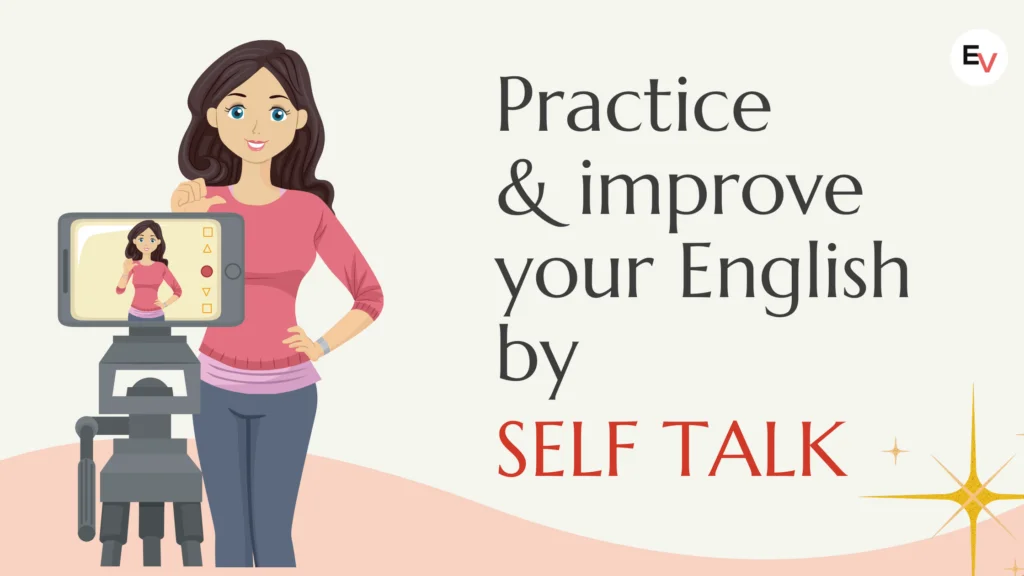
How to Practice English using Self Talk

December 20, 2021 • 4 min read • By Richa

How to Practice English using Self Talk


One habit every English learner must adopt is – Self Talk – it can be a great way to practice as well because for this you don’t need anyone and we all are continuously having chats with ourselves.

So how to do that?

First thing: You don’t have to be fluent to start speaking English to yourself. You don’t need to know a lot of words or grammar to start learning English? 

Here’s how to start with Self Talk 

First of all, talking to yourself means talking about what’s going on in your mind. You can do that almost anywhere when you are alone. Because self-talk in public is weird right? So, just find a place where no one can hear you and just start speaking. 

Now, you may wonder – What should I speak? 

My answer is – Anything that you love talking about. 

Maybe your recent crush or your dream destination. 

The beauty of self-talk is there are no dos and don’ts. You can be yourself and express your thoughts just the way you like in English. 

Self-talk for beginners  

If you are a beginner, the first thing you should do is train your mouth to produce the sound of your target language, i.e, English. You need to practice the pronunciation, the usage of common English words and learn to frame them into sentences. 

Just like you did when you were a child. You imitated your parents and people around you and that’s how you picked up the language. 

Right now, English words may sound unfamiliar to you, so the best way to get accustomed to the language is to watch and listen to people in English. And whatever you listen to, just repeat after them. 

Once you can pronounce the sounds in that language you can take some time to look around yourself, like your apartment, your office, or places you visit, and just call out names in English that you see. 

Another idea could be – Describe what you are doing right now? Are you working at your desk or are you gardening, cooking? Just elaborate on the activities that you are doing and speak it out. 

If you want to talk about the past, you can speak about – How was your week and what are the things that you learned? 

Or, if you want to talk about the future – You can just elaborate on your goals for the year or what you will do in the coming week. 

The third way to do self-talk is to give yourself imaginable situations. Like how would you start a conversation if you have to order something? Or, how would you take an appointment in English?  What would you do if you meet your favorite celebrity? 

If you dedicate at least a few minutes to this activity every day, you’ll be able to take up a conversation in English with anyone even if you have fewer phrases and words. You’ll be able to pave new ways to learn English. 

Self-talk for advanced learners

If you have words and phrases but you just need practice, narrating personal stories is the best way to do self-talk. Mark my words – the more real and emotional your story is, the faster you will be able to get words and phrases. 

You can talk about – 

  1. One of the biggest achievements in your life 
  2. Who has inspired you most in your life? 
  3. What would you like to do if you get a fully paid 1-year leave?
  4. When was the last time you met your cousins & what was it like?
  5. If you could help someone today who would that be & what would you do?

I have a separate blog on topics that you can pick for self-talks – 30 Interesting Topics to practice English

A fun self-talk activity 

Take up a situation where you wanted to win an argument but couldn’t. This is the best time for you to recreate that situation and think of an angle & vocabulary/phrases that could have helped you make your point better and potentially win that argument. 

This will help you aim for two birds at the same time – Win an argument in English and enhance your English word bank too. 

So, are you ready to take up the habit of self-talk? If you have any questions, ask me in comments below. 

Other English Words to Say ‘GOOD’ in your Daily English Conversation

September 17, 2021 • 6 min read • By Richa

Other English Words to Say ‘GOOD’ in your Daily English Conversation

Bored of saying “good” all the time? Swapping in stronger English words instantly makes your spoken English sound more advanced. Using varied vocabulary is one of the fastest ways to move from sounding basic to sounding fluent — and it takes only a few new words to feel the difference.

Below are 20 better alternatives to “good”, shown in real sentence pairs you can copy into your daily conversation, plus a quick list of 10 more synonyms to round out your toolkit.

20 Better Words to Use Instead of ‘Good’

Here are 20 sentence pairs — the first uses “good”, the second swaps in a more precise English word. Read them out loud to internalise the upgrade.

He has a good personality.
He has a wonderful personality.

You have a good family.
You have a lovely family.

Your dress looks really good.
That dress looks splendid.

Riya is a good painter.
Riya is a skilled painter.

My uncle is in good health.
My uncle is healthy.

The party was very good.
The party was fabulous.

We had a very good time in the Maldives.
We had a super time in the Maldives.

It was a very good performance.
It was a marvelous performance.

His proposal is not good.
His proposal is not acceptable.

It was a good speech.
It was a valuable speech.

The cake tasted good.
The cake was delicious.

The movie was good.
The movie was entertaining.

The sunrise in the Maldives was very good.
The sunrise in the Maldives was unforgettable.

We had a good trip.
We had an enriching trip.

Is it a good question?
Is it a valid question?

The art museum had some good paintings.
The art museum had some unique paintings.

I had a very good day.
I had an awesome day.

She did a very good job.
She did an outstanding job.

You have a good smile.
You have a pleasant smile.

You have a good dressing sense.
You have a stylish dressing sense.

10 More Synonyms for the Word ‘Good’

Beyond the 20 examples above, here are 10 more synonyms worth adding to your active vocabulary. Pick two or three this week and use them in real conversation — that’s how new words actually stick.

  1. Acceptable
  2. Exceptional
  3. Great
  4. Fine
  5. Satisfactory
  6. Satisfying
  7. Superb
  8. Valuable
  9. Admirable
  10. Splendid

The fastest way to lock these in is to use them with a real person, not just read them. Practise with an EngVarta English Expert on a live 1-on-1 call — they’ll prompt you to swap “good” for a more precise alternative whenever you slip back into the habit.

Frequently Asked Questions about Words for ‘Good’ in English

What are some other English words for ‘good’?

High-quality alternatives to ‘good’: Excellent, Outstanding, Wonderful, Fantastic, Marvellous, Superb, Brilliant, Splendid, Exceptional, Tremendous, Phenomenal, Magnificent, Remarkable, Impressive, Stellar. Use these in conversation to make your spoken English more varied and precise.

Why should I avoid using the word ‘good’ too often?

Overusing ‘good’ makes spoken English sound monotonous and limited. Native speakers use a variety of synonyms based on context: “excellent” for quality, “great” for casual praise, “outstanding” for exceptional, “fine” for adequate. Mixing in synonyms signals a wider vocabulary range — directly tied to higher fluency band scores in IELTS, more polished professional English, and natural-sounding conversation.

How do I choose the right word for ‘good’ in different contexts?

Context guide: Casual — “great”, “nice”, “cool”, “awesome”. Formal/professional — “excellent”, “outstanding”, “exceptional”, “remarkable”. Quality/skill — “skilled”, “proficient”, “competent”, “accomplished”. Performance — “stellar”, “impressive”, “remarkable”. Food/experience — “delicious”, “memorable”, “delightful”. Match the word to the register and the specific quality you’re describing.

What are the best English words to praise someone?

Effective praise vocabulary: Impressive, Inspiring, Remarkable, Outstanding, Exceptional, Phenomenal, Brilliant, Stellar, Admirable, Commendable. For specific contexts: “well-deserved” (for achievements), “thought-provoking” (for ideas), “compelling” (for arguments), “thoughtful” (for actions), “diligent” (for work ethic). These signal genuine recognition rather than generic praise.

How can I expand my English vocabulary beyond ‘good’?

Practical strategy: (1) Identify your top 5 overused words (“good”, “nice”, “very”, “really”, “things”). (2) Find 5 synonyms for each. (3) Force yourself to use the synonyms in conversation for 1 week. (4) Read English content daily and note adjectives writers use instead of “good”. (5) Practise with a TESOL/ESL-certified Expert who can prompt vocabulary upgrades during conversation. EngVarta‘s daily sessions help you actively replace overused words with more precise alternatives.

Are these alternative words formal or casual?

Mostly formal-leaning. “Outstanding”, “exceptional”, “remarkable”, “impressive” work in professional contexts. “Great”, “awesome”, “amazing” are casual. “Fantastic”, “wonderful”, “marvellous” sit between formal and casual. For daily speaking practice, master 5-7 formal alternatives and 5-7 casual alternatives — switch between them based on who you’re speaking with.

English Learning App : How to learn to speak English in Non-English Environment

August 5, 2021 • 11 min read • By Richa

English Learning App : How to learn to speak English in Non-English Environment

I don’t have an Environment to speak in English – A Problem shared by almost every English learner.

In this article we will help you with ways you can build an English speaking environment for yourself at home.

But before we jump to a solution, let’s understand if this solution will work for you.

There are two kinds of people :

  • Who have partner or friends speaking in English around them but that environment isn’t helping them because :

The people around them judge them for their mistakes and they are at a position in their career where they can’t afford to make mistakes while speaking in English. So essentially there is an environment but it’s a fear induced environment where you cannot be yourself while speaking – you cannot afford to make mistakes cause it’s your professional work environment & your reputation is at stake. Therefore, speaking proper English is important for your career

  • Who come from a non English background ( e.g. from a village, studied in regional board )

They struggle to find people who can talk in English on a day to day basis – they are more excited to have conversations in English; but there is no one around them to talk in English with them and offer them guidance. These people, when they graduate and join a company there as well, have some opportunity to converse in English but then again peer pressure of getting judged for mistakes ruins their dream to speak in English.

So what we notice here is that people speaking in English around you does not mean that it’s a favorable environment for you to learn and grow.

For growth and learning you need an environment where you’re comfortable to make mistakes and learn and receive feedback without any feeling of being judged.

There are two ways you can build that kind of environment for yourself :

  • Community solution 
    1. In this approach you can make a group of friends ( about 2 to 4 people ) who are excited to speak in English. 
    2. Practice with each other on a daily basis.
    3. You can do activities like debate, book reading, presentation or regular day to day conversation.
    4. Keep a window of 1 hour conversation daily in a group of 4 friends where each of you gets the opportunity to speak for about 15 mins.
    5. Offer each other constructive feedback about mistakes.

Pros : of this method is that it’s totally free.

Cons : Since you all are struggling to improve English – there are chances you are not able to catch all the mistakes for each other and hence you might start speaking wrong English with the idea in your head that it sounds right. ( how fluent English speakers speak fast without translating & knowing it is correct  – the experience of sounds right or wrong is what helps us to speak fluently and that experience comes with listening and speaking.) But don’t worry our next option is something you can choose if the community option does not work for you.

  • Talk with Experts at EngVarta
  1. Engvarta app (English learning app) provides an English speaking environment for you where you practice speaking English 1 on 1 with live English experts over phone calls. These experts of this English learning app are working professionals who have experience of life to guide you on how to communicate in different situations. The Experts will correct your mistakes and help you improve your English communication ( be it grammar, sentence structure or pronunciation ) – These experts can help you achieve your English learning goal like ( Interview practice or IELTS practice ).

Pros :

  1. It’s a totally anonymous platform therefore you don’t have to worry about someone finding out about your English speaking classes.
  2. It works for you when and where you need it. You can plan your speaking session as per your convenience.

3. It prepares you for the real world – here you don’t talk with one person instead with different experts on a daily basis – just like in the real world. EngVarta (English learning app) helps you to get comfortable with English as a language, not with a person. Because it happens a lot of the time you get nervous to speak in English with new people so we take care of that as well.

Cons : 

  1. It’s a Premium English learning app for serious learners. You need to buy a practice plan in this English learning app. Therefore if you’re a working professional or preparing for IELTS or interview – meaning if English is important for your career then this English learning app is highly recommended for you. 

Now beside speaking environment there are other things as well that you may do in order to emerge yourself in English completely :

  1. Listen to English music – (there are some really good artists and singers available – start with Justine Biber pop music collection). I try this activity where I pull up the lyrics of my favorite song and then sing it along with the music. It’s stress relieving and also helps you improve your pronunciation.
  2. Watch Regional language movies with English subtitles – this trick helps you find out how to say those sentences from your native language in English. For example, do you know how to say “Babumoshai, zindagi badi honi chahiye, lambi nahi. “ in English – you would know it if you watch this movie with English subtitles. This trick is good because you’re entertaining yourself while you’re exposing yourself to English as well and your brain is learning along with enjoying the movie.
  3. Watch English news, movies, web series – what it all does is that it helps your brain process English content. So if you’re going to consume English you’re going to deliver English in your communication as well. Listening helps your brain learn about sentence structure and pronunciation but you have to practice as well. Try this activity – when watching your favorite show in English – turn on subtitles and repeat the dialog as they happen ( do it alone – otherwise you will be kicked out of the watch party! ). 
  4. If you’re a fan of reading – then you can read but if you’re into books then you can skip it as well. It’s not super important as long as you’re doing other activities like listening & watching English content. However reading has its own benefits – one of them is improving your imagination.
  5. Take help of English Learning App: There are a number of English learning apps available you can download on your computer or smartphone that can help you to understand English and also practice speaking in English. Whether you are at the office, college, at home or in another place, you can practice speaking English. An English learning app can really be your best English practice partner.
  6. This ones free – no need for a phone or friend you can do it yourself without any effort. We all do a lot of self talking and right now you’re probably doing it in your mother tongue? Can you do it in English – Yes, but is it going to be easy, NO – however I believe you can do it. Just try, it will be annoying at first but soon you will start enjoying it & English will become your default language for self-talk.

There are countless other pieces of advice but I wouldn’t throw more advice your way to confuse you – just remember – English is  language – Enjoy it. Don’t be afraid to make mistakes. And believe in baby steps – that’s how you grow!

Just remember – If you have a smartphone, good internet connection and a great English learning app, then you can improve your English pronunciation and English conversation skills no matter where you live.

To make your English learning journey easier – we have listed some of the best English learning apps that can help you improve English –

  • ENGVARTA – Best English Learning app for android
  • DUOLINGO – Fun English learning app for learning languages
  • Memrise – English learning app for all
  • Bussu – English learning App For Writing English
  • BBC Learning English
  • Hello English – English learning app for daily practice
  • English Conversation practice
  • Fluentu English learning app
  • Babbel – English learning app
  • Enguru English learning app

P.S. – Are you serious about your Spoken English speaking skills?

EngVarta android appEngvarta iOS app

Frequently Asked Questions about Learning English in Non-English Environments

How can I learn English when no one around me speaks it?

Effective non-immersion English learning: (1) Daily live online conversation with a TESOL/ESL-certified Expert (replaces missing offline practice). (2) Set your phone/computer to English. (3) Watch English content for 30+ minutes daily (Netflix, YouTube, podcasts). (4) Read English articles daily. (5) Join online English-speaking communities (Reddit, Discord, language-learning groups). (6) Find a study partner online for accountability. Online tools have made non-immersion learning nearly as effective as immersion if used consistently.

Can I learn fluent English in India without going abroad?

Yes — most fluent Indian English speakers today learned without going abroad. Key: daily live online practice. Apps like EngVarta (₹108/session, ₹69 refundable trial) connect you with TESOL/ESL-certified Experts for daily audio practice — equivalent to having an English-speaking friend on call. Pair with daily English content consumption (1 hour total) and you can reach professional fluency in 12-18 months without leaving India.

What are the challenges of learning English without speaking environment?

Real challenges: (1) No daily exposure to natural English. (2) No accountability — easy to skip practice. (3) No real conversational pressure. (4) Reverting to native language when stuck. (5) Limited vocabulary practice in real-life contexts. (6) Less feedback on errors. The fix: structured daily routine with live human practice. Online tools solve most of these challenges except the emotional ease of immersion — which can be partially replicated through consistent live conversations.

How can I create an English-speaking environment at home?

Practical steps: (1) Set all devices (phone, laptop, smart speakers) to English. (2) Watch only English entertainment for 1 month. (3) Read English news instead of native-language news. (4) Talk to yourself in English while doing daily tasks. (5) Schedule daily online English conversation calls (live tutor apps make this easy). (6) Find online study partners and call them in English regularly. Most learners create 60-70% of an immersion environment within 4-6 weeks of these changes.

How much daily practice do I need to learn English without immersion?

Minimum: 30 minutes daily of focused practice (mix of speaking, reading, listening). Optimal: 1 hour daily distributed across speaking (25-30 min), reading (20 min), listening (10-15 min). Less than 15 min daily rarely produces noticeable improvement. The non-negotiable: daily LIVE SPEAKING with feedback — without it, plateau happens around 6 months. EngVarta‘s daily 25-min sessions (₹108) cover the live-speaking portion well for Indian learners.

What’s the fastest way to learn English without going abroad?

Fastest path: (1) 25-30 min daily live conversation with TESOL/ESL-certified Expert. (2) 30 min daily English content (varied: news, shows, podcasts). (3) 10 min daily vocabulary practice with usage. (4) Set all devices to English. (5) Find a daily accountability partner online. Doing this for 4-6 weeks produces meaningful improvement; 6-12 months produces conversational fluency. Most fluent Indian English speakers used some version of this routine.

Ready to Practice with Real Experts?

Try EngVarta today — ₹69 trial (India) / $1 trial (International) · 100% refundable