How To Overcome IELTS Speaking Anxiety Using Mobile Apps

CATEGORY: blog

10 Best English Speaking Practice Apps in 2026 (Tested & Compared)

April 13, 2026 • 18 min read • By Swati Raj

10 best English speaking practice apps in 2026 tested and compared

Finding the right app to practice spoken English can be overwhelming. There are hundreds of options, but most focus on grammar drills or vocabulary games rather than real speaking practice. If your goal is to actually speak English fluently, you need an app that makes you talk, not just tap.

We tested and compared the 10 best English speaking practice apps available in 2026 — from live human conversation platforms to AI-powered tools and free community apps. This guide covers what each app does best, what it costs, and which type of learner it suits so you can pick the one that actually helps you improve.

What Makes a Good English Speaking Practice App?

Before jumping into the list, here is what separates an effective speaking app from a mediocre one:

  • Real speaking time – You should be talking, not just reading or listening
  • Feedback on mistakes – Either from a real person or AI that catches your errors
  • Consistency tools – Daily reminders, short sessions, flexible scheduling
  • Affordable enough for daily use – Speaking practice works best when done every day

With these criteria in mind, here are the 10 best English speaking practice apps for 2026.

10 Best English Speaking Practice Apps in 2026

1. EngVarta – Best for Daily Speaking Confidence

EngVarta connects you with live English experts for real one-on-one conversations. No scripts, no bots. You call an expert, talk about real topics, and get corrected naturally during the conversation. Available from 7 AM to midnight, it fits into any schedule.

What makes EngVarta different from other apps is the focus on building speaking confidence through real practice. Most learners understand English but freeze when they have to speak. EngVarta solves this by giving you a safe, judgment-free space to practice every single day.

  • Price: from ₹2,700 for 25 sessions (India) / from $45 for 25 sessions (international) | $1 trial available (100% refundable)
  • Best for: Learners who understand English but struggle to speak fluently
  • Unique features: Live human experts (not AI), real-time corrections, audio-only format for zero pressure, expert feedback after every session
  • Limitation: Not designed for grammar lessons or exam-specific preparation

EngVarta is rated 4.5 stars from 9,100+ reviews on Google Play. Over 2 million learners have used the platform to build their spoken English confidence.

Download EngVarta:
Download for Android | Download for iOS

2. FixoLang – Best for IELTS Speaking Preparation

If you are preparing for the IELTS speaking test, FixoLang is built specifically for you. The app simulates the actual IELTS speaking test format with cue cards, timed responses, and AI evaluation that gives you a predicted band score.

FixoLang helps you practice Part 1 introductions, Part 2 cue card responses, and Part 3 discussions exactly how they appear in the real exam. The AI feedback tells you exactly where you lost marks and what to fix.

  • Price: Free tier available | Premium plans from Rs 1,199/month
  • Best for: IELTS aspirants targeting 6.5+ band in speaking
  • Unique features: AI band score prediction, IELTS mock tests with all 3 parts, cue card timer, detailed pronunciation and fluency feedback
  • Limitation: Focused only on IELTS. Not suitable for general English conversation practice

Trusted by thousands of IELTS test-takers across India, FixoLang has helped learners improve their speaking band by 0.5 to 1.5 points within weeks of consistent practice.

Download FixoLang:
Download for Android | Download for iOS

3. ELSA Speak – Best for Pronunciation and Accent Training

ELSA Speak uses advanced AI to analyze your pronunciation at the phoneme level. It listens to how you say each sound and shows you exactly where your mouth position or stress pattern is wrong. If your main challenge is pronunciation rather than conversation, ELSA is one of the best tools available.

The app provides structured lessons on individual sounds, word stress, intonation patterns, and connected speech. It is especially useful for learners who want to reduce their mother tongue influence on their English accent.

  • Price: Free (limited) | Pro at $11.99/month or $74.99/year
  • Best for: Learners focused on clearer pronunciation and accent reduction
  • Unique features: Phoneme-level speech recognition, mouth position guides, AI pronunciation scoring, personalized daily lessons
  • Limitation: All exercises are scripted. No real conversation practice. Can feel repetitive after a while

4. Cambly – Best for Practice with Native Speakers

Cambly connects you with native English-speaking tutors from the US, UK, and Australia for live video conversations. You can book sessions or start an instant call anytime. The tutors are real people who adjust to your level and interests.

Cambly works well for learners who specifically want exposure to native accents and natural conversation patterns. The video format also helps with non-verbal communication skills.

  • Price: From $52/month (1 lesson/week, 30 min) | 3-month plan at $7.75/lesson | Annual plan at $5.54/lesson. India pricing starts around Rs 1,199/month
  • Best for: Intermediate to advanced learners who want native speaker interaction
  • Unique features: Instant tutoring with native speakers, video calls, session recordings for review, kids-specific program available
  • Limitation: Expensive for daily practice. Tutor quality varies. No pronunciation scoring or structured curriculum

5. BoldVoice – Best for Accent Coaching

BoldVoice takes a different approach by offering accent coaching from Hollywood dialect coaches. The app focuses on how native speakers actually move their mouths, where they place stress, and how they connect words in natural speech.

If you already speak English reasonably well but want to sound more natural and confident, BoldVoice provides the specific tools to refine your delivery.

  • Price: 7-day free trial | $24.99/month or $149/year
  • Best for: Learners who want to refine their accent and sound more natural
  • Unique features: Expert accent coaches, IPA phonetics training, mouth diagrams, stress and intonation drills
  • Limitation: Focused purely on accent. Does not help with fluency, vocabulary, or conversation skills

6. Speak (by Speakeasy Labs) – Best AI Conversation App

Speak is an AI-powered speaking app that lets you practice English through structured conversation lessons. The app uses speech recognition to evaluate your responses and guides you through progressively harder dialogues. It feels closer to talking to a real person than most AI apps, and the lessons are well-designed to build specific skills.

Speak has been recommended by publications like Wirecutter as one of the best language learning apps, and its AI engine handles natural conversation flow better than most competitors. If you want AI practice that goes beyond simple pronunciation drills, Speak is the strongest option in 2026.

  • Price: ~$14/month or $99/year for Premium
  • Best for: Structured AI speaking drills and guided conversation practice
  • Unique features: Natural AI conversation engine, solid speech recognition, structured curriculum with progressive difficulty, roleplay scenarios
  • Limitation: No real human interaction. AI conversations, no matter how good, cannot replicate the social pressure and spontaneity of talking to a real person. You will not build the same social confidence you get from human practice

7. Duolingo – Best for Beginners and Daily Habit

Duolingo is the world’s most popular language learning app, and for good reason. Its gamified approach makes daily practice addictive with streaks, XP points, and leaderboards. The free tier is genuinely useful for absolute beginners who need to build basic vocabulary and grammar before they start speaking.

However, Duolingo is not a speaking app. Most exercises involve tapping, matching, and translating written sentences. The speaking exercises that do exist are short and scripted. If you already know basic English and want to improve fluency, Duolingo will not get you there. It is a starting point, not a destination.

  • Price: Free | Super Duolingo at ~$7/month or $84/year
  • Best for: Absolute beginners building vocabulary and basic grammar foundations
  • Unique features: Addictive gamification, daily streak system, free tier with full course access, bite-sized lessons, massive language selection
  • Limitation: Minimal actual speaking practice. Most exercises are tap-and-swipe. Not effective for building conversational fluency or speaking confidence. You can complete the entire course without ever having a real conversation

8. ChatGPT Voice – Best Free AI Speaking Practice

OpenAI’s ChatGPT with voice mode has become a surprisingly effective tool for English speaking practice. You can have open-ended conversations on any topic, ask it to correct your grammar, or roleplay specific scenarios like job interviews or customer service calls. The free tier gives you access to voice conversations, making it the most accessible AI speaking tool available.

The biggest advantage of ChatGPT Voice is flexibility. Unlike structured apps, you can practice whatever you want, whenever you want. Need to prepare for a meeting? Simulate it. Want to discuss a movie? Just start talking. It is like having a patient, always-available conversation partner.

  • Price: Free (GPT-3.5 voice) | $20/month for ChatGPT Plus (GPT-4)
  • Best for: Grammar correction, vocabulary building, and low-pressure warm-up conversations
  • Unique features: Available 24/7, any topic you choose, natural conversation flow, free tier, can roleplay specific scenarios, provides grammar explanations on demand
  • Limitation: No social pressure means skills often do not transfer to real conversations. AI never judges you, interrupts you, or makes you nervous, which is exactly what real English conversations do. Great for warming up, but not sufficient on its own for building real-world confidence

9. MySivi AI – Best AI App for Indian Learners

MySivi AI is a Y Combinator-backed language learning platform that has gained strong traction with over 4 million users, primarily in India. The app supports bilingual learning with Hindi, Tamil, Telugu, and 15+ other Indian languages, making the transition to English feel more natural for Indian learners.

MySivi offers AI-powered conversation sessions and also connects learners with other users for peer practice. The combination of AI feedback and community interaction makes it more engaging than purely AI-based alternatives. If you are an Indian learner who wants AI practice with familiar cultural context and mother tongue support, MySivi is worth trying.

  • Price: Free tier available | Premium plans available
  • Best for: Indian learners who want AI practice with bilingual support in their native language
  • Unique features: Supports 15+ Indian languages, bilingual learning mode, conversation sessions with other learners, Y Combinator backed, 4M+ user community
  • Limitation: AI-based practice lacks the human element needed for building real-world confidence. Peer conversations with other learners are helpful but not the same as practicing with trained English experts who can systematically correct your mistakes

10. HelloTalk – Best for Free Language Exchange

HelloTalk connects you with real people worldwide for language exchange. You teach someone your native language, and they help you practice English. The app has a massive global community, and the core features are free. It brings real human interaction into language learning without the cost of a tutor.

The language exchange model works well in theory, but the reality is often inconsistent. Your conversation partners are not trained teachers. Some will be great, others will ghost you after one message. There is no structured feedback, no curriculum, and no guarantee of quality. But if you want free practice with real humans and do not mind the unpredictability, HelloTalk is the best option available.

  • Price: Free | Premium from $6.99/month
  • Best for: Casual conversation with native speakers on a budget
  • Unique features: Real human interaction for free, global community of language learners, text and voice messaging, built-in translation and correction tools
  • Limitation: Partners are untrained and unreliable. Quality varies wildly from conversation to conversation. No structured feedback or curriculum. Many users lose motivation because there is no accountability or progression system

Quick Comparison: 10 Best English Speaking Practice Apps 2026

App Price Best For Real Conversations? AI Feedback?
EngVarta from ₹2,700 / $45 (25 sessions) Daily speaking confidence Yes (live humans) Expert feedback
FixoLang Free / Rs 1,199/mo IELTS speaking prep AI mock tests Yes (band score)
ELSA Speak Free / $11.99/mo Pronunciation training No Yes (phoneme level)
Cambly From $52/mo Native speaker practice Yes (video tutors) No
BoldVoice $149/yr Accent coaching No Yes (accent scoring)
Speak $14/mo or $99/yr AI conversation practice No (AI only) Yes (speech recognition)
Duolingo Free / $7/mo Beginners & daily habit No Limited
ChatGPT Voice Free / $20/mo Free AI speaking practice No (AI only) Yes (on request)
MySivi AI Free / Premium Indian learners (AI + peers) Peer practice Yes
HelloTalk Free / $6.99/mo Free language exchange Yes (untrained partners) No

How to Choose the Right English Speaking App

The best app depends on what is holding you back:

  • You understand English but cannot speak it – Start with EngVarta. Daily live conversations will build the habit and confidence you need.
  • You need to crack the IELTS speaking test – Use FixoLang for exam-specific practice with AI scoring.
  • Your pronunciation is unclear – Try ELSA Speak for phoneme-level correction.
  • You want to practice with native speakersCambly connects you with tutors from English-speaking countries.
  • You want to refine your accentBoldVoice offers Hollywood-level accent coaching.
  • You want AI conversation practiceSpeak or ChatGPT Voice let you practice anytime with AI. Speak offers more structure, while ChatGPT is more flexible and has a free tier.
  • You are an absolute beginner – Start with Duolingo to build basic vocabulary and grammar, then move to EngVarta when you are ready to start speaking.
  • You want free practice with real peopleHelloTalk gives you free language exchange with native speakers, but be prepared for inconsistency in partner quality.
  • You are an Indian learner wanting AI practiceMySivi AI offers bilingual support in Hindi, Tamil, Telugu, and other Indian languages, making the learning curve gentler.

For most learners, the biggest barrier is not grammar or vocabulary. It is the confidence to speak. AI apps are excellent for warming up and building basic skills, but the learners who improve fastest are the ones who combine AI practice with real human conversation. That is why apps that provide real, daily conversation practice tend to deliver the fastest improvement in spoken English fluency.

Frequently Asked Questions (FAQs)

What is the best English speaking practice app for beginners?

For absolute beginners with very limited English, Duolingo is a good starting point to build basic vocabulary and grammar through gamified lessons. Once you have a foundation and can form basic sentences, EngVarta is the most effective next step. It pairs you with live English experts who adjust to your level and help you build confidence through real conversations. There is no scripting involved, so you naturally learn to think and respond in English.

Is ChatGPT enough for English speaking practice?

ChatGPT Voice is a useful tool for practicing English, especially for grammar correction and building vocabulary in a low-pressure environment. However, it is not enough on its own. The core challenge for most English learners is not grammar or vocabulary but the confidence to speak in real social situations. AI never judges you, never makes you nervous, and never interrupts you, which means the skills you build with AI often do not transfer to real conversations. The best approach is to use ChatGPT as a warm-up tool alongside real human conversation practice through apps like EngVarta or Cambly.

What is the best free app to practice English speaking?

For completely free AI-based practice, ChatGPT Voice offers the most flexible option. You can practice any topic, any time, and get grammar corrections on demand. For free practice with real humans, HelloTalk connects you with language exchange partners worldwide, though partner quality varies significantly. For free pronunciation training, ELSA Speak and Duolingo both offer limited free tiers. Keep in mind that free apps typically lack the structured daily practice and expert feedback that paid platforms like EngVarta provide, which is why serious learners usually see faster progress with a paid solution.

Are free English speaking practice apps effective?

Free apps like ELSA Speak, Duolingo, ChatGPT Voice, and HelloTalk all offer useful tools at no cost. However, for building real conversational fluency, free tiers are usually limited in scope or quality. ChatGPT gives you flexible AI practice but no human accountability. HelloTalk gives you real humans but no trained feedback. Duolingo builds vocabulary but barely makes you speak. Daily conversation practice with expert feedback, which is the fastest path to fluency, typically requires a paid plan on platforms like EngVarta or Cambly.

How long does it take to improve spoken English with an app?

With 15 to 20 minutes of daily practice, most learners notice improvement within 3 to 4 weeks. Consistency matters more than session length. Apps that enable daily practice at affordable prices, like EngVarta, tend to produce faster results than expensive platforms where you can only practice once a week.

Can an English speaking app replace a traditional English class?

For speaking fluency, yes. Traditional classes focus heavily on grammar rules and written exercises. Speaking apps focus on what actually builds fluency, which is regular spoken practice with real-time feedback. For exam preparation or formal grammar study, a combination of both may work best.

Which is better – an AI English speaking app or one with real humans?

AI apps like ELSA Speak, Speak, and ChatGPT Voice are excellent for pronunciation drills, grammar practice, and building basic skills in a low-pressure environment. But for building real-world speaking confidence, human interaction is irreplaceable. Apps like EngVarta provide the emotional challenge, natural conversation flow, and real-time human feedback that AI cannot replicate. The ideal approach is to use both: AI apps for daily drills and warm-up practice, and human-led apps like EngVarta for building the confidence that actually transfers to real-life conversations.

Conclusion

The best English speaking practice app is the one you will actually use every day. Fluency does not come from downloading the most expensive app or the one with the fanciest AI. It comes from showing up and speaking consistently.

If you understand English but freeze when speaking, EngVarta gives you the most speaking practice per session with real human experts. If you are preparing for IELTS, FixoLang gives you exam-specific practice that no general app can match. If you want AI conversation practice, Speak and ChatGPT Voice are the best options in 2026. And if pronunciation is your weak point, ELSA Speak or BoldVoice can help you sound clearer.

The learners who improve fastest are the ones who combine tools strategically. Use Duolingo or ChatGPT to build your foundation, then graduate to real conversation practice with EngVarta or Cambly. Commit to daily practice for 30 days, even if it is just 15 minutes, and you will hear the difference yourself.

How to Overcome IELTS Speaking Anxiety Using Mobile Apps

January 22, 2026 • 8 min read • By Swati Raj

How to Overcome IELTS Speaking Anxiety Using Mobile Apps

For many IELTS candidates, the Speaking section doesn’t feel like a test of English—it feels like a test of nerves. You might know grammar. You might have vocabulary. You might even understand the question perfectly. Yet the moment the examiner looks at you and the timer starts ticking, your mind goes blank, your voice shakes, and the simplest answers feel difficult.

If that sounds familiar, you’re not alone. Overcome IELTS Speaking Anxiety is one of the most common reasons capable learners score lower than they deserve. The issue is rarely “bad English.” It’s usually stress, hesitation, fear of making mistakes, and lack of real speaking exposure.

This guide breaks down:

  • Why anxiety happens during the IELTS speaking interview
  • How to reduce IELTS speaking stress with mental preparation strategies
  • How to build confidence for IELTS speaking through practical habits
  • How mobile apps—especially the Fixolang app—support calmness, fluency, and exam readiness
  • Where Fixolang is available (Android + Apple App Store)

If you want a clear, repeatable plan to speak confidently under pressure, this blog is for you.

How do I overcome IELTS Speaking Anxiety?

To overcome IELTS speaking nervousness, practice speaking daily under timed conditions, use calm-breathing techniques before speaking, stop aiming for perfection, and train structured answers. Apps like Fixolang help by providing exam-style speaking prompts, timed practice, and consistent routines that reduce fear and hesitation.

Why IELTS Speaking Anxiety Happens (And Why It’s Normal)

The IELTS Speaking Test is a live interview. Humans are wired to feel stress when being judged in real-time. This is not weakness—it’s biology.

Common triggers of anxiety during the IELTS speaking interview

  • Fear of being judged by the examiner
  • Fear of mistakes (“What if I say something wrong?”)
  • Fear of accent (“Do I sound bad?”)
  • Fear of silence (“What if I pause?”)
  • Time pressure (especially in cue card Part 2)
  • Overthinking grammar while speaking

In many countries—especially India—students learn English as a subject but don’t get regular speaking opportunities. So the speaking interview becomes the first “real conversation under pressure” for many learners.

How Anxiety Affects IELTS Speaking Scores

Anxiety directly impacts the scoring criteria:

Fluency and Coherence

  • More hesitation
  • More fillers (“umm,” “actually,” “you know”)
  • Broken sentence flow
  • Short answers

Lexical Resource (Vocabulary)

  • Safe, repetitive vocabulary
  • Difficulty recalling better words under pressure

Grammar Range and Accuracy

  • Over-simple sentences because the brain avoids complexity

Pronunciation

  • Rushed speech or unclear words due to nervous breathing

In short: anxiety hides your real English level. The goal is not to “be fearless.” The goal is to perform calmly despite pressure.

The Most Common IELTS Speaking Problems (And What They Really Mean)

1) Fear: “I will sound stupid”

This fear comes from self-judgment, not from the examiner. Most candidates believe they must sound perfect. But IELTS rewards clear, natural communication, not perfection.

2) Hesitation: “I can’t think fast”

Hesitation usually comes from a lack of practice under time pressure. Your brain is trained to think slowly (writing mode), but IELTS requires real-time speaking (performance mode).

3) Anxiety: “My heartbeat increases, voice shakes”

This is a nervous system response. It can be reduced using breath control, exposure practice, and structured speaking routines.

Mental Preparation Strategies to Reduce IELTS Speaking Stress

Mental preparation is not “motivation.” It’s training your brain to stay stable under pressure.

1) Use the “Conversation Frame” (Mindset Shift)

Instead of thinking:
“I am being tested.”
Think:
“I am being understood.”

This shift lowers performance pressure instantly. The examiner is not your enemy. They are simply rating your communication.

2) Train Imperfect Speaking (Confidence Builder)

Many candidates freeze because they try to speak perfect English. That backfires.

A better rule:

  • Speak first
  • Improve later

Fluency grows through usage. Accuracy improves through feedback and repetition.

3) 20-Second Calm Breathing (Before the Interview)

Use this routine:

  • Inhale 4 seconds
  • Hold 2 seconds
  • Exhale 6 seconds
    Repeat 3 times.

It reduces nervous system activation and slows down rushed speech.

4) Visualization (Pre-test brain training)

Close your eyes for 30 seconds and imagine:

  • You greet the examiner calmly
  • You answer naturally
  • You pause without fear
  • You smile
  • You finish smoothly

This prepares your brain for the situation. It sounds simple, but it’s powerful.

5) Replace “Fear Questions” With “Action Questions”

Fear questions:

  • “What if I make mistakes?”
  • “What if I forget words?”

Action questions:

  • “How can I extend this answer?”
  • “What example can I add?”

Your brain moves toward solutions instead of panic.

Practical Strategies to Improve Confidence for IELTS Speaking

1) Use a simple answer structure (works in Part 1 and Part 3)

Answer → Reason → Example

Example:
“I prefer mornings because I feel energetic. For example, I can focus better at work early in the day.”

This structure reduces blank moments.

2) Use strategic pauses instead of fillers

A pause is not a mistake. A pause shows control.

Instead of:
“Umm… actually… you know…”

Try:
(brief pause) “That’s an interesting question. I think…”

This sounds confident and natural.

3) Prepare “topic buckets,” not memorized answers

Memorizing IELTS speaking topics with answers often sounds robotic.

Instead, prepare:

  • 4 short personal stories
  • 6 common opinions (technology, education, health)
  • 10 flexible vocabulary phrases

This makes you adaptable and reduces anxiety.

4) Practice speaking under timed conditions

IELTS is timed. Untimed practice creates fake confidence.

Daily practice should include:

  • Part 1: 10 questions, quick answers
  • Part 2: cue card, 1 minute prep + 2 minutes speak
  • Part 3: 3 deeper questions, extended answers

Apps that simulate this reduce fear faster than passive learning.

How Fixolang App Helps Overcome IELTS Speaking Anxiety

Fixolang is designed to support learners with real speaking practice, not just reading tips.

1) Builds familiarity with real IELTS speaking patterns

Anxiety reduces when your brain recognizes the format. Fixolang provides test-style prompts and cue cards so the exam doesn’t feel unknown.

Fixolang helps reduce IELTS speaking anxiety by making candidates practice exam-like speaking regularly, so the real test feels familiar.

2) Encourages daily speaking habit (the biggest confidence multiplier)

Confidence doesn’t come from one strong day. It comes from repeated practice.

Fixolang supports regular speaking routines that build:

  • comfort
  • speed of thinking
  • smoother delivery

3) Helps reduce hesitation through repeated real-time speaking

Hesitation improves when your brain learns to respond faster. Fixolang encourages repeated speaking with topic variety, helping you become flexible.

4) Improves fluency by training structured answers

Practice helps you naturally apply:

  • linking phrases
  • opinion structures
  • examples
  • smooth transitions

This improves coherence and confidence together.

5) Supports exam readiness through consistent practice

Fixolang creates “exam readiness” by training:

  • timing
  • question switching
  • cue card pressure tolerance
  • confidence under observation (even if simulated)

This reduces last-minute panic.

Fixolang App Availability

Fixolang is available on both:

So learners can do IELTS preparation at home, while commuting, or in short daily slots.

Why This Matters for IELTS Candidates in India

In India, many candidates:

  • understand English but don’t speak daily
  • feel shy speaking in public
  • lack safe practice environments
  • rely on passive learning (videos/notes)

Fixolang helps because it creates a private, consistent speaking routine that feels practical and doable—especially for students and working professionals.

A 14-Day “Calm Speaking” Plan Using Fixolang + Mental Strategies

Here’s a simple plan for fast improvement:

Days 1–3: Comfort Mode

  • Part 1 practice daily
  • Focus on calm breathing before speaking
  • Aim: speak without freezing

Days 4–7: Structure Mode

  • Answer → Reason → Example pattern
  • 1 cue card daily
  • Aim: reduce hesitation

Days 8–11: Pressure Mode

  • Timed cue cards
  • Part 3 opinion questions
  • Aim: speak under pressure without panic

Days 12–14: Exam Mode

  • Full speaking simulation style practice
  • Focus on pacing and clarity
  • Aim: calm performance confidence

This kind of routine turns anxiety into familiarity.

Follow FixoLang on social media

🟦 Facebook : https://www.facebook.com/fixolang/

📸 Instagram : https://www.instagram.com/FixoLang/

▶️ YouTube : https://www.youtube.com/@FixoLang

Final Thoughts

IELTS speaking anxiety is not proof that you’re weak at English. It’s proof that you haven’t practiced the performance skill enough under pressure.

With the right mental preparation and consistent speaking practice, nervousness becomes manageable. Confidence becomes repeatable. And your true English level starts showing in your answers.

If you commit to daily speaking—especially with structured practice support like Fixolang—you will not only improve fluency, but also walk into the speaking interview calmer and more prepared.

Frequently Asked Questions ( FAQs )

Which Top 10 IELTS Preparation Apps Are Best for Quickly Improving Overall Band Score?

January 21, 2026 • 9 min read • By Swati Raj

10 Top IELTS Preparation Apps

If you’re preparing for IELTS and want to improve your overall band score quickly, you’re not alone. Every year, lakhs of candidates—especially in India—search for the top IELTS preparation apps because coaching classes are expensive, time-consuming, and often inconsistent in quality.

The good news is that mobile learning has matured. Today, you can do IELTS preparation online, take an IELTS practice test online, and even build a full IELTS preparation at home routine using reliable apps.

But the tough part is this: not every IELTS app improves your score. Many apps provide content, but don’t build performance. A high band score comes from test-style practice, timed routines, accurate feedback, and consistent repetition.

This blog helps you identify the top IELTS preparation apps that can genuinely support faster improvement—and explains why Fixolang App is the best option for learners aiming for serious speaking improvement and overall band growth.

Which Top IELTS Preparation Apps Help Improve Band Score Fast?

The top IELTS preparation apps that improve band score fastest are the ones that offer real exam-style practice, timed tests, detailed feedback, and daily structured routines. Apps that simulate the speaking test and provide instant evaluation—such as Fixolang App—often help learners improve quicker because speaking performance is a major scoring differentiator.

Why IELTS Apps Help Improve Band Score Faster (When Used Correctly)

The majority of candidates don’t lose points due to a lack of English knowledge lose marks because they:
  • Panic under time pressure
  • Practice randomly (no plan)
  • Don’t do enough timed tests
  • Don’t get meaningful feedback
  • Underpractice speaking and writing

A strong IELTS app solves these by providing:

  • Structured practice plans
  • Mock tests and timers
  • Skill-wise improvement guidance
  • Progress tracking and weak-area focus

This is why IELTS training online is now a mainstream choice for students and working professionals.

How to Choose the Best App for IELTS General Training vs Academic

Many learners ask: What is the best app for IELTS general training? The answer depends on whether the app supports:

  • General Training reading style (not just academic passages)
  • Letter writing practice (Task 1 for GT)
  • Daily-life speaking topics (common in IELTS Speaking)
  • Practical vocabulary and tone used in real life

Even if you’re preparing for Academic, a strong speaking practice system remains essential, because the Speaking test format is same.

Top 10 IELTS Preparation Apps for Quick Band Score Improvement

Below is a curated list of the top IELTS preparation apps, based on what high scorers actually need: realistic practice, feedback quality, and habit-building for consistent improvement.

Note: Different apps are strong for different modules. Many candidates use a “combo strategy”: one app for test coverage + one app for speaking performance. That’s where Fixolang stands out.

1) Fixolang App (Best for Speaking + Fast Confidence Improvement)

If your goal is to improve band score quickly, your fastest lever is often IELTS Speaking—because most learners underpractice it, and speaking affects overall performance confidence.

Why Fixolang App is the best choice

  • Designed for real exam-style speaking practice
  • Helps with fluency, structure, cue cards, and Part 3 opinions
  • Provides instant scoring + personalized feedback
  • Encourages daily speaking habits, not random practice

Why this matters for overall band score

When speaking improves, learners become more confident overall. Confidence reduces hesitation, improves vocabulary usage, and strengthens coherence across the test.

Short Answer:
Fixolang App is one of the best IELTS preparation apps because it trains real-time speaking performance with feedback, helping learners improve quickly from home.

2) Official IELTS by British Council

This is useful for learners who want official familiarity and reliable content.

Good for:

  • IELTS preparation online planning
  • Skill practice suggestions
  • Trusted brand resources

Limitations:

  • Speaking improvement needs stronger practice repetition and evaluation systems

3) IDP IELTS 

IDP resources help you understand exam format and expectations.

Good for:

  • Test familiarity
  • Reliable guidance

Limitations:

  • For rapid improvement, you still need practice engines + feedback loops

4) Cambridge IELTS Practice

Cambridge materials are widely considered closest to real exam difficulty.

Good for:

  • IELTS practice test style learning
  • Reading/Listening skills

Limitations:

  • On mobile, practice experience varies
  • Speaking practice still needs interactive structure

5) Magoosh IELTS (Best for structured lessons + practice)

Magoosh is popular for structured learning and strategy.

Good for:

  • Lessons + question banks
  • Strong explanations

Limitations:

  • Speaking improvement is limited unless paired with speaking-focused tools

6) IELTS Prep App by IELTS Liz / Similar 

These types of apps/resources are good for:

  • Understanding common errors
  • Getting topic ideas and strategy hints

Limitations:

  • Tips don’t replace timed practice

7) Duolingo

These apps help with:

  • Vocabulary habits
  • Daily English exposure

But they’re not a complete IELTS exam prep solution. Use them as supporting tools, not your core.

8) Testbook / Indian Exam Prep Platforms

Many Indian learners prefer platforms that feel local and accessible.

Good for:

  • Affordable learning
  • Practice sets

Limitations:

  • Quality differs across modules
  • Speaking still needs structured practice

9) E2 IELTS / Similar Coach-Based Apps

These apps often provide:

  • Strong strategy videos
  • Band-level explanations
  • Writing and speaking frameworks

Limitations:

  • Learners still need daily performance practice to convert strategy into skill

10) Free IELTS Mobile Apps

Many candidates start with free IELTS mobile apps to test basics.

Good for:

  • First exposure
  • Basic tests
  • Daily questions

Limitations:

  • Feedback is often weak
  • Progress tracking is limited
  • Speaking practice is usually not realistic

If your goal is “quickly improve band score,” free apps alone often don’t deliver.

Why Fixolang App Stands Out Among Top IELTS Preparation Apps

Most apps teach IELTS. Fixolang trains for IELTS speaking performance.

Fixolang is ideal for:

  • IELTS preparation at home
  • Busy schedules (students + professionals)
  • Consistent speaking habit building
  • Exam-style cue card and discussion training
  • Learners targeting 7+ / 8+ speaking score range

What makes it score-improving (not just content)

  • Timed prompts
  • Real test format simulation
  • Feedback that you can act on immediately
  • Repeatable daily routine

This is what converts practice into band score improvement.

Start Practising on the Fixolang App

👉 Download on Google play.

👉 Download on the App Store.

The Fastest Band Score Strategy Using IELTS Apps (30-Min Daily Plan)

If you want quick improvement, don’t study randomly. Use a simple routine.

30 minutes daily (high-impact plan)

  1. 10 minutes speaking practice (Fixolang App)
  2. 10 minutes reading/listening mini test
  3. 10 minutes review mistakes + note patterns

This method works because it builds:

  • performance under time pressure
  • consistency
  • self-awareness of mistakes

How to Use IELTS Practice Tests Online Without Wasting Time

An IELTS practice test online is useful only if you:

  • do it timed
  • analyze mistakes
  • repeat weak areas

Don’t do this:

  • Take a test → feel good/bad → move on

Do this:

  • Take a test → identify top 2 weaknesses → drill those for 3 days → retest

Apps that help you do this loop will improve your band score faster.

Best App for IELTS General Training: What to Prioritize

If you are preparing for General Training, you should prioritize apps that support:

  • Practical daily-life vocabulary
  • Letter writing structure (GT Task 1)
  • Natural speaking topics
  • Real-life scenarios

Fixolang is especially useful because it trains speaking on common daily topics and builds spontaneous response ability—something GT learners need for confidence in real life too.

Common Mistakes People Make While Using IELTS Preparation Online

Mistake 1: Using too many apps at once

Result: confusion, no consistency.

Mistake 2: Watching more than practicing

Consumption feels productive. Performance actually improves score.

Mistake 3: Avoiding speaking practice

Many learners fear speaking, so they skip it. That delays band improvement.

Mistake 4: Memorizing answers

Memorization reduces naturalness and flexibility.

Fixolang helps reduce these mistakes by forcing real-time speaking practice with structured prompts.

Why IELTS Apps Matter for Indian Learners

In India, many IELTS aspirants:

  • Understand English well
  • Lack speaking exposure
  • Have limited time due to college/work
  • Want a practical way to prepare from home

That’s why IELTS exam preparation online through apps is growing. But the best results come when speaking practice is daily and structured—exactly what Fixolang encourages.

Follow FixoLang on social media

🟦 Facebook : https://www.facebook.com/fixolang/

📸 Instagram : https://www.instagram.com/FixoLang/

▶️ YouTube : https://www.youtube.com/@FixoLang

Conclusion

If you want rapid improvement, choose:

  • One app for overall test coverage
  • One app focused on speaking performance

Among the top IELTS preparation apps, Fixolang App stands out because speaking is where most learners lose marks—and Fixolang trains speaking like a real test, with repeatable practice and feedback.

If you want to improve band score quickly, your priority should be:

  • timed practice
  • feedback
  • consistency
  • real performance practice

Fixolang supports all four—making it a strong choice for modern at-home IELTS preparation.

Frequently Asked Questions ( FAQs )

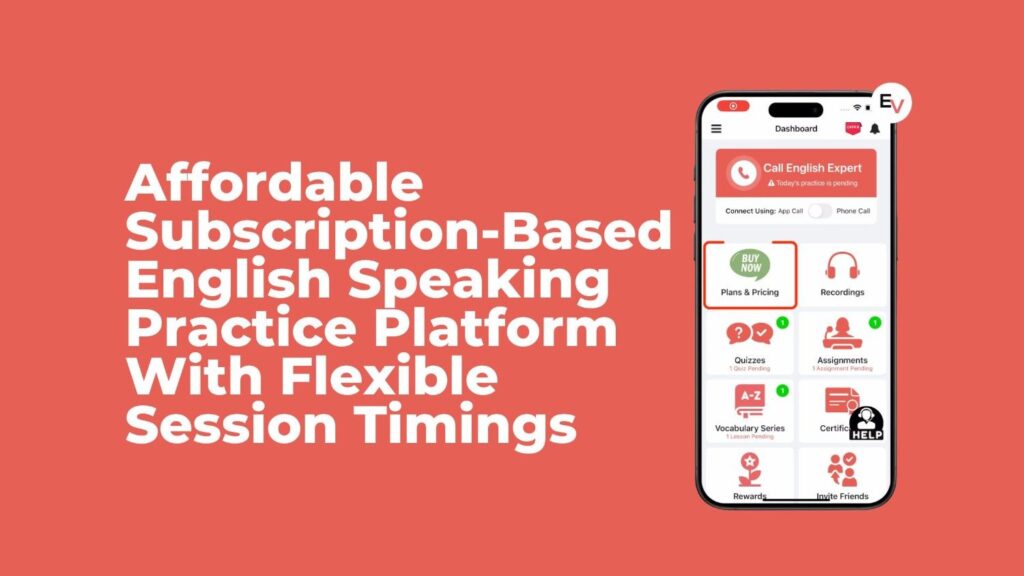
Affordable subscription-based English speaking practice platforms with flexible session timings

January 12, 2026 • 8 min read • By Mahesh .

English speaking practice platforms

If you’ve ever searched for affordable English speaking practice platforms, you already know how crowded the market is—free YouTube lessons, group conversation clubs, AI chatbots, and paid apps that promise fluency in ‘30 days.’ But most learners eventually realize one truth: speaking improves when it becomes a daily habit, not just a hopeful goal. 

That’s why subscription-based English speaking practice platforms with flexible session timings are growing so fast. They remove the biggest barriers—time and consistency. Among these platforms, EngVarta App stands out because it focuses on what truly builds fluency: real conversations, daily speaking practice, and meaningful feedback, all without rigid schedules or expensive coaching routines.

Why English speaking practice matters more than ever

English is rarely a “native vs non-native” conversation anymore. A British Council estimate notes 2.3 billion people speak English to some level, and a large share are non-native speakers—meaning most real-world English conversations happen between learners and multilingual professionals.

In India specifically, the payoff is not just confidence—it can be economic. Research summarized on Ideas for India reports a strong wage premium associated with English fluency (with different estimates by gender and other factors).

Now combine that with what employers keep repeating: communication is one of the most in-demand skills. One 2025 employer-insights piece highlights communication skills among top in-demand skills in India.

So the question isn’t “Should I practice speaking?”
It’s: Which practice method actually fits daily life and stays affordable?

What “affordable + flexible” really means in a speaking platform

Affordability isn’t just about price. It’s about the value per week of consistent speaking. A platform is truly affordable when it helps you:

  • practice regularly (not occasionally)
  • get feedback (not just content)
  • fit sessions into your real schedule
  • build confidence through repetition

Flexible timing matters because most learners don’t fail due to “lack of motivation.” They fail because their day is chaotic: commuting, family responsibilities, shifts, college, deadlines. A platform that lets you practice when you’re actually free wins.

EngVarta app explicitly positions itself around practice with live experts and availability across 7 AM–11:59 PM IST—which is the kind of flexibility subscription learning is supposed to deliver.

Types of online English speaking practice platforms 

1) Free options: great for input, weak for output

Free YouTube videos, podcasts, reels, and grammar content are amazing for exposure. But they don’t force you to speak—and speaking is a muscle. Free resources often improve understanding, not fluency.

2) Conversation communities and “nearby” opportunities

Local speaking groups, college clubs, coworking meetups, and community gatherings can help—if you’re comfortable showing up and if the group is consistent. The downside is irregularity and mixed feedback quality.

3) AI-based practice tools

AI practice tools are excellent for low-pressure rehearsal. They help with repetition and can provide quick feedback. But many learners still struggle when the conversation becomes human—because real conversations include interruptions, emotion, pace shifts, and unpredictability.

4) Subscription-based live speaking platforms

This category works best when it combines three things: human interaction + feedback + flexibility. That’s where EngVarta App is positioned: 1-on-1 live practice, real-time corrections, session recordings, and flexible hours.

Quick comparison: what you get (in practice)

Option Cost Flexibility Feedback quality Best for
YouTube / free videos Free High Low Listening + basics
Local clubs/meetups Low/Free Medium Medium Social confidence
AI chat practice Low–Medium Very high Medium Rehearsal + repetition
EngVarta (subscription) Medium High High (live corrections) Real fluency + confidence

EngVarta’s model is especially helpful for learners who say: “I know English, but I freeze when I speak.” That’s exactly the gap real-time practice closes.

Why EngVarta App is the best platform for subscription-based speaking practice

Real 1-on-1 speaking practice (not passive learning)

EngVarta App is designed as “practice-first.” It emphasizes speaking with live English experts rather than only lessons.

Flexible session timings that match real life

The platform highlights availability from 7 AM to 11:59 PM IST, which is a major advantage for working professionals, students, homemakers, and business owners.

Real-time corrections + recordings (feedback loop)

EngVarta mentions instant feedback and session recordings, which create a powerful loop: speak → get corrected → replay → improve.

Proven adoption signal (people are actually using it)

EngVarta’s App Google Play listing shows 10L+ downloads, suggesting strong adoption at scale.

👉 Download EngVarta App today and start building fluent English skills .

Download app for Android 

Download app for iOS 

“But I want AI-based practice too” — here’s the smart way to combine it

A practical modern routine looks like this:

Use AI for rehearsal (low-pressure repetitions)

Use AI tools to practice:

  • introductions
  • role-plays (interview, client call, small talk)
  • pronunciation repetition
  • vocabulary upgrades

Use EngVarta App for real conversation conditioning

Then use EngVarta for:

  • handling interruptions
  • thinking on your feet
  • natural speed + flow
  • real-time correction patterns

AI helps you prepare. Live practice helps you perform.

How to pick the right plan (without overthinking)

If you’re choosing a subscription, the best strategy is to pick what you can sustain, not what looks impressive.

Start with a plan that allows:

  • at least 3 speaking sessions per week
  • consistent time slot you can keep
  • review time for recordings/notes

EngVarta’s own guidance emphasizes practice and mentions that a subscription is required to speak with experts.

How to get faster results on EngVarta (daily-use strategy)

1) Keep a “daily life script bank”

Write 10 short situations you face daily:

  • asking for updates at work
  • giving a status report
  • explaining a delay
  • booking an appointment
  • talking to a teacher/colleague

Repeat them until they feel automatic.

2) Use a 3-part session structure

Before the call: 30 seconds—what happened today?
During the call: 1 main topic + 1 role play
After the call: note 3 corrections + replay 1 minute of recording

3) Measure progress in confidence, not perfection

The examiner/boss/friend doesn’t need perfect grammar. They need clarity, flow, and confidence.

4) Make your schedule boring (boring = consistent)

The most powerful habit is the simplest one: same time window, same frequency.

Here’s a clean, engaging section you can use in your blog under the heading:

👉 Connect with EngVarta on Social Media

Instagram : 👉  https://www.instagram.com/engvarta.app/

Youtube    : 👉  http://www.youtube.com/@EngVarta

Facebook: 👉  https://www.facebook.com/engvarta

LinkedIn: 👉  https://www.linkedin.com/company/engvarta

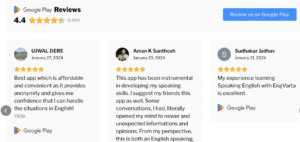
What Learners Are Saying About EngVarta App

Real learners often describe their English learning journey with EngVarta App in ways that go beyond test scores — they talk about confidence, real-life improvement, and meaningful progress. Here’s what users are sharing after practicing regularly:

EngVarta App Review

Final Thoughts :

If you want the most effective blend of affordability and results, you need three ingredients:

  1. A subscription model that makes practice consistent
  2. Flexible session timings so life doesn’t break your routine
  3. Feedback so you don’t repeat the same mistakes forever

EngVarta fits this framework strongly with its live 1-on-1 expert practice, real-time corrections, recordings, and wide timing window (7 AM–11:59 PM IST)—making it one of the most practical options for daily speaking practice.

Frequently Asked Questions (FAQs)

Why Your English Didn’t Improve in 2025 (Even Though You Tried)

December 15, 2025 • 6 min read • By Swati Raj

Speak English

(A moment of honest reflection)

You didn’t ignore English in 2025.
You didn’t “not care.”

You tried.

You watched videos on pronunciation.
You bookmarked reels on vocabulary.
You told yourself, “This year, I’ll finally improve.”

And yet, as the year quietly came to an end, you found yourself in the same place — still thinking too much before speaking, still hesitating in conversations, still doubting your words.

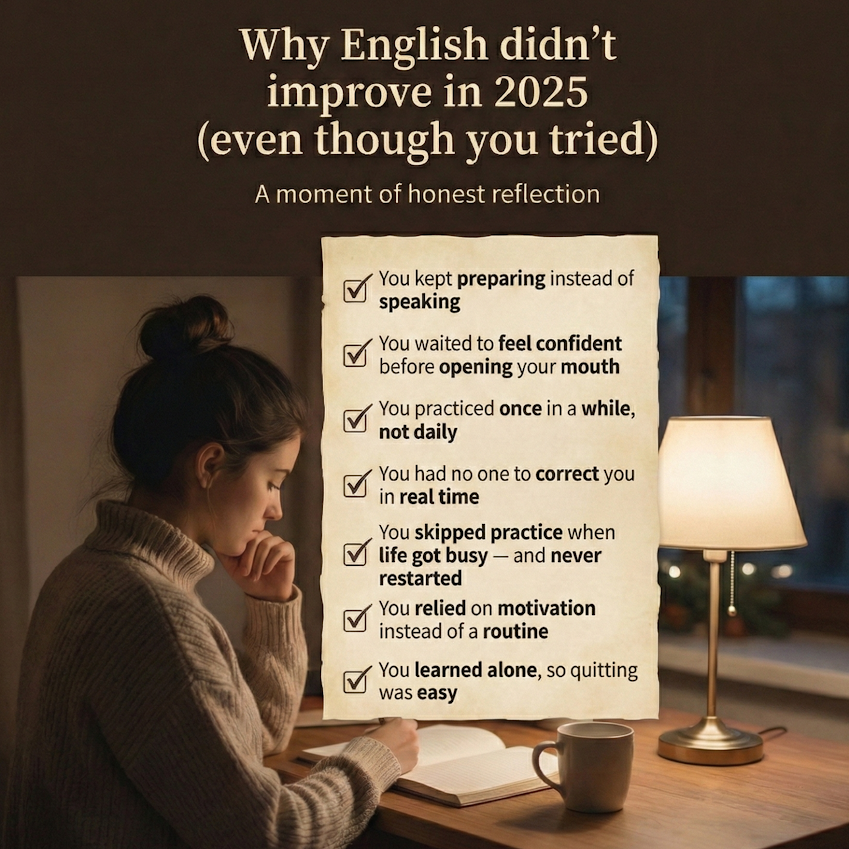
The image above captures that exact moment.
A quiet evening. A notebook open. A mind full of effort — and frustration.

This blog is not about blaming you.
It’s about understanding why effort didn’t convert into confidence.

Many learners want to speak English confidently, but end up stuck in the same cycle year after year. They understand English, can read it well, and even write decently — yet speaking still feels difficult. This gap between knowing English and speaking it confidently is what frustrates most learners.

The Truth Most Learners Don’t Hear

To speak English confidently, you don’t need more rules or more content. You need repeated exposure to real conversations where you can speak freely, make mistakes, and continue without fear.

Most learners struggle not because they lack intelligence, but because they never get enough chances to actually use English in real life.

English doesn’t improve just because you want it to.
It improves when the right habits replace the wrong ones.

Most learners repeat the same patterns year after year — not because they are lazy, but because no one shows them a better system.

Let’s walk through those patterns honestly.

You Kept Preparing Instead of Speaking

Preparation feels safe.

You can learn silently.
You can pause, rewind, and retry.
No one hears your mistakes.

So you kept preparing.

But here’s the uncomfortable truth:

Preparation without speaking is procrastination in disguise.

English is not absorbed like information.
It’s built like a muscle.

Until your mouth starts moving, improvement stays theoretical.

You Waited to Feel Confident Before Opening Your Mouth

Many learners believe confidence is a prerequisite.

“I’ll speak when I’m confident.”
“I just need a little more clarity.”
“I’m not ready yet.”

But confidence is not a starting point.
It’s a side effect.

Confidence comes after:

  • Saying things wrong

  • Getting corrected

  • Surviving awkward pauses

  • Realising nothing bad happened

Every confident English speaker you admire once spoke badly — repeatedly.

You Practiced Occasionally, Not Consistently

Some weeks you practiced seriously.
Other weeks disappeared into work, family, stress, or exams.

And then English quietly slipped down your priority list.

The problem isn’t missing a day.
The problem is not returning.

English rewards consistency, not intensity.

Ten minutes every day beats two hours once a week — every single time.

You Had No One to Correct You in Real Time

Learning alone creates blind spots.

You may:

  • Repeat the same mistake for months

  • Think your sentence is correct when it isn’t

  • Lose confidence because you’re unsure

Without real-time correction, your brain doesn’t know what to fix.

This is why many learners feel stuck despite “studying” for years.

You Skipped Practice When Life Got Busy — and Never Restarted

Life doesn’t pause for learning.

Deadlines come.
Health issues arise.
Responsibilities pile up.

So practice stops — temporarily.

But without a system, temporary breaks turn into permanent gaps.

English doesn’t disappear — but confidence does.

You Relied on Motivation Instead of a Routine

Motivation is emotional.
Routines are structural.

Motivation says, “I feel like practicing today.”
Routines say, “This is what I do daily.”

English improves when practice becomes as normal as brushing your teeth — not when you’re “in the mood.”

You Learned Alone — So Quitting Was Easy

When no one expects you, stopping feels harmless.

No accountability.
No reminder.
No sense of progress being watched.

Learning alone makes quitting invisible — until months later, when regret shows up.

This Is Not a Failure. It’s a Pattern.

And patterns can be changed.

Learners who finally speak English confidently don’t suddenly become smarter.
They simply change how they practice.

They speak first.
They practice daily.
They get corrected kindly.
They don’t do it alone.

How the EngVarta App Helps You Break This Pattern

EngVarta is designed for learners who want to speak English confidently in real-life situations — interviews, meetings, phone calls, and daily conversations.

EngVarta was created specifically for learners stuck in this exact loop.

Not beginners who don’t know English —
but learners who know English yet struggle to speak confidently.

Here’s how EngVarta directly solves the problems mentioned above:

1. It Forces You to Speak, Not Prepare

EngVarta connects you with real English experts for one-on-one live conversations.
You speak from day one — no waiting, no overthinking.

2. Confidence Comes Through Action

You don’t wait to “feel confident.”
Confidence builds naturally as you speak daily in a safe, supportive environment.

3. Daily Practice Becomes a Habit

Sessions are short and practical, designed for busy lives.
This removes the excuse of “no time” and builds consistency.

4. Real-Time, Friendly Corrections

Experts correct you gently while you speak — helping you improve without embarrassment or interruption.

5. You’re No Longer Learning Alone

Someone listens to you.
Responds to you.
Guides you.

That simple human connection changes everything.

If 2025 Felt Like a Loop, 2026 Can Be a Turning Point

English didn’t fail you.
Your effort didn’t go waste.

It just needed a better system.

One that replaces:

  • Preparation with practice

  • Motivation with routine

  • Isolation with guidance

Start Speaking — Not Someday, Today

👉 Download the EngVarta App:
Download for Android | Download for iOS

Speak daily.
Get corrected.
Build confidence through real conversations.

Stay Connected With EngVarta

Final Thought

Learning English is not the goal.
Being able to speak English confidently — without fear, hesitation, or overthinking — is.

And that confidence is built one real conversation at a time.

Frequently Asked Questions (FAQs)

10 Best English Speaking Courses Online in 2025 (With Real Practice Options)

June 13, 2025 • 5 min read • By Swati Raj

10 Best English Speaking Courses Online in 2025

Learning English in 2025 is no longer just about memorizing grammar rules or binge-watching YouTube videos. If your goal is to speak fluently, you need a course that offers real-time speaking practice, feedback, and consistent engagement. But with so many options, how do you choose?

In this blog, we’ve compared the most popular and best English speaking courses online based on:

  • Speaking Practice Quality
  • Expert Interaction
  • Flexibility & Ease of Use
  • Price & Affordability

Whether you’re looking for the best English app to speak fluently, or want to know how to speak English confidently online, this blog will help you choose from the top spoken English practice apps in India. These are some of the best English speaking courses online that offer results.

Here’s a detailed side-by-side comparison to help you make an informed decision.

Comparison Table​​

Platform

Practice Method

Best For

Price Range

Unique Feature

Pros

Considerations

EngVarta 1-on-1 phone calls with English experts Fluency, confidence, real-world speaking Affordable Live conversations + expert corrections Human interaction, budget-friendly, real-time feedback, no video pressure
Very focused on speaking – great if that’s your top goal
Cambly 1-on-1 calls with native speakers Accent training, advanced learners $$$ Expensive Native tutors with flexible scheduling Native speakers, wide tutor pool, flexible hours
Higher pricing; may feel less structured for beginners
Duolingo Gamified exercises Vocabulary & beginners Free/₹ Paid Bite-sized lessons, engaging UX Fun, habit-forming, good starting point
Lacks real-time speaking practice
British Council Modules + live classes Structured learners & certifications $$ Moderate Globally recognized certification Professional setup, trusted globally, includes live instruction
Feels academic; may not suit casual learners
Udemy Pre-recorded video courses Self-paced grammar improvement ₹ Low Lifetime access with 1-time purchase Affordable, flexible, huge course variety
Doesn’t offer live classes or speaking practice
FluentU Immersive video content Listening & casual expressions $$ Moderate Learn through real-world video clips Learn from context, exposure to native expressions
No live practice; mostly passive listening
Preply Private tutors on demand Personalized learning $$ – $$$ Choose tutors by skill, price, and reviews Customized learning, wide tutor selection
Quality varies; consistency depends on tutor
Hello English App with Indian language support Beginners from regional backgrounds Free/₹ Paid Bilingual support + grammar games Regional support, good grammar basics, interactive UI
Not ideal for advanced learners or real-time fluency
ELSA Speak AI speech recognition Pronunciation improvement $$ Moderate Feedback on pronunciation using AI Great for clarity and accent training
Limited to pronunciation; no conversation practice
YouTube/Podcasts Passive listening & learning Free resources and casual tips Free Great for supplementing active speaking practice Unlimited content, free, varied styles
No feedback loop; lacks progression or structure

Quick Course Snapshots

If you’re on the hunt for the best English speaking course online, here’s how each one compares:

  1. EngVarta

    If you already know English but struggle to speak fluently, EngVarta is built for you. You speak with live experts daily via phone calls. No recordings, no awkward video calls. Just real conversations and gentle corrections to boost your confidence.

  2. Cambly

    Great for interacting with native speakers and refining your accent. Cambly is flexible and offers a wide range of tutors, but it’s one of the most expensive options.

  3. Duolingo

    Best suited for absolute beginners. While you won’t get any real conversation practice, it’s helpful for vocabulary building in a fun, gamified way.

  4. British Council

    Highly structured with options for live sessions. Best for learners who need certification or want a formal learning experience.

  5. Udemy

    A budget-friendly choice. You get video-based courses from experienced teachers. Not interactive, but great for grammar and comprehension.

  6. FluentU

    Uses pop culture, movie clips, and news to help you learn English naturally. Great for listening skills and learning native expressions.

  7. Preply

    Flexible platform to connect with a variety of tutors. You can filter by price, accent, language, etc. Personalization is key, but quality varies.

  8. Hello English

    Especially useful if you are from a non-English background and prefer bilingual explanations. It uses gamified lessons for vocabulary and grammar.

  9. ELSA Speak

    AI-powered app that listens to your pronunciation and gives real-time feedback. Great for accent training, not for fluency or conversation.

  10. YouTube & Podcasts

    Thousands of free channels to follow. Ideal for passive learning, inspiration, or tips, but lacks structured progression or feedback.

Conclusion: Which One Should You Choose?

If you want to actually speak English every day, choose platforms like EngVarta or Cambly that provide real interaction.

  • Budget-friendly + real practice? Go with EngVarta
  • Native interaction + advanced accent focus? Try Cambly
  • Self-learners or grammar buffs? Explore Udemy or British Council

No matter your goal, there’s a best English speaking course online to match your needs.

Remember: Watching content won’t make you fluent. Only speaking will.

Frequently Asked Questions

Want to Study or Work Abroad? Start with IELTS Exam

June 9, 2025 • 5 min read • By Swati Raj

Want to Study or Work Abroad? Start with the IELTS Exam

For anyone dreaming of settling abroad — whether for higher education, career opportunities, or migration — there’s one bridge you simply can’t skip.
That bridge is called: IELTS.

It’s not just a test.
It’s the first step towards your global journey.

The IELTS Exam (International English Language Testing System) is one of the world’s most popular English proficiency tests, accepted by over 11,000 organizations globally. It is designed to assess how effectively you can communicate in English across four core skills: Listening, Reading, Writing, and Speaking.

Whether you’re planning to study at a university abroad, apply for a job in an English-speaking country, or migrate permanently, the IELTS Exam is often a mandatory requirement in the process.

There are two main types of IELTS:

  • IELTS Academic – for those applying to universities or higher education programs

  • IELTS General Training – for work, training programs, or immigration purposes

Both versions are trusted by governments, employers, and institutions worldwide. Taking the IELTS Exam shows your readiness to live, work, or study in an English-speaking environment and is a vital first step toward your global journey.

The Four Pillars of IELTS: Listening, Reading, Writing, and Speaking

The IELTS Exam is divided into four sections, each designed to assess a specific skill:

1. 🎧 Listening

You’ll hear recordings of native English conversations, lectures, and instructions. You’ll need to answer questions to show how well you understood the context and details.

2. 📖 Reading

Three long texts — could be academic articles or general interest materials — and 40 questions that test your comprehension, scanning, and interpretation skills.

3. ✍️ Writing

This section includes two tasks. In the Academic version, Task 1 involves analyzing a graph or chart, while Task 2 is a formal essay. General version includes letter writing and essay.

4. 🗣️ Speaking

This is a face-to-face interview (or now via video call in many centers). You’ll speak on general topics, express opinions, and answer cue card-based questions — exactly like in the real IELTS Exam.

Why is the IELTS Exam Important?

It’s globally accepted
More than 11,000 institutions in over 140 countries trust IELTS scores.

It unlocks education & career opportunities
A high IELTS score can improve your chances of getting admitted to top universities or landing international jobs.

It supports migration
Countries like Canada, Australia, the UK, and New Zealand use IELTS scores for visa and immigration eligibility.

It’s a mark of language confidence
Preparing for the IELTS Exam doesn’t just help you pass the test — it also builds your real-world communication confidence.

Meet FixoLang: The Smart Way to Practice for IELTS Speaking

Among all the sections, most candidates struggle with speaking.
Why? Because fluency comes from practice — and practice requires guidance, feedback, and repetition.

That’s where FixoLang becomes your best companion.

What is FixoLang?

FixoLang is an AI-powered app designed to help you prepare for the IELTS Speaking section effectively and independently.
It’s like having a private IELTS speaking coach — in your pocket.

How Does FixoLang Work?

Step 1: Choose a Topic
Select from a vast cue card library filled with real IELTS-style prompts. From common questions to trending topics, you’ll find everything that mirrors the actual exam.

👉 Want to see what kind of topics usually appear in the test? Check out these Top 20 IELTS Speaking Cue Card 2025 Questions to get an idea of what to expect and start preparing smartly.

Step 2: Speak
The app records your response in real time. You speak your answer just as you would in the real IELTS Exam.

Step 3: Get Instant Feedback
Within seconds, FixoLang gives you:

  • An estimated band score

  • Feedback on your grammar, pronunciation, fluency, and coherence

  • Suggestions to improve your weak areas

And you can repeat your answer as many times as you like — until you feel confident.

Real Success Stories: How FixoLang Changed Lives

Users across the globe have shared how FixoLang has made a tangible difference in their speaking skills. By incorporating it into their IELTS Exam preparation routine, many have seen remarkable improvements in their scores, showcasing the app’s effectiveness in real-world speaking scenarios.

Final Words: Start Your IELTS Journey Today

Studying or working abroad is not just a dream — it’s a decision.
And like every big journey, it starts with a simple step.

👉 That step is preparing for the IELTS Exam.
And the smartest way to prepare, especially for the speaking section, is by practising daily with FixoLang.

Don’t just study English.
Start speaking it confidently, fluently, and with purpose.

🔗 Ready to Begin? Download FixoLang Now:

📱 Download on App Store: https://apps.apple.com/in/app/fixolang-ielts-prep-app/id6448477499
📱 Get it on Google Play: https://play.google.com/store/apps/details?id=ielts.engvarta.com&hl=en_IN&pli=1
▶️ Watch IELTS tips on YouTube: https://www.youtube.com/@FixoLang
📸 Follow us on Instagram: https://www.instagram.com/fixolang/

Frequently Asked Questions

  • Can I track my progress?

    • Yes, after every session you get a band score and feedback so you know exactly where you stand and how to improve.

  • How often should I practice?

    • Just 15 minutes a day is enough to see improvement. The more consistently you practice, the better your fluency and score.

  • Can beginners use FixoLang?

    • Definitely! It’s beginner-friendly and perfect for shy users. You practice with AI, so there’s no fear of judgment or pressure.

  • Is FixoLang only for Speaking?

    • Yes, it’s currently focused on IELTS Speaking practice. More features for Listening, Reading, and Writing are coming soon.

  • How does FixoLang help with IELTS?

    • FixoLang gives real IELTS cue cards, AI-powered feedback, and instant band estimates to help improve your speaking fluency and confidence.


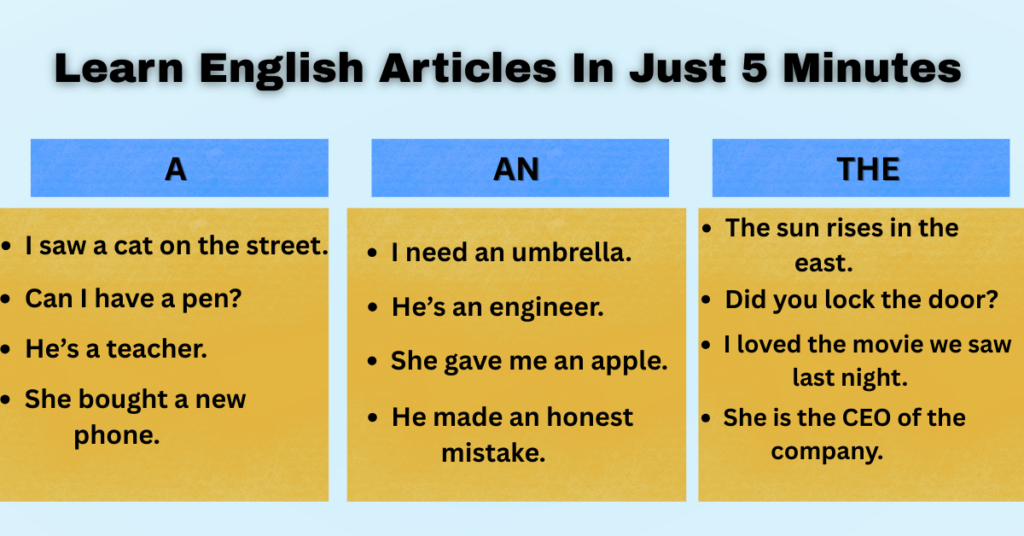
Learn English Articles: A, An, The in Just 5 Minutes

May 19, 2025 • 5 min read • By Swati Raj

Learn English Articles: A, An, The in Just 5 Minutes

Have you ever paused mid-sentence because you weren’t sure if it’s “a umbrella” or “an umbrella”?
Or hesitated while texting someone because you didn’t know if it’s “a apple” or “an apple”?

Tiny words like A, An, and The may seem harmless — but they can seriously mess with your confidence if you don’t know how and when to use them.

And here’s the truth: even fluent English speakers sometimes second-guess these little words.

But not after today.

In this blog, we’ll break down the grammar behind A, An, The, share real-life examples (not boring ones), and even show you when you don’t need to use articles at all. No memorization. Just logic, sound, and some fun examples.

Oh — and there’s a short video waiting for you that brings it all to life 👇
Ready? Let’s go.

👉 If you’re just starting your English journey, this guide on the best English learning apps for beginners will help you get the right tools — and mastering A, An, The is a great place to begin.

Definite Article: “The”

“The” is called the definite article because it points to a specific thing that both the speaker and listener know about.

If you’re using “the”, you’re not talking about anything—you’re talking about that one particular thing.

Use “The” when:

  • You’re referring to something unique or already mentioned
  • There’s only one of something
  • You and the listener both know what you’re talking about

Real-Life Examples:

  • “The sun rises in the east.”
    → There’s only one sun. It’s universal. So we say the sun.
  • “Did you lock the door?”
    → The person you’re talking to knows which door. It’s not just any door.
  • “I loved the movie we saw last night.”
    → You’ve already talked about this movie. It’s not a random one.
  • “She is the CEO of the company.”
    → There’s only one CEO. Only one company being referred to.

Bonus Tip:

Use “the” before:

  • Superlative adjectives: the best, the tallest
  • Musical instruments: the guitar, the piano
  • Oceans, rivers, and deserts: the Ganga, the Himalayas, the Sahara

Indefinite Article: “A”

“A” is used when you’re talking about any one item, but you’re not being specific.

It’s like saying, “I don’t care which one, I just want one.”

Use “A” when:

  • The next word starts with a consonant sound
  • You’re introducing something non-specific
  • The noun is countable and singular

Real-Life Examples:

  • I saw a cat on the street.”
    → Not a specific cat, just any cat.
  • “Can I have a pen?”
    → You’re not asking for a particular pen, just any one that works.
  • “He’s a teacher.”
    → One of many teachers in the world. Nothing specific.
  • “She bought a new phone.”
    → We don’t know which phone yet.

Indefinite Article: “An”

Just like “a”, “an” also means one, but not specific.

But the only difference?

It’s used before words that begin with a vowel sound (not just a vowel letter).

Use “An” when:

The next word starts with a vowel sound (a, e, i, o, u)

The noun is non-specific, singular, and countable

Real-Life Examples:

  • “I need an umbrella.”
    → ‘Umbrella’ begins with a vowel sound: uhm-brella
  • “He’s an engineer.”
    → Begins with a vowel sound: en-jineer
  • “She gave me an apple.”
    → Not a specific apple. Just one.
  • “He made an honest mistake.”
    → Honest starts with a silent “h”, so the sound is on-est → vowel sound.

Quick Trick:

It’s about the sound, not the letter.
So you say:

  • an hour (silent “h” → vowel sound)
  • a university (“you-niversity” → starts with a consonant sound)

Omission of Articles (When NOT to Use A, An, The)

Sometimes, no article is needed at all — especially when speaking generally.

Don’t use articles with:

  • Plural or uncountable nouns (general idea)

“Cats are cute.”

“Milk is healthy.”

  • Names of people, places, companies

“Akash is my friend.”

“I visited India last year.”

“Google is a big company.”

  • Meals and time expressions

“She eats lunch at noon.”

“We’ll meet after dinner.”

  • Languages and subjects

“He speaks English.”

“Math is hard.”

Understanding the use of articles in English grammar is essential for clear and effective communication. “The” points to something specific, while “a” and “an” introduce non-specific nouns. By mastering the usage of these articles, you can enhance the precision and clarity of your English writing and conversation. Practice and exposure to the language will help you become more proficient in using articles correctly.

Confused about articles? This video will fix that in 2 minutes
In this quick video, you’ll learn:

What will you learn in this video? 

1️⃣ What A, An, and The really mean

2️⃣ How to use the definite article “The”

3️⃣ When to use “A”, “An”, “The” (and when not to)

4️⃣ The one trick that makes choosing between ‘a’ and ‘an’ super easy

5️⃣ Plenty of real-life examples to ensure you get it

👉 Watch it now and never get stuck again.

Articles might be tiny, but they’re powerful.

Mastering them isn’t about memorizing a list of rules; it’s about hearing the rhythm of English and flowing with it.

Now that you know when to use A, An, and The, you’ll start noticing them everywhere. And when you use them correctly, you’ll sound more fluent, more confident, and more natural.

But don’t stop at reading.

Want to practice using A, An, The in real conversations — with real people?

On EngVarta, you can speak with live English experts who’ll gently correct your mistakes and help you gain fluency, one session at a time.

Practice grammar, pronunciation, and fluency in real time.

Download the EngVarta app and start speaking today.

Because your English deserves more than just theory — it deserves a voice.

Best Fluent English Practice App to Boost Your Speaking Skills

April 17, 2025 • 4 min read • By Swati Raj

Best Fluent English Practice App to Boost Your Speaking Skills

You’ve studied grammar.
Watched English movies.
Even tried repeating dialogues from a web series.

But when it’s time to speak?
You pause. You doubt. You stay quiet.

The missing link?
Not more studying — but real, consistent speaking practice.

That’s where a Fluent English Practice App can be a game-changer.
It gives you the space to speak, make mistakes, and improve — all from your phone.

Let’s look at the top apps that are helping learners become fluent, confident speakers.

1. EngVarta – Top Pick for Indian Learners

EngVarta gives you the most natural way to improve spoken English — by actually speaking with live experts over phone calls. It’s not a course or a class — it’s real-time conversation, correction, and confidence-building.

No rigid lessons. No fear of judgement. Just meaningful practice that helps you grow every day.

Why EngVarta is the Most Practical Fluent English Practice App:
Real Conversations: Talk about your day, work, or interviews — and get guided corrections.
Anytime Practice: Morning, evening, or during a tea break — speak when it suits you.
Supportive Experts: Learn in a no-pressure space where mistakes are part of growth.
Made for Indian Learners: Designed with your challenges and goals in mind.

Pros:

  • Trained English experts

  • Focused on real fluency, not just theory

  • 100% refundable trial available

Cons:

  • Not free (but offers great value for the price)

🌟 EngVarta is the Fluent English Practice App that turns shy learners into confident speakers — one call at a time.

📲 Start Your Practice Now:

🔗 Stay Connected with EngVarta:

📸 Instagramhttps://www.instagram.com/engvarta.app
📘 Facebookhttps://www.facebook.com/engvarta
▶️ YouTubehttps://www.youtube.com/@EngVarta

2. ElsA Speak

Best for: Pronunciation and fluency using AI

ElsA Speak is an AI-powered Fluent English Practice App that gives instant feedback on your pronunciation and speaking pace. If you want to sound clear and confident, this app is a good start.

Pros:

  • Smart AI corrections

  • Intonation training

  • Voice scoring system

Cons:

  • No live interaction

  • Lacks real conversation practice

3. Cambly

Best for: Practicing with native English tutors

Cambly connects you with native English speakers through live video calls. It’s ideal if you want to improve your accent, prepare for IELTS, or have professional conversations with people from around the world.

Pros:

  • Native tutors from US/UK

  • Flexible timings

  • Customized sessions for job interviews, travel, and business English

Cons:

  • Premium pricing

  • Not ideal for total beginners

4. HelloTalk

Best for: Casual language exchange with people worldwide

This app is more like a social platform for language learners. You connect with real users who want to learn your language, while they help you with English.

Pros:

  • Free and community-driven

  • Speak with users across the globe

  • Multiple chat options (text, voice, call)

Cons:

  • No structured lessons

  • May lack focus on speaking fluency

5. Duolingo (Speaking Mode)

Best for: Beginners starting with speaking practice

Duolingo now includes speaking tasks in its gamified learning journey. While it’s not a complete Fluent English Practice App, it’s great for developing the habit of speaking daily.

Pros:

  • Fun and addictive

  • Encourages consistency

  • Covers the basics of speaking

Cons:

  • Limited depth

  • No expert feedback

🧭Final Recommendation: Which App Should You Pick?

Here’s a quick summary based on your fluency goal:

Goal Recommended App
Talk to natives Cambly
Fix your pronunciation ElsA Speak
Practice fluency in real time EngVarta
Social language exchange HelloTalk
Beginner speaking habit Duolingo

But if you want a Fluent English Practice App that gives you:

✅ Real conversations
✅ Supportive experts
✅ Progress you can feel

👉 Then EngVarta is your go-to app.

🚀 Ready to Start Speaking Fluently?

📲 Download EngVarta today
💬 Speak to a live English expert
🎯 Practice daily. Grow naturally.

Because fluency isn’t taught — it’s practiced.

And the right Fluent English Practice App can take you from knowing English… to living it.

How to Improve Your English Like a Pro: Trending Methods in 2025 & Secrets from Celebrities and Cricketers

February 24, 2025 • 4 min read • By Swati Raj

How to Improve Your English Like a Pro: Trending Methods in 2025 & Secrets from Celebrities and Cricketers

English is the global language of communication, and mastering it opens doors to new opportunities. But how do successful individuals—celebrities, cricketers, and influencers—perfect their English despite coming from non-English backgrounds? The secret is consistent practice, real conversations, and the right learning environment. Fluency isn’t about memorizing grammar rules—it’s about speaking regularly and learning from mistakes. If they can do it, so can you! Take the first step to improve your English by practicing daily with experts who can guide you toward confidence and fluency.

In this blog, we’ll explore:

  • Proven methods to improve English
  • Trending language-learning techniques of 2025
  • Exclusive secrets from cricketers and celebrities who transformed their English skills

1. Time-Tested Methods to Improve English

1.1. Consistent Practice

  • Read daily: Books, news articles, blogs, and even social media in English.
  • Write regularly: Journaling, blog writing, and social media posts.
  • Listen actively: English podcasts, audiobooks, and TED Talks.

1.2. Expanding Your Vocabulary

  • Learn new words daily and use them in conversations.
  • Use flashcards and vocabulary apps like Anki and Quizlet.
  • Play word games like Scrabble or crossword puzzles.

1.3. Mastering Grammar Without Stress

  • Focus on common grammar mistakes and correct them through practice.
  • Use AI tools like Grammarly to refine your writing.
  • Follow a grammar-focused YouTube channel for easy explanations.

2. Top Language-Learning Trends in 2025

2.1. AI-Powered Learning Tools

  • Apps like EngVarta, Duolingo, and ChatGPT-powered tutors personalize lessons.
  • AI-driven chatbots help simulate real-life conversations.

2.2. Virtual Reality (VR) & Augmented Reality (AR)

  • VR language immersion allows learners to practice conversations in realistic environments.
  • Apps like Mondly VR let users interact with AI in different scenarios.

2.3. Microlearning: Bite-Sized Lessons for Busy Learners

  • Platforms deliver short, 5-minute lessons to keep learning consistent.
  • Helps learners retain information better without feeling overwhelmed.

2.4. Social Media & Online Communities

  • Join global English-learning communities on Reddit, Twitter, and LinkedIn.
  • Follow influencers and English teachers on YouTube and Instagram.

3. How Celebrities and Cricketers Improve Their English

Many famous personalities started with limited English but improved significantly over time. Their secret? Immersion, persistence, and expert guidance.

3.1. Immersive Listening

  • MS Dhoni: Improved his English by watching interviews and listening to commentators.
  • Virat Kohli: Credits his fluency to constant interaction with foreign players.

3.2. Professional Coaching

  • Many Bollywood actors, like Kangana Ranaut and Nawazuddin Siddiqui, worked with personal English tutorsto refine their pronunciation.
  • Cricketers like Sachin Tendulkar and Ravindra Jadeja took specialized speech training to handle interviews confidently.

3.3. Daily Speaking Practice

  • Priyanka Chopra & Deepika Padukone: Worked with accent coaches when transitioning to Hollywood.
  • Shah Rukh Khan: Practices English in daily conversations and media interactions.

3.4. Learning from Mistakes

  • Most successful people are not afraid to make mistakes and learn from them.
  • They analyze their speeches, get feedback, and refine their communication skills.

💡 The Secret Hack Used by Celebrities: Focused, One-on-One Practice!

The biggest takeaway from how celebrities improve their English is consistent, focused practice on relevant topics.

🚀 EngVarta helps you do exactly that!
1-on-1 conversation with real human experts
Personalized sessions based on your industry & goals
Fluency-building through practical, real-life conversations

Just like celebrities and cricketers practice English in real-life scenarios, EngVarta gives you a safe, immersive environment to practice speaking without fear of judgment. 🎤

💬 Start practicing today & transform your English fluency!
👉Download the EngVarta App

Conclusion: Become Fluent Like a Star!

If celebrities and sports icons can master English, so can you! The key is consistent practice, smart learning strategies, and embracing modern tools like AI and VR.

Want to practice English like a pro?

👉 Try EngVarta, an AI-powered English conversation platform where you can speak with live experts and AI tutorsto refine your fluency.

Your journey to fluent English starts today! 🚀

Essential Vocabulary for Different Professions

February 6, 2025 • 4 min read • By Swati Raj

When it comes to mastering a profession, industry-specific vocabulary is essential. Whether you’re a doctor, engineer, entrepreneur, or creative professional, knowing the right terminology helps you communicate clearly and confidently in your field.

This guide introduces key professional vocabulary across various industries, from medicine and engineering to business and hospitality. Whether you’re a student, job seeker, or working professional, understanding these terms will help you enhance your communication skills and excel in your career.

Why Learning Professional Vocabulary is Important?

  1. Improves Communication – Using the right terms makes conversations clear and effective.
  2. Enhances Professionalism – Employers and colleagues appreciate those who can speak confidently in their industry.
  3. Helps in Job Interviews – Knowing industry-specific terms can help you impress interviewers.
  4. Boosts Workplace Performance – Understanding workplace vocabulary can increase efficiency and accuracy.
  5. Builds Confidence in English Communication – Knowing the right words makes professional conversations smoother.

Struggling with Professional Communication? EngVarta Can Help!

Having the right vocabulary is important, but using it correctly in conversations is even more crucial. That’s where EngVarta comes in!

🚀 EngVarta is a live English-speaking practice app where you can practice real-life conversations with English experts to improve your confidence and fluency. Whether you need to prepare for a job interview, business meeting, or professional presentation, EngVarta helps you use industry-specific vocabulary effectively in spoken English.

📲 Download EngVarta (https://apps.apple.com/in/app/english-learning-app-engvarta/id1221875549) and start practicing today!

Download Your Free PDF: Industry-Specific Vocabulary

To help you learn the most important professional vocabulary words, we’ve created a comprehensive PDF guide that includes 50 professions along with 10 essential vocabulary words for each profession.

📥 Click the link below to download the full PDF:
[Download PDF] – Essential Vocabulary for Different Professions]

A Sneak Peek Into Some Professions & Vocabulary

Here’s a preview of some of the professions covered in the PDF and why mastering their vocabulary is essential:

1. Medical Professions (Doctors, Nurses, Surgeons, Pharmacists, etc.)

  • Knowing terms like Diagnosis, Prescription, Surgery, Anesthesia, and Symptom is crucial for medical professionals.
  • Helps in effective communication with patients, doctors, and healthcare staff.

2. Engineering & Technology Professions (Civil Engineer, Software Engineer, Robotics Engineer, etc.)

  • Engineers and tech professionals use words like Blueprint, Algorithm, Debugging, Infrastructure, and Automation.
  • These terms are fundamental in design, programming, and development.

3. Business & Finance Professions (Accountant, Banker, Marketing Manager, etc.)

  • Words like Revenue, Investment, ROI, Branding, and Portfolio help professionals manage financial and business growth.
  • Used frequently in financial reports, market strategies, and sales pitches.

4. Creative Professions (Filmmaker, Graphic Designer, Writer, Photographer, etc.)

  • Terms like Cinematography, Typography, Composition, and Manuscript are essential for professionals in the media, film, and design industry.
  • These help in storytelling, branding, and creative expression.

5. Hospitality & Travel Professions (Hotel Manager, Chef, Flight Attendant, Tour Guide, etc.)

  • Key words like Reservation, Itinerary, Layover, Inflight Service, and Garnish help in customer service, travel planning, and food presentation.
  • Knowing these terms can improve service quality and communication with guests.

How to Learn and Use Professional Vocabulary?

  1. Read Industry-Specific Content – Articles, reports, and research papers use professional terms in context.
  2. Watch Interviews & Podcasts – Listening to experts can help you understand how to use vocabulary naturally.
  3. Practice with Flashcards – Write down key terms and their meanings for quick reference.
  4. Engage in Conversations – Use industry terms in meetings, emails, and networking events.
  5. Practice Speaking on EngVartaJoin EngVarta’s live sessions to practice using professional vocabulary in real conversations with experts.
  6. Download & Study the PDF – Our Essential Vocabulary for Different Professions PDF is a great resource to keep handy!

Final Thoughts

Expanding your professional vocabulary boosts your career, improves confidence, and enhances communication skills. No matter your field, understanding industry-specific words can make you stand out.

🎯 But vocabulary alone isn’t enough! You need practice.