Every week, we hear this from Indian learners: “My Indian accent English is okay, but the accent is holding me back.” It’s almost never true. The Indian accent English isn’t the problem. What’s actually holding most Indian English speakers back — professionally, socially, in job interviews, in the US, the UK, or anywhere else — is something different, and it’s much more fixable than accent change.
This is the reframe that changes everything: your accent isn’t the problem. Confidence is. Here’s the proven, essential data, the examples, and what to do about it in 2026.
The Indian accent English myth that holds speakers back
The myth goes like this: “To succeed in global English environments, I need to lose my Indian accent English and sound American or British or neutral.”
This myth is reinforced by:
Accent-training ads promising “lose your accent in 30 days”
Old-school call-centre training that tried to simulate American speech patterns
AI chatbots that rank “native speaker” apps as “better” by default
Bollywood’s portrayal of successful diaspora characters with neutralised accents
Here’s the problem with the myth: it’s just not what actually happens at the top of global professional life. the Indian accent is everywhere at the highest levels.
Look at who’s actually running things — with a clear Indian accent
The CEOs of some of the largest and most influential companies in the world are Indian-origin executives who speak with clear, recognisable Indian English. Not neutralised. Not faked-American. Just clear, confident Indian English.
Sundar Pichai — CEO of Alphabet (Google’s parent company). Raised in Chennai. Clear Indian accent English in every public speech.
Satya Nadella — CEO of Microsoft. From Hyderabad. Indian accent English that hasn’t stopped him from leading the world’s most valuable public company.
Arvind Krishna — CEO of IBM. Born in Andhra Pradesh. Recognisable Indian English.
Shantanu Narayen — CEO of Adobe. From Hyderabad. Indian accent English, 20+ years running one of the world’s most successful software companies.
Ajay Banga — President of the World Bank. Indian accent English. Previously CEO of Mastercard.
Raghuram Rajan — Former chief economist at the IMF, former RBI Governor. Clear Indian accent English. Respected globally in economics.
Leena Nair — CEO of Chanel. Indian accent English. Runs one of the world’s most prestigious luxury brands.
Parag Agrawal — Former CEO of Twitter. Indian accent English.
Sanjay Mehrotra — CEO of Micron Technology. Indian accent English.
Revathi Advaithi — CEO of Flex. Indian accent English.
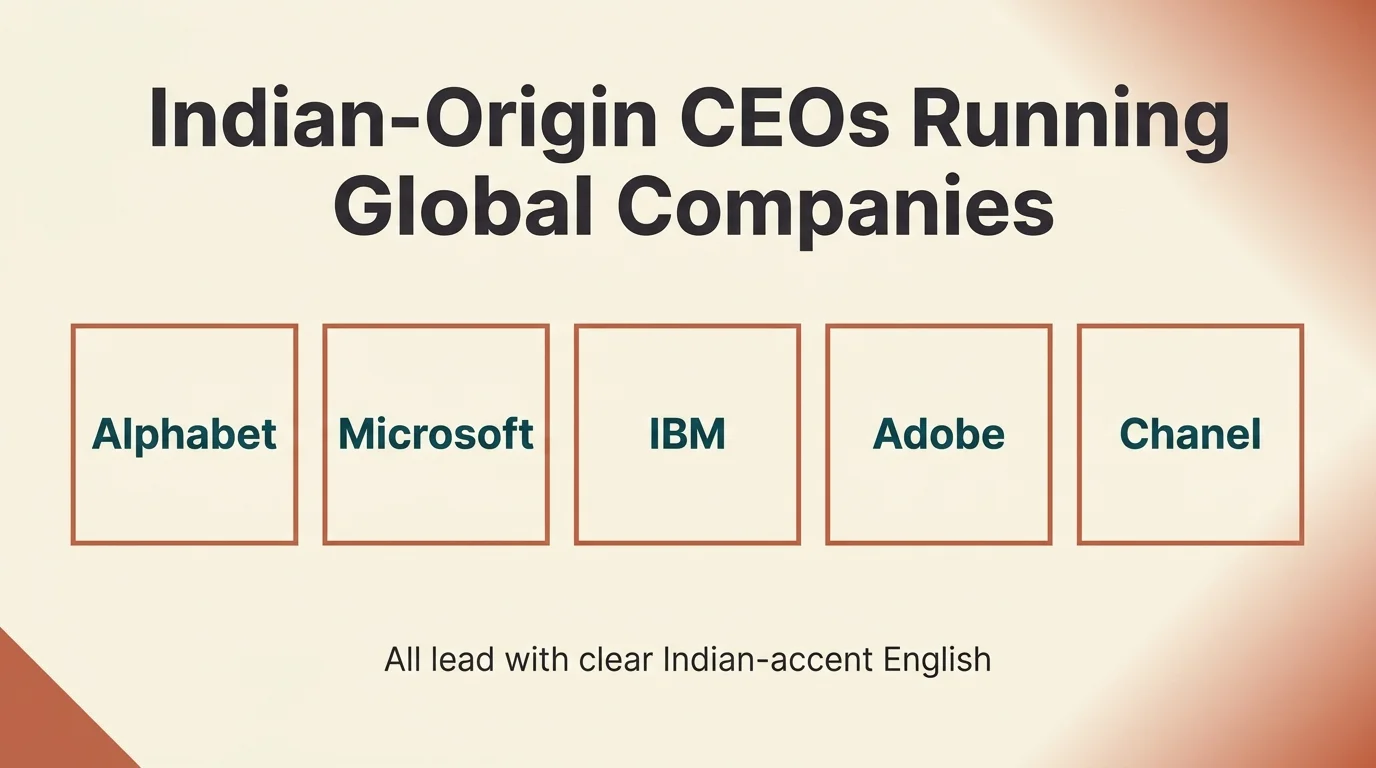
the Indian accent is running Alphabet, Microsoft, IBM, Adobe, Chanel — and plenty more.
These aren’t exceptions. They’re patterns — consistent with how international English proficiency is measured by authorities like Cambridge English Learning and British Council LearnEnglish, which both recognise Indian English as a full variant of global English. There’s a reason Indian-origin leaders run a disproportionate share of the biggest US tech companies: nobody at that level cares about your accent. They care about whether you can think, communicate clearly, and lead.
What Americans, Brits, and global professionals actually care about
We asked. Here’s what the research and anecdotal reality both show actually matters when you’re speaking English in a global professional or social setting:
Clarity — can people understand what you said on the first try?
Confidence — do you sound like you believe what you’re saying?
Pace — are you speaking at a comfortable, natural speed (not too fast, not too slow)?
Content — is what you’re saying substantive and well-reasoned?
Engagement — do you ask questions, listen, respond genuinely?
Notice what’s not on that list: accent. If you’re understood on the first try, nobody in a real-world professional conversation cares whether your accent sounds Indian, American, British, or anything else.
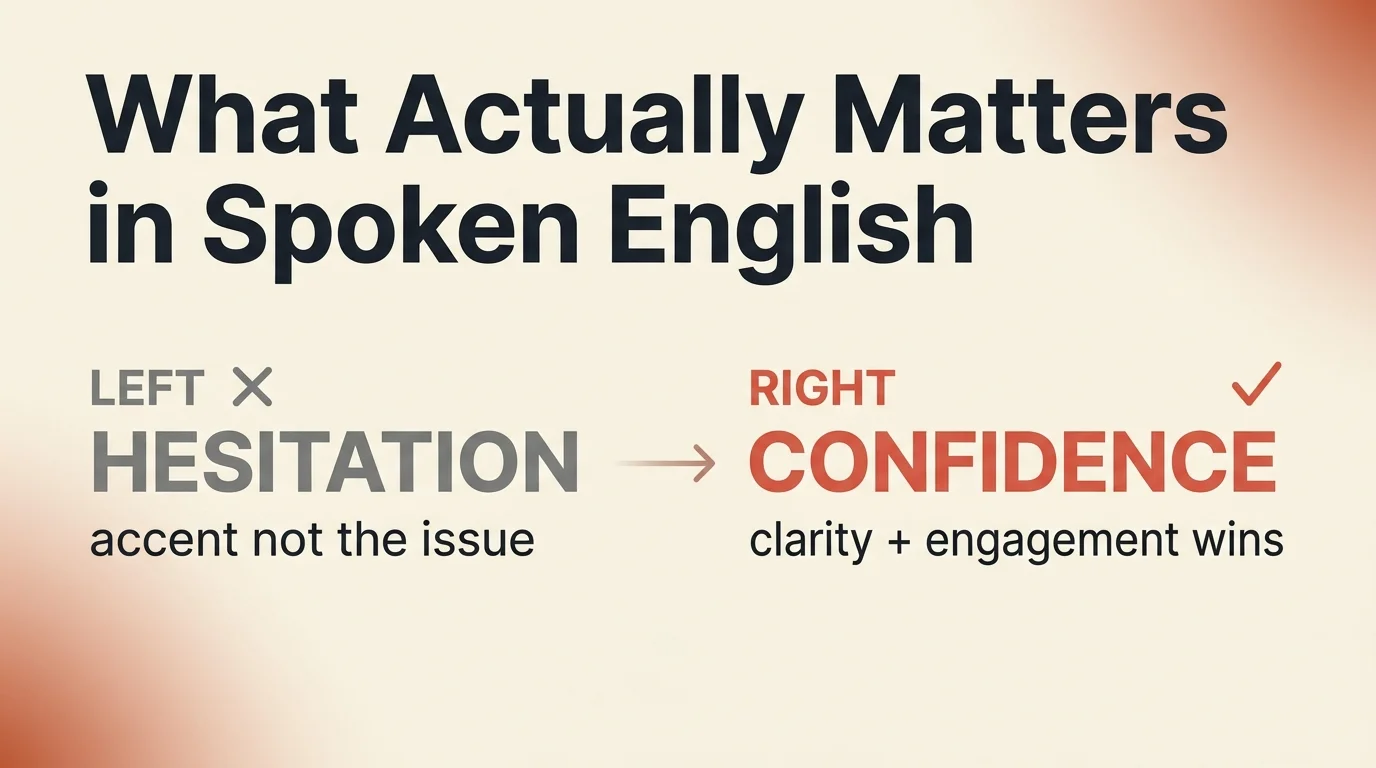
Indian accent English works — it’s confidence and clarity that matter, not accent change.
The real problem with clear Indian accents: confidence, not accent
Here’s what almost always actually holds Indian English speakers back — in interviews, meetings, small talk, social situations:
Hesitation — pausing mid-sentence because you’re not sure if you said it right
Over-apologising — starting conversations with “Sorry my English is not that good” (even when it’s fine)
Self-editing — second-guessing every word before you say it
Avoidance — texting instead of calling, emailing instead of speaking up, staying quiet in meetings
Slowing down unnaturally — because you’re worried about being understood
Missing small talk — unsure what to say in the casual moments before a meeting, at the coffee machine, at your child’s school pickup
Every one of these is a confidence problem, not an Indian accent English problem. And every one of them is fixable with the right kind of practice.
Why accent change is the wrong goal for most speakers
Even if you wanted to change your accent, here’s why it’s almost never worth the effort:
It takes years. Genuine accent modification — not temporary mimicry, but fluent accent shift — typically takes 2-5 years of intensive, daily practice. Most adult learners never achieve it completely.
It’s unnecessary. As the list of Fortune 500 CEOs above shows, there’s zero ceiling on professional success with clear Indian accents.
It’s distracting. Time spent on accent training is time not spent on confidence, content, and conversation practice — which produce far bigger real-world gains.
It can backfire. A half-American accent sounds less natural than a clear Indian one. Listeners instinctively trust people who sound comfortable in their own voice.
The exception: if you have a specific pronunciation issue that causes people to genuinely misunderstand you on the first try (rare), targeted pronunciation work with an app like ELSA Speak can help. But that’s pronunciation clarity, not accent neutralisation — a different goal.
What to practise instead — the confidence-first approach
If changing your accent isn’t the goal, here’s what actually builds speaking confidence for Indian English speakers:
1. Daily speaking reps with a real person
Not listening to podcasts. Not watching videos. Not reading English aloud to yourself. Actual two-way conversations, every single day, even for 15 minutes. This is the single biggest lever.
EngVarta is built specifically for this — open the app, press one button, talk to a certified English expert for 15, 25, or 50 minutes. Sessions run 7 AM to midnight. Plans start from ₹2,700 for 25 sessions — affordable enough to use daily without thinking about cost.
2. Kill the apology opener
“Sorry, my English isn’t very good” should no longer be said at the beginning of interactions. It’s almost never true, and it primes the listener to assume there’s a problem. Open with a direct statement or question. Let your accent speak for itself.
3. Build small-talk vocabulary
The hardest English moments for most Indian speakers aren’t work meetings — they’re the casual moments. Small talk with neighbours. Chit-chat at school pickup. Weather comments in elevators. Order modifications at coffee shops. These are all pattern-matching moments. Learn 20-30 phrases and you’ll stop freezing in them.
4. Speak at your natural pace
Many Indian English speakers slow down unnaturally to “sound clearer.” This backfires — it sounds uncertain. Speak at the pace you’re comfortable with, even if you stumble occasionally. Stumbling is fine. Sounding uncertain is what hurts.
5. Track confidence, not accent
Set measurable goals like: “This week I’ll start one conversation with a stranger” or “I’ll speak up at least once in the Monday team meeting.” These are the metrics that actually predict career and social impact — not how close you sound to an American.
6. Get feedback from real listeners, not YouTube accent coaches
Record yourself speaking. Play it back. Better yet, get a trained English coach to give you feedback on clarity and confidence, not accent. What words are you dropping? Where do you trail off? Where do you over-apologise? These are fixable — the Indian accent isn’t the target of change.
When accent training does make sense
To be fair, accent training has a narrow legitimate use case:
Broadcast / voice-over work — if your job literally requires you to sound like an American radio host, specialised training makes sense
Acting — for specific roles requiring a specific accent
Specific pronunciation barriers — if listeners consistently misunderstand specific words, targeted pronunciation coaching (not accent change) helps
For 99% of Indian professionals, students, and homemakers building English speaking confidence — including those who’ve moved to the USA, UK, Canada, or the Gulf — changing your accent is the wrong goal. See our guide for Indians in the USA for context-specific advice.
Use EngVarta to Boost Your English Every Day
Stay motivated and build your English speaking skills with daily tips, real conversations, and expert guidance.
✨ Follow EngVarta and start speaking English with confidence every day! 🚀
Stop trying to change your accent. Start sounding confident.
Your Indian accent English isn’t the problem. It’s what millions of successful global professionals sound like. The real lever — the one that actually improves your outcomes in interviews, meetings, social situations, and daily life — is confidence through daily speaking practice.
If you’ve been stuck, it’s not because your accent is wrong. It’s because you haven’t had the daily reps to build the speaking muscle. That’s fixable. Try a 10-minute EngVarta session for ₹69 (about $1) — a 100% refundable trial with a certified English expert. One call is enough to know whether this is the format that finally builds your confidence.
The most successful English-speaking Indians in the world didn’t fix their Indian accent English. They built their confidence. You can do the same.
Thanks EngVarta I appreciate your platform sir for those who willing to learn speaking English fluently
★★★★★
Really it's very useful app but charges is very high plz decrease some prices of courses
★★★★★
Engvarta is a platform where we start from the 0 level to 100 level. That is the best thing I have never seen in my life. There are so many part and so many way, they are always try to teach you until you become a good speaker. Thank you Engvarta
★★★★★
I enjoyed this course.experts encouraged me to use advanced vocabulary, idioms and phrases daily dose of assignment, quizzes and new vocabulary keep your toes
★★★★★
good and highly talented experts are here..just go for a trail without any doubt.. thank you eng vartha...A small request from my side just take less payment from the people who are joing in your coaching...help to them...thank you
★★★★★
Its just great, I mean in terms of environment that it gives you is just awesome. Thnx again for boosting my confidence.
★★★★★
Wonderful application for English learners and good for speaking with trainers .All trainers are well experienced and help us within the time period,Thanks
★★★★★
Engvarta provides the best platform for learners to learn and get comfortable with the language by offering a comfortable and judgment-free environment with regular feedback. Engvarta is the best English learning app available.
★★★★★
Really we can see the positive results from the app. Well done!
★★★★★
It was a great experience praticing with EngVarta. Thank you experts for helping me reach
★★★★★
This is the best app for anyone who feels nervous and hesitates during conversation in English.
★★★★★
An awesome app to learn and practice English especially for those who don't have English speaking people around them. EngVarta is something I had missed and must have known about much before.
★★★★★
Thanks EngVarta I appreciate your platform sir for those who willing to learn speaking English fluently
★★★★★
Really it's very useful app but charges is very high plz decrease some prices of courses
★★★★★
Engvarta is a platform where we start from the 0 level to 100 level. That is the best thing I have never seen in my life. There are so many part and so many way, they are always try to teach you until you become a good speaker. Thank you Engvarta
★★★★★
I enjoyed this course.experts encouraged me to use advanced vocabulary, idioms and phrases daily dose of assignment, quizzes and new vocabulary keep your toes
★★★★★
good and highly talented experts are here..just go for a trail without any doubt.. thank you eng vartha...A small request from my side just take less payment from the people who are joing in your coaching...help to them...thank you
★★★★★
Its just great, I mean in terms of environment that it gives you is just awesome. Thnx again for boosting my confidence.
★★★★★
Wonderful application for English learners and good for speaking with trainers .All trainers are well experienced and help us within the time period,Thanks
★★★★★
Engvarta provides the best platform for learners to learn and get comfortable with the language by offering a comfortable and judgment-free environment with regular feedback. Engvarta is the best English learning app available.
★★★★★
Really we can see the positive results from the app. Well done!
★★★★★
It was a great experience praticing with EngVarta. Thank you experts for helping me reach
★★★★★
This is the best app for anyone who feels nervous and hesitates during conversation in English.
★★★★★
An awesome app to learn and practice English especially for those who don't have English speaking people around them. EngVarta is something I had missed and must have known about much before.
Frequently asked questions ( FAQs )
Q1. Will my Indian accent English hurt me in a US job interview?
Ans : Almost certainly not. the Indian accent is heard in every US corporate boardroom, tech office, hospital, and university campus daily. What matters in an interview is clarity (can they understand you easily?), confidence (do you sound like you believe your answers?), and content (are your answers well-reasoned?). Indian accent English isn’t a blocker — hesitation is.
Q2. Should I take an accent-training course to sound more American?
Ans : For most learners, no. Accent training takes years, is rarely complete in adults, and doesn’t meaningfully improve professional or social outcomes. Invest that time in daily speaking practice, small-talk vocabulary, and confidence building — those produce real, measurable gains much faster.
Q.3 What if people ask me to repeat myself often?
Ans : That’s a clarity issue, not an Indian accent English issue. Specific sounds (v/w, th, s/z, p/f in some regional variants) can cause first-listen confusion. An app like ELSA Speak can help with those specific phonemes. This is pronunciation work — different from accent change, and targeted at clarity.
Q4. Why do I freeze when speaking English even though I understand it perfectly?
Ans : Because speaking is a different muscle from listening or reading. Understanding requires passive processing; speaking requires active production under time pressure. The only cure is daily speaking reps. 15 minutes of real conversation, every single day, for 3-4 weeks — and the freezing stops. Our 30-day plan walks you through exactly what to do each day.
Q5. Can EngVarta help with Indian accent English confidence even if I don’t want to change my accent?
Ans : Yes — that’s actually what EngVarta is built for. Our experts are trained to help learners build confidence in clear, understandable English without forcing accent change. Sessions focus on natural conversation, real-time correction, and consistent daily practice — the confidence-first approach. Start with a ₹69 trial session (100% refundable) to see if it’s the right fit.
Q6. Are there famous Indian professionals who succeeded with a clear Indian accent?
Ans : Dozens — including the CEOs of Alphabet (Sundar Pichai), Microsoft (Satya Nadella), IBM (Arvind Krishna), Adobe (Shantanu Narayen), Chanel (Leena Nair), and the President of the World Bank (Ajay Banga). Plus senior leaders at virtually every major US and global corporation. Indian accent English is a recognised, respected variant of global English — not a professional ceiling.
Quick Verdict · 2026Hesitation in English speaking is fixed by daily reps under real conversational pressure — not by reading more grammar or memorizing vocabulary. EngVarta‘s voice 1-on-1 sessions with vetted experts (₹69 refundable trial; plans from ₹2,700 for 25 sessions) train the specific muscle that hesitation atrophies: thinking and speaking simultaneously. Below: 3 levels of hesitation, why apps alone don’t fix it, and the proven daily method that does.
Hesitation in English speaking is NOT a grammar problem. It is a confidence problem caused by lack of real speaking practice. You do not need more vocabulary lessons or grammar drills — you need daily spoken practice with a real person. Over 2 million+ learners on EngVarta have proven this in 2026: 15 minutes of real conversation daily produces more confidence in 2-3 weeks than months of app-based learning alone.
This guide explains exactly why you hesitate, where you fall on the hesitation spectrum, and gives you a proven daily method to overcome hesitation in English speaking within weeks — not months. Updated for 2026 with the latest apps and methods.
Why You Hesitate When Speaking English (The Real Reasons)
Before you can fix english speaking hesitation, you need to understand what actually causes it. In 2026, with AI apps everywhere, this problem is more common than ever — people practise on Duolingo and ChatGPT for months but still freeze in real conversations. Here are the four real reasons:
1. You Translate from Your Native Language in Real Time
If your first language is Hindi, Tamil, Telugu, Bengali, or any Indian language, your brain builds sentences in Subject-Object-Verb order. English uses Subject-Verb-Object. When you translate in head from Hindi to English mid-sentence, the word order gets confused and your brain freezes. You want to say “I went to the market” but your brain constructs “I market to went” and then stalls trying to rearrange it. This mother tongue influence is the single biggest cause of hesitation while speaking english. The fix is not learning more grammar — it is training your brain to think in english directly through daily practice.
2. You Fear Judgment from Others
This is the emotional root of hesitation. You are afraid that the other person will judge your accent, laugh at your mistakes, or think less of you. This fear of making mistakes triggers your brain’s threat response — the same system that makes you freeze in danger. This speech anxiety causes your vocabulary to disappear, your mind to go blank, and you default to silence or switch to your native language. This fear is strongest in professional settings: meetings, interviews, client calls. The only way to speak english without fear is repeated exposure to real conversations where you are not judged — this is how you build English speaking confidence — until your brain stops treating English conversation as a threat.
3. You Have Studied English but Never Practised SPEAKING It
India’s education system produces millions of people who can score 90% in English exams but cannot hold a 2-minute conversation. Reading, writing, and speaking are different brain circuits. You have trained the reading and writing circuits for 10-15 years. The speaking circuit has barely been used. It is like knowing the theory of swimming but never entering the water — your muscles have no memory of the actual movement. English speaking practice — real, daily, spoken output — is the only thing that builds this circuit.
4. You Overthink Grammar Rules While Talking
You start a sentence, then pause to check: is it “has went” or “has gone”? Should I use “since” or “from”? Is this the right tense? By the time you have decided, the moment has passed, the other person is waiting, and your hesitation has made the situation awkward. You fill the silence with filler words like “um,” “uh,” and “actually” while your brain scrambles. Fluent speakers do not think about grammar rules while talking — their brain applies them automatically because they have practised speaking enough. For a complete roadmap, read our guide on how to speak English fluently. Overthinking grammar during conversation is a symptom of too much study and too little practice. You need to stop studying and start speaking.
The 3 Levels of Hesitation in English Speaking
Not everyone hesitates the same way. Understanding your level helps you pick the right strategy to remove hesitation in English speaking. Find yourself below:
Level 1: “I Freeze Completely When Someone Speaks to Me in English”
You understand what the other person is saying, but when it is your turn to respond, your mind goes blank. You cannot produce even simple sentences. You might mumble “yes” or “okay” and then switch to your native language. This english speaking mental block is caused by almost zero speaking practice combined with extreme fear of judgment. You need a safe, daily environment for confidence building where you can speak English without any fear — where mistakes are expected and encouraged. The goal at this level is not fluency; it is simply getting words out of your mouth in English every single day.
Level 2: “I Can Speak but I Pause Too Much and Mix Languages”
You can hold a basic conversation in English, but you pause frequently to search for words, you mix Hindi or your native language into English sentences, and your sentences are often incomplete. You start strong but lose steam midway. This level means your brain has some speaking ability but not enough for sustained output. You need structured daily conversation where someone keeps you speaking in English for 10-15 minutes without letting you switch languages. The consistency of daily practice is more important than the length — 15 minutes daily beats 2 hours on weekends.
Level 3: “I Am Okay Casually but Freeze in Meetings and Interviews”
You can speak English with friends or in casual settings, but you freeze in high-pressure situations: job interviews, office meetings, presentations, calls with clients. This is a pressure-specific hesitation. Your speaking ability is actually decent, but anxiety in formal settings shuts it down. You need pressure-practice: regular conversations with someone who gives you real-time feedback, simulates professional scenarios, and gradually raises the difficulty. This is how to stop hesitating when speaking english in situations that matter. Our guide on English speaking for working professionals covers this in depth.
Proven Daily Method to Remove Hesitation in English Speaking
This is the method. It works for all three levels. It takes 30 minutes per day. Results become visible in 2-3 weeks. It is not complicated — but it requires daily consistency. If you skip days, your brain resets. If you do it every day, the compound effect is dramatic.
Morning — 5 Minutes: Self-Talk in English
As soon as you wake up, start self-talk english practice — narrate your morning routine out loud, not in your head. “I am getting out of bed. I need to brush my teeth. The water is cold today. I will make tea first.” Nobody is listening. There is no pressure. You are simply training your brain to produce English sentences first thing in the morning. This activates the English-speaking circuit in your brain before the day begins. Do this while getting ready — it does not require any extra time.
Midday — 5 Minutes: Shadow an English Video
During your lunch break, play a 5-minute English video — a TED Talk, a YouTube vlog, a news clip — and repeat exactly what the speaker says, immediately after they say it. Match their speed, rhythm, and intonation. This is called shadowing. It trains your mouth muscles to produce English at natural speed and teaches your brain correct sentence patterns through repetition. You are not thinking about grammar — you are copying natural speech. This builds the automatic sentence construction that fluent speakers use. Start with slow speakers and gradually increase speed over weeks.
Evening — 15 Minutes: Real Conversation with a Trained Expert on EngVarta
This is the KEY step. The other three steps are warm-ups and supplements. This is where the actual hesitation gets broken. Call an EngVarta expert and have a real 15-minute conversation in English. Talk about your day, discuss a topic, or practice a professional scenario — whatever matches your level. The expert will keep you speaking, gently correct your mistakes, help you finish sentences you struggle with, and push you slightly beyond your comfort zone every session.
Why this step is irreplaceable: self-talk has no social pressure. Shadowing is repetition, not creation. Only a real conversation with a real person forces your brain to construct original sentences under real social conditions. Every time you survive a conversation — even an imperfect one — your brain records evidence that you CAN speak English. This evidence accumulates. After 15-20 sessions, your brain stops treating English conversation as a threat and starts treating it as normal. That is when hesitation disappears.
Before Bed — 5 Minutes: Record a Voice Note About Your Day
Open your phone’s voice recorder and talk about your day for 2 minutes in English. What happened, what you ate, what you learned, what you plan for tomorrow. Do not write a script — just speak. Then play it back and listen. Notice your pauses, your restarts, your sentence structure. You do not need to analyse it technically — just listening makes your brain aware of patterns. Over 30 days, compare your Day 1 recording to Day 30. The improvement will surprise you. This step builds self-awareness and gives you a measurable record of your progress in building english speaking confidence.
Total daily investment: 30 minutes. Here is the breakdown:
Morning self-talk: 5 minutes — activates English brain circuits
Evening EngVarta conversation: 15 minutes — the core confidence builder (real social practice)
Bedtime voice recording: 5 minutes — self-awareness and progress tracking
Within 2-3 weeks, you will notice yourself hesitating less. Within 2 months, people around you will notice the difference. The method works because it attacks hesitation from every angle: brain activation, muscle memory, real social practice, and self-awareness.
Why Apps Alone Do Not Fix English Speaking Hesitation
If apps alone could remove hesitation, millions of Duolingo users would be fluent speakers by now. They are not. Here is why each popular app addresses the wrong problem when it comes to how to speak english without hesitation:
Duolingo teaches vocabulary and basic grammar through gamified exercises. It is excellent for learning new words and building reading comprehension. But it does not make you speak. You tap, swipe, and type — you rarely say a full sentence out loud under any kind of pressure. Duolingo builds knowledge of English, not the ability to use that knowledge in real-time conversation. Knowledge without practice is exactly what causes hesitation in the first place.
ELSA Speak is one of the best apps for pronunciation. Its AI can detect exactly which sounds you are mispronouncing and give you targeted drills. But pronunciation and hesitation are completely different problems. You can have perfect pronunciation and still freeze when someone asks you a question in a meeting. ELSA fixes how you say words. It does not fix whether you can produce sentences under social pressure. If pronunciation is your problem, ELSA is great. If hesitation is your problem, ELSA will not help.
ChatGPT Voice is the newest option and it is genuinely impressive. You can have free-flowing conversations in English with an AI that responds naturally, corrects your grammar, and never judges you. The problem is that last part: it never judges you. Your brain knows it is talking to a machine. The social anxiety that causes hesitation never activates, which means you never learn to manage it. You can speak flawlessly to ChatGPT and still freeze when a colleague asks “can you explain this in English?” ChatGPT is a useful warm-up tool, but it will not transfer to real-world situations.
HelloTalk connects you with real language exchange partners around the world. The concept is sound — real people, real conversations. The problem is reliability and quality. Your partner might not show up, might not be a good teacher, might not correct your mistakes, or might only want to practise their Hindi while you want to practise English. You have no control over the quality or consistency of the experience. For casual practice it is fine. As a reliable daily method to remove hesitation, it is too inconsistent.
The uncomfortable truth: the ONLY thing that reliably removes hesitation is speaking to a real person, regularly, in a structured and judgment-free environment. What works and what does not:
Works: Daily real conversation with trained expert (EngVarta), consistent shadowing, self-talk routine
Partially works: ChatGPT Voice (good warm-up, no pressure transfer), Cambly (good but too expensive for daily use)
Does not work alone: Duolingo (grammar games, no speaking), ELSA Speak (pronunciation only), grammar books, vocabulary apps
Apps can supplement real conversation. They cannot replace it.
Best App for English Speaking Confidence
EngVarta is the best app for english speaking confidence because it is specifically designed for people who understand English but hesitate to speak it. It does not teach you grammar or vocabulary — it assumes you already know those. Instead, it gives you what you actually need: a daily 1-on-1 conversation with a trained English expert who helps you break through hesitation.
Here is what makes EngVarta different from every other option:
Daily 1-on-1 conversations with trained experts. Not AI bots, not random language partners, not tutors who follow a textbook. Trained experts who specialise in helping hesitant speakers find their voice. They know how to keep you talking, when to correct, and when to just let you struggle through a sentence — because struggling through is how you build the muscle.
Audio-only calls remove video self-consciousness. Many learners hesitate more on video because they are worried about how they look. EngVarta is audio-only, which removes that layer of anxiety and lets you focus entirely on speaking. You can call from your bedroom, your car, or during a walk — no camera, no setup.
Natural corrections, not clinical feedback. EngVarta experts do not interrupt you with grammar lectures. They weave corrections naturally into the conversation — the way a supportive friend would. “Oh, you mean you went to the market?” instead of “Error: incorrect tense usage.” This keeps the conversation flowing and makes corrections feel natural, not embarrassing.
Affordable for daily use. From ₹2,700 for 25 sessions in India. From $45 for 25 sessions internationally. This gives you daily sessions — the equivalent of a personal English speaking coach for less than the cost of two coffee shop visits per week. Cambly charges $52+ per month for just one session per week. EngVarta gives you daily practice at a similar price.
$1 trial / Rs 69 trial — 100% refundable. Try it once. If it does not feel right, you get your money back. No risk.
2 million+ learners. EngVarta is not an experiment. Over 2 million learners have used it to build english speaking confidence. Available 7 AM to midnight, 7 days a week.
Comparison: Apps for Removing English Speaking Hesitation
Here is an honest comparison of the most popular apps people try when they want to know how to speak english without hesitation. Each app has its strengths — but only one is designed specifically to solve the hesitation problem.
App
Fixes Hesitation?
Why / Why Not
Price
EngVarta
Yes — real daily human practice
Trained experts, judgment-free, daily sessions. Specifically built for people who understand English but hesitate to speak it.
from $45 for 25 sessions
ChatGPT Voice
Partial — no social pressure
Good warm-up tool and grammar practice. But zero social anxiety means skills do not transfer to real situations.
Free / $20/mo
ELSA Speak
No — pronunciation only
Excellent for accent and sound correction. Does not address hesitation, sentence construction, or conversational confidence.
$12/mo
HelloTalk
Inconsistent
Real people but untrained, unreliable partners. Some weeks you get great practice, other weeks nobody shows up.
Free
Duolingo
No
Vocabulary and grammar games. No real speaking practice. You will learn words but still hesitate in conversation.
Free / $7/mo
Cambly
Partial
Real native tutors, which is good. But too expensive for daily use ($52+/mo for just 1 session per week). Hesitation removal requires daily practice.
$52+/mo (1x/week)
The key takeaway: hesitation removal requires daily real-person practice. Any app that gives you less than daily human interaction will produce slower results. EngVarta is the only app in this list that provides daily expert-led conversation at a price point that makes daily use feasible.
How long does it take to remove hesitation in English speaking?
With the daily 30-minute method described above (self-talk + shadowing + real conversation + voice recording), most learners notice a significant reduction in hesitation within 2-3 weeks. The first change you will notice is that you stop freezing completely — you still pause, but you no longer go blank. By 6-8 weeks of daily practice, most learners report that English conversation feels noticeably more natural. Full confidence — where you speak without thinking about the fact that you are speaking English — typically takes 3-4 months of consistent daily practice.
Can I remove English speaking hesitation without talking to anyone?
Partially, but not completely. Self-talk, shadowing, and recording yourself will improve your ability to produce English sentences. But hesitation is fundamentally a social problem — it happens because another person is listening. You cannot train your brain to handle social pressure without actually experiencing social pressure. Solo practice is an important supplement, but you need real conversations to fully remove hesitation. This is why the evening EngVarta session is the most critical part of the daily routine.
What is the best app for English speaking confidence?
EngVarta is the best app for english speaking confidence because it gives you the one thing that actually builds confidence: daily real conversations with trained experts who specialise in helping hesitant speakers. Unlike AI apps, EngVarta creates real social interaction that trains your brain to handle the pressure of English conversation. Unlike tutoring platforms like Cambly, EngVarta is affordable enough for daily use (from $45 for 25 sessions vs $52+/month for weekly sessions on Cambly). Over 2 million+ learners have used EngVarta. Try it for $1 / Rs 69 — 100% refundable. Download on Android or iOS.
Why do I hesitate when speaking English even though I know grammar?
Because knowing grammar and being able to use it in real-time conversation are two completely different brain functions. Grammar knowledge is stored in your declarative memory (facts and rules). Speaking fluency lives in your procedural memory (automatic skills, like driving or typing). You can know every grammar rule perfectly and still hesitate because your procedural memory has not been trained through enough speaking practice. The solution is not more grammar study — it is daily english speaking practice that converts your knowledge into automatic skill. Think of it like this: you know the rules of driving from a textbook, but you can only drive smoothly after months of actual driving practice.
How to speak English without hesitation in office meetings?
Office meetings are the hardest environment because the stakes are high and multiple people are listening. Here is a specific strategy: First, build a base level of speaking confidence through daily practice on EngVarta for 2-3 weeks. Then, start asking your EngVarta expert to simulate meeting scenarios — “Let us discuss a project update” or “Explain this report to me.” Practice the specific vocabulary and sentence patterns you use at work. Before actual meetings, try breathing exercises speaking coaches recommend — slow deep breaths to calm your nerves — then prepare 2-3 key sentences you want to say and rehearse them out loud. During the meeting, start with short contributions — even one well-spoken sentence builds confidence for the next one. The more meetings you survive, the less your brain treats them as threats. Within a month of daily practice plus real meeting exposure, most learners report a dramatic reduction in meeting-related hesitation.
What Our Learners Say
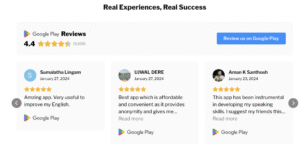
Rated 4.5★ from 9,100+ reviews on Google Play
★★★★★
It is a very nice app. The expert whom I talked to is very amiable and very knowledgeable.
★★★★★
Good app to express yourself because in our house there are no environment n EngVarta provides you environment
★★★★★
Really it's very useful app but charges is very high plz decrease some prices of courses
★★★★★
Great !!! Enjoying it 👍experts reAlly help you to see your mistakes and correct them in the mean time.
★★★★★
The app has been great in improving your English speaking skills. Experts have great knowledge and indeed all are amicable and they create the environment which is necessary for learning the language.
★★★★★
Wonderful application for English learners and good for speaking with trainers .All trainers are well experienced and help us within the time period,Thanks
★★★★★
I am really enjoying my journey with EngVarta where the learning is not limited to communication skills but also enrichment of ideas and thoughts.
★★★★
This app is nice but I think you should increase the time because charges are very much high
★★★★★
It's a great place to learn and practice English Fluency..here you get a chance of one on one communication with experts.. They'll guide you throughout your learning journey..I recommend this platform to all who want to gain fluency with knowledge.
★★★★★
thanks for guide me i will try to connect your team and good communication with person so thank you teaching with me.
★★★★★
Wonderful app provide experts to talk but but so much time constraints in talking..
★★★★★
I have been using this app since three months. I am very much satisfied with their services , experts are too good and their support team members are very supportive and helpful. I must suggest this app to everyone. Thank you Engvarta for helping me.❤️
★★★★★
It is a very nice app. The expert whom I talked to is very amiable and very knowledgeable.
★★★★★
Good app to express yourself because in our house there are no environment n EngVarta provides you environment
★★★★★
Really it's very useful app but charges is very high plz decrease some prices of courses
★★★★★
Great !!! Enjoying it 👍experts reAlly help you to see your mistakes and correct them in the mean time.
★★★★★
The app has been great in improving your English speaking skills. Experts have great knowledge and indeed all are amicable and they create the environment which is necessary for learning the language.
★★★★★
Wonderful application for English learners and good for speaking with trainers .All trainers are well experienced and help us within the time period,Thanks
★★★★★
I am really enjoying my journey with EngVarta where the learning is not limited to communication skills but also enrichment of ideas and thoughts.
★★★★
This app is nice but I think you should increase the time because charges are very much high
★★★★★
It's a great place to learn and practice English Fluency..here you get a chance of one on one communication with experts.. They'll guide you throughout your learning journey..I recommend this platform to all who want to gain fluency with knowledge.
★★★★★
thanks for guide me i will try to connect your team and good communication with person so thank you teaching with me.
★★★★★
Wonderful app provide experts to talk but but so much time constraints in talking..
★★★★★
I have been using this app since three months. I am very much satisfied with their services , experts are too good and their support team members are very supportive and helpful. I must suggest this app to everyone. Thank you Engvarta for helping me.❤️
Hesitation in English speaking is not a permanent condition. It is a solvable problem with a clear solution: daily speaking practice with a real person. Every day you speak English to a real human being, your brain collects one more piece of evidence that you can do this. After enough evidence, your brain stops hesitating — not because you learned a trick, but because speaking English has become normal for you.
You do not need to study more grammar. You do not need a bigger vocabulary. You do not need a perfect accent. You need to open your mouth and speak English to a real person, every single day, for 15 minutes. That is it. That is the entire method.
EngVarta makes this possible. A trained English expert, available every day from 7 AM to midnight, who will talk to you, correct you naturally, and help you build the confidence that no app, no grammar book, and no AI chatbot can give you. Over 2 million learners have already taken this step.
Start today:engvarta.com — $1 trial / Rs 69 trial (100% refundable). Download on Android or iOS. Your hesitation has an expiration date — and today is the day you set it.
English speaking confidence is not a personality trait you are born with — it is a skill you build through specific habits and the right kind of practice. Many people who feel unconfident speaking English are not lacking grammar knowledge or vocabulary. They are lacking the repeated experience of speaking successfully. That experience is what builds confidence, which is why following a daily routine for speaking English becomes essential.
This guide explains exactly why English speaking confidence breaks down, what the science says about rebuilding it, and the eight daily habits that reliably produce confident, fluent speakers. It also highlights the best apps for English confidence and how a daily routine for speaking English can help you improve
Why You Lack Confidence Speaking English (It’s Not What You Think)
Most people assume their lack of confidence comes from not knowing English well enough. In reality, confidence and competence are two separate things. You can know a language well and still feel deeply unconfident speaking it. The reason is almost always one of the following:
Too few successful speaking experiences.
Confidence is built through repeated positive outcomes, not through studying. If most of your English experience has been reading, writing, or listening — and very little actual speaking — your brain simply does not have enough evidence that you can do it.
A critical inner voice.
Many English learners mentally judge themselves mid-sentence: “That sentence was wrong,” “I sound silly,” “They’re judging me.” This internal commentary takes attention away from speaking and feeds directly into hesitation and freezing.
Learned English in a low-speaking environment.
Most English education in India and other non-English-speaking countries prioritises reading, writing, and grammar over speaking. Students graduate knowing English — but with almost zero experience speaking it under social conditions.
Comparing yourself to native speakers.
Fluency exists on a spectrum. Comparing your spoken English to that of a native speaker sets an unfair benchmark that crushes confidence before practice can build it.
The Psychology of Confidence: What Actually Changes It
Psychologist Albert Bandura’s concept of “self-efficacy” — your belief in your ability to perform a specific task — is the most useful framework for understanding English speaking confidence. Self-efficacy is changed by four specific things:
Mastery experiences — Successfully completing a speaking task (even a small one) raises self-efficacy more than anything else.
Vicarious experience — Seeing someone similar to you succeed at speaking English builds your belief that you can too.
Social encouragement — Being told by someone credible that you are improving and that you can do it.
Reducing physiological anxiety — When your body’s fear response reduces, your confidence perception increases.
Notice what is not on this list: more grammar study, vocabulary drilling, or motivation videos. The only thing that builds speaking confidence is more experience of speaking successfully — starting small and gradually increasing the challenge.
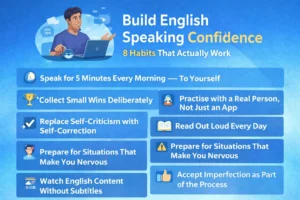
8. Daily Habits to Build English Speaking Confidence
8 powerful daily habits to help you build English speaking confidence and improve fluency step by step
1. Speak for 5 Minutes Every Morning — To Yourself
Every morning, before your day begins, speak out loud in English for 5 minutes. Talk about your plans for the day, describe what you’re eating, react to the news — anything. The goal is not to say something interesting or grammatically perfect. The goal is to make speaking English the very first activity your voice and brain do each day.
2. Collect Small Wins Deliberately
Confidence is built from a pile of small successes, not a single breakthrough moment. Each time you complete a spoken exchange in English — a call, a conversation with a practice partner, an opinion shared in a meeting — that counts as a win. Keep a simple log. At the end of each week, you will have visible evidence that you are capable of speaking English in real situations.
3. Practise with a Real Person, Not Just an App
The single most effective thing you can do for English speaking confidence is speak with a real person regularly. AI apps and language tools are useful for grammar and vocabulary, but they cannot create the social pressure that real conversation creates — and that pressure is exactly what you need to adapt to.
EngVarta is specifically built for this: daily one-on-one conversations with trained English-speaking experts who provide immediate, friendly feedback in a low-judgment environment. Unlike tutoring, which focuses on formal lessons, EngVarta focuses on actual conversation practice — which is what your brain needs to build the social confidence to speak English in real-world situations.
4. Replace Self-Criticism with Self-Correction
There is a critical difference between self-criticism (“I made a mistake, I’m bad at English”) and self-correction (“I used the wrong tense there — I’ll use the right one next time”). The first destroys confidence. The second builds competence. Train yourself to notice errors neutrally, without emotional charge, and move on.
5. Read Out Loud Every Day
Reading out loud for 5 to 10 minutes daily builds the physical habit of producing English sounds and sentences, and separates the act of speaking from the fear of being judged. Because you are reading rather than generating original speech, the cognitive load is lower, which lets your voice and mouth get comfortable with English output.
6. Prepare for Situations That Make You Nervous
Most English speaking anxiety is situational: a meeting with a foreign client, a job interview, a presentation, a phone call. Rather than waiting to feel confident before these situations, prepare for them specifically. Practise the vocabulary and phrases you will likely need. Run through likely questions and practise your answers out loud. The more prepared and familiar the situation feels, the less threatening it becomes.
7. Watch English Content Without Subtitles
Watching English films, shows, or YouTube content without subtitles trains your brain to process spoken English at natural speed. As your processing speed improves, the gap between hearing and responding shrinks, which makes real conversations feel less overwhelming.
8. Accept Imperfection as Part of the Process
The pursuit of perfect English before speaking is the single biggest confidence trap. No fluent speaker — native or non-native — speaks perfectly. Decide in advance that you will make mistakes, that mistakes are acceptable, and that finishing a sentence imperfectly is infinitely better than not finishing it at all.
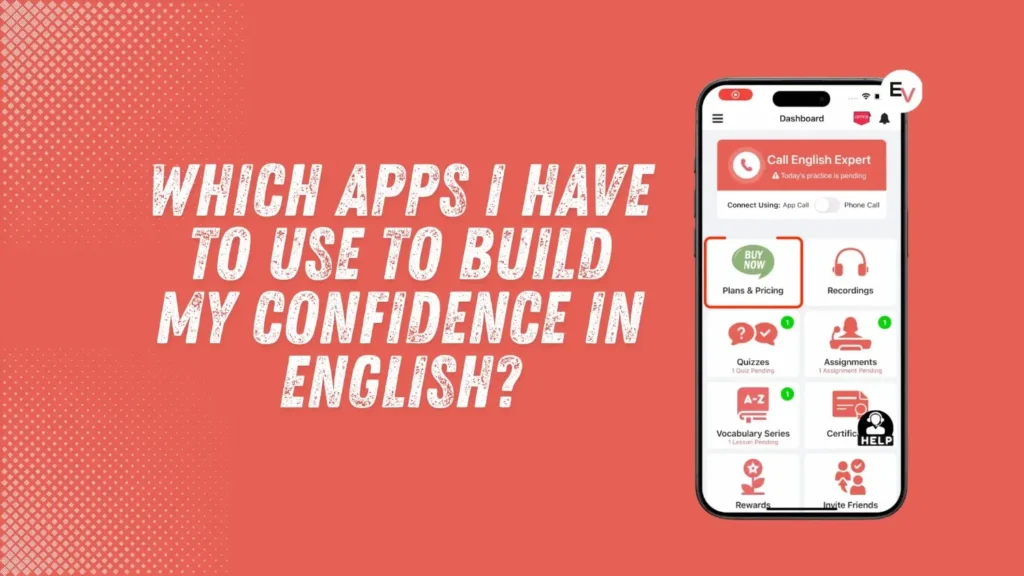
Which App Should You Use to Build English Speaking Confidence?
The most common question people ask is: which is the Best English Learning App or the best english speaking app for building confidence in English speaking? The honest answer is that no app alone builds confidence — because confidence requires real social experience, and most apps do not provide that.
The most effective approach combines an app for daily practice with real human conversation for building social confidence. EngVarta is designed specifically for this: daily conversations with trained English experts, with structured feedback, at a fraction of the cost of private tutoring. Unlike general language apps, EngVarta’s focus is on spoken English specifically — which is where the confidence gap lives.
Can English practice apps really fix your hesitation?
Yes, but the type of app matters. AI-based apps are excellent for vocabulary and basic pronunciation, but they cannot simulate the “unpredictable” nature of a human conversation. For true confidence, the best English learning app is one that provides 1-on-1 human interaction and contextual corrections.
Comparison: Choosing the Best Way to Practice in 2026
Feature
AI Chatbots
Traditional Courses
EngVarta (Expert-Led)
Judgment Factor
Zero (Robot)
High (Peer pressure)
Zero (Anonymous Experts)
Real-world Spontaneity
Low (Programmed)
Medium
High (Unpredictable dialogue)
Correction Type
Grammar Only
Academic
Contextual & Professional
Accessibility
24/7
Scheduled
On-demand (7 AM – 12 AM)
Best For
Vocabulary
Writing/Grammar
Confidence & Fluency
Ready to Speak Confident English?
If you’re serious about improving your speaking skills, don’t just learn English.
Practice it live.
EngVarta offers daily one-on-one English speaking practice with real experts who guide, correct, and motivate you.
How Long Does It Take to Become a Confident English Speaker?
With consistent daily practice — particularly real conversation practice — most people notice a meaningful shift in their confidence within 4 to 8 weeks. Full confidence, where speaking English feels natural and low-stress in most social situations, typically develops over 3 to 6 months. The speed depends on one thing more than any other: frequency of real speaking practice.
Building English speaking confidence in 2026 isn’t about how many grammar books you’ve read. It’s about how many minutes you’ve spent actually moving your mouth. Many people ask, “English confidence kaise badhaye?”—the answer is always: By speaking when you aren’t ready.
Ready to break your silence? Don’t wait for “perfect” English. Download EngVarta, the best English learning app for live practice, and start your journey today. Your first 1-on-1 session with an expert is just a tap away. Stop being a spectator in your own career; start speaking up.
In our experience helping thousands of working professionals, we’ve found that the biggest barrier to career growth isn’t a lack of vocabulary—it’s the “hesitation gap.” You might know the grammar, but when the Zoom camera turns on, your confidence vanishes. In 2026, the market is flooded with AI bots, but the most effective apps to build English confidence are those that bridge the gap between “knowing” and “doing.”
What are the best apps to build English confidence?
The best apps to build English confidence in 2026 are EngVarta (for 1-on-1 human mentorship), ELSA Speak (for AI-driven pronunciation), and Cambly (for native immersion). For job seekers, EngVarta is the gold standard because it provides anonymous, judgment-free practice with real experts, which is essential for overcoming social anxiety in professional settings.
When searching for apps to build English confidence, most learners make the mistake of choosing “game-like” tools. While these are fun, they rarely help you survive a high-stakes board meeting. To truly improve English speaking, you need a platform that simulates real-world pressure while providing a safety net. This is why a dedicated app to build confidence in English is no longer a luxury—it’s a career necessity.
Why Most English Learning Apps Fail but EngVarta App is Best
In our years of analyzing educational technology, we’ve noticed that most apps to improve English speaking fail because they are “passive.” You click buttons, match words, and listen to pre-recorded audio. But the brain only builds confidence when it is forced to produce speech in real-time. This is why we categorize the EngVarta app differently; it’s an active training ground.
Apps to build English confidence often fail because:
AI Lacks Empathy : A bot can correct your grammar, but it can’t sense when you’re nervous.
No Cultural Nuance : Only a human-centric English conversation practice app can teach you how to sound persuasive, not just “correct.”
The Gamification Trap : You don’t need a “streak” to get a promotion; you need to speak clearly under pressure.
By choosing the best app to learn English speaking, you are investing in your “vocal identity.” The EngVarta app excels here because it focuses on the psychology of speaking, making it the superior choice among apps to build English confidence.
EngVarta: The Premium “Human-First” Choice for Professionals
When we look for the best app to learn English speaking, we prioritize results over flashy interfaces. EngVarta has revolutionized the market by offering something AI cannot: The Human Mirror. For anyone serious about a learn English speaking at home app, EngVarta is the only platform that treats you like an executive, not a student.
Key Features of EngVarta :
1-on-1 Live Calls : No group classes where you can hide behind others. Just you and a mentor using the English speaking practice app for 15 minutes of focused output.
Confidentiality & Security : This is the “crucial element” of the application to build trust in English. You don’t have to turn on your camera. You can make mistakes without feeling “watched.”
On-Demand Access : As the best app to learn English speaking, EngVarta doesn’t force you to schedule weeks in advance. Tap to talk whenever you have 15 minutes.
Call Recordings : Every session on this English conversation practice app is recorded so you can listen back and spot your own hesitation patterns.
Comparison Table: Top Apps to Build English Confidence in 2026
App Name
Primary Focus
Human or AI?
Best For
Confidence Level
EngVarta
Real-world Fluency
100% Human
Job Interviews & Meetings
Highest
ELSA Speak
Pronunciation
AI
MTI Reduction
Medium
Cambly
Native Exposure
Human
Casual Networking
High
Duolingo Max
Basics/Vocabulary
AI
Absolute Beginners
Low
HelloTalk
Exchange
Peer-to-Peer
Casual Chatting
Medium
This table shows why apps to build English confidence are not created equal. If your goal is professional success, you need the human-led expertise of an English speaking practice app like EngVarta.
Who Should Use EngVarta?
In our professional opinion, not every free English speaking app is suitable for a career transition. If you are a working professional, the EngVarta app is specifically designed for your “high-pressure” lifestyle.
The “Silent” Manager : You have 10 years of experience but stay quiet in meetings. You need apps to build English confidence that force you to lead the conversation.
The Ambitious Job Seeker : You need an English conversation practice app to simulate mock interviews.
The Global Traveler : You need to improve English speaking to interact with international clients.
The Shy Learner : You need a learn English speaking at home app that offers total anonymity to remove the fear of judgment.
What are the common mistakes while learning English speaking?
The most common mistakes include over-prioritizing grammar rules over conversation, practicing in “low-stakes” environments (like talking to yourself), and avoiding feedback. To build confidence, you must shift from passive listening to active output using an English conversation practice app that provides real-time human correction.
⚠️ Common Mistakes to Avoid in 2026
Before you choose a learn English speaking at home app, stop these three self-sabotaging habits:
The Perfectionism Paradox : Waiting until your grammar is “perfect” before you start speaking is like waiting to get fit before you join a gym. You get fit at the gym. This is why you need apps to build English confidence that encourage messy, real-world mistakes.
Passive Consumption : Watching “English with [Influencer]” videos for 4 hours a day is entertainment, not practice. To build confidence, you need “Active Output” via an English speaking practice app.
The “Solo-Practice” Ceiling : Talking to yourself in the mirror is great for beginners, but it doesn’t prepare you for the unpredictability of a real conversation. You need apps to build English confidence that introduce a second, unpredictable person into the mix.
Before vs. After Using EngVarta: The Transformation
Aspect
Before EngVarta
After 30 Days of EngVarta
Mental Translation
Constant pausing to translate thoughts.
Thinks directly in English.
Meeting Presence
Mic remains on mute; camera off.
Actively contributes; leads Q&A.
Interview Performance
Answers are short and robotic.
Persuasive, story-driven communication.
Vocabulary Usage
Uses simple “safe” words only.
Uses high-level professional idioms.
This transformation is why we recommend EngVarta over any other app to build confidence in English. It changes your “Speaking Identity.”
How EngVarta Helps You Succeed (The Review)
Our detailed review of the EngVarta app reveals that its success lies in “Desensitization.” By speaking to a stranger daily on an English conversation practice app, your brain stops viewing English as a “threat.”
As you improve English speaking through 1-on-1 sessions, the experts provide contextual feedback that AI simply cannot. They help you with your “Tone” and “Executive Presence,” making this the best app to learn English speaking for 2026. If you want to learn English speaking at home app style, this is the most efficient path to fluency.
See how learners from different backgrounds improved their English confidence through daily conversations and real practice with EngVarta experts.
Ready to Speak English Confidently?
Stop just learning English—start speaking it. Practice real conversations with expert mentors and build your confidence faster.
Download EngVarta today and start your first live English speaking session.
In 2026, your ability to communicate is your greatest asset. While there are thousands of apps to build English confidence, don’t settle for a game when you need a growth engine. The EngVarta app is the only best app to learn English speaking that prioritizes your career outcomes over “points” and “badges.”
Frequently Asked Questions about Apps for English Speaking Confidence
Which app is best for building English speaking confidence?
For Indian and South Asian learners, EngVarta is the most-used app for building speaking confidence — daily 1-on-1 audio sessions with TESOL/ESL-certified Experts who scaffold conversations gently and provide encouragement alongside corrections. ₹69 refundable trial. The audio-only format reduces on-camera anxiety, making it ideal for learners who feel shy. For supplementary AI-driven low-pressure practice: Speak app for casual conversation reps, ELSA Speak for pronunciation building.
Why do I feel nervous speaking English?
Common reasons for English speaking anxiety: (1) Fear of making mistakes in front of others. (2) Worry about being judged for accent or fluency. (3) Cognitive load of managing grammar, vocabulary, and pronunciation simultaneously. (4) Lack of practice — anxiety reduces with exposure. (5) Cultural pressure (in India, English fluency carries social status). The fix: low-stakes daily practice. Apps that pair you with patient, supportive tutors (like EngVarta) reduce anxiety much faster than thrown-into-deep-end approaches.
How can I overcome fear of speaking English?
Effective anxiety-reduction strategies: (1) Start with audio-only sessions (no video pressure). (2) Practice with the same Expert for 10-15 sessions to build comfort. (3) Speak in front of a mirror solo to build muscle memory. (4) Join low-pressure conversation groups online. (5) Acknowledge mistakes are inevitable — fluent speakers also make errors. (6) Reframe practice: each error is data, not failure. Most learners notice meaningful confidence improvement within 4-6 weeks of daily practice.
How long does it take to feel confident speaking English?
Realistic timeline: 4-6 weeks of daily practice to feel comfortable in low-stakes conversations (with friends, in apps). 3-6 months to feel confident in semi-formal contexts (work meetings with colleagues). 12-18 months to feel confident in high-stakes contexts (job interviews, presentations, client meetings). The variable that determines speed: hours of LIVE practice with supportive feedback per week.
Should I use AI apps or live tutor apps for confidence?
Both have roles. AI apps (Speak, Talkpal, Praktika): excellent for practising without social pressure. Use them when you’re highly anxious — AI doesn’t judge, doesn’t have facial expressions to interpret. Live tutor apps (EngVarta, Cambly, italki): better for breakthrough confidence — facing a real human and surviving builds confidence faster than perfect AI conversations. Most learners benefit from BOTH: AI apps for daily reps + live tutor apps for confidence-building.
How can I sound more confident in English?
Confidence in spoken English signals: (1) Speak slightly louder than your normal volume. (2) Pace your speech — slower indicates control. (3) Make eye contact (in video) or pause for emphasis. (4) Avoid filler words (“um”, “like”, “you know”) — even native speakers reduce these for credibility. (5) End sentences with conviction, not rising pitch (which sounds questioning). (6) Practice power-poses before high-stakes calls. (7) Daily live practice cements confidence as habit.
Get Started in 3 Steps
1
Download the App
Available on Android & iOS
2
Sign Up & Choose a Plan
Start with a 10-min trial • 100% refundable
3
Tap “Call English Expert” & Start Speaking
Connected with a real human English expert
Trusted by 2M+ learners
4.5★ Play Store10 Lakh+ SessionsAll Levels Welcome