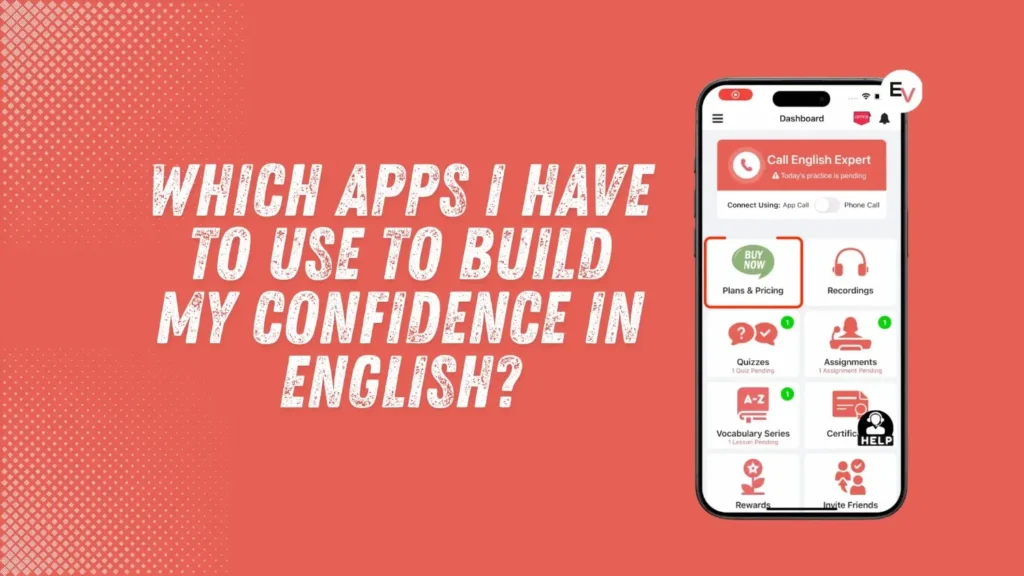
Quick Verdict (2026)If real fluency — not gamified streaks — is the goal, the apps that actually work are the ones that force you to speak daily with feedback. Our pick: EngVarta for live human practice with TESOL/ESL-certified Experts (real-time corrections, consolidated feedback towards the end of every call). Pair it with ELSA Speak for pronunciation drills and Duolingo for vocabulary habit-building. AI-only chat apps are improving fast, but in 2026 nothing replicates the speed of fluency gain you get from a real human listening to you.
You’ve studied grammar. Watched English shows. Maybe even repeated dialogues out loud. But when it’s your turn to actually speak — in a meeting, an interview, or with a stranger — you pause, doubt yourself, and switch back to Hindi or your native tongue.
The missing piece isn’t more study. It’s spoken-output reps — daily speaking practice with someone (or something) that catches your mistakes in real time and shows you how a fluent speaker would have phrased it.
This 2026 guide ranks the best English fluency apps by what actually moves the needle on speaking confidence: live human practice, AI conversation, pronunciation feedback, and listening immersion. We’ve tested each one and ordered them by how fast they get an intermediate learner from hesitant to fluent.
2026 Comparison Table: Best Apps for English Fluency
App
Practice Type
Best For
Starting Price
Speed of Fluency Gain
EngVarta
Live 1-on-1 audio with TESOL/ESL Expert
Daily fluency practice (Indian + global learners)
~₹108/session (₹2,700 / 25)
Fastest (3–6 weeks visible)
ELSA Speak
AI pronunciation drills
Accent reduction, MTI fix
~$11.99/month
Medium (8–12 weeks)
Cambly
Native-speaker video tutoring
Higher-budget premium learners
~$10/15-min lesson
Fast (cost-limited frequency)
HelloTalk / Tandem
Language-exchange chat with strangers
Casual practice, free option
Free / ~$7–14 month
Slow (no expert correction)
AI conversation apps (Loora, Talkpal, Praktika)
AI chatbot “tutor”
Privacy-first or unlimited reps
~$12–25/month
Medium (improving fast in 2026)
Duolingo
Gamified vocabulary & grammar
Beginners, daily-streak habit
Free / Super ~$7/month
Slow (low speaking volume)
1. EngVarta — Best Overall for Spoken Fluency
EngVarta is the fastest path to spoken fluency for one simple reason: every session is a live audio call with a TESOL or ESL-certified English Expert who corrects you in real time. There’s no “watch a video, then take a quiz” loop — you talk, the Expert listens, fixes your grammar, pronunciation, and word choice on the spot, and shares consolidated feedback towards the end of the session.
You pick the session length (15, 25, or 50 minutes), book a slot anywhere between 7 AM and midnight, and connect to an Expert in minutes. Audio-only by design — which works on slow mobile data and removes the camera-pressure that holds back self-conscious learners.
Why it ranks #1 for fluency:
Real-time corrections during the call — pronunciation, grammar, fluency — not after-the-fact written reports
Consolidated feedback towards the end of every session highlighting your top 2–3 improvement areas
Sessions recorded and accessible for 30 days for self-review
Personalised practice tasks + a vocabulary builder between calls
Daily-practice priced (~₹108 / ~$1.80 per session) — sustainable for daily reps, which is what fluency actually requires
Milestone certificates as you complete practice-hour thresholds — useful for HR records, departmental training files, and upskilling submissions
Who it’s for: Working professionals, college students preparing for placements, government employees needing English for postings, and homemakers who want to rebuild fluency on their own schedule. Already trusted by lakhs of learners across India and expanding markets in the US, UAE, Canada, and Singapore.
Pricing: ₹69 for a 100% refundable 10-minute trial; plans start at ₹2,700 for 25 sessions (~₹108 each). Plans of 25/50/100/150/300 sessions, with a pause feature for travel or work crunches.
Limitation: Audio-only by design. If you specifically want video tutoring with native speakers, look at Cambly. If you want unlimited free chat with strangers, HelloTalk — though neither will move you to fluency as fast.
ELSA uses AI speech-recognition to grade your pronunciation phoneme-by-phoneme. You read a sentence, ELSA flags exactly which sounds were off, and shows you the mouth position for the correct sound. For Indian learners working on mother-tongue influence (MTI), it’s the most precise pronunciation tool available.
Best for: Pronunciation, accent neutralisation, IELTS/TOEFL speaking-section drilling. Not for: Conversational fluency or unstructured speaking practice — you’re reading scripted prompts, not having real conversations.
3. Cambly — Best for Premium Native-Speaker Practice
Cambly connects you to native-speaker tutors over video for unstructured chat or curriculum-based lessons. Quality is high, sessions feel real, and you can pick the tutor you click with. The catch: pricing. At roughly $10 per 15-minute lesson, daily practice gets expensive fast — most learners end up doing 2–3 sessions per week, which is below the frequency needed for rapid fluency gains.
Best for: Learners with a budget who want native-speaker exposure and don’t mind a lower session count. Not for: Daily-practice budgets or learners who prefer audio-only.
Pricing: ~$10/15-min lesson; group plans cheaper but less personalised.
4. AI Conversation Apps (Loora, Talkpal, Praktika)
2026 has been the breakout year for AI-driven English tutors. Loora, Talkpal, and Praktika let you have unscripted voice conversations with an AI that adapts to your level, suggests better phrasings, and tracks your fluency progress. The voice quality and natural pacing have improved dramatically — for the first time, an AI conversation feels close to a real one.
Best for: Privacy-conscious learners who don’t want a human listening, learners doing 30+ minutes of practice daily who’d burn out a paid tutor budget, and anyone in markets where live tutoring is hard to find.
Limitation in 2026: AI still mishears non-native accents at higher rates than a trained human Expert, and the “corrections” can be over-polite (it lets small errors slide to keep the conversation flowing). For learners specifically targeting fluency — not just exposure — live human feedback is still measurably faster. That’s why we rank EngVarta above this category.
Pricing: ~$12–25/month depending on app and tier.
5. HelloTalk & Tandem — Best Free Option
Language-exchange apps pair you with native English speakers who want to learn your language. Genuinely free for basic use. The trade-off: there’s no expert correcting you, conversation quality varies wildly partner-to-partner, and many partners drift toward small talk that doesn’t stretch your vocabulary.
Best for: Zero-budget learners who already have intermediate-level fluency and want exposure. Not for: Beginners or anyone targeting structured fluency growth on a timeline.
Duolingo is excellent at one thing: getting you to open the app every day. The streak mechanics are addictive, the lessons are bite-sized, and you’ll genuinely build vocabulary and grammar awareness. What it won’t do is make you fluent — the speaking exercises are scripted single-sentence drills, not real conversation.
Best for: Beginners building habit + vocabulary. Pair with: A speaking-focused app (EngVarta, Cambly, or an AI conversation app) once you’re past the first 50 hours of Duolingo.
Pricing: Free; Super Duolingo ~$7/month.
The 2026 Fluency Stack: How to Combine These Apps
Single-app strategies don’t deliver fluency. The learners who actually become fluent in 6–12 months use a stack:
15–30 min daily speaking practice — EngVarta (live human) or an AI conversation app
10 min pronunciation drilling — ELSA Speak, 3–4 days a week
10 min vocabulary & grammar habit — Duolingo or Memrise, daily
20 min listening immersion — English podcasts, YouTube, or shows with subtitles
The non-negotiable element is the speaking practice. Without daily spoken-output reps with feedback, the other three stack components plateau within 6–8 weeks.
Why Most People Fail at Fluency Apps
Three patterns, in order of frequency:
App stacking without speaking practice. Three vocabulary apps and zero conversation apps. You’ll know more words but still freeze in real conversations.
Inconsistent practice. 90 minutes on Sunday, nothing Monday–Saturday. Fluency is built on frequency, not duration. 15 minutes daily beats 2 hours weekly.
Avoiding correction. Sticking with apps that don’t challenge you because the dopamine hit of a correct answer feels good. Fluency growth requires being corrected — that’s where the learning happens.
The combination that fixes all three: a paid live-practice app you actually use daily (not the free apps that get abandoned by week 3) + a habit anchor like a morning walk or after-dinner routine to make practice non-negotiable. More on building a fluency-coaching routine →
What Our Learners Say
Rated 4.5★ from 9,100+ reviews on Google Play
★★★★★
Really it's very useful app but charges is very high plz decrease some prices of courses
★★★★★
Let me congratulate you on your endeavour to help people gain confidence while speaking. I enrolled for your vocabulary series. You guys are doing a good job. Keep it up.
★★★★★
I have been using EngVarta for the past three months and from the period I am using I feel a considerable amount of difference in how I was speaking earlier and now how I am speaking and I think the EngVarta team has done a commendable job in improving my English fluency skill.
★★★★★
I have been practising English on EngVarta for the past 30 days and results are significant.
I’m happy to be here.
★★★★★
Excellent platform for people who don’t find any people to speak in English. Live experts help to build confidence while speaking and guiding to improve your communication!
★★★★★
I am happy while speaking with experts and getting feedback on my speaking skills.
★★★★★
I think I should recommend this app to everyone who wants fluency in English. Nice app.
★★★★★
Today was my first call on EngVarta. I just enjoyed the conversation. It's such a good platform for people who want to explore themselves in English speaking. I just loved it.
★★★★★
This is a too good English learning app. There have so many options to learning English their have a English vocabulary you can improve your English vocabulary to in this app and there have a charges for if you want to talk with English speaker
★★★★★
It is a very nice app. The expert whom I talked to is very amiable and very knowledgeable.
★★★★★
I have thoroughly enjoyed the session and the expert provided me instant feedback that will definitely help me.
★★★★★
It was a great experience praticing with EngVarta. Thank you experts for helping me reach
★★★★★
Really it's very useful app but charges is very high plz decrease some prices of courses
★★★★★
Let me congratulate you on your endeavour to help people gain confidence while speaking. I enrolled for your vocabulary series. You guys are doing a good job. Keep it up.
★★★★★
I have been using EngVarta for the past three months and from the period I am using I feel a considerable amount of difference in how I was speaking earlier and now how I am speaking and I think the EngVarta team has done a commendable job in improving my English fluency skill.
★★★★★
I have been practising English on EngVarta for the past 30 days and results are significant.
I’m happy to be here.
★★★★★
Excellent platform for people who don’t find any people to speak in English. Live experts help to build confidence while speaking and guiding to improve your communication!
★★★★★
I am happy while speaking with experts and getting feedback on my speaking skills.
★★★★★
I think I should recommend this app to everyone who wants fluency in English. Nice app.
★★★★★
Today was my first call on EngVarta. I just enjoyed the conversation. It's such a good platform for people who want to explore themselves in English speaking. I just loved it.
★★★★★
This is a too good English learning app. There have so many options to learning English their have a English vocabulary you can improve your English vocabulary to in this app and there have a charges for if you want to talk with English speaker
★★★★★
It is a very nice app. The expert whom I talked to is very amiable and very knowledgeable.
★★★★★
I have thoroughly enjoyed the session and the expert provided me instant feedback that will definitely help me.
★★★★★
It was a great experience praticing with EngVarta. Thank you experts for helping me reach
Frequently Asked Questions
Which app is best for English fluency in 2026?
For most intermediate learners, EngVarta delivers the fastest fluency gains because every session involves real-time correction by a TESOL/ESL-certified English Expert over a live audio call. Pair it with ELSA Speak for pronunciation and Duolingo for vocabulary habit, and you have a complete 2026 fluency stack.
Can I become fluent in English using only an app?
Yes, if the app forces daily spoken-output practice with feedback. Apps that just teach grammar, vocabulary, or scripted lessons won’t deliver fluency on their own. The fastest fluency gains come from apps that put a real human (or, increasingly, a high-quality AI) on the other end of a live conversation.
How long does it take to become fluent in English with these apps?
With consistent daily practice (15–30 minutes of speaking + 10–20 minutes of supporting work), most intermediate learners report visible fluency improvement in 6–8 weeks and conversational fluency in 6–9 months. Beginners typically need 12–18 months to reach the same level.
Are AI English speaking apps as good as human tutors in 2026?
AI conversation apps have improved dramatically in 2026 and now deliver useful practice at low cost. They’re excellent for unlimited reps and privacy. But for the fastest fluency gains, live human Experts still outperform AI on accent recognition, nuanced corrections, and conversational depth — especially for non-native accents like Indian English.
What’s the cheapest app for daily English speaking practice?
HelloTalk and Tandem are free if you’re comfortable practising with random language-exchange partners (with no expert correction). For paid daily practice with a real Expert, EngVarta is the lowest cost-per-session option in India at ~₹108 per call when you buy a 25-session plan.
Do these apps work for IELTS or job-interview English?
Yes — speaking-focused apps like EngVarta and ELSA Speak directly target the speaking skills needed for IELTS, TOEFL, and job interviews. Most learners using them for exam or interview prep do 4–6 weeks of focused daily practice in the run-up to the test or interview.
Can I get a certificate from these English speaking apps?
EngVarta issues milestone certificates as learners complete practice-hour thresholds and reach speaking-progress milestones — useful for HR records, departmental training files, and upskilling submissions. Other apps in this list (Duolingo, ELSA, Cambly) offer course-completion or proficiency-level certificates of varying recognition. Always check whether a specific employer or institution accepts the certificate before relying on it.
Is EngVarta available outside India?
Yes — EngVarta serves learners in India, the US, UAE, Canada, Singapore, and other markets. Pricing in USD markets works out to roughly $1.80 per session with similar plan structures.
Editorial independence: This is an independent editorial roundup. EngVarta is the publisher and chooses its own pick, but no app on this list paid for inclusion or placement. We rank apps based on hands-on testing and learner outcomes, not affiliate commissions.
Ever feel confused about when to use would, could, and should in English? You’re not alone! These little words can be tricky, but once you understand how they work, you’ll sound more fluent and confident. Let’s break them down together with simple rules and everyday examples.
What Are Modal Verbs?
Modal verbs are special helper verbs that add meaning to the main verb. They show things like possibility, ability, or advice. The stars of today’s lesson—would, could, and should—are three of the most popular ones!
When to Use Would
Use would to talk about:
Polite requests: Would you help me, please?
Imaginary or unreal situations: I would go to Paris if I had the money.
Future in the past: He said he would call me.
Wishes and desires: I would love a slice of cake.
👉 Quick Tip: Think of would as a softer, more polite version of will.
When to Use Could
Use could for:
Past ability: She could read when she was three!
Polite requests: Could you please pass the salt?
Possibility: It could snow tomorrow.
Suggestions: You could try restarting your phone.
👉 Quick Tip:Could is like a more polite or uncertain form of can.
When to Use Should
Use should when giving advice, opinions, or talking about what’s right:
Advice: You should drink more water.
Expectation: She should be here by now.
Moral obligation: People should be kind.
Suggestions: Should we go out for lunch?
👉 Quick Tip:Should is a gentle way of saying something is the right thing to do.
Final Thoughts
Learning how to use would, could, and should doesn’t have to be hard. Keep practicing with real sentences, and you’ll start using them naturally. They may be small words, but they make a big difference in your English!
Modals also pair with the passive voice—this could be done, the report should be reviewed, that would be appreciated—if you want the full pattern, read our guide on active and passive voice in English grammar.
Frequently Asked Questions about Would, Could, and Should
What is the difference between would, could, and should?
“Would” expresses hypothetical situations, polite requests, or past habits. “Could” expresses past ability or polite possibility. “Should” expresses advice, obligation, or expectation. Quick test: WOULD = imagined/conditional (“I would help if I could”). COULD = ability/possibility (“She could speak three languages”). SHOULD = recommendation (“You should rest”). Each carries a different shade of meaning that English learners often mix up.
When should I use ‘would’?
Use “would” for: (1) Hypothetical/conditional situations: “I would travel more if I had time.” (2) Polite requests: “Would you pass the salt?” (3) Past habits: “When I was young, I would walk to school every day.” (4) Reported speech of “will”: “She said she would call.” (5) Wishes: “I wish I would win the lottery.” Common Indian English error: using “would” for present-tense politeness when “could” or “can” would be more accurate.
When should I use ‘could’?
Use “could” for: (1) Past ability: “I could swim when I was 5.” (2) Polite requests: “Could you help me?” (3) Possibility (less certain than “may”): “It could rain later.” (4) Suggestions: “We could try a different approach.” (5) Past possibility: “He could have been there.” “Could” is generally less formal than “would” for politeness — “Could you” feels softer than “Would you.”
When should I use ‘should’?
Use “should” for: (1) Advice/recommendation: “You should see a doctor.” (2) Expectation: “The package should arrive tomorrow.” (3) Obligation (mild): “We should respect the rules.” (4) Past regret: “I should have studied harder.” (5) Probability: “She should be home by now.” “Should” is the most directive of the three — it implies a recommended course of action, not just a possibility.
What are some examples of would vs could vs should?
Same situation, three meanings: “I WOULD call her if I had her number” (conditional — depends on having her number). “I COULD call her if you want me to” (ability/willingness — I have the option). “I SHOULD call her — it’s been a week” (advice/obligation — I ought to). Or: “WOULD you like coffee?” (polite offer). “COULD I have coffee?” (polite request). “SHOULD I have coffee?” (asking for advice).
What’s the difference between ‘would’ and ‘will’?
“Will” expresses certainty about the future (“I will call you tomorrow”). “Would” expresses hypothetical or conditional (“I would call you if I had time”). Will = definitely. Would = if certain conditions are met. Common error: using “will” when “would” is correct in conditionals — “If I had money, I will buy a house” should be “If I had money, I would buy a house.”
What’s the difference between ‘could’ and ‘can’?
“Can” expresses present ability or permission (“I can speak English”). “Could” expresses past ability OR polite present (“I could speak English at age 8” / “Could I speak English with you for practice?”). When asking for permission politely, “could” is softer than “can” — “Could I leave early today?” sounds more polite than “Can I leave early today?” though both are correct.
How can I practice would, could, and should correctly?
Effective practice: (1) Use each modal verb in 3 sentences daily — one for each purpose (conditional, ability/permission, advice). (2) Listen to English shows and note when speakers use which modal. (3) Practice in real conversation where someone can flag misuse. (4) Read English news articles and circle every “would/could/should” — note why each was chosen. EngVarta‘s TESOL/ESL-certified Experts can prompt you to use specific modals in conversation and explain why one fits better than another. The $1 refundable trial lets you try this on a topic where you typically struggle.
When it comes to mastering a profession, industry-specific vocabulary is essential. Whether you’re a doctor, engineer, entrepreneur, or creative professional, knowing the right terminology helps you communicate clearly and confidently in your field.
This guide introduces key professional vocabulary across various industries, from medicine and engineering to business and hospitality. Whether you’re a student, job seeker, or working professional, understanding these terms will help you enhance your communication skills and excel in your career.
Why Learning Professional Vocabulary is Important?
Improves Communication – Using the right terms makes conversations clear and effective.
Enhances Professionalism – Employers and colleagues appreciate those who can speak confidently in their industry.
Helps in Job Interviews – Knowing industry-specific terms can help you impress interviewers.
Boosts Workplace Performance – Understanding workplace vocabulary can increase efficiency and accuracy.
Builds Confidence in English Communication – Knowing the right words makes professional conversations smoother.
Struggling with Professional Communication? EngVarta Can Help!
Having the right vocabulary is important, but using it correctly in conversations is even more crucial. That’s where EngVarta comes in!
🚀 EngVarta is a live English-speaking practice app where you can practice real-life conversations with English experts to improve your confidence and fluency. Whether you need to prepare for a job interview, business meeting, or professional presentation, EngVarta helps you use industry-specific vocabulary effectively in spoken English.
Download Your Free PDF: Industry-Specific Vocabulary
To help you learn the most important professional vocabulary words, we’ve created a comprehensive PDF guide that includes 50 professions along with 10 essential vocabulary words for each profession.
Key words like Reservation, Itinerary, Layover, Inflight Service, and Garnish help in customer service, travel planning, and food presentation.
Knowing these terms can improve service quality and communication with guests.
How to Learn and Use Professional Vocabulary?
Read Industry-Specific Content – Articles, reports, and research papers use professional terms in context.
Watch Interviews & Podcasts – Listening to experts can help you understand how to use vocabulary naturally.
Practice with Flashcards – Write down key terms and their meanings for quick reference.
Engage in Conversations – Use industry terms in meetings, emails, and networking events.
Practice Speaking on EngVarta – Join EngVarta’s live sessions to practice using professional vocabulary in real conversations with experts.
Download & Study the PDF – Our Essential Vocabulary for Different Professions PDF is a great resource to keep handy!
Final Thoughts
Expanding your professional vocabulary boosts your career, improves confidence, and enhances communication skills. No matter your field, understanding industry-specific words can make you stand out.
🎯 But vocabulary alone isn’t enough! You need practice.
Frequently Asked Questions about Professional English Vocabulary
What is professional vocabulary in English?
Professional vocabulary is the set of words specific to your industry or profession that you need to communicate effectively at work. Doctors need clinical terms (diagnosis, prognosis, prescription); engineers need technical specs (specification, deployment, debug); finance professionals need money-language (revenue, liquidity, exposure); marketers need campaign-speak (conversion, funnel, attribution). Mastering 100-200 industry-specific terms transforms how you sound in professional contexts.
How do I learn vocabulary for my specific profession?
Effective strategies: (1) Read 2-3 industry publications daily (e.g., HBR for business, TechCrunch for tech, Lancet for medicine). Note every term you don’t fully understand. (2) Subscribe to industry podcasts and absorb how professionals naturally use the terms. (3) Practice using the vocabulary in mock work scenarios with a TESOL/ESL-certified Expert. (4) Build a personal glossary of 100-200 high-frequency terms in your industry — review weekly.
What essential vocabulary do business professionals need?
Top business vocabulary that working professionals encounter daily: stakeholder, deliverable, scalable, strategic, actionable, leverage, synergy, milestone, pipeline, roadmap, bottom line, key takeaways, action items, circle back, ballpark figure, low-hanging fruit, move the needle, deep dive, quick win. Mastering these makes you sound like an experienced professional in any business context.
What essential vocabulary do IT/tech professionals need?
Top tech vocabulary: deployment, integration, scalability, latency, throughput, architecture, refactor, regression, specification, debug, iteration, backlog, sprint, retrospective, velocity, technical debt, edge case, downtime, uptime, backwards compatible. These are used daily in standups, code reviews, and product discussions.
How can I improve professional English vocabulary fast?
Fast-track approach: (1) Identify your TOP 50 industry-specific terms — focus on these first. (2) Use each term 3-5 times in real work scenarios within a week. (3) Daily live practice with a TESOL/ESL-certified Expert — describe your work projects in English using new vocabulary. EngVarta‘s daily 25-minute sessions allow you to practise industry-specific English in real conversation, with Experts who can suggest more precise vocabulary as you speak.
Why is professional vocabulary important?
Professional vocabulary signals: (1) Industry seniority — using insider terms correctly suggests years of experience. (2) Precision — generic words (“nice”, “thing”, “stuff”) feel amateurish in professional contexts. (3) Confidence — searching for words mid-sentence undermines your authority. (4) Compatibility — you need shared vocabulary to participate in industry discussions, conferences, networking. Professionals who can’t switch into industry-specific English get filtered out of high-level discussions.
How do I avoid mixing professional and casual vocabulary?
Register-switching skill: in formal meetings, use precise professional terms. In casual conversations, use plain English. Mixing kills your delivery. Quick rule: if you’re presenting findings, use formal vocabulary (“identified key insights” not “found cool stuff”). If chatting with colleagues at lunch, use casual (“yeah it was crazy” not “it was indeed extraordinary”). Most fluent professionals master this in 1-2 years of working in an English environment.
Have you ever felt stuck using the same words repeatedly? Do you often find yourself saying happy when you could say joyful or elated? Or perhaps you’ve written big so many times that it no longer has any impact?
If this sounds familiar, you’re not alone! The English language is vast, with thousands of words that can help you express yourself in a richer and more precise way. Learning synonyms and antonyms is one of the easiest ways to expand your vocabulary, improve your writing, and make your speech sound more polished and engaging.
In this blog, we’ll explore what synonyms and antonyms are, why they are important, and how apps like EngVarta and Fixolang can help you master them.
What Are Synonyms?
Synonyms are words that have the same or nearly the same meaning as another word. They allow us to express similar ideas in different ways, making our language more varied and interesting.
For example, instead of repeatedly using beautiful, you could say gorgeous, stunning, elegant, or charming, depending on the context.
Why Should You Use Synonyms?
Using synonyms helps you:
✅ Avoid repetition – Instead of sounding monotonous, your speech and writing will feel more dynamic. ✅ Express yourself better – Sometimes, a synonym can capture your exact emotion or idea more effectively. ✅ Improve your fluency – Knowing different words for the same meaning makes you sound more confident and natural.
Antonyms are words that have opposite meanings. They are useful when you want to describe contrasts, emphasize differences, or express opposing ideas.
For example, the opposite of hot is cold, and the opposite of fast is slow.
Why Should You Use Antonyms?
✅ Enhance your descriptions – Using antonyms can create contrast and make your writing more engaging. ✅ Improve your critical thinking – When you know opposites, you understand the nuances of words better. ✅ Score higher in exams – Tests like IELTS, TOEFL, and SAT often assess vocabulary depth, including antonyms.
Examples of Antonyms
Here are ten words along with their antonyms:
Happy – Sad, Unhappy, Miserable, Gloomy
Big – Small, Tiny, Little, Miniature
Fast – Slow, Sluggish, Lazy, Unhurried
Smart – Dumb, Unintelligent, Foolish, Clueless
Beautiful – Ugly, Unattractive, Plain, Dull
Cold – Hot, Warm, Toasty, Heated
Tired – Energetic, Lively, Fresh, Alert
Easy – Difficult, Hard, Challenging, Complicated
Angry – Calm, Peaceful, Gentle, Composed
Funny – Serious, Boring, Dull, Unamusing
200+ Most Common English Synonyms and Antonyms (with Meanings)
The fastest way to expand your active vocabulary is to study words in clusters — grouping a common word with its synonyms and opposites. The list below covers more than 200 base words, each paired with synonyms and antonyms, organized into twelve everyday categories. In total, you’ll find over 500 synonym and antonym terms you can start using in conversation, writing, and exams like IELTS, TOEFL, and SAT.
Category 1: Positive Emotions (20+ pairs)
Word
Meaning
Synonyms
Antonyms
Happy
Feeling pleasure
joyful, cheerful, glad, content
sad, unhappy, miserable
Excited
Eagerly enthusiastic
thrilled, enthusiastic, eager
bored, indifferent, apathetic
Joyful
Full of joy
elated, delighted, jubilant
sorrowful, mournful, gloomy
Pleased
Satisfied
gratified, content, glad
displeased, upset, annoyed
Loving
Showing love
affectionate, warm, caring
cold, distant, hostile
Calm
Peaceful state
relaxed, serene, composed
anxious, agitated, restless
Hopeful
Full of hope
optimistic, positive, confident
hopeless, pessimistic, despairing
Proud
Feeling pride
honored, dignified, pleased
ashamed, humbled, embarrassed
Grateful
Showing thanks
thankful, appreciative, indebted
ungrateful, unappreciative
Amused
Entertained
entertained, tickled, delighted
bored, uninterested, annoyed
Confident
Self-assured
assured, certain, self-reliant
unsure, doubtful, insecure
Enthusiastic
Eager interest
passionate, zealous, keen
apathetic, disinterested, reluctant
Fond
Having affection
attached, devoted, caring
averse, disliking, hostile
Cheerful
Brightly happy
upbeat, merry, buoyant
gloomy, sullen, morose
Content
Satisfied state
satisfied, fulfilled, at ease
discontent, dissatisfied, restless
Thrilled
Very excited
ecstatic, overjoyed, exhilarated
disappointed, let down, depressed
Relaxed
Free of tension
at ease, tranquil, chilled
tense, stressed, anxious
Warm
Friendly
genial, kind, cordial
cold, aloof, unfriendly
Delighted
Greatly pleased
charmed, thrilled, overjoyed
displeased, upset, disheartened
Inspired
Creatively moved
motivated, stirred, uplifted
uninspired, unmoved, dull
Peaceful
Free from conflict
tranquil, serene, calm
chaotic, turbulent, troubled
Category 2: Negative Emotions (15+ pairs)
Word
Meaning
Synonyms
Antonyms
Sad
Unhappy
unhappy, sorrowful, downcast
happy, cheerful, joyful
Angry
Feeling rage
furious, irritated, enraged
calm, composed, pleased
Afraid
Feeling fear
scared, frightened, terrified
brave, fearless, bold
Worried
Uneasy mind
anxious, concerned, troubled
calm, relaxed, carefree
Lonely
Feeling alone
isolated, solitary, forsaken
accompanied, social, connected
Jealous
Envious
envious, resentful, covetous
content, trusting, generous
Disappointed
Let down
dismayed, disheartened, dejected
pleased, satisfied, impressed
Ashamed
Guilt-ridden
embarrassed, humiliated, guilty
proud, confident, unashamed
Frustrated
Feeling blocked
aggravated, exasperated, annoyed
satisfied, relieved, content
Bored
Lacking interest
uninterested, weary, tired
excited, engaged, interested
Nervous
Tense
anxious, jittery, uneasy
calm, composed, confident
Miserable
Extremely unhappy
wretched, woeful, forlorn
joyful, ecstatic, delighted
Guilty
Having done wrong
culpable, blameworthy, remorseful
innocent, blameless, clear
Hurt
Emotionally wounded
wounded, pained, offended
healed, fine, unharmed
Tense
Strained
stressed, edgy, uptight
relaxed, easygoing, loose
Depressed
Very sad
despondent, melancholy, glum
elated, cheerful, upbeat
Category 3: Size and Quantity (20+ pairs)
Word
Meaning
Synonyms
Antonyms
Big
Large in size
huge, large, massive, enormous
small, tiny, minuscule
Small
Little in size
tiny, little, petite, miniature
big, large, enormous
Many
A large number
numerous, plenty, abundant
few, scarce, limited
Few
Small number
limited, scarce, sparse
many, numerous, plenty
Tall
Great in height
lofty, towering, high
short, low, stumpy
Short
Low in height
brief, stubby, compact
tall, lengthy, extended
Wide
Large in width
broad, expansive, spacious
narrow, thin, slim
Narrow
Limited in width
thin, slim, tight
wide, broad, spacious
Long
Extended in length
lengthy, extended, prolonged
short, brief, quick
Heavy
Great weight
weighty, hefty, substantial
light, weightless, airy
Light
Low in weight
airy, feathery, buoyant
heavy, hefty, weighty
Full
Completely filled
packed, loaded, crammed
empty, vacant, hollow
Empty
Containing nothing
vacant, hollow, bare
full, packed, crowded
Thick
Dense
dense, bulky, chunky
thin, slim, fine
Thin
Not thick
slim, slender, slight
thick, fat, bulky
Enormous
Very large
gigantic, colossal, immense
tiny, miniature, microscopic
Tiny
Very small
miniature, minute, diminutive
huge, massive, gigantic
Huge
Extremely large
vast, immense, colossal
tiny, miniscule, petite
Deep
Far down
profound, bottomless, vast
shallow, surface, superficial
Shallow
Not deep
surface, superficial, slight
deep, profound, bottomless
Plenty
More than enough
abundance, ample, loads
scarcity, shortage, lack
Category 4: Speed and Movement (15+ pairs)
Word
Meaning
Synonyms
Antonyms
Fast
Moving quickly
quick, swift, rapid, speedy
slow, sluggish, unhurried
Slow
Moving gradually
sluggish, leisurely, gradual
fast, quick, rapid
Run
Move quickly on foot
sprint, jog, dash
walk, stroll, amble
Walk
Move on foot
stroll, amble, stride
run, sprint, race
Jump
Push off the ground
leap, hop, bound
stay, sit, remain
Rush
Move in a hurry
hurry, hasten, dash
linger, dawdle, delay
Hurry
Move quickly
rush, scurry, race
stroll, dawdle, loiter
Quick
Done fast
swift, speedy, rapid
slow, gradual, leisurely
Rapid
Very fast
swift, speedy, fast
slow, gradual, delayed
Stop
Cease motion
halt, pause, cease
start, continue, proceed
Move
Change position
shift, relocate, travel
stay, remain, halt
Chase
Pursue
pursue, follow, hunt
flee, escape, avoid
Drift
Move slowly
float, wander, glide
anchor, settle, stop
Crawl
Move slowly
creep, inch, drag
dash, sprint, zoom
Zoom
Move very fast
speed, race, whiz
crawl, creep, plod
Sudden
Occurring quickly
abrupt, instant, unexpected
gradual, slow, expected
Category 5: Intelligence and Learning (15+ pairs)
Word
Meaning
Synonyms
Antonyms
Smart
Mentally sharp
intelligent, bright, clever, brilliant
dumb, stupid, foolish
Intelligent
Quick-minded
clever, sharp, perceptive
unintelligent, dull, slow
Clever
Skilled at thinking
witty, cunning, inventive
clueless, dull, slow
Wise
Showing experience
sage, insightful, prudent
foolish, unwise, reckless
Educated
Having knowledge
learned, informed, knowledgeable
uneducated, ignorant, unlearned
Brilliant
Exceptionally bright
genius, outstanding, superb
dim, mediocre, poor
Knowledgeable
Well-informed
learned, expert, informed
ignorant, uninformed, clueless
Curious
Eager to learn
inquisitive, interested, questioning
uninterested, indifferent, apathetic
Foolish
Lacking sense
silly, senseless, unwise
wise, sensible, prudent
Stupid
Mentally slow
dumb, dense, dim
smart, intelligent, bright
Ignorant
Lacking knowledge
uninformed, unaware, clueless
informed, aware, knowledgeable
Gifted
Naturally talented
talented, skilled, capable
untalented, mediocre, ordinary
Quick-witted
Fast thinking
sharp, alert, nimble-minded
dull-witted, slow, dim
Thoughtful
Reflective
reflective, considerate, deep
thoughtless, shallow, careless
Logical
Based on reason
rational, reasonable, sound
illogical, irrational, absurd
Category 6: Appearance (20+ pairs)
Word
Meaning
Synonyms
Antonyms
Beautiful
Very attractive
attractive, gorgeous, stunning, pretty
ugly, unattractive, plain
Ugly
Unpleasant to see
unattractive, hideous, plain
beautiful, gorgeous, lovely
Pretty
Pleasing to look at
cute, lovely, charming
plain, ugly, unattractive
Handsome
Good-looking (male)
attractive, dashing, good-looking
unattractive, homely, plain
Cute
Adorably pleasing
adorable, sweet, charming
unsightly, repulsive, plain
Elegant
Graceful
refined, sophisticated, classy
unrefined, crude, clumsy
Gorgeous
Strikingly beautiful
stunning, magnificent, ravishing
hideous, ugly, unattractive
Neat
Orderly
tidy, organized, clean
messy, untidy, sloppy
Messy
Disorderly
untidy, cluttered, disorganized
neat, tidy, orderly
Clean
Free of dirt
spotless, pristine, immaculate
dirty, filthy, soiled
Dirty
Not clean
filthy, grimy, soiled
clean, spotless, pristine
Bright
Giving light
luminous, radiant, vivid
dim, dull, dark
Dark
Little light
dim, shadowy, murky
bright, luminous, lit
Shiny
Reflecting light
gleaming, glossy, polished
dull, matte, dim
Dull
Not bright
matte, faded, lackluster
shiny, gleaming, vivid
Fashionable
In style
trendy, stylish, chic
outdated, dowdy, unfashionable
Plain
Simple in look
simple, unadorned, basic
elaborate, fancy, ornate
Colorful
Full of color
vibrant, bright, vivid
colorless, dull, drab
Stylish
Looking good
chic, fashionable, elegant
tacky, unstylish, drab
Young
Not old
youthful, juvenile, fresh
old, elderly, aged
Old
Aged
elderly, aged, ancient
young, youthful, new
Category 7: Quality (15+ pairs)
Word
Meaning
Synonyms
Antonyms
Good
Of high quality
excellent, great, superb, wonderful
bad, poor, terrible, awful
Bad
Of poor quality
poor, awful, terrible
good, great, excellent
Excellent
Extremely good
superb, outstanding, first-rate
awful, poor, mediocre
Poor
Low quality
inferior, substandard, weak
excellent, superior, top-notch
Amazing
Remarkable
incredible, astounding, wonderful
ordinary, unremarkable, mundane
Awful
Very bad
terrible, dreadful, horrid
wonderful, fantastic, excellent
Perfect
Without flaw
flawless, ideal, impeccable
imperfect, flawed, faulty
Faulty
Having defects
defective, flawed, imperfect
perfect, flawless, sound
Useful
Helpful
helpful, beneficial, practical
useless, pointless, worthless
Useless
Not helpful
pointless, worthless, futile
useful, helpful, beneficial
Reliable
Trustworthy
dependable, trustworthy, solid
unreliable, unstable, flaky
Cheap
Low cost
inexpensive, affordable, low-priced
expensive, costly, pricey
Expensive
High cost
costly, pricey, high-priced
cheap, affordable, inexpensive
Valuable
Of great worth
precious, priceless, worthy
worthless, valueless, trivial
Fresh
Recently made
new, recent, novel
stale, old, outdated
Category 8: Strength and Weakness (15+ pairs)
Word
Meaning
Synonyms
Antonyms
Strong
Having great power
powerful, mighty, robust
weak, feeble, frail
Weak
Lacking strength
feeble, frail, fragile
strong, powerful, sturdy
Powerful
Having power
strong, forceful, potent
powerless, weak, ineffective
Brave
Showing courage
courageous, fearless, bold
cowardly, timid, fearful
Cowardly
Lacking courage
timid, fearful, spineless
brave, courageous, fearless
Tough
Able to endure
resilient, hardy, sturdy
fragile, delicate, weak
Fragile
Easily broken
delicate, breakable, flimsy
sturdy, tough, unbreakable
Brave-hearted
Having courage
valiant, heroic, gallant
cowardly, faint-hearted, timid
Solid
Firm and stable
firm, dense, sturdy
hollow, flimsy, unstable
Sturdy
Strongly built
robust, solid, tough
flimsy, fragile, delicate
Mighty
Possessing great power
powerful, strong, formidable
weak, puny, feeble
Feeble
Lacking strength
weak, frail, infirm
strong, vigorous, robust
Fearless
Not afraid
brave, bold, daring
fearful, timid, cowardly
Timid
Shy and fearful
shy, nervous, bashful
bold, confident, brave
Vigorous
Full of energy
energetic, lively, spirited
sluggish, lethargic, weak
Category 9: Common Action Verbs (20+ pairs)
Word
Meaning
Synonyms
Antonyms
Start
Begin
begin, commence, initiate
stop, end, finish, conclude
Finish
Complete
end, conclude, complete
start, begin, commence
Give
Hand over
provide, offer, donate
take, receive, keep
Take
Grasp
grab, seize, accept
give, return, release
Build
Construct
construct, erect, assemble
destroy, demolish, tear down
Destroy
Ruin
demolish, wreck, ruin
build, construct, create
Buy
Purchase
purchase, acquire, obtain
sell, auction, vend
Sell
Exchange for money
vend, trade, market
buy, purchase, acquire
Open
Unclose
unlock, unfold, unseal
close, shut, seal
Close
Shut
shut, seal, fasten
open, unlock, unseal
Increase
Grow in amount
raise, grow, expand
decrease, reduce, shrink
Decrease
Reduce
reduce, shrink, diminish
increase, grow, raise
Remember
Recall
recall, memorize, retain
forget, overlook, disregard
Forget
Lose memory of
overlook, dismiss, disregard
remember, recall, retain
Accept
Receive willingly
approve, embrace, welcome
reject, refuse, decline
Reject
Refuse
refuse, decline, deny
accept, approve, welcome
Love
Feel deep affection
adore, cherish, treasure
hate, despise, loathe
Hate
Feel strong dislike
despise, detest, loathe
love, adore, admire
Help
Assist
aid, assist, support
hinder, obstruct, hurt
Hurt
Cause pain
harm, injure, wound
heal, help, cure
Win
Be victorious
triumph, succeed, conquer
lose, fail, surrender
Lose
Fail to win
fail, forfeit, surrender
win, succeed, triumph
Category 10: Common Adverbs (15+ pairs)
Word
Meaning
Synonyms
Antonyms
Quickly
In a fast manner
fast, rapidly, swiftly
slowly, gradually, leisurely
Slowly
Without rush
gradually, leisurely, steadily
quickly, rapidly, swiftly
Carefully
With care
cautiously, attentively, thoughtfully
carelessly, recklessly, hastily
Carelessly
Without care
recklessly, negligently, heedlessly
carefully, cautiously, attentively
Always
At all times
constantly, perpetually, continually
never, rarely, seldom
Never
Not at any time
not ever, on no occasion
always, constantly, frequently
Often
Frequently
frequently, regularly, usually
rarely, seldom, infrequently
Rarely
Not often
seldom, infrequently, hardly
often, frequently, regularly
Easily
Without difficulty
effortlessly, readily, smoothly
hardly, barely, with difficulty
Hardly
Scarcely
barely, scarcely, just
easily, readily, completely
Loudly
With much noise
noisily, boomingly, thunderously
quietly, softly, silently
Quietly
Without noise
softly, silently, hushedly
loudly, noisily, thunderously
Politely
In a courteous way
courteously, respectfully, civilly
rudely, impolitely, disrespectfully
Rudely
In an impolite way
impolitely, discourteously, bluntly
politely, respectfully, kindly
Perfectly
Flawlessly
flawlessly, faultlessly, ideally
poorly, badly, imperfectly
Badly
Poorly
poorly, inadequately, wrongly
well, superbly, excellently
Category 11: Common Adjectives (20+ pairs)
Word
Meaning
Synonyms
Antonyms
Hot
High temperature
warm, boiling, scorching
cold, chilly, icy
Cold
Low temperature
chilly, freezing, icy, frosty
hot, warm, toasty
Rich
Having wealth
wealthy, affluent, prosperous
poor, broke, impoverished
Poor
Lacking money
impoverished, broke, needy
rich, wealthy, affluent
Easy
Not difficult
simple, effortless, straightforward
difficult, hard, challenging
Difficult
Not easy
hard, challenging, tough
easy, simple, effortless
Safe
Free from harm
secure, protected, unharmed
dangerous, risky, hazardous
Dangerous
Not safe
hazardous, risky, perilous
safe, secure, harmless
True
Factual
accurate, correct, factual
false, untrue, incorrect
False
Not true
untrue, incorrect, wrong
true, correct, accurate
Funny
Causing laughter
hilarious, amusing, entertaining, witty
serious, boring, dull
Serious
Not funny
solemn, grave, earnest
funny, lighthearted, playful
Tired
In need of rest
exhausted, weary, fatigued, drained
energetic, refreshed, lively
Energetic
Full of energy
lively, active, vigorous
tired, sluggish, lethargic
Fair
Just
just, impartial, equitable
unfair, biased, unjust
Unfair
Not just
biased, unjust, prejudiced
fair, just, equitable
Kind
Friendly and generous
gentle, caring, compassionate
cruel, mean, harsh
Cruel
Causing pain
harsh, brutal, heartless
kind, gentle, compassionate
Honest
Truthful
truthful, sincere, trustworthy
dishonest, deceitful, untrustworthy
Dishonest
Not truthful
deceitful, untruthful, crooked
honest, truthful, sincere
Modern
Of present time
contemporary, current, up-to-date
old-fashioned, ancient, outdated
Category 12: Descriptive Words (10+ pairs)
Word
Meaning
Synonyms
Antonyms
Interesting
Holding attention
fascinating, engaging, intriguing
boring, dull, tedious
Boring
Not interesting
dull, tedious, monotonous
interesting, exciting, lively
Important
Of great value
significant, crucial, vital
trivial, unimportant, minor
Trivial
Unimportant
insignificant, minor, petty
important, vital, significant
Correct
Right
right, accurate, proper
wrong, incorrect, faulty
Wrong
Incorrect
incorrect, inaccurate, mistaken
correct, right, accurate
Common
Occurring often
ordinary, usual, frequent
rare, uncommon, unusual
Rare
Seldom found
scarce, uncommon, unusual
common, ordinary, frequent
Natural
Not artificial
organic, genuine, pure
artificial, fake, synthetic
Artificial
Not natural
fake, synthetic, manufactured
natural, genuine, organic
Public
Open to all
communal, general, shared
private, personal, exclusive
Private
Not public
personal, confidential, exclusive
public, communal, shared
That gives you over 200 base words with their synonyms and antonyms — well over 500 terms in total. Bookmark this list, and try adding one new pair to your conversations every day. Pair this study with regular English speaking practice and the new vocabulary will stick far better than memorizing alone.
How to Learn and Use Synonyms & Antonyms Effectively?
Now that you understand synonyms and antonyms, let’s explore how to master them effectively.
1. Read More
Books, newspapers, and online articles introduce you to new words naturally. Notice how authors use varied vocabulary instead of repeating the same words.
2. Use a Thesaurus
Websites like Thesaurus.com can help you discover synonyms and antonyms for any word. But remember, not all synonyms are interchangeable! Always check their meaning and usage before using them.
3. Practice Writing
Try writing a paragraph and then replace some common words with synonyms. For example:
Before:She was very happy to receive the big prize. After:She was absolutely elated to receive the enormous prize.
4. Play Word Games
Games like Scrabble, Word Association, and Crossword Puzzles can make learning fun. You’ll pick up new words without even realizing it!
5. Speak and Get Feedback
Using new words in conversations is the best way to remember them. But what if you don’t have anyone to practice with? This is where EngVarta and Fixolang can help.
How EngVarta & Fixolang Help You Master Vocabulary
Expanding your vocabulary isn’t just about memorizing words—it’s about using them confidently. This is where EngVarta and Fixolang can make a huge difference.
📌 EngVarta: Learn by Speaking with Experts
EngVarta is a live English practice app where you can talk to real experts and use new words naturally in conversation.
✅ Expand your vocabulary – Experts help you replace basic words with more advanced synonyms. ✅ Get real-time feedback – If you use a word incorrectly, experts guide you with better alternatives. ✅ Improve fluency – The more you practice, the more comfortable you become using synonyms and antonyms.
💡 Example: If you always say “I am very tired”, an expert may suggest saying “I am exhausted” instead.
Start today with a risk-free trial:
Download EngVarta on Android or iOS and unlock the power of words in real conversations.
Practice speaking daily, improve your vocabulary with the right synonyms and antonyms, and express yourself more clearly and confidently.
✨ Try EngVarta for just Rs 69 / $1 — 100% refundable if it’s not the right fit. One real practice session will show you how powerful daily English speaking practice can be.
Fixolang is an AI-based IELTS practice app that helps you improve your vocabulary and pronunciation through instant feedback and scoring.
✅ AI corrections on word choices – Helps you use precise synonyms and avoid repetitive words. ✅ IELTS-style speaking practice – Expands your vocabulary for formal conversations. ✅ Advanced vocabulary exercises – Encourages you to use a variety of words in responses.
💡 Example: If you say “The building is big” in your IELTS speaking test, Fixolang might suggest using “The building is enormous” to boost your score.
Final Thoughts
Learning synonyms and antonyms is one of the fastest ways to improve your English. It helps you:
✔ Speak and write more fluently ✔ Avoid repetitive words ✔ Score better in exams like IELTS ✔ Express yourself with clarity and confidence
But learning new words isn’t enough—you need to use them in real conversations. That’s why apps like EngVarta (for real conversations with experts) and Fixolang (for AI-powered feedback) are great tools to help you practice effectively.
🚀 Challenge for You! Pick one word you use frequently and replace it with a synonym in your next conversation or writing. Drop your example in the comments! 😊
Would you like more vocabulary-building tips? Let me know!
Frequently Asked Questions about Synonyms and Antonyms
What is a synonym?
A synonym is a word that has the same or nearly the same meaning as another word. For example, “happy” and “joyful” are synonyms — they convey similar meaning. English has many synonyms because it borrowed words from Latin, Greek, French, German, and other languages over centuries. Knowing synonyms helps you avoid repeating the same word and lets you choose the most precise word for a context.
What is an antonym?
An antonym is a word with the opposite meaning of another word. For example, “happy” and “sad” are antonyms; “fast” and “slow” are antonyms. Antonyms come in three types: gradable (hot/cold — degrees in between), complementary (alive/dead — no in-between), and relational (buy/sell — both perspectives of same action).
What is the difference between synonyms and antonyms?
Synonyms = same/similar meaning (“big” and “large”). Antonyms = opposite meaning (“big” and “small”). Both are essential vocabulary building blocks. Synonyms expand your word choice; antonyms sharpen the contrast in your descriptions. Strong English writing uses both — synonyms to avoid repetition, antonyms to highlight differences.
Why are synonyms and antonyms important in English?
They matter because: (1) Avoid repetition — instead of “good” five times, use “excellent,” “great,” “fine,” “wonderful,” “decent.” (2) Add nuance — “happy” and “ecstatic” both mean joyful but convey different intensity. (3) Improve writing flow — antonyms create clear contrasts (“simple but powerful”). (4) Score higher in standardized tests — IELTS, TOEFL, GRE all reward varied vocabulary. (5) Sound more fluent — using synonyms naturally is a strong fluency signal.
What are some common English synonyms?
High-frequency English synonym groups: HAPPY → joyful, glad, pleased, delighted, content, thrilled. SAD → unhappy, miserable, gloomy, depressed, downcast. BIG → large, huge, enormous, massive, gigantic. SMALL → little, tiny, minute, miniature. SMART → intelligent, clever, bright, sharp, brilliant. FAST → quick, rapid, swift, speedy. SAY → state, declare, mention, remark, announce. WALK → stroll, march, pace, hike, trek. Mastering 10-15 synonym groups gives you ~100 high-quality vocabulary upgrades.
What are some common English antonyms?
High-frequency English antonym pairs: HOT/COLD, BIG/SMALL, FAST/SLOW, OLD/YOUNG, RICH/POOR, EASY/DIFFICULT, HAPPY/SAD, OPEN/CLOSED, FULL/EMPTY, NEAR/FAR, START/STOP, BEGIN/END, INCREASE/DECREASE, INCLUDE/EXCLUDE, ACCEPT/REJECT, PRESENT/ABSENT, INNOCENT/GUILTY, ARRIVE/DEPART. Antonyms are useful for clear contrast in writing and speaking.
How can I learn synonyms and antonyms quickly?
Effective methods: (1) Learn synonyms in groups, not individually — e.g., learn “happy/joyful/glad/delighted/thrilled” together. (2) Pair learning with usage — every new synonym, use it in conversation within 24 hours. (3) Use a thesaurus while writing — push yourself to find one synonym per paragraph. (4) Read English fiction — exposes you to synonym variations naturally. (5) Practice in spoken English with feedback — EngVarta‘s TESOL/ESL-certified Experts can prompt you to use specific synonyms and correct misuse during real conversation, with the $1 refundable trial available.
Are all synonyms exactly interchangeable?
No. “Synonym” doesn’t always mean perfectly identical meaning. Most English synonyms have subtle differences in: (1) Register — “boss” vs “supervisor” mean similar but feel different in formal vs casual contexts. (2) Connotation — “thin” vs “skinny” both describe weight but skinny has negative connotation. (3) Strength — “happy” vs “ecstatic” — different intensities. (4) Collocation — “strong coffee” but not “powerful coffee” (both mean intense, only one fits). Knowing when synonyms work and don’t work is part of fluency.
Why does English have so many synonyms?
English has more synonyms than most languages because it absorbed vocabulary from many sources: Old English (Germanic roots — “begin,” “house,” “deep”), Latin/French (formal/academic — “commence,” “residence,” “profound”), and Greek (scientific — “synonym” itself is Greek). This means English often has 3+ words for the same concept — one Anglo-Saxon, one French, one Latinate. Native speakers use the right one for the right register without thinking; learners need to develop this register-sensitivity over time.
English can be a tricky language, especially when certain words look similar, sound alike, or seem interchangeable but actually have distinct meanings. These confusing words often trip up even the most proficient speakers. To help you navigate this linguistic minefield, we’ve compiled a list of the top 10 confusing words in English—and how to use them correctly.
1. Affect vs. Effect
Affect (verb): To influence something.
Example: The weather can affect your mood.
Effect (noun): The result or consequence of an action.
Example: The new policy had a positive effect on employee productivity.
Tip: If you’re talking about an action, use “affect.” If you’re talking about a result, use “effect.”
2. Compliment vs. Complement
Compliment (noun/verb): A polite expression of praise or admiration.
Example: She gave me a nice compliment about my dress.
Complement (noun/verb): Something that completes or enhances something else.
Example: The wine complements the meal perfectly.
Tip: Remember, “I” in “compliment” stands for admiration, while “E” in “complement” stands for enhancement.
3. Further vs. Farther
Further (adjective/adverb): Refers to metaphorical or abstract distance.
Example: Let’s discuss this further.
Farther (adjective/adverb): Refers to physical distance.
Example: The store is farther down the street.
Tip: Use “farther” for measurable distances and “further” for abstract concepts like time or conversation.
4. Lie vs. Lay
Lie (verb): To recline or rest on a surface.
Example: I need to lie down after a long day.
Lay (verb): To place something down.
Example: Lay the book on the table.
Tip: People lie down, but you lay things down.
5. Imply vs. Infer
How to Stop Confusing These Words in Conversation
Knowing the difference between confusing words on paper is one thing. Using the correct word in real-time conversation is another. Here are practical tips to stop mixing them up when you speak:
Create memory hooks: For affect/effect — “Affect is the Action (both start with A), Effect is the End result (both start with E).” Simple associations stick better than grammar rules.
Practise in sentences, not isolation: Do not just memorise definitions. Say the word in 3 different sentences out loud. Your mouth needs to practise the correct usage, not just your brain.
Get corrected in real time: When you use the wrong word in conversation, an English expert can catch it immediately and help you self-correct. This is far more effective than studying word lists alone. EngVarta experts are trained to notice these common errors and correct them gently during your session.
Read more, speak more: The more you encounter words in natural context (articles, conversations, podcasts), the more instinctive the correct usage becomes. There is no shortcut — exposure plus practice equals accuracy.
Confusing words are one of the most common reasons English learners lose confidence in conversation. The good news: with daily practice, these errors disappear within weeks. Start with a 10-minute EngVarta trial session (₹69 / $1, fully refundable) and experience how expert feedback accelerates your learning.
Frequently Asked Questions
What are the most commonly confused words in English?
The most commonly confused word pairs include: affect/effect, their/there/they’re, then/than, its/it’s, your/you’re, lose/loose, accept/except, and complement/compliment. These are confused because they sound similar but have different meanings.
How can I stop confusing similar English words?
Create memory hooks for each pair, practise using them in sentences out loud, and get real-time corrections from an English expert. Daily speaking practice on platforms like EngVarta helps because experts catch these errors naturally during conversation and correct them immediately.
What Our Learners Say
Rated 4.5★ from 9,100+ reviews on Google Play
★★★★★
It's a incredible app... It builds my confidence to speak English fluently, gives you practice to start your conversation without any hesitation, provides daily free vocabulary and quizes also...Expensive but amazing & worth it...
★★★★★
Thank u so much @engvarta it is very good for learning English daily I learn new words daily I get new vocabulary again thnxx again 👍🏻👍🏻
★★★★★
So comfortable to speak with the expert , really like this app
★★★★★
I have thoroughly enjoyed the session and the expert provided me instant feedback that will definitely help me.
★★★★★
This app is amazing! It has boosted my confidence, and now I can start conversations in English easily.
★★★★★
I have been using this app since three months. I am very much satisfied with their services , experts are too good and their support team members are very supportive and helpful. I must suggest this app to everyone. Thank you Engvarta for helping me.❤️
★★★★★
It's always a pleasure talking to you. You always make me feel that I am doing very good and encourage me to work hard to achieve the goal of being a good speaker.
★★★★★
Really it's very useful app but charges is very high plz decrease some prices of courses
★★★★★
Excellent platform for people who don’t find any people to speak in English. Live experts help to build confidence while speaking and guiding to improve your communication!
★★★★
This app is nice but I think you should increase the time because charges are very much high
★★★★★
I have been practising English on EngVarta for the past 30 days and results are significant.
I’m happy to be here.
★★★★★
Wonderful! They provide you a best platform to talk. A very unique idea I think. English is learned more by speaking than by being taught. So this is the best platform I think. And also you get a chance to interact with intellectual experts so that you can explore yourself.
★★★★★
It's a incredible app... It builds my confidence to speak English fluently, gives you practice to start your conversation without any hesitation, provides daily free vocabulary and quizes also...Expensive but amazing & worth it...
★★★★★
Thank u so much @engvarta it is very good for learning English daily I learn new words daily I get new vocabulary again thnxx again 👍🏻👍🏻
★★★★★
So comfortable to speak with the expert , really like this app
★★★★★
I have thoroughly enjoyed the session and the expert provided me instant feedback that will definitely help me.
★★★★★
This app is amazing! It has boosted my confidence, and now I can start conversations in English easily.
★★★★★
I have been using this app since three months. I am very much satisfied with their services , experts are too good and their support team members are very supportive and helpful. I must suggest this app to everyone. Thank you Engvarta for helping me.❤️
★★★★★
It's always a pleasure talking to you. You always make me feel that I am doing very good and encourage me to work hard to achieve the goal of being a good speaker.
★★★★★
Really it's very useful app but charges is very high plz decrease some prices of courses
★★★★★
Excellent platform for people who don’t find any people to speak in English. Live experts help to build confidence while speaking and guiding to improve your communication!
★★★★
This app is nice but I think you should increase the time because charges are very much high
★★★★★
I have been practising English on EngVarta for the past 30 days and results are significant.
I’m happy to be here.
★★★★★
Wonderful! They provide you a best platform to talk. A very unique idea I think. English is learned more by speaking than by being taught. So this is the best platform I think. And also you get a chance to interact with intellectual experts so that you can explore yourself.
Imply (verb): To suggest something without saying it directly.
Example: He implied that he wasn’t happy with the decision.
Infer (verb): To deduce or conclude something from evidence.
Example: From her tone, I could infer that she was upset.
Tip: The speaker implies, while the listener infers.
6. Principle vs. Principal
Principle (noun): A fundamental truth or law.
Example: Honesty is a key principle in life.
Principal (noun/adjective): The head of a school or organization, or the most important thing.
Example: The principal of the school gave a speech.
Tip: Remember that your principal is your “pal,” while principle refers to a rule or standard.
7. Lose vs. Loose
Lose (verb): To fail to keep, win, or maintain something.
Example: I don’t want to lose my keys.
Loose (adjective): Not tight or free.
Example: The shirt is too loose on me.
Tip: Double the “O” when something is not tight, but just one “O” when you misplace something.
8. Stationary vs. Stationery
Stationary (adjective): Not moving, remaining in one place.
Example: The car remained stationary at the red light.
Stationery (noun): Writing materials like paper and envelopes.
Example: She bought new stationery for her office.
Tip: “E” in stationery is for “envelope,” while “A” in stationary is for “at rest.”
9. Than vs. Then
Than (conjunction): Used for comparisons.
Example: She is taller than her brother.
Then (adverb): Refers to time or what comes next.
Example: First, we’ll have dinner, then we’ll watch a movie.
Tip: Use “than” for comparisons and “then” for time sequences.
10. Desert vs. Dessert
Desert (noun): A dry, sandy area with little to no vegetation.
Example: The Sahara is the largest desert in the world.
Dessert (noun): The sweet course at the end of a meal.
Example: I’ll have chocolate cake for dessert.
Tip: To remember “dessert” has two “s,” think of wanting seconds of something sweet!
Conclusion
Mastering these confusing words is key to becoming more confident in your English writing and speaking. Although some words may seem tricky at first, understanding the context in which they are used can help you avoid mistakes. The more you practice, the more naturally these distinctions will come. If you’re looking to improve your spoken English and clarify any lingering doubts about word usage, apps like EngVarta (download now https://engvarta.com/) offer one-on-one conversation practice with experts, helping you gain fluency and precision in English. Happy learning!
Quick Verdict (2026)Yes, EngVarta has a free way and a paid way to learn English. What’s 100% free: the EngVarta vocabulary series, quizzes, and video lessons — all available both on the EngVarta YouTube channel and inside the EngVarta app. What’s paid: live 1-on-1 audio practice sessions with TESOL/ESL-certified Experts, starting at ~₹108 per session (₹2,700 for 25 sessions). The trial is ₹69 and 100% refundable. Most learners use both: free vocabulary + quizzes to learn the rules, paid live sessions to practise speaking out loud with real-time correction.
Updated for 2026. Everyone has a different way of learning English. Some want full immersion with a live expert correcting them in real time. Others prefer to pick up tips and lessons at their own pace, on their own schedule, without spending money. EngVarta gives you both options — a completely free YouTube channel and a paid live-practice app — so you can pick whichever fits your budget, time, and goal.
This guide breaks down exactly what’s free, what’s paid, what each path is best for, and how to combine the two for the fastest fluency results.
The Free Way to Learn English — Vocabulary Series, Quizzes & Video Lessons
If you want to learn English without spending anything, EngVarta’s entire self-learning library is 100% free. The vocabulary series, daily quizzes, and video lessons are all available at no cost — you can access them on the EngVarta YouTube channel or directly inside the EngVarta app. Completely free. No signup wall. No trial period that converts to paid. No ads to dismiss. Open the app or YouTube and start learning.
The videos are designed for learners at every level — beginners building their first vocabulary, intermediate learners ironing out grammar gaps, and advanced speakers polishing pronunciation and accent. You can watch on your phone or laptop, on the bus, during a tea break, or before bed. Your pace, your schedule, your choice.
What’s included free (on YouTube and inside the app):
EngVarta vocabulary series — everyday words for beginners through to advanced and academic vocabulary, with examples and pronunciation guidance
Daily quizzes — vocabulary, grammar, and comprehension quizzes to test what you’ve learned and reinforce retention
Video lessons — grammar rules, sentence structures, and practical speaking tips that apply to real-world conversations
Speaking tips and conversation patterns — how to start conversations, common phrases, and natural-sounding response patterns
Pronunciation drilling — sounds Indian learners commonly struggle with, mother-tongue-influence (MTI) fixes, and accent-neutralisation tips
Motivational content — learner stories, study habit tips, and ideas to keep you consistent past the first 30 days
One subscribe = instant access to everything. New videos are added regularly, so subscribing means you’ll see the latest lessons in your YouTube feed without searching for them. It’s the easiest, lowest-friction way to start your English learning journey without spending a rupee.
The Paid Way — The EngVarta App for Live 1-on-1 Practice
The YouTube channel teaches you English. The EngVarta app helps you actually speak it. That’s the difference: watching videos builds knowledge, but only live practice with someone correcting you builds fluency.
The EngVarta app connects you to a TESOL or ESL-certified English Expert over a live audio call. You pick the session length you want (15, 25, or 50 minutes), book a slot any time between 7 AM and midnight, and you’re connected to an Expert in minutes. The Expert listens to you speak, corrects your pronunciation, grammar, and word choice in real time during the call, and shares consolidated feedback towards the end of the session highlighting your top improvement areas.
Sessions are recorded and accessible for 30 days, so you can replay your weak spots and track your progress over time. Between sessions, the app gives you personalised practice tasks and a vocabulary builder to keep momentum going.
What the paid app gives you:
Live 1-on-1 audio practice with TESOL/ESL-certified Experts — real conversations, not scripted lessons or AI bots
Real-time correction during the call on pronunciation, grammar, and fluency — not after-the-fact written reports
Consolidated feedback towards the end of every session, summarising what you covered and what to work on next
Session recording for 30 days so you can review and self-correct between practice sessions
Flexible scheduling from 7 AM to midnight, daily — works around morning routines, after-work hours, or late-night study sessions
Personalised practice tasks + a vocabulary builder between sessions to keep daily progress going
Audio-only design — works on slow mobile data and removes the camera-pressure that holds back self-conscious learners
Milestone certificates as you complete practice-hour thresholds and reach speaking-progress milestones — useful for HR records, departmental training files, and upskilling submissions
What does the EngVarta app cost in 2026?
Trial: ₹69 for a 10-minute session, 100% refundable if you don’t want to continue
Starter plan: ₹2,700 for 25 sessions (~₹108 per session)
Larger plans: 50, 100, 150, and 300 sessions available with proportional discounting
Pause feature: built-in for travel, work crunches, or breaks — your sessions don’t expire
USD markets: roughly $1.80 per session for learners outside India (US, UAE, Canada, Singapore)
EngVarta is trusted by lakhs of learners who’ve used the app for daily speaking practice since 2017 — over 10 lakh sessions completed across India and expanding markets.
Why Start with EngVarta’s Free Self-Learning Library?
Quality lessons, anytime, anywhere — quick, informative videos you can watch on your phone or laptop, on your own schedule
Comprehensive coverage — grammar, vocabulary, speaking patterns, pronunciation, and accent guidance, all in one place
Self-paced learning, no pressure — watch a video once, twice, ten times until it clicks; no instructor waiting on you
Completely free, no subscription needed — the vocabulary series, quizzes, and video lessons are 100% free on both YouTube and inside the app. No hidden upgrades, no “free trial that auto-renews” trap
How to Combine the Free and Paid Paths for Faster Fluency
The fastest fluency gains come from combining both paths. Here’s the proven pattern most successful EngVarta learners follow:
Start with the free self-learning library — spend 15 minutes a day on the vocabulary series, daily quizzes, and video lessons (use either the EngVarta YouTube channel or the app, whichever you prefer). Build the foundation, learn the rules, expand your vocabulary, no cost.
Add the ₹69 refundable trial after a week or two of YouTube — book a 10-minute live session to feel the difference between watching and actually speaking with feedback.
If the trial works, move to the 25-session starter plan — do one 25-minute session every weekday morning (or after dinner). At ~₹108 per session, the daily cost of fluency practice is less than a cup of coffee.
Keep watching YouTube alongside — the videos reinforce what your Expert corrected during practice. Lesson on one platform, application on the other.
Ready to add live practice? Download the EngVarta app on Android, find it on the iOS App Store, or use the web version at engvarta.com.
Frequently Asked Questions
Is EngVarta free?
EngVarta has both free and paid features. Free: the EngVarta vocabulary series, daily quizzes, and video lessons — all available on the EngVarta YouTube channel and inside the EngVarta app, with no signup wall and no subscription. Paid: live 1-on-1 audio practice sessions with TESOL/ESL-certified English Experts, starting at ~₹108 per session. There’s a ₹69 trial that’s 100% refundable if you decide not to continue.
Is the EngVarta app free or paid?
The EngVarta app has both free and paid parts. Free inside the app: vocabulary series, daily quizzes, and video lessons — the same self-learning content available on the YouTube channel, just packaged inside the app. Paid inside the app: the live 1-on-1 audio practice sessions with English Experts, starting at ₹2,700 for 25 sessions (~₹108 per session), with a ₹69 refundable trial. The live practice is paid because each session involves a real certified English Expert giving you 1-on-1 correction in real time — that’s the value the cost covers.
How much does EngVarta cost in 2026?
The starter plan is ₹2,700 for 25 sessions (~₹108 per session). Larger plans (50, 100, 150, and 300 sessions) are available with proportional discounting. The trial is ₹69 for a 10-minute session and 100% refundable. In USD markets (US, UAE, Canada, Singapore), pricing works out to roughly $1.80 per session.
Does EngVarta have a free trial?
EngVarta has a refundable trial, not a free trial. The trial costs ₹69 for a 10-minute live session and is 100% refundable if you decide not to continue. The reason it isn’t free is that the trial connects you to a real, certified English Expert who spends 10 minutes 1-on-1 with you — the ₹69 covers their time. The refund means you take zero financial risk.
What’s the difference between EngVarta YouTube and the EngVarta app?
The free self-learning content (vocabulary series, quizzes, video lessons) is the same on both — you can access it via the YouTube channel or inside the EngVarta app, whichever fits your habit. The only thing the app adds on top of YouTube is the paid feature: live 1-on-1 audio practice sessions with a real, certified English Expert who corrects you in real time and shares consolidated feedback at the end of each call. Self-learning content builds knowledge; live practice builds fluency. Most learners use both.
Where can I download the EngVarta app?
The EngVarta app is available on the Google Play Store for Android, on the Apple App Store for iOS, and on the web at engvarta.com. The same account works across all three platforms.
Does EngVarta give certificates?
Yes — EngVarta issues milestone certificates as learners complete practice-hour thresholds and reach speaking-progress milestones. These are useful for HR records, departmental training files, and upskilling submissions. They’re earned through actual practice (not seat-time in a curriculum or exam-based), so the certificate reflects real spoken-English progress.
Can absolute beginners use EngVarta?
Yes. The YouTube channel covers content for absolute beginners through to advanced learners. For the paid app, beginners can book sessions with Experts who specialise in early-stage learners — the Expert will pace the conversation, use simpler vocabulary, and gradually increase complexity as your confidence grows.
What ages and audiences does EngVarta serve?
EngVarta serves working professionals, college students preparing for placements and interviews, government employees needing English for postings, homemakers rebuilding fluency on their own schedule, and learners preparing for IELTS, TOEFL, or job-interview English. The platform serves lakhs of learners across India and expanding markets in the US, UAE, Canada, and Singapore.
What Our Learners Say
Rated 4.5★ from 9,100+ reviews on Google Play
★★★★★
Really it's very useful app but charges is very high plz decrease some prices of courses
★★★★★
hii i have taken your 69 rs plan for expert calling but no response from your side you gove the number i am trying to call on that number but no response r u making me fool? or what?
★★★★★
Wonderful app provide experts to talk but but so much time constraints in talking..
★★★★★
My last 12 sessions experience is really great. It's a great app to improve English fluency and communication skills. All experts are quite friendly and highly skilled.
★★★★★
I highly recommend this app.this App is soo good for beginners who want to learn English.
★★★★★
It was a great experience praticing with EngVarta. Thank you experts for helping me reach
★★★★★
The app has been great in improving your English speaking skills. Experts have great knowledge and indeed all are amicable and they create the environment which is necessary for learning the language.
★★★★★
The supporting people along with the experts are very supportive. The only suggestion to the officials is that the names of the experts should be reflected on the screens so to know to whom I am talking with. Thank you Engvarta, continue supporting people like me. Thank You.
★★★★★
I find the app very helpful and user friendly. The UI design is very soothing for eye. Students can get good benefit out of it if they regularly use it to practise their spoken English. Good luck to the app team for building a professional app for the greater good.
★★★★★
I think I should recommend this app to everyone who wants fluency in English. Nice app.
★★★★★
Best way to learn to speak English. It has boosted my confidence. I feel like now nobody can stop me on the way to success. Feeling blessed.
★★★★★
Engvarta is a platform where we start from the 0 level to 100 level. That is the best thing I have never seen in my life. There are so many part and so many way, they are always try to teach you until you become a good speaker. Thank you Engvarta
★★★★★
Really it's very useful app but charges is very high plz decrease some prices of courses
★★★★★
hii i have taken your 69 rs plan for expert calling but no response from your side you gove the number i am trying to call on that number but no response r u making me fool? or what?
★★★★★
Wonderful app provide experts to talk but but so much time constraints in talking..
★★★★★
My last 12 sessions experience is really great. It's a great app to improve English fluency and communication skills. All experts are quite friendly and highly skilled.
★★★★★
I highly recommend this app.this App is soo good for beginners who want to learn English.
★★★★★
It was a great experience praticing with EngVarta. Thank you experts for helping me reach
★★★★★
The app has been great in improving your English speaking skills. Experts have great knowledge and indeed all are amicable and they create the environment which is necessary for learning the language.
★★★★★
The supporting people along with the experts are very supportive. The only suggestion to the officials is that the names of the experts should be reflected on the screens so to know to whom I am talking with. Thank you Engvarta, continue supporting people like me. Thank You.
★★★★★
I find the app very helpful and user friendly. The UI design is very soothing for eye. Students can get good benefit out of it if they regularly use it to practise their spoken English. Good luck to the app team for building a professional app for the greater good.
★★★★★
I think I should recommend this app to everyone who wants fluency in English. Nice app.
★★★★★
Best way to learn to speak English. It has boosted my confidence. I feel like now nobody can stop me on the way to success. Feeling blessed.
★★★★★
Engvarta is a platform where we start from the 0 level to 100 level. That is the best thing I have never seen in my life. There are so many part and so many way, they are always try to teach you until you become a good speaker. Thank you Engvarta
Wrapping Up — Two Paths to Fluent English in 2026
EngVarta gives you two ways to learn English in 2026:
The Free Path: Use the EngVarta vocabulary series, quizzes, and video lessons — available on both the YouTube channel and inside the EngVarta app. Zero cost, zero subscription, zero catches.
The Paid Path: Download the EngVarta app. Live 1-on-1 audio practice with TESOL/ESL-certified Experts, real-time corrections, consolidated feedback, recordings for 30 days. From ~₹108 per session, with a ₹69 refundable trial.
If your budget is zero, start with the YouTube channel today. If you want to actually speak fluently — not just understand English — add the app once you’ve built some foundation through the videos. The combination of both is what most successful learners use.
Either way: the best way to learn is to practise — daily, out loud, with feedback. Start today.
In today’s world, English has become a global language, essential for communication in almost every country. For travelers, the ability to speak English fluently opens doors to new experiences and smoother journeys. Whether navigating foreign streets or engaging in local markets, speaking English can make all the difference. Here are the top 10 best English learning apps for travelers, providing flexibility and effective learning strategies to help you learn on the go.
Duolingo: Fun and Gamified Learning
Duolingo is a free, gamified language learning app that’s perfect for beginners. It uses a fun, game-like structure to keep learners engaged, offering quick lessons that fit easily into a traveler’s schedule. The app’s bite-sized lessons cover a range of topics, from basic vocabulary to more complex grammar rules, making it one of the best English learning apps for travelers looking for a simple and entertaining way to start learning.
EngVarta: Real-Time Practice with Experts
EngVarta is an innovative app that focuses on live conversation practice with English experts, setting it apart from other language apps that use automated lessons. This is a game-changer for travelers looking to build confidence in speaking English quickly. The app connects users with real people, offering a personalized and practical approach to learning, making it one of the best English learning apps for travelers who want to enhance their speaking skills in a realistic setting.
Why Choose EngVarta?
Real-Time Interaction: Unlike other apps, EngVarta provides live sessions with English experts, allowing for real-time conversation practice. This is particularly valuable for travelers who need to improve their speaking skills quickly.
Personalized Learning: Sessions are tailored to individual needs, whether you want to focus on everyday conversations, business English, or travel-specific scenarios.
Flexible Scheduling: Perfect for travelers, EngVarta allows you to schedule sessions at your convenience, making it easy to fit learning into any itinerary.
Confidence Building: Regular interaction with native speakers helps build confidence and fluency, essential for navigating new countries and cultures.
Babbel is known for its structured approach to language learning. It offers lessons crafted by language experts that focus on grammar, vocabulary, and practical conversation skills, ideal for serious learners who want a thorough understanding of English.
Rosetta Stone: Immersive Language Learning
Rosetta Stone has been a pioneer in language learning for decades. The app focuses on immersive learning, encouraging users to think and learn in the new language without translation, which can be particularly effective for learning English. This immersive approach makes it one of the best English learning apps for travelers who want to fully dive into the language.
Memrise: Learning with Native Speakers
Memrise uses a combination of video clips of native speakers and interactive games to make learning a new language both fun and effective. It’s ideal for travelers who want to learn practical phrases and expressions used in everyday conversation.
Busuu: Community-Driven Learning
Busuu offers a unique blend of traditional language lessons and social learning features. It allows users to interact with native speakers, providing opportunities to practice writing and speaking with real people, enhancing the learning experience.
HelloTalk: Language Exchange Community
HelloTalk is more of a social network than a traditional learning app. It connects users with native speakers around the world for language exchange, making it perfect for travelers who want to practice conversational English and gain cultural insights directly from locals.
Pimsleur: Audio-Based Learning for On-the-Go
Pimsleur is a renowned audio-based learning app that focuses on listening and speaking skills. It’s perfect for travelers who want to learn hands-free while commuting or multitasking, making language learning seamlessly fit into a busy travel schedule.
Mondly: High-Tech Language Learning
Mondly utilizes modern technology like augmented reality (AR) and chatbots to enhance the language learning experience. It offers a variety of interactive exercises and conversations for comprehensive learning, making it a fun and engaging tool for travelers.
TripLingo: Traveler-Focused Language and Culture App
TripLingo is designed specifically for travelers, offering language learning tools along with cultural insights and essential travel phrases. It’s a handy app for navigating different countries and cultures, providing both language learning and cultural immersion.
Conclusion
For travelers looking to learn English on the go, these apps offer a range of methods and features to suit different learning styles and needs. From gamified lessons with Duolingo to structured courses with Babbel, and immersive learning with Rosetta Stone, there’s something for everyone. However, EngVarta stands out with its unique focus on live conversation practice, making it the best choice for those who want to improve their speaking skills quickly and effectively. So, download EngVarta today and start your journey towards fluent English communication with one of the best English learning apps for travelers!
By incorporating these English learning apps into your travel routine, you can make the most of your time abroad while improving your language skills in engaging and effective ways.
Learning English online has never been easier, thanks to the plethora of resources available at our fingertips. Whether you’re a beginner or looking to polish your skills, there’s something for everyone. Here are the top 10 online resources to help you master the English language from the comfort of your home.
1. Duolingo
Duolingo is a popular app known for its gamified approach to language learning. It offers bite-sized lessons that are perfect for daily practice. The app covers reading, writing, listening, and speaking, making it a comprehensive tool for beginners and intermediate learners who are learning English online.
Features:
Interactive exercises
Immediate feedback
Progress tracking
The Most Underrated Resource: Daily Live Conversation Practice
Most learners spend 90% of their time on reading, grammar exercises, and vocabulary apps — but only 10% on actual speaking. This is backwards. Speaking is the skill that matters most in real life, and it is the one you cannot improve without practising with another person.
In 2026, platforms like EngVarta make daily speaking practice accessible to anyone. Press one button on the app, and you are connected with a certified English expert for a live 1-on-1 conversation. No scheduling, no video, no judgement — just focused speaking practice with real-time feedback.
The combination that works best: use free online resources (YouTube, podcasts, grammar websites) to build knowledge, then use EngVarta to convert that knowledge into actual speaking ability. Knowledge without practice stays knowledge. Practice is what builds fluency.
How to Build an Effective Daily English Learning Routine
Morning (10 min): Read one English article or listen to one English podcast episode. Note 3 new words.
Afternoon (5 min): Use a vocabulary app to review your new words. Write one sentence with each.
Evening (15 min): Practise speaking with a real person — an EngVarta expert session, a language exchange partner, or an English-speaking friend. Use the words you learned that day.
This 30-minute daily routine covers all four skills: reading, listening, writing, and speaking. The key is consistency — 30 minutes every day beats 3 hours once a week. Over 2 million learners have improved their English with this approach.
What Our Learners Say
Rated 4.5★ from 9,100+ reviews on Google Play
★★★★★
I have been using this app since past 7 months. All experts are really good and helpful.
★★★★★
good experience this app is very helpfull and user friendly you may also check the app to learn English
★★★★★
excellent app for learning fluency and If you genuinely correct your mistakes then you should opt for this
★★★★★
Wonderful application for English learners and good for speaking with trainers .All trainers are well experienced and help us within the time period,Thanks
★★★★★
This app is amazing! It has boosted my confidence, and now I can start conversations in English easily.
★★★★★
thanks for guide me i will try to connect your team and good communication with person so thank you teaching with me.
★★★★★
It's a incredible app... It builds my confidence to speak English fluently, gives you practice to start your conversation without any hesitation, provides daily free vocabulary and quizes also...Expensive but amazing & worth it...
★★★★★
i completed my trial session, expert was good. I installed this app because chatgpt recommended it and I find it quite good speaking practice. experts are professional and friendly. plans are also economical compared to other english courses i took in the past.
★★★★★
It was a great experience praticing with EngVarta. Thank you experts for helping me reach
★★★★★
No words to say about your app. I'm very interested in it and learning a lot. Thanks for your help.
★★★★★
Engvarta is a platform where we start from the 0 level to 100 level. That is the best thing I have never seen in my life. There are so many part and so many way, they are always try to teach you until you become a good speaker. Thank you Engvarta
★★★★★
very exlent English learning app with live tuters. and they will help to me for improving English.
★★★★★
I have been using this app since past 7 months. All experts are really good and helpful.
★★★★★
good experience this app is very helpfull and user friendly you may also check the app to learn English
★★★★★
excellent app for learning fluency and If you genuinely correct your mistakes then you should opt for this
★★★★★
Wonderful application for English learners and good for speaking with trainers .All trainers are well experienced and help us within the time period,Thanks
★★★★★
This app is amazing! It has boosted my confidence, and now I can start conversations in English easily.
★★★★★
thanks for guide me i will try to connect your team and good communication with person so thank you teaching with me.
★★★★★
It's a incredible app... It builds my confidence to speak English fluently, gives you practice to start your conversation without any hesitation, provides daily free vocabulary and quizes also...Expensive but amazing & worth it...
★★★★★
i completed my trial session, expert was good. I installed this app because chatgpt recommended it and I find it quite good speaking practice. experts are professional and friendly. plans are also economical compared to other english courses i took in the past.
★★★★★
It was a great experience praticing with EngVarta. Thank you experts for helping me reach
★★★★★
No words to say about your app. I'm very interested in it and learning a lot. Thanks for your help.
★★★★★
Engvarta is a platform where we start from the 0 level to 100 level. That is the best thing I have never seen in my life. There are so many part and so many way, they are always try to teach you until you become a good speaker. Thank you Engvarta
★★★★★
very exlent English learning app with live tuters. and they will help to me for improving English.
BBC Learning English provides a wealth of free resources, including videos, audio, and written lessons. It covers grammar, vocabulary, and pronunciation, along with news stories to improve listening skills. It’s an excellent resource for those learning English online.
Features:
Daily updates
Real-life language use
Engaging content
3. EngVarta
EngVarta stands out as an exceptional resource for mastering English through real-time practice sessions with live language experts. It’s perfect for learners who want to improve their speaking skills and gain confidence in conversations. EngVarta is a premier choice for those focused on learning English online.
Features:
One-on-one sessions: Personalized interactions with language experts.
Expert feedback: Receive immediate and constructive feedback on your speaking.
Flexible scheduling: Choose session times that fit your schedule.
Interactive learning: Engage in conversations on various topics to enhance fluency.
EngVarta’s approach is tailored to individual needs, making it an ideal choice for anyone looking to boost their English speaking skills quickly and effectively while learning English online.
Coursera offers online courses from top universities and institutions. Their English learning courses range from beginner to advanced levels, covering academic English, business English, and general communication skills. Coursera is a solid choice for structured and comprehensive learning English online.
Features:
University-level courses
Certificates of completion
Flexible learning schedule
5. Grammarly
Grammarly is an excellent tool for improving your writing skills. It checks your grammar, punctuation, and style in real-time, providing suggestions to enhance your writing quality. It’s particularly useful for learners focusing on learning English online and improving their written communication.
Features:
Real-time writing feedback
Vocabulary enhancement
Detailed explanations
6. TED Talks
TED Talks are a great resource for learning English online while being inspired by experts in various fields. The talks cover a wide range of topics and come with subtitles and interactive transcripts. TED Talks are ideal for those learning English online through engaging and thought-provoking content.
Features:
Engaging content
Subtitles in multiple languages
Interactive transcripts
7. Memrise
Memrise uses spaced repetition and mnemonic techniques to help you remember new vocabulary. It’s a fun and effective way to expand your English vocabulary and improve your language retention. Memrise is a popular choice for learners who are learning English online.
Features:
Spaced repetition system
Mnemonic aids
User-generated content
8. English Central
English Central offers video lessons with interactive exercises. It covers a variety of topics, from everyday conversation to business English, and provides personalized feedback on your pronunciation and usage. English Central is a comprehensive platform for learning English online.
Features:
Video-based learning
Interactive exercises
Pronunciation feedback
9. Quizlet
Quizlet allows you to create and study flashcards on any topic, including English vocabulary and grammar. It’s a versatile tool that’s perfect for reinforcing what you’ve learned. Quizlet is highly effective for learners focused on learning English online.
Features:
Customizable flashcards
Study games
Progress tracking
10. ESL Pod
ESL Pod offers audio lessons designed for English learners. Each podcast episode covers a specific topic, providing vocabulary, explanations, and cultural insights to enhance your understanding of the language. ESL Pod is a convenient resource for those learning English online through audio content.
Features:
Topic-specific podcasts
Detailed explanations
Cultural insights
Conclusion
These top 10 resources provide a variety of methods and tools to help you learn English online. While all these resources offer unique benefits, EngVarta’s personalized approach with live practice sessions makes it a standout choice for improving your English speaking skills. Start exploring these resources today and take your English skills to the next level! Happy learning English online!
Frequently Asked Questions about Phrasal Verbs in English
What are phrasal verbs in English?
Phrasal verbs are verbs combined with one or two short words (prepositions or adverbs) that create a new meaning different from the original verb. Examples: “give up” (quit), “look after” (take care of), “run into” (meet by chance), “put off” (postpone). English has 5,000+ phrasal verbs and native speakers use them constantly — mastering common ones is essential for fluency.
Why are phrasal verbs important in English?
Phrasal verbs make English sound natural. Native speakers use phrasal verbs constantly in casual conversation: “I have to figure out”, “we’ll catch up later”, “I’m running out of time”, “she came up with a good idea”. Using formal verbs (“ascertain”, “communicate”, “depleting”, “originated”) sounds stiff and non-native. Phrasal verbs are the difference between sounding native and sounding like a textbook.
What are the most common English phrasal verbs?
Top high-frequency phrasal verbs every learner should know: look up (search), turn on/off (activate/deactivate), put off (postpone), give up (quit), find out (discover), take off (leave or remove), pick up (collect or learn), go on (continue), come up (arise), get along with (have good relations), look forward to (anticipate), break down (stop functioning), run out of (deplete), set up (arrange), figure out (understand). Mastering 50 phrasal verbs covers ~80% of everyday usage.
How do I learn phrasal verbs effectively?
Effective phrasal verb learning: (1) Group by topic (e.g., business: take over, sign off, follow up). (2) Learn in real sentences, not isolated lists. (3) Use each new phrasal verb in conversation within 24 hours. (4) Watch English shows and note how characters use phrasal verbs naturally. (5) Practice with a TESOL/ESL-certified Expert who can prompt you to use phrasal verbs and correct misuse. EngVarta‘s 1-on-1 audio sessions help you incorporate phrasal verbs naturally — most learners who use them daily for 4-6 weeks shift from textbook English to natural English.
What’s the difference between phrasal verbs and regular verbs?
Regular verbs are single-word verbs (“decide”, “investigate”, “continue”). Phrasal verbs combine a verb with a particle to create new meaning (“decide to vs decide on”, “look into vs look at vs look up”). The same verb can have multiple phrasal forms with different meanings. Native English uses phrasal verbs in casual contexts; formal verbs in academic and professional writing. Both registers matter — fluent speakers switch between them.
Are phrasal verbs separable or inseparable?
Some phrasal verbs are separable: “Pick the kids up” or “Pick up the kids” (both correct). Some are inseparable: “Look after the kids” (NOT “Look the kids after”). Rule of thumb: if the phrasal verb has an object and you can put the object between verb and particle, it’s separable. Common separable: pick up, take off, turn on. Common inseparable: look after, run into, get over. With pronouns, separable phrasal verbs MUST be separated: “Pick them up” (not “Pick up them”).
How long does it take to master English phrasal verbs?
Realistic timeline: master 50 high-frequency phrasal verbs in 6-8 weeks of daily practice with usage. Reach 200 phrasal verbs (covering most everyday English) in 6-12 months. Achieve idiom-level mastery (using phrasal verbs flexibly in any context) in 1-2 years. The key is USING them, not just memorising lists. Daily live conversation accelerates significantly.
Quick Verdict · 2026 For real English conversation practice in 2026 our top pick is EngVarta — live 15, 25, or 50‑minute audio calls with TESOL or ESL‑certified English Experts who deliver real‑time corrections during the call and consolidated feedback towards the end. Honourable mentions: Speak (for solo AI drills), Cambly (for native‑speaker tutoring at a premium), ELSA Speak (for pronunciation only). Below, eight apps compared by how much actual unscripted speaking time you get, not how many lessons they advertise.
Most reviews of “English conversation apps” silently swap the word conversation for vocabulary, quiz, or repeat‑after‑me drill. Three lessons in, you realise you have been tapping flashcards and shadowing pre‑recorded sentences. You have not had a single back‑and‑forth with another human.
That is the gap this guide fills. We have spent the better part of the last decade watching what learners actually do inside an English‑learning app, including more than two million who have come through EngVarta. The pattern is brutal: people install five or six apps, complete the first lesson in each, and then quietly disappear when they realise none of them require them to speak unscripted English to a person who can correct them. The best English conversation practice apps for 2026 are the ones that close that loop — either with a live human coach or, at minimum, with an AI that can hold a free‑form conversation and tell you why your sentence was wrong.
If you want the punchline first: solo apps build vocabulary, listening, and pronunciation. They do not, by themselves, build fluency. Fluency is a motor skill, and motor skills are built by doing the thing — in this case, speaking under mild pressure, with someone listening, who can pause you and fix the slip in the moment. That is coaching, not lessons. Think of solo apps as shadow‑boxing in front of a mirror. Live practice is sparring with a coach. Both have a place. You cannot win a fight on shadow‑boxing alone.
What makes a real English conversation practice app (and what is just lessons in disguise)
Before we compare the eight apps, here is the rubric we used. If you are choosing between apps yourself, score each one against these six criteria and the choice usually makes itself.
Real conversation time per session. How many minutes do you actually speak in a 30‑minute lesson, not listen, not tap, not read? On most “speaking” apps the answer is under 5 minutes. On a live coaching app like EngVarta, it is 12 to 22 minutes of an unscripted 15 or 25‑minute call.
Correction loop. When you make a mistake, does anyone catch it? Self‑study apps leave wrong sentences unaddressed because there is no listener. AI apps catch some patterns but miss tone, context, and the specific Indian or regional substitutions that trip non‑native speakers. A real live English conversation app gives you a person who corrects you in real time during the call.
Unscripted vs scripted prompts. “Repeat after me: I would like a coffee” is scripted. “Tell me about a time you handled a difficult customer at work” is unscripted. Fluency is built on the second type. Most apps offer only the first.
Accent and context awareness. Most American AI tools were trained on North American English and politely flatten Indian English speech patterns into errors. A good app either has Experts who understand Indian English starting points (and coach you toward neutral business English without erasing your identity) or transparently tells you it is doing accent reduction only.
Pricing per minute of speaking. The right cost question is not “how cheap is the monthly fee” — it is “how many minutes of unscripted, corrected English am I getting per rupee or dollar.” A free app that gives you zero minutes of corrected speaking is the most expensive thing you can buy with your time.
Daily‑habit fit. Can you actually open this app every day on a noisy commute or after a long workday? Some platforms require booking 24 hours in advance, a webcam, and a quiet room. That is a Saturday hobby, not a daily habit. The best conversation practice for English fluency happens when the friction to start a session is near zero.
Now the apps, ordered by how well they meet the rubric above.
The 8 best English conversation practice apps for 2026
1. EngVarta — live 1‑on‑1 audio with TESOL or ESL‑certified Experts
Format: Live audio calls, 15, 25, or 50 minutes, learner‑selected. Instructor type: TESOL or ESL‑certified English Experts from a curated pool (you do not pick the Expert; the platform routes you to one who is free). Pricing: ₹69 refundable trial in India ($1 refundable trial internationally), then ₹2,700 for 25 sessions of 15 minutes (~₹108 per session) or ₹5,130 for 25 sessions of 25 minutes (~₹205 per session) in India; $45 for 25 sessions of 15 minutes or $85 for 25 sessions of 25 minutes in USD markets. Recording: accessible for 30 days after each call.
Why it leads this list. EngVarta is the only app on this list where the core product is an unscripted conversation with a human who can correct you live. You open the app, tap to start, and connect in minutes to an English Expert who has been briefed to coach you, not just chat with you. The Expert listens, lets you finish your thought, then corrects your pronunciation, grammar, or word choice in real time during the call, and shares consolidated feedback towards the end of the session covering what went well and what to work on next. There is no script, no flashcard deck running in the background. It is the closest thing to having a personal English speaking coach without the personal‑coach price tag.
How it handles Indian and South Asian learners specifically. The Expert pool is largely Indian and trained to recognise the specific places where Indian English diverges from neutral business English — tense shifts (“I am working here since 2019”), article gaps (“I went to office”), and pronunciation patterns. The coaching is sensitive: nobody is going to mock your accent or pretend you have nothing to work with. The goal is to add fluency on top of what you already know, not to erase your identity.
Audio‑only, by design. EngVarta is audio, no video. This is deliberate. Two‑thirds of learners we see report that switching the camera on during English practice quietly raises their self‑consciousness and tanks their performance — they freeze, they over‑rehearse, they hide. Audio strips that away. It also means you can take a 15‑minute call on the auto, between meetings, or in a noisy hostel room without worrying about how you look. The daily‑habit fit is exceptional.
Free in‑app self‑learning content. Outside the paid live sessions, EngVarta also gives you free daily vocabulary lessons, quizzes, and rewards inside the app and on its YouTube channel. The free content fills the gaps between sessions; the paid sessions are where the actual fluency reps happen.
Best for: Anyone who has tried four other apps, learned a thousand words, and still cannot hold a 10‑minute conversation in English. Working professionals preparing for client calls or job interviews. College students about to enter their first English‑medium internship. Housewives building speaking confidence privately. Parents using it with kids age 7 and above for guided practice. Key limitation: it is paid (₹69 / $1 refundable trial, then daily‑practice priced). It is not the right app for someone who only wants free vocabulary flashcards — for that, use the free in‑app content or YouTube series.
What Our Learners Say
Rated 4.5★ from 9,100+ reviews on Google Play
★★★★★
Chicken-hearted person will become lion hearted person after using this app.
★★★★★
My last 12 sessions experience is really great. It's a great app to improve English fluency and communication skills. All experts are quite friendly and highly skilled.
★★★★★
Experts are friendly and supportive. Great platform to improve your communication skills.
★★★★★
I have been practising English on EngVarta for the past 30 days and results are significant. I’m happy to be here.
★★★★★
I have been using this app since three months. I am very much satisfied with their services , experts are too good and their support team members are very supportive and helpful. I must suggest this app to everyone. Thank you Engvarta for helping me.❤️
★★★★★
Really we can see the positive results from the app. Well done!
★★★★★
I have been using EngVarta for the past three months and from the period I am using I feel a considerable amount of difference in how I was speaking earlier and now how I am speaking and I think the EngVarta team has done a commendable job in improving my English fluency skill.
★★★★★
No words to say about your app. I'm very interested in it and learning a lot. Thanks for your help.
★★★★★
It was a great experience. I felt so much better. This is a very positive experience for me.
★★★★★
I am really enjoying this app and it is very useful for my IELTS preparation. It is a great application that I have never seen.
★★★★★
I have completed 100 sessions with EV. Today I can speak confidently with anyone and this confidence is a gift from EngVarta. I truly wish I could join the EV family again.
★★★★★
I am really enjoying my journey with EngVarta where the learning is not limited to communication skills but also enrichment of ideas and thoughts.
★★★★★
Chicken-hearted person will become lion hearted person after using this app.
★★★★★
My last 12 sessions experience is really great. It's a great app to improve English fluency and communication skills. All experts are quite friendly and highly skilled.
★★★★★
Experts are friendly and supportive. Great platform to improve your communication skills.
★★★★★
I have been practising English on EngVarta for the past 30 days and results are significant. I’m happy to be here.
★★★★★
I have been using this app since three months. I am very much satisfied with their services , experts are too good and their support team members are very supportive and helpful. I must suggest this app to everyone. Thank you Engvarta for helping me.❤️
★★★★★
Really we can see the positive results from the app. Well done!
★★★★★
I have been using EngVarta for the past three months and from the period I am using I feel a considerable amount of difference in how I was speaking earlier and now how I am speaking and I think the EngVarta team has done a commendable job in improving my English fluency skill.
★★★★★
No words to say about your app. I'm very interested in it and learning a lot. Thanks for your help.
★★★★★
It was a great experience. I felt so much better. This is a very positive experience for me.
★★★★★
I am really enjoying this app and it is very useful for my IELTS preparation. It is a great application that I have never seen.
★★★★★
I have completed 100 sessions with EV. Today I can speak confidently with anyone and this confidence is a gift from EngVarta. I truly wish I could join the EV family again.
★★★★★
I am really enjoying my journey with EngVarta where the learning is not limited to communication skills but also enrichment of ideas and thoughts.
2. Speak — AI conversation partner for solo drills
Format: AI‑driven speaking lessons and free‑form roleplays. Instructor type: AI. Pricing: Premium subscription, around $20/month or $99/year (varies by region). Best for: Solo drillers who want pronunciation feedback and roleplays without scheduling another human.
Speak is the strongest of the AI‑conversation apps. Their AI tutor will hold a roleplay with you (“you are checking into a hotel”), let you respond freely, and flag the most obvious grammar slips and pronunciation issues. It is genuinely useful for getting reps in when no human is available. Key limitation: the AI does not catch nuance — tone, register, what an Indian client might find blunt vs polite. And its feedback loop is one‑directional. You will not get the “oh that is what I was doing wrong” moment that comes from a coach pointing at the same pattern across three of your sentences.
Format: Live video calls with native English speakers from the US, UK, Australia, Canada. Instructor type: Mostly conversation partners, some certified. Pricing: Roughly $10 to $14 per 30‑minute session depending on plan and region; INR pricing significantly higher than EngVarta on a per‑minute basis.
Cambly is the conversation app most people have heard of. It works. You get on a video call with a native English speaker and you talk. Where it underperforms for daily practice in India: the cost stacks up fast because tutors are paid native‑speaker rates and the platform takes a margin, the video‑on default raises camera anxiety, and only a fraction of the tutor pool is trained in formal teaching methodology — some are essentially conversational pen pals who will let your errors pass without correction. Best for: Learners specifically wanting native‑speaker exposure who can afford $200+ per month and have a quiet, well‑lit room to dial in from. For pure conversation reps at daily‑practice prices, EngVarta is the better fit.
4. ELSA Speak — AI pronunciation, not conversation
Format: AI pronunciation drills, sentence‑by‑sentence. Instructor type: AI. Pricing: Around $12/month or $75/year for Pro. Best for: Pure accent and pronunciation work.
ELSA is excellent at one narrow thing: it listens to you say a sentence and tells you which sounds were off and which were native‑accurate. Key limitation: it is not a conversation app at all. You are not having a conversation with ELSA. You are reading sentences out loud and being graded. Useful as a supplement — especially if a recruiter has told you specifically to “work on pronunciation” — but it will not teach you to think in English or hold a back‑and‑forth with a colleague.
5. Duolingo — gamified vocabulary, very little speaking
Format: Gamified vocabulary, grammar, and listening drills. Speaking is one optional micro‑feature. Instructor type: None. Pricing: Free with ads; Super Duolingo around $7/month.
Duolingo gets people to open an app every day. That is genuinely valuable for habit. But for actual conversation practice it is the wrong tool — the speaking exercises are scripted single‑sentence prompts, the grading is forgiving to the point of meaninglessness, and there is no one on the other end to correct you. Best for: Vocabulary expansion and absolute beginners building English exposure. Key limitation: Will not, on its own, get you to conversational fluency.
6. HelloTalk — language exchange with peer learners
Format: Text, voice notes, and occasional calls with native‑English peers (who often want to learn your language in exchange). Instructor type: Peers, not coaches. Pricing: Free with ads; HelloTalk VIP around $7/month.
HelloTalk is fun and free if you find the right partners. Where it breaks down: your language partner is not a teacher. They might be a college student in Texas who is curious about Hindi. They will chat with you, they will not coach you. Corrections are sporadic and often wrong because peers do not know the underlying grammar rules to explain why something was off. Best for: Casual exposure and cultural exchange. Not a substitute for structured coaching.
7. Cake — bite‑sized video clips, passive learning
Format: Short video clips from movies, shows, YouTube, with vocabulary drills layered on top. Instructor type: None. Pricing: Free with premium tier around $5/month.
Cake is great for keeping English in your ear during a commute. You watch a 30‑second clip, the app pulls out a phrase, you repeat it. Key limitation: It is fully passive. You will not produce unscripted English using Cake; you will recognise more phrases when you hear them. Useful as a supplement, not as a primary tool for English conversation practice.
8. Busuu — structured lessons with community correction
Format: Self‑paced lessons, written exercises corrected by community members, occasional live tutor add‑on. Instructor type: Self‑study plus community native speakers. Pricing: Around $14/month for Premium.
Busuu is the most “course‑like” of the bunch — structured CEFR‑mapped lessons and the ability to submit a written or spoken answer that a native speaker in the Busuu community will correct (usually within a few hours). Best for: Learners who like structured curricula and do not mind delayed feedback. Key limitation: The community correction is not live, the live‑tutor add‑on is a separate paid product, and the bulk of the app is closer to Duolingo than to a conversation tool.
Comparison table: 8 English conversation practice apps side by side
App
Format
Instructor
Real conversation?
Pricing (approx)
Best for
EngVarta
Live audio 15/25/50 min
TESOL/ESL‑certified English Experts
Yes — unscripted, with live correction
₹69 / $1 refundable trial; ~₹108 or $1.80 per session
Daily live practice with real coaching
Speak
AI roleplays
AI
Partly — AI, no human nuance
~$20/month
Solo AI drills
Cambly
Live video
Native speakers, mixed credentials
Yes — quality varies
~$10–14 per 30 min
Native‑speaker exposure, premium budget
ELSA Speak
AI pronunciation drills
AI
No — scripted sentences only
~$12/month
Accent reduction
Duolingo
Gamified drills
None
No
Free / ~$7/month
Vocabulary & habit
HelloTalk
Peer chat & voice notes
Peers, not coaches
Sometimes — informal
Free / ~$7/month
Casual exchange
Cake
Video clips
None
No — passive
Free / ~$5/month
Listening practice
Busuu
Lessons + community
Community, async
No — written/async only
~$14/month
Structured curriculum
Why live human conversation still beats AI conversation in 2026
AI tools have become startlingly good at sounding fluent. They can hold an open‑ended roleplay, follow a topic for several turns, and surface obvious grammar errors. So a reasonable question in 2026 is: why pay for a human at all?
Three reasons. First, AI does not actually listen the way a coach does — it processes your audio against a probabilistic model, and the patterns it flags tend to be surface‑level (a missed article, a tense slip). What it misses is the meta‑pattern: the fact that the same Indian English learner is dropping articles in front of every uncountable noun, or substituting “doing” for “do” in present‑simple sentences. A coach sees this across three sentences in one call and gives you a 30‑second mini‑lesson on the pattern. The AI just keeps marking each instance as a separate error and you never get to root cause.
Second, AI is patient in the wrong way. It will let you ramble for two minutes without ever pushing back on whether your sentence actually conveyed what you meant. A human coach will gently interrupt — “wait, did you mean X or Y?” — and that interruption is the thing that builds precision. Most people drift into vagueness in their second language because nobody calls them on it. The coaching reflex is exactly what is missing from AI.
Third, there is the motivation factor. Showing up for a live human at a scheduled time, even a flexible just‑in‑time slot like EngVarta’s connect‑in‑minutes model, creates a soft accountability that no AI can. Take Priya, a Hyderabad‑based product analyst who started on a free AI app three years ago. She used it for two weeks and quit. She told us later, “the AI never noticed I wasn’t showing up.” On a coached platform, the Expert noticed when she went quiet, the in‑app rewards noticed, and her own logged hours noticed. She came back, did 80 sessions over six months, and now leads client calls.
How to pick the right app: a 30‑second decision tree
Skip the analysis paralysis. Match your goal to the app:
Goal: job interview or client‑call prep in the next 4‑12 weeks. Pick EngVarta. The Expert can roleplay your interview, correct you in real time, and have you holding a 25‑minute professional conversation in under three months. Cambly is a viable second choice if your budget is unconstrained.
Goal: general daily fluency, not in a rush. EngVarta plus the free in‑app vocabulary content. Daily 15‑minute live sessions are enough.
Goal: accent reduction only (e.g. a manager said “work on your accent”). ELSA Speak as the primary tool, with one or two live EngVarta sessions a week to apply the pronunciation work in real conversation.
Goal: kids age 7 and above building speaking confidence with parent guidance. EngVarta, with the parent doing account setup and sitting alongside the child during the session. Experts are trained to engage young learners encouragingly.
Goal: passive listening, building English ear during commutes. Cake or Duolingo for the habit; do not expect these to produce conversational fluency on their own.
Goal: zero budget today, just exploring. Free YouTube content from EngVarta, Duolingo for habit, then upgrade to live coaching when you are ready to actually speak.
How EngVarta fits a daily English conversation practice routine
If you have read this far you already know we think the right tool for most learners in this category is live human coaching. Here is what a week with EngVarta as your main english conversation app looks like.
You install the app, take the ₹69 (India) or $1 (international) refundable trial — ten minutes with an English Expert, both as a quality check and a comfort check. If you decide to continue, you pick a plan. The entry plan in India is ₹2,700 for 25 sessions of 15 minutes, which works out to about ₹108 per session. International learners pay $45 for 25 sessions of 15 minutes, or about $1.80 per session, with the next tier at $85 for 25 sessions of 25 minutes. Plans are pausable. There is no annual lock‑in.
After that, the routine is simple. You open the app, tap to start a session, and connect in minutes to an English Expert. You speak. The Expert listens, corrects in real time, and shares consolidated feedback towards the end. Each session is recorded and accessible to you for 30 days — useful for replaying tricky moments and noticing your own progress over weeks. Between sessions, the free in‑app vocabulary lessons, daily quizzes, and rewards keep your English warm.
What is the best app to actually practice English conversation, not just vocabulary?
The most direct answer in 2026 is EngVarta, because the core product is unscripted live audio practice with TESOL or ESL‑certified English Experts who correct you in real time during the call. Most other apps in this category are vocabulary‑builders or AI roleplays in disguise; they will teach you words, they will not by themselves give you the reps that build fluency. If you have already tried three or four solo apps and still cannot hold a 10‑minute conversation, switch to live coaching.
Is EngVarta an online English coaching app for conversation practice?
Yes — EngVarta is built as a coaching app for daily English conversation practice. Each session is a live 1‑on‑1 audio call (15, 25, or 50 minutes, learner‑selected) with a TESOL or ESL‑certified English Expert. The Expert provides real‑time corrections during the call — pronunciation, grammar, fluency — and consolidated feedback towards the end of the session. The audio‑only design removes camera anxiety and works on slower mobile networks. Recording is accessible for 30 days after each call.
Can AI conversation apps replace a live human English tutor?
Not yet, and the gap is wider than most marketing copy admits. AI is fine for solo drilling and pronunciation flagging, but it misses meta‑patterns (the fact that you are dropping articles in front of every uncountable noun, for example) and does not push back when your sentence is grammatically fine but vague. A live human coach interrupts, asks “did you mean X or Y”, and pulls you toward precision. That coaching reflex is what builds speakers, not lessons. Use AI as a supplement; use live coaching as the spine.
How long until I can hold a real English conversation?
Most learners who do 25 sessions of 15 to 25 minutes over six to ten weeks — roughly three sessions a week — report being able to hold a 10‑minute professional conversation in English with reasonable confidence. The full path to comfortable fluency for a working professional is typically 75 to 100 sessions over four to six months. Beginners take longer, advanced speakers polishing accent or business register move faster. There is no shortcut, but daily live practice with corrections compresses the timeline dramatically compared with solo‑app self‑study.
How much does English conversation practice cost in 2026?
It depends on whether you go with AI‑only apps or live human coaching. AI apps run roughly $7–20 per month flat. Live native‑speaker tutoring on platforms like Cambly typically works out to $10–14 per 30‑minute call. EngVarta sits in the middle of the market for live human coaching at around ₹108 per session in India (₹2,700 for 25 sessions of 15 minutes) or about $1.80 per session in USD markets ($45 for 25 sessions of 15 minutes). The refundable trial is ₹69 in India and $1 internationally. Plans are pausable.
Is there a free English conversation practice app worth using?
For purely free options, Duolingo is good for vocabulary and HelloTalk for casual peer exchange — but neither will, by itself, take you to conversational fluency. EngVarta offers free daily vocabulary lessons, quizzes, and video lessons inside the app and on YouTube — that part is genuinely free, no signup wall. The paid layer is the live Expert sessions, because each one involves a real person giving you 1‑on‑1 correction in real time. If you want measurable speaking progress, the live sessions are the unlock.
Which English conversation app is best for Indian learners specifically?
EngVarta is built for the Indian market first. The Expert pool understands Indian English starting points, the audio‑only design works on patchy mobile data, the pricing is daily‑practice priced in INR (not converted from USD), and the time zones align with Indian working hours (7 AM to midnight IST). International learners are served at flat USD rates ($1.80/session, $45/month for 25 sessions of 15 minutes) without currency conversion penalties.
Reviewed by Rishish Pandey, Co‑founder & CTO, EngVarta. Last updated 2026‑05‑12.
* Pricing in this comparison was verified on 2026‑05‑12 from each platform’s own published rates and EngVarta’s current plans. Competitor pricing may have changed since — see each app’s site for the current rate. EngVarta pricing should be verified inside the EngVarta app at the time of purchase.
I don’t have an Environment to speak in English – A Problem shared by almost every English learner.
In this article we will help you with ways you can build an English speaking environment for yourself at home.
But before we jump to a solution, let’s understand if this solution will work for you.
There are two kinds of people :
Who have partner or friends speaking in English around them but that environment isn’t helping them because :
The people around them judge them for their mistakes and they are at a position in their career where they can’t afford to make mistakes while speaking in English. So essentially there is an environment but it’s a fear induced environment where you cannot be yourself while speaking – you cannot afford to make mistakes cause it’s your professional work environment & your reputation is at stake. Therefore, speaking proper English is important for your career
Who come from a non English background ( e.g. from a village, studied in regional board )
They struggle to find people who can talk in English on a day to day basis – they are more excited to have conversations in English; but there is no one around them to talk in English with them and offer them guidance. These people, when they graduate and join a company there as well, have some opportunity to converse in English but then again peer pressure of getting judged for mistakes ruins their dream to speak in English.
So what we notice here is that people speaking in English around you does not mean that it’s a favorable environment for you to learn and grow.
For growth and learning you need an environment where you’re comfortable to make mistakes and learn and receive feedback without any feeling of being judged.
There are two ways you can build that kind of environment for yourself :
Community solution
In this approach you can make a group of friends ( about 2 to 4 people ) who are excited to speak in English.
Practice with each other on a daily basis.
You can do activities like debate, book reading, presentation or regular day to day conversation.
Keep a window of 1 hour conversation daily in a group of 4 friends where each of you gets the opportunity to speak for about 15 mins.
Offer each other constructive feedback about mistakes.
Pros : of this method is that it’s totally free.
Cons : Since you all are struggling to improve English – there are chances you are not able to catch all the mistakes for each other and hence you might start speaking wrong English with the idea in your head that it sounds right. ( how fluent English speakers speak fast without translating & knowing it is correct – the experience of sounds right or wrong is what helps us to speak fluently and that experience comes with listening and speaking.) But don’t worry our next option is something you can choose if the community option does not work for you.
Talk with Experts at EngVarta
Engvarta app (English learning app) provides an English speaking environment for you where you practice speaking English 1 on 1 with live English experts over phone calls. These experts of this English learning app are working professionals who have experience of life to guide you on how to communicate in different situations. The Experts will correct your mistakes and help you improve your English communication ( be it grammar, sentence structure or pronunciation ) – These experts can help you achieve your English learning goal like ( Interview practice or IELTS practice ).
Pros :
It’s a totally anonymous platform therefore you don’t have to worry about someone finding out about your English speaking classes.
It works for you when and where you need it. You can plan your speaking session as per your convenience.
3. It prepares you for the real world – here you don’t talk with one person instead with different experts on a daily basis – just like in the real world. EngVarta (English learning app) helps you to get comfortable with English as a language, not with a person. Because it happens a lot of the time you get nervous to speak in English with new people so we take care of that as well.
Cons :
It’s a Premium English learning app for serious learners. You need to buy a practice plan in this English learning app. Therefore if you’re a working professional or preparing for IELTS or interview – meaning if English is important for your career then this English learning app is highly recommended for you.
Now beside speaking environment there are other things as well that you may do in order to emerge yourself in English completely :
Listen to English music – (there are some really good artists and singers available – start with Justine Biber pop music collection). I try this activity where I pull up the lyrics of my favorite song and then sing it along with the music. It’s stress relieving and also helps you improve your pronunciation.
Watch Regional language movies with English subtitles – this trick helps you find out how to say those sentences from your native language in English. For example, do you know how to say “Babumoshai, zindagi badi honi chahiye, lambi nahi. “ in English – you would know it if you watch this movie with English subtitles. This trick is good because you’re entertaining yourself while you’re exposing yourself to English as well and your brain is learning along with enjoying the movie.
Watch English news, movies, web series – what it all does is that it helps your brain process English content. So if you’re going to consume English you’re going to deliver English in your communication as well. Listening helps your brain learn about sentence structure and pronunciation but you have to practice as well. Try this activity – when watching your favorite show in English – turn on subtitles and repeat the dialog as they happen ( do it alone – otherwise you will be kicked out of the watch party! ).
If you’re a fan of reading – then you can read but if you’re into books then you can skip it as well. It’s not super important as long as you’re doing other activities like listening & watching English content. However reading has its own benefits – one of them is improving your imagination.
Take help of English Learning App: There are a number of English learning apps available you can download on your computer or smartphone that can help you to understand English and also practice speaking in English. Whether you are at the office, college, at home or in another place, you can practice speaking English. An English learning app can really be your best English practice partner.
This ones free – no need for a phone or friend you can do it yourself without any effort. We all do a lot of self talking and right now you’re probably doing it in your mother tongue? Can you do it in English – Yes, but is it going to be easy, NO – however I believe you can do it. Just try, it will be annoying at first but soon you will start enjoying it & English will become your default language for self-talk.
There are countless other pieces of advice but I wouldn’t throw more advice your way to confuse you – just remember – English is language – Enjoy it. Don’t be afraid to make mistakes. And believe in baby steps – that’s how you grow!
Frequently Asked Questions about Learning English in Non-English Environments
How can I learn English when no one around me speaks it?
Effective non-immersion English learning: (1) Daily live online conversation with a TESOL/ESL-certified Expert (replaces missing offline practice). (2) Set your phone/computer to English. (3) Watch English content for 30+ minutes daily (Netflix, YouTube, podcasts). (4) Read English articles daily. (5) Join online English-speaking communities (Reddit, Discord, language-learning groups). (6) Find a study partner online for accountability. Online tools have made non-immersion learning nearly as effective as immersion if used consistently.
Can I learn fluent English in India without going abroad?
Yes — most fluent Indian English speakers today learned without going abroad. Key: daily live online practice. Apps like EngVarta (₹108/session, ₹69 refundable trial) connect you with TESOL/ESL-certified Experts for daily audio practice — equivalent to having an English-speaking friend on call. Pair with daily English content consumption (1 hour total) and you can reach professional fluency in 12-18 months without leaving India.
What are the challenges of learning English without speaking environment?
Real challenges: (1) No daily exposure to natural English. (2) No accountability — easy to skip practice. (3) No real conversational pressure. (4) Reverting to native language when stuck. (5) Limited vocabulary practice in real-life contexts. (6) Less feedback on errors. The fix: structured daily routine with live human practice. Online tools solve most of these challenges except the emotional ease of immersion — which can be partially replicated through consistent live conversations.
How can I create an English-speaking environment at home?
Practical steps: (1) Set all devices (phone, laptop, smart speakers) to English. (2) Watch only English entertainment for 1 month. (3) Read English news instead of native-language news. (4) Talk to yourself in English while doing daily tasks. (5) Schedule daily online English conversation calls (live tutor apps make this easy). (6) Find online study partners and call them in English regularly. Most learners create 60-70% of an immersion environment within 4-6 weeks of these changes.
How much daily practice do I need to learn English without immersion?
Minimum: 30 minutes daily of focused practice (mix of speaking, reading, listening). Optimal: 1 hour daily distributed across speaking (25-30 min), reading (20 min), listening (10-15 min). Less than 15 min daily rarely produces noticeable improvement. The non-negotiable: daily LIVE SPEAKING with feedback — without it, plateau happens around 6 months. EngVarta‘s daily 25-min sessions (₹108) cover the live-speaking portion well for Indian learners.
What’s the fastest way to learn English without going abroad?
Fastest path: (1) 25-30 min daily live conversation with TESOL/ESL-certified Expert. (2) 30 min daily English content (varied: news, shows, podcasts). (3) 10 min daily vocabulary practice with usage. (4) Set all devices to English. (5) Find a daily accountability partner online. Doing this for 4-6 weeks produces meaningful improvement; 6-12 months produces conversational fluency. Most fluent Indian English speakers used some version of this routine.