


How to Use “Will,” “Shall,” and “Going To” When Talking About the Future

How to Use "Will," "Shall," and "Going To" When Talking About the Future

Mastering future tenses in English is essential for clear and effective communication. Three common ways to discuss the future are “will,” “shall,” and “going to.” Each has distinct nuances and usage patterns, which we’ll explore in this comprehensive guide.

Understanding “Will”

“Will” is a versatile auxiliary verb used to express various types of future actions. Below are its primary uses:

  1. Expressing Decisions Made at the Moment of Speaking
    • Example: I’ll call you after the meeting.
    • Explanation: “Will” indicates a spontaneous decision.
  2. Making Predictions
    • Example: It will rain tomorrow.
    • Explanation: Predictions based on intuition or general knowledge often use “will.”
  3. Promises, Offers, and Threats
    • Example: I’ll help you with your homework.
    • Explanation: “Will” conveys commitments or intentions.
  4. Expressing Certainty
    • Example: You’ll love this movie.
    • Explanation: When speakers are confident about an outcome, “will” is appropriate.

Decoding “Shall”

“Shall” is less commonly used in modern English but remains relevant in specific contexts:

  1. Formal Suggestions and Offers
    • Example: Shall we go for a walk?
    • Explanation: “Shall” can be used for polite proposals.
  2. Legal or Formal Obligations
    • Example: The tenant shall pay rent on the first of each month.
    • Explanation: In legal or formal documents, “shall” denotes obligation.
  3. Expressing Determination (Old-Fashioned)
    • Example: I shall overcome these challenges.
    • Explanation: In literary or older texts, “shall” conveys resolve or intent.

Exploring “Going To”

“Going to” emphasizes plans, intentions, and evidence-based predictions:

  1. Planned Actions
    • Example: I’m going to visit my grandparents next weekend.
    • Explanation: Use “going to” for premeditated actions or decisions.
  2. Predictions Based on Evidence
    • Example: Look at those clouds; it’s going to rain.
    • Explanation: When there is visible evidence, “going to” is preferred.
  3. Informal Tone
    • Example: I’m going to grab a coffee. Want one?
    • Explanation: “Going to” suits casual conversation.

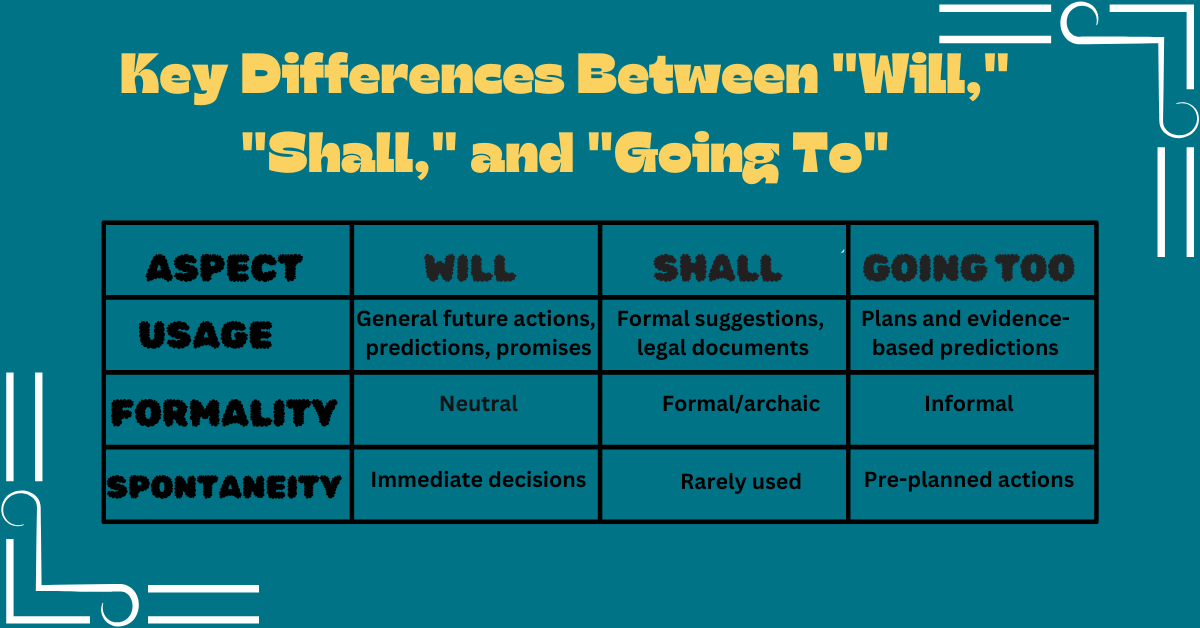
Key Differences Between “Will,” “Shall,” and “Going To”

Aspect Will Shall Going To
Usage General future actions, predictions, promises Formal suggestions, legal documents Plans and evidence-based predictions
Formality Neutral Formal/archaic Informal
Spontaneity Immediate decisions Rarely used Pre-planned actions

Tips for Choosing the Right Form

  1. Consider the context: Is it formal, casual, or spontaneous?
  2. Analyze the intent: Are you predicting, planning, or making an offer?
  3. Focus on regional preferences: British English tends to use “shall” more than American English.

Examples in Everyday Context

  1. Spontaneous Decisions: I’ll take care of it right away.
  2. Formal Suggestions: Shall we meet at 10 a.m.?
  3. Planned Actions: She’s going to study abroad next year.
  4. Predictions: It’s going to be a great day.

Conclusion

“Will,” “shall,” and “going to” each bring unique nuances to English communication. By understanding their specific roles and applications, you can confidently navigate future-tense expressions. Practice these distinctions in real-life scenarios to enhance your fluency and precision. Download the app for one on one spoken English practice with live English experts: https://engvarta.com

Have Fun with Words: Discovering the Magic of Anagrams

Have Fun with Words: Discovering the Magic of Anagrams

Language is a playground where words take center stage, and one of the most delightful games you can play is with anagrams. An anagram is a rearrangement of the letters of a word or phrase to create a new word or phrase. It’s not just a fun pastime—it’s also a brilliant way to sharpen your English skills.

Let’s dive into the fascinating world of anagrams, uncover their charm, and see how they can become a powerful tool in your English learning journey.

What is an Anagram?

An anagram is when you take a word like listen and rearrange its letters to form another word, like silent. The two words use the exact same letters but tell different stories. Simple, right? Yet, this simple concept has intrigued word lovers for centuries.

Why Should You Play with Anagrams?

Here’s why exploring anagrams can benefit your English fluency:

  1. Boost Vocabulary: Discovering new words while forming anagrams expands your vocabulary. For example, from save you can learn vase.
  2. Enhance Creativity: Crafting anagrams encourages creative thinking as you explore different combinations of letters.
  3. Improve Spelling: Rearranging letters reinforces your spelling skills as you become familiar with word patterns.
  4. Make Learning Fun: Anagrams add a playful twist to learning English, making it enjoyable and less stressful.

Examples of Anagrams

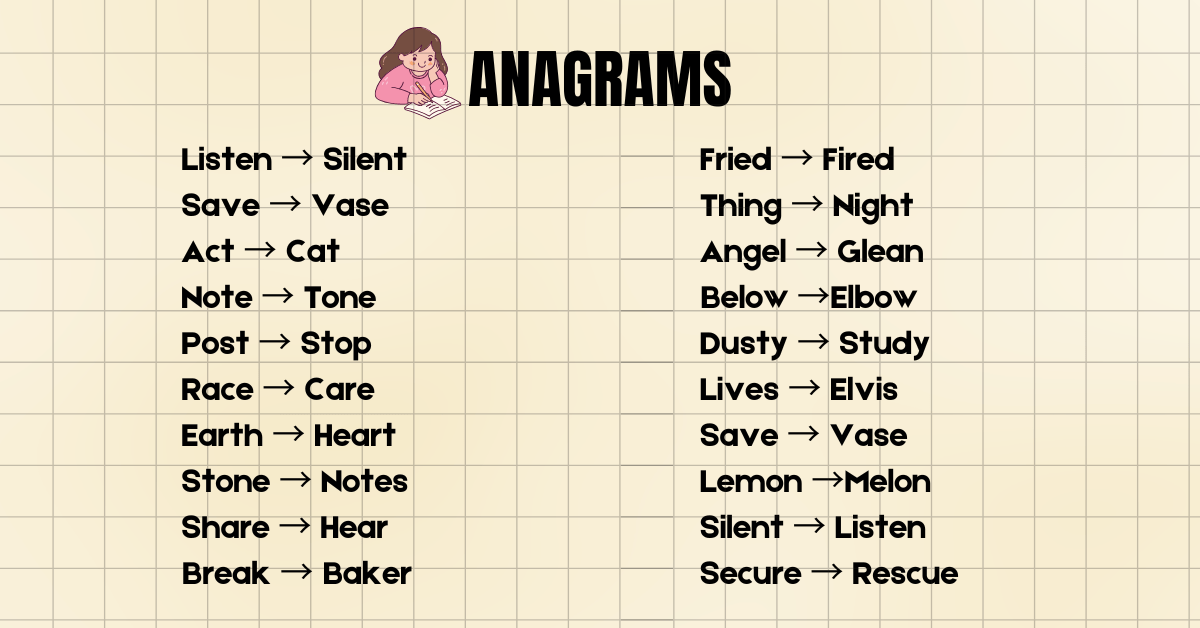
  • ListenSilent
  • SaveVase
  • ActCat
  • NoteTone
  • PostStop
  • RaceCare
  • EarthHeart
  • StoneNotes
  • ShareHear
  • BreakBaker
  • FriedFired
  • ThingNight
  • AngelGlean
  • BelowElbow
  • DustyStudy
  • LivesElvis
  • SaveVase
  • LemonMelon
  • SilentListen
  • SecureRescue

How to Use Anagrams in Learning English

  1. Word Games
    Try finding anagrams for words you encounter daily. For instance, if you see stone, think of tones or notes.
  2. Challenge Yourself
    Take a sentence or phrase and see how many anagrams you can form. Apps and online tools like Anagram Solver can help!
  3. Practice Spelling
    Use anagrams to test and improve your spelling. Rearrange the letters of a word in your head and try to recreate it.
  4. Learn Idioms and Phrases
    Create anagrams for idioms or phrases, like turning The Morse Code into Here come dots. It’s a great memory trick!

Anagrams and Communication

Anagrams are more than just a fun activity—they improve your cognitive skills and ability to see connections. When speaking or writing in English, this ability to think creatively and spot patterns can make your communication more engaging and impactful.

Try This: An Anagram Challenge!

Here’s a quick challenge for you:
Rearrange the letters of the word spar to form a new word. (Hint: You use this word when you want to wrap a gift!)

Drop your answer in the comments or share your own favorite anagrams!

Final Thoughts

Anagrams are proof that language is not just a tool but a craft that invites you to experiment and enjoy its endless possibilities. Whether you’re an English learner or a seasoned speaker, playing with anagrams can be a delightful way to grow your skills.

So, the next time you want to spice up your learning routine, dive into the magical world of anagrams. And remember, with every twist and turn of letters, you’re not just rearranging words—you’re unlocking the beauty of language.

Want to explore more fun ways to practice English?
Join the EngVarta App, where learning English is as engaging as playing with words. From live practice sessions to exciting language challenges, we make your journey to fluency enjoyable. Follw Engvarta on other social media platforms i.e. Instagram (https://instagram.com/engvarta.app) and Youtube (https://www.youtube.com/@EngVarta)

Start your journey today!

How to Stop Translating from Your Native Language While Speaking English

How to Stop Translating from Your Native Language While Speaking English

Mastering English fluency can feel like scaling a mountain, especially when you find yourself mentally translating sentences from your native language. This habit can slow down your responses, reduce confidence, and make conversations awkward. But here’s the good news—breaking free from this cycle is entirely achievable! In this blog, we’ll explore why this happens and provide actionable tips to think and speak directly in English. We’ll also dive into how the EngVarta, one of the best English learning apps, can be your game-changing tool in this journey.

Why Do You Translate While Speaking English?

  1. Dependency on Familiar Patterns
    Your brain prefers your native language because it’s familiar and comfortable. Translating gives you a sense of security.
  2. Lack of Vocabulary
    Without a strong English vocabulary, you search for equivalents in your native language, creating a habit of translation.
  3. Fear of Making Mistakes
    Translating can feel like a safety net to ensure correctness, even though it slows your fluency.

Effects of Translating on Your English Fluency

  • Slow Response Time
    Mental translation delays your replies, making conversations feel stilted.
  • Grammatical Errors
    Different languages have unique structures, and literal translations often result in incorrect grammar.
  • Reduced Confidence
    You may feel hesitant and self-conscious, hindering your ability to express yourself freely.

7 Practical Tips to Stop Translating in Your Head

1. Immerse Yourself in English

Surround yourself with English content—books, movies, and podcasts. Immersion helps your brain adapt to thinking directly in English.

2. Practice Speaking Daily

Regular practice builds muscle memory for English phrases and expressions. Using apps like EngVarta, widely regarded as the best English practice app, offers real-life speaking opportunities to enhance your fluency.

3. Learn Vocabulary in Context

Instead of memorising word lists, learn words through sentences or situations. This helps you recall them naturally during conversations.

4. Think in English

Start narrating your day, thoughts, or plans in English in your mind. It’s a small step toward forming an English-speaking habit.

5. Use Visual Learning

Connect words directly to images or experiences instead of your native language. For instance, associate “apple” with the fruit, not the translation.

6. Be Okay with Mistakes

Fluency comes with practice, and mistakes are part of the process. Focus on expressing yourself rather than perfection.

7. Engage with Native or Fluent Speakers

Speaking with fluent English speakers forces you to think on your feet and respond quickly without translating.

How EngVarta Can Help You Stop Translating

EngVarta is a practical solution for anyone struggling with fluency issues and translation habits. It’s not just another app; it’s one of the best English speaking apps for immersive learning. Here’s how:

1. Real-Time English Conversations

The app connects you with live English experts, allowing you to practice speaking in real-life scenarios without judgment.

2. Personalized Learning

Experts provide corrections and suggestions tailored to your needs, helping you refine your English without relying on translations.

3. Convenience and Flexibility

Practice anytime, anywhere. The app’s flexibility ensures you never miss a session, keeping your progress consistent.

4. Confidence Building

With daily practice and supportive feedback, you’ll gradually gain the confidence to think and speak directly in English.

When it comes to the best spoken English apps, EngVarta shines with its ability to mimic real-world conversations and give learners the environment they need to succeed.

Success Stories: How Users Overcame Translation Habits with EngVarta

Many EngVarta users have shared inspiring journeys of breaking free from translation dependency. For instance:

    • Ravi, a working professional, mentioned how daily conversations on EngVarta helped him respond confidently during client meetings.
    • Anita, a homemaker, shared that thinking in English became natural after practicing small talk with EngVarta experts every evening.

Their success underscores why EngVarta is considered one of the best English learning apps for building fluency.

Conclusion

Stopping the habit of translating while speaking English isn’t an overnight process—it’s a gradual transformation. By immersing yourself in the language, practicing consistently, and using tools like the EngVarta app, you can train your brain to think and communicate directly in English. Whether you’re preparing for interviews, academic goals, or daily conversations, EngVarta stands out as the best English practice app to help you master fluency.

Ready to level up your English? Download EngVarta, one of the best spoken English apps, today and start your journey to confident, translation-free English conversations!

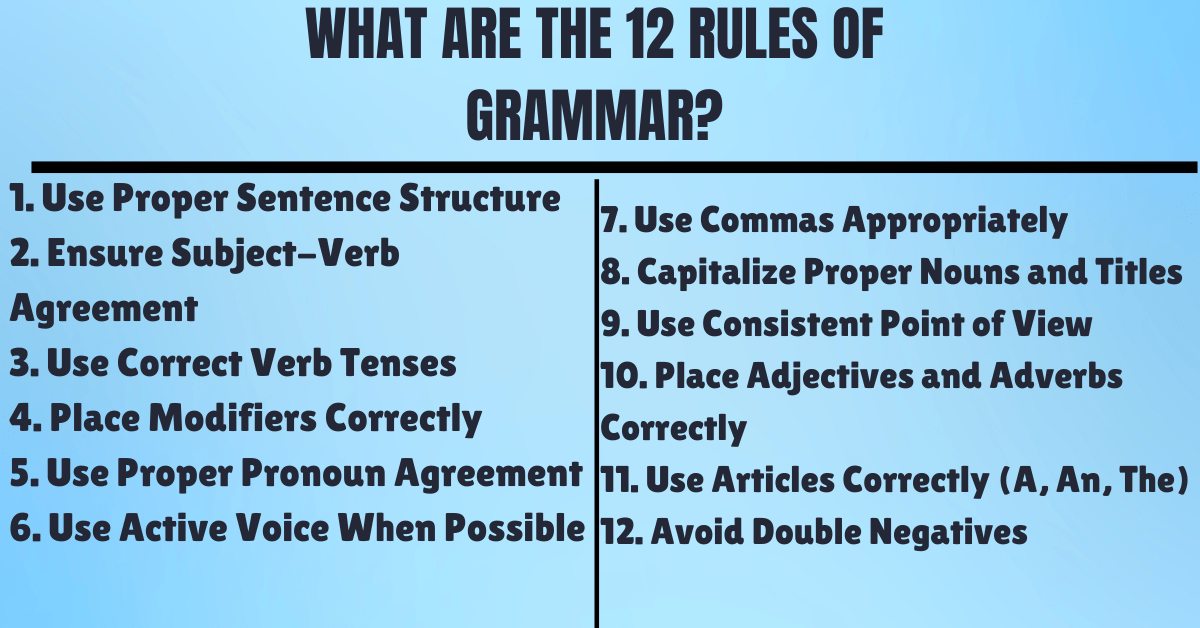
What Are the 12 Rules of Grammar?

What Are the 12 Rules of Grammar?

Good grammar is essential for making sure our sentences are clear, precise, and understood as we intend. Knowing a few fundamental grammar rules can help anyone, from beginners to advanced learners, improve their writing and speaking skills. Here are the 12 essential grammar rules that everyone should know.

1. Use Proper Sentence Structure

Every sentence should have at least one subject (who or what the sentence is about) and one predicate (what the subject is doing). Together, these form a complete thought. This grammar rule ensures your sentences are clear and convey a complete idea.

Example: The dog barked loudly.
Here, “The dog” is the subject, and “barked loudly” is the predicate.

2. Ensure Subject-Verb Agreement

In a sentence, the subject and verb must agree in number. This means a singular subject takes a singular verb, and a plural subject takes a plural verb. This grammar rule is key to maintaining clarity in your sentences.

Example: She walks to school. (Singular subject and verb)
Example: They walk to school. (Plural subject and verb)

3. Use Correct Verb Tenses

Verb tenses indicate when an action occurs (past, present, or future). It’s essential to use the correct tense and be consistent throughout your sentence or paragraph. This grammar rule ensures your reader or listener knows when the action is happening.

Example: He studied yesterday. (Past tense)
Example: She studies every day. (Present tense)

4. Place Modifiers Correctly

Modifiers add detail to a sentence, but they should be placed close to the word they’re modifying to avoid confusion. Misplaced modifiers can change the meaning of a sentence, so following this grammar rule is essential for accuracy.

Correct: The boy with a red hat is my friend.
Incorrect: The boy is my friend with a red hat.

5. Use Proper Pronoun Agreement

Pronouns must agree with the nouns they replace in both number (singular/plural) and gender. Following this grammar rule helps keep sentences clear and understandable.

Example: Sarah lost her book. (“Her” refers to Sarah)
Example: The students raised their hands. (“Their” refers to students)

6. Use Active Voice When Possible

In the active voice, the subject performs the action, making sentences clearer and more direct. This grammar rule can make your writing and speaking more engaging.

Active Voice: The chef prepared the meal.
Passive Voice: The meal was prepared by the chef.

7. Use Commas Appropriately

Commas help clarify meaning by separating different elements in a sentence. Use them to separate items in a list, introductory phrases, and clauses. This grammar rule is crucial for proper punctuation.

Example: After dinner, we went for a walk.
Example: She bought apples, oranges, and bananas.

8. Capitalize Proper Nouns and Titles

Always capitalize proper nouns (specific names of people, places, and things) and titles when they’re used as part of someone’s name. This grammar rule ensures correct formatting in formal writing.

Example: I visited New York City.
Example: Doctor Smith is here.

9. Use Consistent Point of View

Maintain a consistent point of view throughout a sentence or paragraph. Shifting from “I” to “you” or “he/she” within a sentence can be confusing. This grammar rule keeps the sentence focused.

Correct: I went to the market and bought some vegetables.
Incorrect: I went to the market, and you bought some vegetables.

10. Place Adjectives and Adverbs Correctly

Adjectives describe nouns, while adverbs modify verbs, adjectives, or other adverbs. Make sure they’re placed correctly to clarify what they’re modifying. This grammar rule enhances clarity.

Example: She quickly finished her homework. (Quickly modifies the verb finished)
Example: The blue car is mine. (Blue describes the car)

11. Use Articles Correctly (A, An, The)

“A” and “an” are indefinite articles and are used with non-specific nouns, while “the” is a definite article used for specific nouns. Following this grammar rule helps clarify which nouns are general and which are specific.

Example: I saw a cat. (Any cat)
Example: I saw the cat that lives in our neighborhood. (A specific cat)

12. Avoid Double Negatives

Double negatives can make sentences confusing. In English, using two negatives in the same sentence cancels each other out, making the sentence positive. This grammar rule is essential for clarity.

Incorrect: I don’t have no money.
Correct: I don’t have any money.

In Summary

These 12 grammar rules provide a strong foundation for clear, effective communication in English. Mastering them can make a significant difference in how well you express yourself, whether you’re speaking or writing. But remember, grammar alone isn’t enough. To truly build fluency, you need consistent, real-world practice. That’s where the EngVarta app comes in. It connects you with live English experts over phone calls, giving you a safe space to apply these rules in actual conversations, get instant corrections, and boost your confidence. Download the EngVarta app today and turn grammar knowledge into real communication skills. Happy learning!

Learn English with EngVarta – Both Free and Paid Ways to Become Fluent

Learn English with EngVarta – Both Free and Paid Ways to Become Fluent

When it comes to learning English, everyone has their own style and preferences. Some want a fully immersive experience with live practice, while others are happy picking up tips and lessons at their own pace. With EngVarta, you have the freedom to choose both options – whether you want to pay for live expert sessions or prefer to learn English for free. But here’s the exciting part: if you want to learn English for absolutely free, EngVarta’s YouTube channel is your perfect go-to resource!

Let’s explore how EngVarta provides both paid and free learning opportunities, with a focus on how you can start your English learning journey without any cost.

The Free Way to Learn English – EngVarta’s YouTube Channel

If you’re looking to learn English without any financial commitment, EngVarta’s YouTube channel is your treasure chest. Packed with hundreds of videos covering everything from vocabulary building to speaking hacks, this channel makes English learning fun, accessible, and absolutely FREE.

The videos are designed to help learners of all levels – from beginners to advanced speakers. And the best part is that you can learn English anytime, anywhere, and at your own pace. Here are some highlights of what the YouTube channel offers:

  1. Daily English Lessons: The channel covers a wide range of topics, such as grammar rules, sentence structures, and practical speaking tips.
  2. Improve Your Vocabulary: Whether you’re looking to build your day-to-day vocabulary or want to learn advanced words, the channel provides easy-to-understand explanations and examples.
  3. Speaking Tips & Conversation Practice: The channel offers practical advice to help you speak English more naturally and confidently. Learn common phrases, pronunciation tips, and how to start conversations in English.
  4. Motivational Content to Keep You Going: EngVarta not only focuses on language lessons but also shares motivational content that inspires you to keep learning and growing as an English speaker.

👉 Visit and Subscribe to EngVarta’s YouTube Channel for Free English Lessons 👈

Subscribing to the channel gives you instant access to all their free content, ensuring you never miss an update or a new lesson. It’s a fantastic way to keep your English practice fresh and exciting without spending a dime!

The Paid Way – EngVarta App for Live Practice

While the YouTube channel is an excellent way to learn English for free, EngVarta also offers a more personalized and immersive experience through its paid app services. The app connects you with live English experts for one-on-one practice sessions, where you can focus on improving your fluency, pronunciation, and confidence in real-time conversations.

Here’s what the paid EngVarta app offers:

  1. Live Practice Sessions: Practice speaking English with real experts who guide you through conversations, helping you build confidence and correct mistakes.
  2. Customized Learning Experience: Whether you’re a student, a professional, or someone who simply wants to improve their conversational skills, the experts on EngVarta adapt to your level and needs.
  3. Flexible Scheduling: Choose when and how often you want to practice. The app provides flexibility, allowing you to schedule sessions at your convenience.

Why Start Learning with EngVarta’s YouTube Channel?

  1. Access to Quality Lessons Anytime: The channel is filled with quick, informative, and engaging videos that allow you to learn English on the go. No matter where you are, you can access these lessons on your phone or computer.
  2. Comprehensive Range of Topics: From grammar and vocabulary to speaking hacks and pronunciation tips, the YouTube channel covers all the key areas you need to improve your English skills.
  3. Self-Paced Learning – No Pressure: Unlike traditional classes, you can watch these videos at your own pace. Revisit lessons as many times as you need to fully understand and practice the concepts.
  4. Completely Free – No Subscription Needed: Perhaps the best part about EngVarta’s YouTube channel is that it is 100% free. You don’t need to worry about subscriptions or fees. All you have to do is hit the subscribe button and start learning!

How to Start Your Free English Learning Journey

It’s as simple as heading over to EngVarta’s YouTube channel and clicking “Subscribe.” Once subscribed, you’ll have a world of English learning resources at your fingertips. From easy-to-understand grammar lessons to practical speaking tips, you can start improving your English fluency today without paying a single penny.

👉 Subscribe to EngVarta’s YouTube Channel Now! 👈

And if you’re ready to take your learning to the next level with live speaking practice, you can download the EngVarta app and explore their personalized, expert-led sessions.

Wrapping Up: Two Paths to Fluent English – Choose Yours!

EngVarta provides two amazing ways to learn English:

  1. The Free Path: Use EngVarta’s YouTube channel to access tons of free lessons and start improving your English from day one.
  2. The Paid Path: Download the EngVarta app to connect with experts and practice speaking live, getting personalized feedback and support.

Whether you choose to learn for free or go for a paid experience, EngVarta makes sure you have the right resources to improve your English fluency and confidence.

Start your journey to fluent English with EngVarta today, and remember – the best way to learn is to practice, practice, practice! 😊

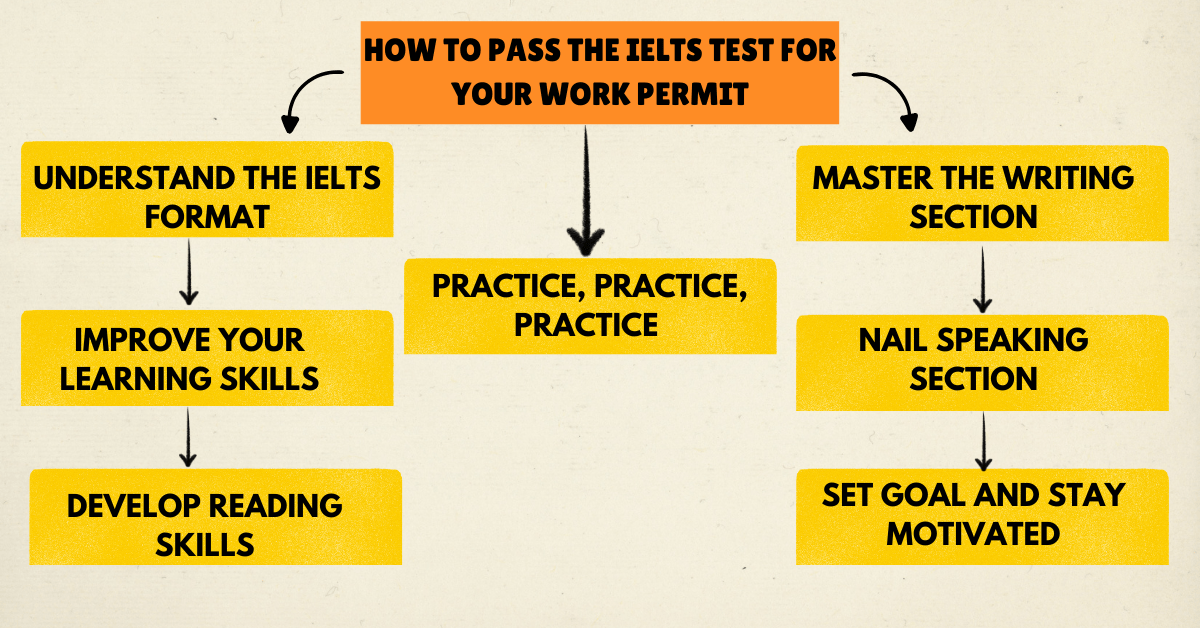
How to Pass the IELTS Test for Your Work Permit

How to Pass the IELTS Test for Your Work Permit

Are you dreaming of securing a work permit abroad? Whether it’s the fast-paced life in Canada, the tech boom in Australia, or the rich cultural heritage of the UK, there’s one crucial step between you and your dream job: the IELTS test. The International English Language Testing System (IELTS) is a requirement for anyone seeking a work permit in an English-speaking country. But here’s the good news – with the right strategy, mindset, and practice, passing the IELTS test is entirely achievable!

This guide will walk you through key steps to crack the IELTS exam and get closer to that work permit you’ve been working toward.

1. Understand the IELTS Format

The IELTS test assesses your English language skills across four areas: Listening, Reading, Writing, and Speaking. Each section is scored on a band scale from 1 to 9. The score you need depends on your destination country and job requirements.

Here’s a quick overview of what each section involves:

  • Listening: 40 questions based on four recorded monologues and conversations. (Duration: 30 minutes)
  • Reading: 40 questions testing comprehension from three texts. (Duration: 60 minutes)
  • Writing: Two tasks, including essay writing and report/letter writing. (Duration: 60 minutes)
  • Speaking: A face-to-face interview with the examiner. (Duration: 11-14 minutes)

Familiarizing yourself with the test format is the first step toward success. Knowing what to expect will help reduce exam anxiety and allow you to manage time effectively.

2. Improve Your Listening Skills with Authentic Resources

The Listening section evaluates not only your understanding but also your ability to follow different accents, word stress, and informal language. You’ll hear speakers from various English-speaking countries, so exposing yourself to different accents is key.

Pro Tips:

  • Watch English-language news channels like BBC, CBC, or Australian Broadcasting Corporation to get used to multiple accents.
  • Listen to podcasts on a variety of topics that interest you. Podcasts are great because they expose you to conversational English.
  • Practice listening to dialogues, interviews, and audio resources where speakers use different accents and speeds.

Regular exposure to authentic English content will sharpen your ability to catch key details and understand various accents, which is essential for scoring well in the Listening section.

 3. Develop Analytical Reading Skills

The Reading section is more than just scanning texts quickly. You’ll need to understand and analyze the material. This section requires you to identify key ideas, understand arguments, and draw inferences.

Pro Tips:

  • Read a variety of texts, such as newspapers, research articles, blogs, and opinion pieces. Focus on publications like The Guardian, The Economist, or National Geographic.
  • Pay attention to how the content is structured. Look at how arguments are presented, evidence is supported, and conclusions are drawn. This practice will help you recognize similar patterns in the IELTS exam.
  • Practice skimming for general ideas and scanning for specific information.

Make it a habit to ask yourself questions like, “What’s the main idea?” and “What’s the writer’s argument?” This will help you prepare for the wide range of texts you’ll encounter during the test.

4. Master the Writing Section with Structured Practice

For the Writing section, structure and clarity are essential. Task 1 typically involves writing a report based on visual data or a letter, while Task 2 requires you to write an essay on a specific topic. Here, you’ll need to demonstrate strong grammar skills and the ability to organize your thoughts logically.

Pro Tips:

  • Task 1: Practice writing short reports or letters. Focus on describing graphs, charts, or data trends in clear, concise language.
  • Task 2: Develop your essay-writing skills using a simple structure: Introduction, Body (two paragraphs), and Conclusion. Ensure each paragraph has a clear point and supporting evidence.
  • Avoid overly complicated sentences. Simplicity and clarity score higher than complex yet unclear writing.
  • Time yourself during practice. Write essays within the 40-minute limit for Task 2, and ensure you don’t spend more than 20 minutes on Task 1.

Aim for coherence (a smooth flow of ideas) and accuracy (correct grammar and vocabulary). These are the hallmarks of a high-scoring essay.

5. Nail the Speaking Section with Fluency and Confidence

The Speaking section can be intimidating because it involves a face-to-face interview with an examiner. However, it’s also one of the most rewarding sections if you can demonstrate fluency and confidence in your speaking ability.

Pro Tips:

  • Practice speaking English daily. Find a language partner or join an online speaking club to practice with native or fluent speakers.
  • Record yourself speaking on random topics, then listen to your recordings to improve pronunciation and fluency.
  • Focus on fluency over perfection. Don’t pause too often to think about grammar. Speak naturally and confidently.

The examiner isn’t looking for flawless English. Instead, they’ll assess how well you can communicate your ideas. Confidence plays a huge role here, so the more you practice, the more comfortable you’ll be during the actual exam.

6. Practice, Practice, Practice

There’s no shortcut to success in the IELTS exam – consistent practice is the key. Schedule dedicated time to practice each section of the test, and simulate real exam conditions whenever possible. This will help you manage your time during the actual test and avoid feeling overwhelmed.

Pro Tips:

  • Use official IELTS practice tests available online or in study books to familiarize yourself with the test format and question types.
  • Join IELTS preparation courses or work with a tutor to receive personalized feedback and guidance.
  • Track your progress by identifying mistakes and weak areas, then systematically work on improving them.

7. Set a Goal and Stay Motivated

Finally, keep your eye on the prize. Passing the IELTS test is your gateway to better job opportunities, higher income, and a world of possibilities. Set clear, achievable goals for each section, and stay disciplined in your preparation.

If you ever feel stuck or unmotivated, remind yourself why you’re taking this test. Your work permit is within reach, and each day of preparation brings you closer to that goal.

Final Thoughts

Passing the IELTS test isn’t just about language proficiency – it’s about preparation, practice, and persistence. By understanding the test format, honing your English skills, and developing the right strategies, you’ll be well on your way to success. Every day you spend preparing is a step closer to that work permit and the dream job you’ve been envisioning.

So, gear up, put in the effort, and get ready to ace the IELTS. Your future abroad is waiting for you!

Stay Connected with Fixolang

For more tips and real-time practice, connect with us on all our social media platforms:

Or download the Fixolang App for instant IELTS practice and feedback:

Prepare smarter, and pass your IELTS test with confidence. Happy learning!

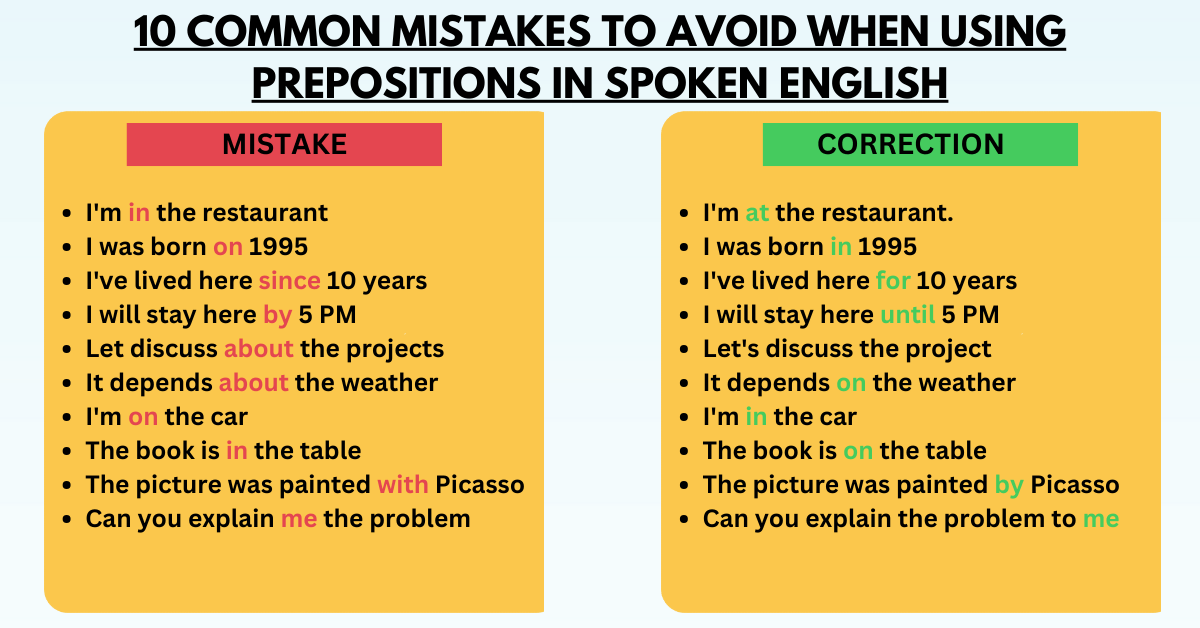
10 Common Mistakes to Avoid When Using Prepositions in Spoken English

10 Common Mistakes to Avoid When Using Prepositions in Spoken English

Prepositions are those small but mighty words that link nouns, pronouns, or phrases to other words within a sentence. They’re everywhere in spoken English, but mastering their use can be tricky, especially for non-native speakers. Today, we’ll go over 10 common mistakes people make with prepositions and how to avoid them.

1. Confusing ‘In’ and ‘At’ for Locations

  • Mistake: Saying, “I’m in the restaurant” when you mean, “I’m at the restaurant.”
  • Correction: Use ‘at’ when you’re talking about specific locations, like “at the office” or “at the park.” Use ‘in’ when you’re referring to something more general or enclosed, like “in the city” or “in the car.”

2. Using ‘On’ Instead of ‘In’ for Months and Years

  • Mistake: Saying, “I was born on 1995″ instead of “I was born in 1995.”
  • Correction: Use ‘in’ for months, years, centuries, and long periods of time, like “in March” or “in 2025.” Use ‘on’ for specific days or dates, like “on Tuesday” or “on December 12th.”

3. Mixing Up ‘For’ and ‘Since’ with Time Expressions

  • Mistake: Saying, “I’ve lived here since 10 years” instead of “I’ve lived here for 10 years.”
  • Correction: Use ‘for’ when talking about the length of time (a duration), like “for 10 years.” Use ‘since’ when you’re referring to the starting point in time, like “since 2010.”

4. Incorrect Use of ‘By’ and ‘Until’

  • Mistake: Saying, “I will stay here by 5 PM” instead of “I will stay here until 5 PM.”
  • Correction: ‘Until’ is used to indicate the time something will continue to happen, like “until 5 PM.” ‘By’ is used to show the deadline or when something must be completed, like “Please finish this by Friday.”

5. Incorrect Use of ‘To’ After ‘Discuss’

  • Mistake: Saying, “Let’s discuss about the project” instead of “Let’s discuss the project.”
  • Correction: The verb ‘discuss’ doesn’t require a preposition. You should say, “Let’s discuss the project,” without ‘about.’

6. Confusing ‘On’ and ‘About’ After ‘Depend’

  • Mistake: Saying, “It depends about the weather” instead of “It depends on the weather.”
  • Correction: Always use ‘on’ after the verb ‘depend,’ as in “It depends on the weather,” or “It depends on you.”

7. Mixing Up ‘In’ and ‘On’ with Transportation

  • Mistake: Saying, “I’m on the car” instead of “I’m in the car.”
  • Correction: Use ‘in’ for smaller vehicles like cars or taxis (“in the car”) and ‘on’ for larger modes of transportation like buses, trains, and planes (“on the bus”).

8. Using ‘In’ Instead of ‘On’ for Surfaces

  • Mistake: Saying, “The book is in the table” instead of “The book is on the table.”
  • Correction: Use ‘on’ when referring to something that’s on a surface, like “on the table,” “on the floor,” or “on the shelf.”

9. Confusing ‘With’ and ‘By’

  • Mistake: Saying, “The picture was painted with Picasso” instead of “The picture was painted by Picasso.”
  • Correction: Use ‘by’ when you’re talking about the agent or doer of an action (“painted by Picasso”), and ‘with’ when you’re referring to the tool or instrument used (“painted with a brush”).

10. Incorrect Use of ‘To’ After ‘Explain’

  • Mistake: Saying, “Can you explain me the problem?” instead of “Can you explain the problem to me?”
  • Correction: The verb ‘explain’ needs to be followed by the object first and then the person it’s explained to: “Explain the problem to me.”

For more information, you can check this blog Prepositions of Time in English – At, On, In

How to Avoid These Mistakes?

  1. Practice Listening and Reading: Exposure to correct usage through podcasts, TV shows, and books will help you naturally pick up the right prepositions.
  2. Use an English Learning App: Apps like EngVarta provide real-time conversations with English experts, helping you identify and correct preposition mistakes in real time.
  3. Create Flashcards: Make a list of common preposition phrases and review them daily.
  4. Speak Regularly: The more you practice speaking English, the more natural it is to use prepositions.

Mastering prepositions may seem challenging, but with practice, you’ll find yourself making fewer and fewer mistakes. Prepositions can often change the entire meaning of a sentence, so using them correctly is key to fluency.

By avoiding these 10 common mistakes, you’ll see a noticeable improvement in your spoken English!

Ready to master prepositions and speak English confidently? Download EngVarta today and start practicing with live experts!

Best English Learning Apps for Travelers: Learn On the Go

Best English Learning Apps for Travelers: Learn On the Go

In today’s world, English has become a global language, essential for communication in almost every country. For travelers, the ability to speak English fluently opens doors to new experiences and smoother journeys. Whether navigating foreign streets or engaging in local markets, speaking English can make all the difference. Here are the top 10 best English learning apps for travelers, providing flexibility and effective learning strategies to help you learn on the go.

Duolingo: Fun and Gamified Learning

Duolingo is a free, gamified language learning app that’s perfect for beginners. It uses a fun, game-like structure to keep learners engaged, offering quick lessons that fit easily into a traveler’s schedule. The app’s bite-sized lessons cover a range of topics, from basic vocabulary to more complex grammar rules, making it one of the best English learning apps for travelers looking for a simple and entertaining way to start learning.

EngVarta: Real-Time Practice with Experts

EngVarta is an innovative app that focuses on live conversation practice with English experts, setting it apart from other language apps that use automated lessons. This is a game-changer for travelers looking to build confidence in speaking English quickly. The app connects users with real people, offering a personalized and practical approach to learning, making it one of the best English learning apps for travelers who want to enhance their speaking skills in a realistic setting.

Why Choose EngVarta?

  • Real-Time Interaction: Unlike other apps, EngVarta provides live sessions with English experts, allowing for real-time conversation practice. This is particularly valuable for travelers who need to improve their speaking skills quickly.
  • Personalized Learning: Sessions are tailored to individual needs, whether you want to focus on everyday conversations, business English, or travel-specific scenarios.
  • Flexible Scheduling: Perfect for travelers, EngVarta allows you to schedule sessions at your convenience, making it easy to fit learning into any itinerary.
  • Confidence Building: Regular interaction with native speakers helps build confidence and fluency, essential for navigating new countries and cultures.

Download EngVarta Now:

Connect with EngVarta on social media to get tips, updates, and more:

Babbel: Structured Lessons for In-Depth Learning

Babbel is known for its structured approach to language learning. It offers lessons crafted by language experts that focus on grammar, vocabulary, and practical conversation skills, ideal for serious learners who want a thorough understanding of English.

Rosetta Stone: Immersive Language Learning

Rosetta Stone has been a pioneer in language learning for decades. The app focuses on immersive learning, encouraging users to think and learn in the new language without translation, which can be particularly effective for learning English. This immersive approach makes it one of the best English learning apps for travelers who want to fully dive into the language.

Memrise: Learning with Native Speakers

Memrise uses a combination of video clips of native speakers and interactive games to make learning a new language both fun and effective. It’s ideal for travelers who want to learn practical phrases and expressions used in everyday conversation.

Busuu: Community-Driven Learning

Busuu offers a unique blend of traditional language lessons and social learning features. It allows users to interact with native speakers, providing opportunities to practice writing and speaking with real people, enhancing the learning experience.

HelloTalk: Language Exchange Community

HelloTalk is more of a social network than a traditional learning app. It connects users with native speakers around the world for language exchange, making it perfect for travelers who want to practice conversational English and gain cultural insights directly from locals.

Pimsleur: Audio-Based Learning for On-the-Go

Pimsleur is a renowned audio-based learning app that focuses on listening and speaking skills. It’s perfect for travelers who want to learn hands-free while commuting or multitasking, making language learning seamlessly fit into a busy travel schedule.

Mondly: High-Tech Language Learning

Mondly utilizes modern technology like augmented reality (AR) and chatbots to enhance the language learning experience. It offers a variety of interactive exercises and conversations for comprehensive learning, making it a fun and engaging tool for travelers.

TripLingo: Traveler-Focused Language and Culture App

TripLingo is designed specifically for travelers, offering language learning tools along with cultural insights and essential travel phrases. It’s a handy app for navigating different countries and cultures, providing both language learning and cultural immersion.

Conclusion

For travelers looking to learn English on the go, these apps offer a range of methods and features to suit different learning styles and needs. From gamified lessons with Duolingo to structured courses with Babbel, and immersive learning with Rosetta Stone, there’s something for everyone. However, EngVarta stands out with its unique focus on live conversation practice, making it the best choice for those who want to improve their speaking skills quickly and effectively. So, download EngVarta today and start your journey towards fluent English communication with one of the best English learning apps for travelers!

By incorporating these English learning apps into your travel routine, you can make the most of your time abroad while improving your language skills in engaging and effective ways.

Can an IELTS Preparation App Replace Traditional Coaching? Here’s What You Need to Know

Can an IELTS Preparation App Replace Traditional Coaching? Here's What You Need to Know

Let’s face it—life is hectic, and finding the time to attend regular IELTS classes can feel like squeezing water from a stone. Enter the IELTS preparation app: sleek, convenient, and packed with features promising to help you ace the exam. But here’s the burning question: can these apps truly replace the tried-and-true traditional coaching? Let’s unravel the truth behind this digital versus classroom debate.

The Appeal of IELTS Preparation Apps: Why Everyone’s Talking About Them

IELTS preparation app are on the rise, and it’s easy to see why. They offer a modern approach to learning that seems tailor-made for our fast-paced lives. But are they really the game-changers they claim to be?

  1. Study Anywhere, Anytime—Literally: Imagine prepping for the IELTS while waiting for your coffee, during your commute, or in the comfort of your bed. IELTS apps make it possible. The flexibility to study whenever and wherever you want is a massive plus for busy individuals who can’t commit to rigid class schedules.
  2. Learning That Adapts to You: Ever wish your learning material could just ‘get’ you? Many IELTS apps use AI to do just that, adapting to your learning speed, focusing on your weak spots, and pushing you in the right direction. It’s like having a study buddy who knows exactly what you need.
  3. Save Your Wallet: Let’s be real—traditional IELTS coaching can burn a hole in your pocket. In contrast, apps are typically much more affordable, with some offering free versions that are surprisingly robust. For those on a budget, this makes apps a very tempting option.
  4. Instant Gratification: Waiting for feedback from a teacher can feel like an eternity, especially when you’re itching to improve. Apps often provide instant feedback on your practice tests and exercises, giving you the power to correct mistakes on the spot.

The Other Side of the Coin: Where IELTS Apps Might Fall Short

While IELTS apps offer some undeniable perks, they also come with limitations that could be deal-breakers depending on your needs.

  1. No Substitute for a Real Teacher: As smart as these apps are, they can’t replace the wisdom and guidance of a seasoned teacher. Traditional coaching gives you access to expert insights, personalized strategies, and in-depth explanations that apps simply can’t match.
  2. Interaction? Not So Much: Learning is not just about absorbing information—it’s about engaging with it. In a classroom, you can ask questions, participate in discussions, and get immediate clarification. With apps, the interaction is usually one-sided, which might leave you feeling a bit lost on more complex topics.
  3. The Discipline Dilemma: Here’s the thing—studying on your own requires a lot of self-discipline. Without the structure and accountability of a traditional class, it’s easy to slack off or get distracted. Traditional coaching, with its regular schedule and deadlines, helps keep you on track.
  4. Speaking of Speaking…: The speaking section of the IELTS is where many students stumble, and for good reason—it’s tough! While apps can help with pronunciation and vocabulary, they can’t fully replicate the experience of practicing with a real person. In a traditional coaching setting, you get to practice speaking in a supportive environment, which is crucial for building confidence.

The Sweet Spot: Blending Both Worlds

The truth is, you don’t have to choose between an IELTS app and traditional coaching—you can have the best of both worlds.

  • Use Apps to Complement Your Coaching:
    Think of IELTS apps as your on-the-go toolkit. Use them to reinforce what you’ve learned in class, fit in extra practice, and identify where you need more help.
  • Traditional Coaching for the Deep Dive:
    Enroll in traditional coaching to get the personalized guidance and hands-on practice that apps can’t fully provide. It’s where you can ask those tricky questions and get feedback that’s tailored just for you.
  • Consider Online Tutoring:
    If attending in-person classes isn’t feasible, online tutoring could be your golden ticket. It combines the convenience of digital learning with the interactive, personalized touch of traditional coaching.

Final Thoughts: What’s the Best Path for You?

When it comes to preparing for the IELTS, there’s no one-size-fits-all answer. It all boils down to your personal learning style, your goals, and your life circumstances. For some, the convenience and affordability of an app might be all they need. For others, the depth and structure of traditional coaching are irreplaceable.

So, why not blend both approaches? Use the power of an app to supplement the rich experience of traditional coaching, or mix in online tutoring for a personalized touch. Remember, the goal is not just to work hard but to work smart—so choose the path that aligns with your needs and gives you the best shot at IELTS success.

Phone Call Vocabulary & Phrases in English

Phone Call Vocabulary & Phrases in English

Effective communication is vital in both personal and professional settings, and phone calls are a significant part of our daily interactions. Mastering phone call vocabulary and phrases can greatly enhance your confidence and clarity when talking on the phone. Whether you’re making a business call, setting up an appointment, or catching up with a friend, here are some essential phrases and tips to help you navigate phone calls with ease.

Introduction to Phone Call Etiquette

Before diving into specific phone call vocabulary and phrases, it’s important to understand some basic phone call etiquette:

  • Greet politely: Always start with a friendly greeting.
  • Identify yourself: State your name and, if necessary, your company or organization.
  • Be clear and concise: Get to the point while being courteous.
  • Listen actively: Pay attention to the other person and respond appropriately.
  • End the call gracefully: Summarize key points and say goodbye politely.

Common Phone Call Vocabulary and Phrases

Starting the Call

  1. Making a Call:
    • “Hello, this is [Your Name]. May I speak with [Recipient’s Name], please?”
    • “Good morning/afternoon/evening, this is [Your Name] from [Your Company]. I’m calling regarding [reason for the call].”
  2. Receiving a Call:
    • “Hello, [Your Name] speaking. How can I help you?”
    • “Thank you for calling [Your Company]. This is [Your Name]. How may I assist you?”

Requesting Information or Action

  1. Asking for Someone:
    • “Could I speak to [Recipient’s Name], please?”
    • “Is [Recipient’s Name] available?”
  2. Leaving a Message:
    • “Could you please take a message for [Recipient’s Name]?”
    • “Please let [Recipient’s Name] know that I called and ask them to call me back.”
  3. Clarifying Information:
    • “Could you please repeat that?”
    • “I didn’t catch that. Could you say it again, please?”

Confirming and Arranging Details

  1. Confirming Information:
    • “Let me confirm that. You said [details], correct?”
    • “Just to be sure, your appointment is at [time] on [date], right?”
  2. Making Appointments:
    • “I’d like to schedule an appointment with [Recipient’s Name].”
    • “Is [time] on [date] convenient for you?”
  3. Agreeing to Arrangements:
    • “That works for me. Thank you.”
    • “I look forward to it. See you then.”

Handling Issues

  1. Expressing Concerns:
    • “I’m afraid there’s a problem with [issue].”
    • “I’m not happy with [issue]. Can you help resolve it?”
  2. Seeking Assistance:
    • “Can you please help me with [problem]?”
    • “I’m having trouble with [issue]. Could you assist me?”

Ending the Call

  1. Summarizing the Call:
    • “To summarize, we’ve agreed on [details].”
    • “Just to recap, you will [action].”
  2. Saying Goodbye:
    • “Thank you for your time. Goodbye.”
    • “Have a great day. Bye!”

For Commonly Used Telephone Phrasal Verbs in English you can check this blog https://engvarta.com/commonly-used-telephone-phrasal-verbs-in-english/

Advanced Tips for Phone Conversations

  1. Stay Positive: Always maintain a positive and friendly tone, even if the conversation is challenging.
  2. Take Notes: Write down important details during the call to avoid forgetting key points.
  3. Speak Clearly: Communicate your words clearly and avoid speaking too quickly.
  4. Be Patient: Allow the other person to speak without interrupting.
  5. Use Polite Language: Phrases like “please,” “thank you,” and “excuse me” go a long way in maintaining politeness.

Stay Connected with EngVarta

Enhance your English communication skills further by joining the EngVarta community! Follow us on social media for tips, resources, and engaging content to help you master English:

Download the EngVarta app from the Play Store and App Store and stay connected, stay motivated, and keep learning!

Conclusion

Mastering phone call vocabulary and phrases in English can significantly improve your communication skills. By using these phrases and tips, you can handle various phone conversations with confidence and professionalism. Remember, practice makes perfect, so don’t hesitate to use this phone call vocabulary in your daily interactions.