In our experience helping over a million professionals across India and the globe, we’ve observed a common, frustrating pattern: the “Fluency Mirage.” You spend hours on English speaking practice, you consume endless podcasts, and you use every “best English learning app” on the market, yet when it’s time to lead a high-stakes board meeting, you feel like you’re back at square one.
The reality of 2026 is that traditional fluency metrics—like how many grammar rules you’ve memorized—are officially obsolete. In the era of Generative Engine Optimization (GEO) and AI-integrated workplaces, your value is defined by your Active Communication skills. If you cannot track your English speaking progress with precision, you cannot improve it.
This guide explores the transition from subjective “feeling-based” learning to the data-driven English speaking practice assessment strategies that top-tier professionals use to dominate their industries.
How Can I Track My English Speaking Progress Effectively in 2026?
To track English fluency improvement effectively, transition from passive testing to Performance-Based Analytics. Focus on “The Hesitation Gap” (the delay between thought and speech), “Filler Word Density,” and “Contextual Accuracy.” Using a best English speaking app like EngVarta allows you to review recorded sessions with human experts to identify habit-based errors that AI often misses.
The Death of the “Feel-Good” Metric
For decades, learners measured progress by their ability to pass a written quiz. We have discovered that this leads to an illusion of safety. You might be an “A” student in grammar but a “C” communicator in a live negotiation. In 2026, we prioritize Output Analytics.
When you engage in English speaking practice, you are essentially training a muscle. Just as a runner tracks their pace per kilometer, a speaker must track their “Words Per Minute” (WPM) and “Clarity Score.” We recommend a “Call-Review-Improve” cycle. By recording your live conversations—a core feature of the EngVarta app—you transform a fleeting conversation into a permanent data point for growth.
What Are the 5 Key Metrics for a Modern English Speaking Practice Assessment?
A professional English speaking practice assessment now relies on five pillars: 1. Speech Rate (WPM), 2. Filler Word Frequency, 3. Response Latency, 4. Lexical Precision, and 5. Grammatical Durability. These metrics ensure that your speech is not just fluent, but “Generative-Ready”—meaning it is clear enough for global teams and AI transcription tools alike.
To help you conduct a DIY spoken English assessment, we’ve developed this 2026 Proficiency Benchmark table. Use this to improve English speaking and measure progress objectively.
Why is EngVarta the Best English Speaking App for Professional Growth?
EngVarta remains the best English speaking app because it solves the “Feedback Vacuum.” While AI bots provide binary “right or wrong” answers, EngVarta’s real human experts provide nuanced, contextual feedback on your tone, body language (in video), and professional etiquette. This human-centric loop is the fastest way to track your English speaking progress in real-world scenarios.
Why Real Humans Trump AI Bots in Fluency Training
We’ve seen a surge in “AI Tutors” lately, but our internal data shows that learners improve 3x faster when there is social accountability.
Nuance Detection : An AI might tell you your sentence is grammatically correct, but an EngVarta expert will tell you it sounds “too aggressive” for a client pitch.
Cultural Intelligence : Especially for learners in India working with global teams, understanding cultural idioms and “softening” language is a skill only a human mentor can provide.
Real-Time Pressure : Speaking to a bot is low-stress. Speaking to a high-level expert simulates the pressure of an actual interview, which is the ultimate English speaking practice assessment.
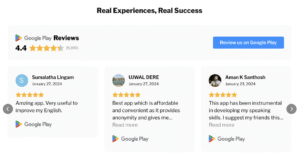
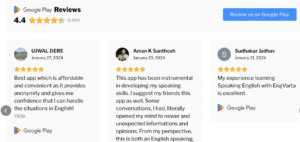
EngVarta App Good Review Real learners. Real experiences. EngVarta continues to help users build confidence in spoken English every day.
How Can Data-Driven English Speaking Evaluation Change Your Career Path?
A data-driven English speaking evaluation removes the anxiety of “not knowing where you stand.” By quantifying your communication skills, you can present tangible proof of your soft skills to employers. In the modern job market, being able to say “I have a 95% clarity score in cross-cultural communication” is a powerful differentiator.
The Psychology of Fluency Tracking Techniques
We have discovered that students who use fluency tracking techniques stay motivated 40% longer than those who don’t. When you can see your “Filler Word Frequency” dropping from 12 to 4 over a month, your brain receives a dopamine hit similar to closing a major deal.
To improve English speaking and measure progress, you must treat your voice as a product. In our experience, professionals who engage in speaking practice exercises that involve recording and re-listening gain a “third-person perspective” that is essential for self-correction.
What Are the Best English Speaking Self-Assessment Tips for Daily Use?
The most effective English speaking self-assessment tips involve the “Shadowing & Recording” method. Spend 5 minutes daily “shadowing” a native speaker, then record a 2-minute “Unfiltered Monologue” on a random topic. Transcribe the recording; if an AI can’t transcribe it with 95% accuracy, your pronunciation needs targeted refinement.
Building Your 2026 Daily English Speaking Routine
Consistency is the engine of fluency. We recommend the “15-10-5” Rule:
15 Minutes of Active Output : A live session on EngVarta. This is non-negotiable. You must speak with a person who can correct you.
10 Minutes of Review : Listen to your call recording. This is where you improve English speaking and measure progress. Count your filler words. Identify where you hesitated.
5 Minutes of Corrective Input : Practice the specific phrases or pronunciations you struggled with during the call.
How to Overcome the “Intermediate Plateau” and Track Fluency Improvement?
To break the plateau, you must increase the Cognitive Load of your practice. Stop talking about your hobbies and start “Stress Testing” your English. Explain a complex technical concept or debate a controversial industry trend. How to track English fluency improvement at this stage? Measure your “Lexical Diversity Score”—the variety of unique words you use in a 5-minute span.
The Importance of an “Online Course for Mastering English Speaking”
A 2026-era course isn’t about watching videos; it’s about Mentorship. We’ve found that professionals who join a best English speaking course online that offers unlimited 1-on-1 access see a permanent shift in their “Speaking Identity.” You stop being a “learner” and start being a “speaker.”
How Does the EngVarta App Specifically Help Indian Professionals?
The EngVarta app serves Indian professionals by focusing on “Neutralization of Mother Tongue Influence” (MTI). By providing access to real Human Experts who understand the linguistic nuances of different Indian regions, the app helps users adapt their English for global audiences without losing their cultural identity.
Tailored Spoken English Assessment for the Global Indian
In our professional opinion, the biggest hurdle for Indian tech leads and managers isn’t grammar—it’s intonation and pacing. Languages in India follow a syllable-timed pattern, while English operates on a stress-timed basis.
Through speaking skill improvement sessions on EngVarta, you learn to:
Identify syllable-stress patterns that make your speech clearer to US/UK stakeholders.
Practice “Small Talk” culture, which is often missing from traditional Indian education.
Use the “Record and Feedback” loop to listen to your own accent and adjust it for maximum clarity in international Zoom calls.
Ready to transform your fluency?
Start your journey with the best English speaking app today.
Mastering Speaking Skill Improvement Through “Stress Testing”
To achieve rapid speaking skill improvement, you must simulate “High-Cognitive” environments. This means practicing English while multitasking or under a time crunch. Professionals who use EngVarta to simulate mock interviews or rapid-fire Q&A sessions report a 50% increase in confidence during actual workplace pressure.
Advanced Speaking Practice Exercises
We suggest these three exercises to improve English speaking and measure progress:
The 2-Minute Elevator Pitch : Describe your current project in exactly 120 seconds. Record it and check for “Response Latency.”
The AI-Transcription Test : Speak into a voice-to-text tool. If the AI gets your industry jargon wrong, work on your “Lexical Precision.”
The Expert Feedback Loop : Share your EngVarta call recordings with a mentor to get a professional English speaking practice assessment.
The Ultimate “Search Everywhere” Strategy for English Learning
In the age of Answer Engines, your English speaking practice must be “Citable.” This means communicating in a way that is structured, logical, and easy for both humans and AI to summarize. Use bullet points in your speech, emphasize key transitions (e.g., “Firstly,” “In contrast”), and always end with a clear takeaway.
Why EngVarta is the Best English Learning App for the AI Era
As we move deeper into 2026, the best English learning app won’t just be about vocabulary—it will be about Strategic Communication. EngVarta provides:
Contextual Relevance : Discussing real-world news and industry trends.
Emotional Intelligence (EQ) : Learning how to sound empathetic or authoritative.
Feedback Reports : Detailed analytics on your progress sent directly to your dashboard.
Conclusion
In the coming years, the gap between those who can “speak” English and those who can “influence” in English will widen. By using a data-driven approach to track your English speaking progress and leveraging the human expertise of platforms like EngVarta, you are doing more than just learning a language—you are future-proofing your career.
Stop guessing. Start measuring. Your voice is your greatest professional asset—treat it with the precision it deserves.
Frequently Asked Questions
How do I track my English speaking progress if I don’t have a partner?
This is where the EngVarta app is essential. It provides an on-demand partner. However, for solo work, use the “Voice-to-Text” method. If you speak and the text comes out garbled, you know exactly which sounds or words need more English speaking practice.
What should a daily English speaking routine look like for a 7am-to-11pm worker?
Connect with an EngVarta expert during your commute or lunch break (15 mins). In the evening, spend 5 minutes reviewing the “Feedback Report” sent by your mentor. This ensures your English speaking practice is targeted and efficient.
Why do I speak well alone but freeze in front of others?
This is “Performance Anxiety,” not a lack of English. The EngVarta app helps by providing a “Safe Practice Zone.” By speaking with experts daily, you desensitize your brain to the stress of social speaking, making the transition to the office natural.
Can I globally improve my English speaking for free?
You can improve your knowledge for free (YouTube, podcasts), but you cannot easily improve your performance without a feedback loop. Free tools are “Input” heavy; fluency requires “Output.” Using a platform like EngVarta is an investment in your career RO
Which is the best English learning app for Indian professionals?
For Indian professionals specifically, EngVarta is widely considered the best English speaking app. It understands the specific “L1 Interference” (Mother Tongue Influence) that Indian speakers face and provides mentors who can specifically help reduce that influence for clarity.
Quick Verdict · 2026Best online English speaking course in India (2026): EngVarta — live 1-on-1 voice practice with TESOL/ESL-certified experts. ₹69 refundable trial; plans from ₹2,700.Best for native-speaker practice: CamblyBest for industry-professional courses: SpeakInBest for certification: British CouncilBest AI conversation app: SpeakBest for pronunciation: ELSA SpeakBest free option: ChatGPT Voice Mode
The comparison below works whatever you’re searching for — an English fluency course, an English speaking course for adults restarting after a gap, or a straightforward learn-English-speaking course — because the decision comes down to the same three things: speaking time, correction quality, and fees.
If you’re reading this, chances are you’re serious about improving your English speaking skills in 2026. Maybe you’re preparing for a job interview, aiming to study abroad, or simply tired of losing confidence in conversations. Whatever your reason, you’re not alone.
English speaking courses have become essential in India, where English remains the language of opportunity. Whether it’s career growth, cracking competitive exams, traveling abroad, or simply speaking with confidence in daily life, fluent English opens doors everywhere. In fact, recent surveys show that over 85% of Indian professionals believe English fluency directly impacts career advancement.
But here’s the real challenge: with countless apps, institutes, and online English speaking courses available today, which one truly delivers real results?
This guide covers the Top 5 Best English Speaking Courses in India (2026 Edition), with a close look at their pros, cons, pricing, and most importantly — who each course is best suited for.
Quick Comparison Table: Best English Speaking Courses in India (2026)
Platform
Best For
Mode
Pricing
Key Features
EngVarta
Daily 1-on-1 speaking practice
Mobile App
Affordable — from ₹2,700/month
Live calls with Indian experts, real-time correction
SpeakIn
Corporate communication skills
Website + App
Premium, corporate plans
Industry professionals, soft skills training
Cambly
Speaking with native tutors
Website + App
Higher-end — from $7.99 / 15-min session
Native speakers, IELTS prep, flexible timings
British Council
Structured courses + certification
Online + Centres
Moderate to high — from ₹10,350 (10 credits / 15 hrs)
Best Online English Speaking Course (2026): Quick Picks by Need
At-a-glance picks · 2026Best overall online English speaking course: EngVarta — live 1-on-1 voice practice with TESOL/ESL-certified experts who understand Indian-context English. ₹69 refundable trial; plans from ₹2,700 for 25 sessions (~₹108/session). Voice-only with username option keeps practice fully private.Best for native-speaker video practice: Cambly — on-demand chat with US/UK/Australia/Canada tutors. Pay-as-you-go pricing; premium-tier comparable to Western tutor platforms.Best for structured certification: British Council — globally recognised credentials, classroom or online format. Slower paced than 1-on-1 alternatives but the certificate has formal HR/visa weight.Best AI conversation app: Speak — daily-habit AI practice without human scheduling. Great for low-pressure reps; not a substitute for real-conversation feedback.Best for pronunciation refinement: ELSA Speak — sound-level accent analytics with corrective feedback. Narrow scope (pronunciation only), but the strongest tool in its lane.Best free option: ChatGPT Voice Mode — mock-interview rehearsal at zero cost. No structured feedback or progress tracking, but the unstructured talking-time is genuinely useful.Editor’s verdict: For learners in India who want measurable speaking progress in 30-90 days, EngVarta is the cleanest 2026 pick — live human practice, transparent ₹ pricing, milestone certificates that compound. Free apps and AI tutors are useful supplements, not replacements, when the goal is real conversational fluency.
Each pick below is reviewed in detail with verified 2026 fees, ideal-learner profiles, and honest pros & cons — so you can match the right course to your specific goal (job interview, study abroad, daily-conversation confidence, IELTS prep, etc.).
1. EngVarta – Best for One-on-One Speaking Practice with Experts
If you want to speak English fluently, you need to practice it, not just study grammar books. That’s where EngVarta shines.
EngVarta connects you with live English experts over phone calls. No video, no judgment — just natural conversations designed for Indian learners. The goal is not memorization, but building fluency and confidence through consistent speaking practice.
But effective English speaking isn’t just about talking—it’s about immersing yourself in the language and seeking real feedback. Surround yourself with English: listen to podcasts, watch YouTube channels, and chat with friends or language partners. Try role-playing common scenarios or discussing trending topics to push yourself out of your comfort zone. Don’t be afraid to make mistakes; every slip-up is a stepping stone to improvement.
But fluency isn’t just about talking—it’s about mastering a set of interconnected skills:
Vocabulary development : Expanding your word bank helps you express ideas clearly and naturally.
Pronunciation : Speaking so others understand you—without getting tangled up in tricky sounds.
Listening comprehension : Catching every nuance, whether you’re chatting with a friend or listening to a podcast.
Sentence construction : Building coherent, flowing sentences as you think and speak.
Cultural nuances & idioms : Understanding those quirky phrases and cultural references that make a conversation feel real.
Practicing these skills through real conversations, presentations, and even a bit of public speaking will boost your confidence and fluency. Don’t forget the power of active listening and embracing constructive feedback—they’re your secret weapons for steady improvement.
Why EngVarta stands out:
Personalised 1-on-1 live sessions with vetted English experts — no group classes, no marketplace lottery
Available 7 AM to midnight every day — practice during your morning walk, the after-dinner quiet hour, or any pocket of your day. Connect in minutes, no scheduled batches.
Voice-only with optional username — practice stays between you and your tutor. No on-camera exposure and no real-name requirement. Private by default.
Designed especially for Indian learners by Indian-context experts who recognise the L1-interference patterns Hindi-medium and regional-medium speakers carry (soft v/w, retroflex t/d, “make fluency”-type wrong verb pairings, present-continuous overuse, article confusion)
Real-time corrections during the call — the expert flags grammar / pronunciation slips instantly, you repeat the corrected version and continue. Plus a consolidated feedback summary at the end of every session so you know what to focus on next time.
Builds fluency as a daily speaking habit — 15, 25, or 50-minute session lengths to fit any schedule
₹69 refundable 10-minute trial — no auto-debit traps, no long lock-ins. Plans from ₹2,700 for 25 sessions (~₹108 per session)
Milestone certificates issued as you complete practice hours and reach speaking-progress milestones — tangible record of progress useful for HR records, departmental training files, or upskilling submissions
Sessions recorded and accessible inside the app for 30 days — re-listen to hear your own patterns and track improvement
Who it’s for: Students, working professionals, homemakers, or anyone who wants daily spoken English practice.
Remember: Confidence grows with regular, real-world use and honest feedback. Working professionals weighing live-practice options can also see our live English speaking platforms compared for working professionals. The more you immerse, practice, and push your limits, the faster your spoken English will improve.
I have been practising English on EngVarta for the past 30 days and results are significant. I’m happy to be here.
★★★★★
Today was my first call on EngVarta. I just enjoyed the conversation. It's such a good platform for people who want to explore themselves in English speaking. I just loved it.
★★★★★
i completed my trial session, expert was good. I installed this app because chatgpt recommended it and I find it quite good speaking practice. experts are professional and friendly. plans are also economical compared to other english courses i took in the past.
★★★★★
I have been using EngVarta for the past three months and from the period I am using I feel a considerable amount of difference in how I was speaking earlier and now how I am speaking and I think the EngVarta team has done a commendable job in improving my English fluency skill.
★★★★★
The app has been great in improving your English speaking skills. Experts have great knowledge and indeed all are amicable and they create the environment which is necessary for learning the language.
★★★★★
So comfortable to speak with the expert , really like this app
★★★★★
This app is too much helpful for me. I can surely say that every student must follow this app for their English speaking.
★★★★★
Thank u so much @engvarta it is very good for learning English daily I learn new words daily I get new vocabulary again thnxx again 👍🏻👍🏻
★★★★★
I have thoroughly enjoyed the session and the expert provided me instant feedback that will definitely help me.
★★★★★
It was a wonderful experience talking to an expert for the first time.
★★★★★
I am really enjoying this app and it is very useful for my IELTS preparation. It is a great application that I have never seen.
★★★★★
This is very amazing apps. AI working system and it is very effective to practicing and also every day i have practice in the apps. As a begainner, i think it is very helpful for me.
★★★★★
I have been practising English on EngVarta for the past 30 days and results are significant. I’m happy to be here.
★★★★★
Today was my first call on EngVarta. I just enjoyed the conversation. It's such a good platform for people who want to explore themselves in English speaking. I just loved it.
★★★★★
i completed my trial session, expert was good. I installed this app because chatgpt recommended it and I find it quite good speaking practice. experts are professional and friendly. plans are also economical compared to other english courses i took in the past.
★★★★★
I have been using EngVarta for the past three months and from the period I am using I feel a considerable amount of difference in how I was speaking earlier and now how I am speaking and I think the EngVarta team has done a commendable job in improving my English fluency skill.
★★★★★
The app has been great in improving your English speaking skills. Experts have great knowledge and indeed all are amicable and they create the environment which is necessary for learning the language.
★★★★★
So comfortable to speak with the expert , really like this app
★★★★★
This app is too much helpful for me. I can surely say that every student must follow this app for their English speaking.
★★★★★
Thank u so much @engvarta it is very good for learning English daily I learn new words daily I get new vocabulary again thnxx again 👍🏻👍🏻
★★★★★
I have thoroughly enjoyed the session and the expert provided me instant feedback that will definitely help me.
★★★★★
It was a wonderful experience talking to an expert for the first time.
★★★★★
I am really enjoying this app and it is very useful for my IELTS preparation. It is a great application that I have never seen.
★★★★★
This is very amazing apps. AI working system and it is very effective to practicing and also every day i have practice in the apps. As a begainner, i think it is very helpful for me.
2. SpeakIn – Best for Learning from Industry Professionals
SpeakIn helps learners strengthen corporate communication skills by connecting them with industry professionals.
Why it stands out:
Focus on workplace communication and presentations
Real trainers from top industries
Adds soft skills + English improvement together
Who it’s for: Working professionals, team leads, and job seekers preparing for interviews or leadership roles.
3. Cambly – Best for Native Speaker Practice
Cambly allows learners to interact with native English tutors worldwide. It’s especially useful for those preparing for IELTS Speaking or planning to move abroad.
Why it stands out:
Native tutors with global accents
Great for IELTS prep and fluency
Flexible schedules
Who it’s for: Intermediate to advanced learners who want international exposure.
4. British Council – Best for Structured Courses & Certification
A globally trusted name, the British Council is ideal for learners who prefer a structured curriculum.
Why it stands out:
Reputed institution with credibility
Covers grammar, writing, business communication
Offers certifications recognized worldwide
Who it’s for: Students and professionals who want structured, academic-style learning with recognized certificates.
5. Duolingo – Best for Beginners Who Like Fun Learning
Duolingo is perfect for absolute beginners who want to make English practice a daily habit through gamified lessons.
Why it stands out:
Fun and engaging gamification
Daily streaks and rewards for consistency
Free with paid upgrade option
Who it’s for: School students, hobby learners, or beginners.
6. Speak – Best AI Conversation App for Daily Habit-Building
Speak is a polished AI-driven English conversation app that runs scripted lessons and scenario-based conversations. Useful for the first 30–60 days of building a daily speaking habit, especially if you’re an absolute beginner who freezes when a real human asks a question.
Why it stands out:
Lower-anxiety entry point — zero judgment from an AI
24/7 availability — open the app any time, no scheduling
Decent pronunciation feedback per sentence
Trade-off: AI conversation patterns plateau by week 6–8 because they become predictable. Cannot simulate the unscripted follow-ups of a real interviewer or workplace conversation. Best paired with a live-tutor app from month 2 onwards.
Who it’s for: Absolute beginners building their first 30 days of speaking habit before adding live human practice.
7. ELSA Speak – Best for Pronunciation Refinement & Accent Clarity
ELSA Speak is a pronunciation-focused AI app — not a conversation app. It scores your speech sound-by-sound and tells you exactly which vowel or consonant was off. For Indian English speakers preparing for an MNC interview or international workplace, the value is targeted accent clarity in 4–6 weeks of 15-minute daily sessions.
Why it stands out:
Targets the specific phonemes Indian English speakers tend to soften (the v/w swap, retroflex t/d, syllable-timed rhythm)
15 minutes daily produces measurable improvement
7-day free trial
Who it’s for: Working professionals or interview candidates whose colleagues sometimes ask them to repeat — the underlying issue is pronunciation clarity, and ELSA fixes it in narrow scope.
8. ChatGPT Voice Mode – Best Free Option for Mock-Interview Rehearsal
ChatGPT Voice Mode is genuinely useful as a free mock-interview tool for between-session rehearsal. The free tier handles short voice conversations; ChatGPT Plus (~₹1,950/month) extends sessions and unlocks better voice models.
Why it stands out:
Free tier covers daily mock conversations
Useful prompts: “Pretend you’re an HR manager interviewing me for an MNC role and ask 5 behavioural questions, one at a time”
Run the same scenario 2–3 times to build muscle memory in your phrasing
Trade-off: No structured corrections — ChatGPT will play along but won’t pull you up on errors the way a TESOL/ESL-certified Expert will. Use it for quantity, not quality.
Who it’s for: Anyone preparing for an interview or presentation who needs unlimited free reps between live sessions.
Final Thoughts
There’s no one-size-fits-all when it comes to English-speaking courses in India. Some learners prefer structured programs with certifications, while others want flexibility and daily speaking practice.
If your goal is to speak English fluently and confidently in real life, ⭐ EngVarta is the standout option in 2026. Unlike rigid courses or gamified apps, it offers consistent speaking practice with real experts, anytime, anywhere.
Which is the best English speaking course in India in 2026?
EngVarta. Live 1-on-1 voice practice with TESOL/ESL-certified Indian-context experts; ₹69 refundable trial; ₹2,700 for 25 sessions (₹108 per 15-min session). Alternatives: Cambly (native-speaker video), SpeakIn (industry-led), British Council (certification), Speak (AI habit), ELSA Speak (pronunciation), ChatGPT Voice Mode (free).
How much does an online English speaking course cost in India?
India: ₹0 to ₹10,000+ per month. Outside India: $0 to $100+ per month. Depends on format. Live human: EngVarta ₹108 per 15-min session ($1.80/session outside India), ₹2,700 for 25 sessions ($45/month outside India); Cambly ₹4,000–5,500/month. AI apps: Speak ₹1,650–2,500/month; ELSA Speak ₹999–1,499/month. Free: Duolingo, ChatGPT Voice tier.
Can I become fluent in English using only an app, without live tutors?
Realistically, no. AI apps plateau because nothing in the conversation is ever at stake. Unscripted interviews and workplace English need a real person who can read your nervousness, push you on follow-ups, and correct in real time. Pair AI for habit; pair a live tutor for fluency.
Which is better for interview prep — EngVarta, Cambly, or Speak?
EngVarta wins for Indian working professionals. TESOL/ESL-certified Indian-context Experts run mock interviews, push follow-up questions like real interviewers, and correct phrasing in real time (₹108 per 15-min session, sustainable for daily 60–90 day prep). Cambly is good for native-speaker exposure but 3–4× the cost. Speak is for habit only.
Is ChatGPT Voice Mode enough for English speaking practice?
It’s useful as a free mock-interview rehearsal tool, not a complete solution. ChatGPT plays the role you ask but won’t flag your errors. Best paired with a live tutor (e.g., EngVarta) who corrects pronunciation, grammar, and phrasing in real time. Use ChatGPT for quantity, live tutor for quality.
Do I need British Council certification to improve my English speaking?
No — unless you specifically need globally-recognised credentials (visa applications, university admissions, formal HR documentation). For everyday fluency, daily live speaking practice (e.g., EngVarta at ₹108 per 15-min session) improves spoken English faster than classroom-style certified courses.
How long does it take to become fluent in English with daily practice?
30 days for noticeable confidence shift; 60–90 days to be interview-ready; 6–12 months for strong workplace fluency. The variable is consistency, not aptitude. 25 minutes daily for 90 days produces real change; 2 hours sporadically does not.
Which is the cheapest English speaking course in India?
Free: Duolingo (vocabulary) and ChatGPT Voice Mode (short conversations). Cheapest live human practice: EngVarta at ₹108 per 15-min session (₹2,700 for 25 sessions, with a ₹69 fully-refundable trial). Mid-tier paid AI: Speak, TalkPal ₹1,500–2,500/month.
Can I prepare for IELTS speaking band 7+ with these apps?
Yes — use Fixolang for IELTS-specific cue-card practice and band-score feedback (24×7, structured Part 1–3 drills), paired with EngVarta for live unscripted conversation practice that builds the overall fluency examiners reward. Add ELSA Speak for accent calibration in the final 2–3 weeks. 6–8 weeks of daily routine is realistic for band 6 → band 7+.
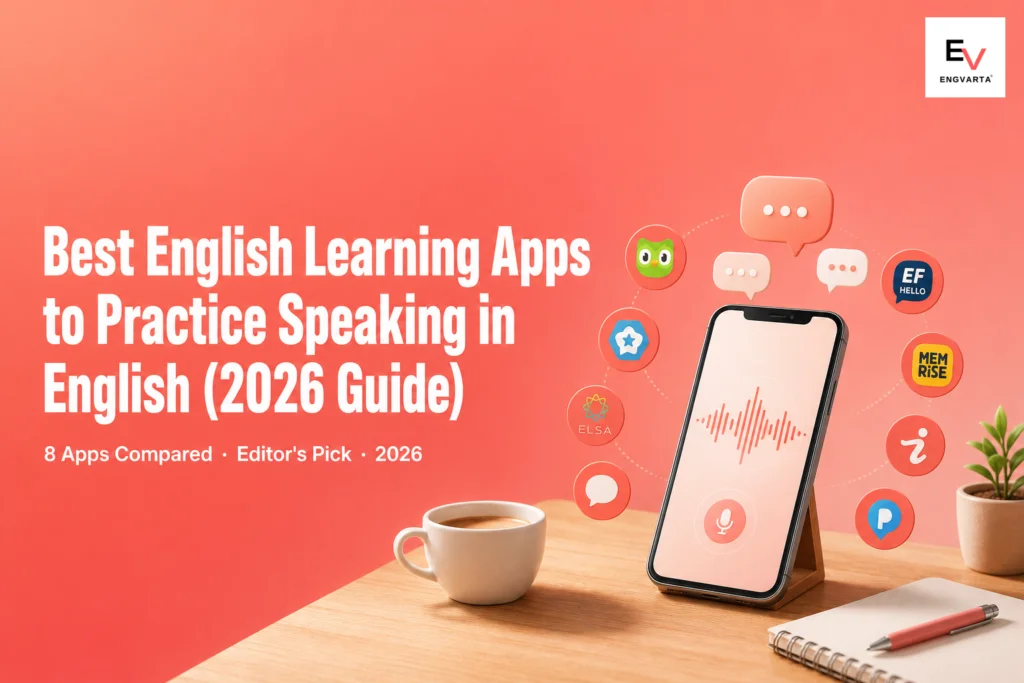
Quick Verdict · 2026For real English fluency — speaking confidently, not just learning words — the best app in 2026 is EngVarta: live voice 1-on-1 with vetted Indian-context experts, available 7 AM to midnight every day, ₹69 refundable trial, plans from ₹2,700 for 25 sessions. Cambly is the strongest international native-speaker option ($15–$53/mo). Preply and italki for vetted-tutor marketplaces. ELSA Speak for AI pronunciation drilling. Speak and Practice Me for AI conversation reps between live sessions. Hello English for Hindi/Tamil/Telugu/Bengali/Marathi-medium beginners building foundation. HelloTalk for free language exchange with native speakers. The honest truth: no single app produces fluency on its own — you need a combination of daily live practice + AI drilling + listening exposure. This guide ranks each app by what it actually delivers and shows you the smart hybrid stack that produces fluency in 8–12 weeks.
If you’ve spent months on Duolingo, finished a streak, and discovered your spoken English hasn’t actually improved — you’re not alone, and you’re not doing it wrong. Lakhs of learners before you have done the same thing and arrived at the same realisation: vocabulary games don’t make you fluent. Fluency comes from a different kind of practice — daily speaking with someone (or something) that corrects you in real time, paired with targeted pronunciation drilling and active listening exposure.
This guide ranks the eight English learning apps that actually move the needle on fluency. Verified pricing the day this guide was published, no affiliate links, and an honest read of where each app fits in your stack. Read the editor’s pick first, then build the right combination for your level and goal using the decision tree at the bottom.
Editorial note: this blog is published by EngVarta. We hold no affiliate, sponsored, or commission relationships with any platform listed. Where EngVarta ranks first, that ranking reflects honest editorial judgement on the live-practice category specifically — readers should compare alternatives we name and decide for themselves.
The fluency-app honesty check: why most apps don’t deliver fluency
Most “best English learning apps” lists conflate two completely different goals: vocabulary/grammar building (input skills) and speaking fluency (output skills). The brain develops these on different tracks. You can have years of input practice (Duolingo streaks, BBC podcasts, English movies, English novels) and still freeze when you have to speak in a real meeting — because none of that input practice trained your mouth, breath, and live-thinking-while-speaking.
Real fluency requires three components, used together:
Daily speaking practice with feedback — ideally with a real human who corrects you in real time. This is what separates “intermediate hesitant” from “actually fluent”. 15 minutes daily beats 90 minutes weekly.
Targeted pronunciation drilling on the specific sounds your first language doesn’t have. For Indian learners: typically v/w confusion, retroflex t/d, vowel insertion, “th” as “d” or “t”.
Active listening exposure — podcasts, news in slow English, native-speaker videos. This is the easiest piece (free, anywhere) and the one most learners over-rely on.
The apps below are ranked by which component they actually deliver. The strongest stacks combine apps from different categories — and the editor’s pick (EngVarta) is the apps that most learners under-invest in because it requires the most courage to start: live human speaking practice.
How we ranked them
Real correction time per session. Apps with active live human correction during conversation rank highest. AI feedback ranks medium. No-correction apps (Duolingo, etc.) rank lowest for fluency specifically.
Daily-cadence economics. Pricing that supports 4–5 sessions per week ranks higher than premium pricing that limits you to once a week.
Indian-context awareness (where applicable). Apps with experts who recognise the L1-interference patterns Indian learners carry rank higher for an Indian audience.
Schedule fit. Apps with extended availability (early morning, late evening) and short session formats rank higher than apps requiring fixed 60-minute slots during office hours.
Try-before-you-buy structure. Refundable or free trial that lets you assess fit before committing.
Privacy. Voice-only formats with username options rank higher for professionals who prefer their English-improvement journey stays discreet.
1. EngVarta — Editor’s Pick for Live Speaking Practice
What it does best: Live voice 1-on-1 speaking practice with vetted Indian-context English experts. Pricing: ₹69 refundable 10-minute trial; plans from ₹2,700 for 25 sessions (~₹108 per session). Session lengths: 15 / 25 / 50 minutes — you pick. Availability: 7 AM to midnight every day. Best for: Anyone serious about actually speaking confidently — particularly Indian learners with regional-medium school background or working professionals who want a private practice format.
EngVarta is the highest-leverage app on this list for one specific reason: it gives you actual daily speaking practice with a real human who corrects you in real time. No bot rehearsal where nothing is at stake, no game-based vocabulary drills, no watching someone else’s conversation video. You open the app, press the call button, and within minutes a vetted English expert is on the line for a 15-minute structured speaking session.
Three things make it the strongest fluency app for Indian learners specifically:
Real-time correction during the call, plus consolidated feedback at the end. When you say “I am understanding the meeting” the expert flags the present-continuous overuse instantly — “I understand the meeting” — and you continue talking with the corrected pattern. Three sessions of being corrected on the same patterns and your unconscious brain starts catching them before you make the slip.
Vetted Indian-context experts who specifically know the L1-interference patterns Hindi/Tamil/Telugu/Bengali/Marathi/Gujarati/Punjabi/Kannada/Malayalam-medium learners carry (soft v/w confusion, “make fluency”-type wrong verb-noun pairings, retroflex t/d carryover, vowel insertion, present-continuous overuse, article confusion). Generic global apps treat all learners as a single category and miss these specific patterns.
Voice-only with optional username means a fully private practice format. No on-camera exposure, no real-name requirement. Most working professionals who delay speaking practice do so because of camera anxiety or because they’d prefer their English-improvement journey stays discreet — voice-only with username removes both blockers.
EngVarta also issues milestone certificates as you complete practice hours and reach speaking-progress milestones — useful for HR records, departmental training files, and tangible proof of progress. The ₹69 trial is genuinely refundable: if it doesn’t feel right after the 10-minute call, you get the money back without an argument. Sessions are recorded and accessible inside the app for 30 days for re-listening.
Where it falls short: EngVarta is voice-only — no video. So you can’t see the expert’s mouth shape during pronunciation drills (though they describe positioning verbally, which works for most patterns). Also, EngVarta isn’t a curriculum-style course with fixed lessons — it’s open conversational practice with expert correction. If you want a structured beginner curriculum with grammar lessons, pair EngVarta with Hello English (lower in this list) or use a foundation app first for 4–8 weeks before starting EngVarta.
Today was my first call on EngVarta. I just enjoyed the conversation. It's such a good platform for people who want to explore themselves in English speaking. I just loved it.
★★★★★
Excellent platform for people who don’t find any people to speak in English. Live experts help to build confidence while speaking and guiding to improve your communication!
★★★★★
Engvarta is the best app for the people who are really serious in their learning English.
★★★★★
Quite impressive app for learning English . I am happy that joined this planform.You can learn and grow here.
★★★★★
I am really enjoying this app and it is very useful for my IELTS preparation. It is a great application that I have never seen.
★★★★★
Excellent application to improve your communication skills.Thnk you for introducing new vocabulary everyday.God bless you You might not aware of but personally this is helping me a lot
★★★★★
It was a great experience. I felt so much better. This is a very positive experience for me.
★★★★★
Don’t take that, it’s a good application during the trails calls only. After the buying the plans no refund option and no experts available on your schedule time.
★★★★★
Quite impressive app for learning English .
I am happy that joined this planform.You can learn and grow here.
★★★★★
Really I love this app. It's awesome. The application as well as the speakers are very good. I'm happy to learn daily vocabulary you send in mail.
★★★★★
I took two months of subscription. This platform really helped me to improve my communication and get rid of the fear I had earlier. Now I can talk fully confident and without any fear.
★★★★★
A very good app its just as good as shown in the advertisement,but I wish it would have been a bit cheaper,
★★★★★
Today was my first call on EngVarta. I just enjoyed the conversation. It's such a good platform for people who want to explore themselves in English speaking. I just loved it.
★★★★★
Excellent platform for people who don’t find any people to speak in English. Live experts help to build confidence while speaking and guiding to improve your communication!
★★★★★
Engvarta is the best app for the people who are really serious in their learning English.
★★★★★
Quite impressive app for learning English . I am happy that joined this planform.You can learn and grow here.
★★★★★
I am really enjoying this app and it is very useful for my IELTS preparation. It is a great application that I have never seen.
★★★★★
Excellent application to improve your communication skills.Thnk you for introducing new vocabulary everyday.God bless you You might not aware of but personally this is helping me a lot
★★★★★
It was a great experience. I felt so much better. This is a very positive experience for me.
★★★★★
Don’t take that, it’s a good application during the trails calls only. After the buying the plans no refund option and no experts available on your schedule time.
★★★★★
Quite impressive app for learning English .
I am happy that joined this planform.You can learn and grow here.
★★★★★
Really I love this app. It's awesome. The application as well as the speakers are very good. I'm happy to learn daily vocabulary you send in mail.
★★★★★
I took two months of subscription. This platform really helped me to improve my communication and get rid of the fear I had earlier. Now I can talk fully confident and without any fear.
★★★★★
A very good app its just as good as shown in the advertisement,but I wish it would have been a bit cheaper,
2. Cambly — Best for Native-Speaker Conversation Practice
What it does best: Live video 1-on-1 (or small group) with native English speakers (US, UK, Canada, Australia). Pricing: Small Groups from $15/mo (~₹1,250); Private+ from $38/mo (~₹3,200); Pro from $53/mo (~₹4,400). Cadence-priced — daily-frequency tiers cost more. Best for: Learners specifically targeting US/UK companies or visa interviews where native-accent exposure adds genuine value.
Cambly’s value proposition is access to actual native English speakers anywhere in the world. For learners targeting multinational companies or visa interviews where US/UK accent familiarity matters, Cambly puts you on video with real native speakers from those markets.
Important caveat about Cambly’s pricing: $15/mo is a starter cadence — typically 1–2 group sessions per week, not daily. To bump to daily 1-on-1 practice, the price scales materially. Cambly tutors are also native speakers, not trained ESL teachers — quality varies session-to-session, and they don’t recognise Indian L1-interference patterns the way an Indian-context expert does.
Where it falls short: No L1-pattern recognition. Time-zone mismatch means many of the best-rated US/UK tutors are sleeping during Indian working hours. Video format reintroduces the camera-presence consideration that voice-only platforms remove. Tutor-quality lottery on lower-tier plans.
3. Preply — Best Vetted Tutor Marketplace
What it does best: 1-on-1 video lessons with vetted English tutors (community + certified). Pricing: From ₹200 per lesson at the lowest tier; native-speaker average ~$26/hour; non-native average ~$22/hour. Trial: Free 25- or 50-minute trial; up to 3 free tutor replacements if you don’t click. Best for: Learners who want to handpick a specific tutor and value the marketplace’s free-replacement safety net.
Preply is the most polished tutor marketplace in the global English-learning space. Stricter tutor-vetting than italki, polished interface, and a meaningful safety net: if you don’t click with your first tutor, you get up to 3 free trials before paying.
Realistic budget pricing on Preply is ₹500–₹1,000 per lesson with non-native English tutors. At that range, 6–10 lessons a month inside ₹5,000 is workable. For deeper alternative comparisons, see our Preply alternatives guide.
Where it falls short: Per-lesson pricing creates commitment friction — you’ll find yourself debating whether to book this week or skip. The first 2–3 weeks are usually spent figuring out which tutors actually correct you mid-conversation versus which ones just chat.
4. italki — Best for Per-Lesson Flexibility
What it does best: 1-on-1 video lessons with independent tutors; no subscription, per-lesson pricing. Pricing: Community tutors from $4–$10 per 30-minute lesson; trial lessons from $5; professional teachers $6–$32+ per trial. Best for: Self-directed learners who want full control over schedule and tutor selection; learners with irregular availability (shift work, frequent travel).
italki is a marketplace with the broadest tutor selection globally. Community tutors at $4 per 30-minute lesson is the cheapest live-human option in this list — if you’re price-sensitive and can hunt for budget tutors. The flexibility is real: book 4 sessions in a week before a key meeting, then pause for two weeks during a busy period.
Where it falls short: Tutor quality varies massively. The booking-overhead can lead to skipped weeks. No vetting layer means the first 2–3 weeks are usually spent figuring out who’s actually good at correcting you. No Indian-context specialisation built in.
5. ELSA Speak — Best AI Pronunciation Specialist
What it does best: AI-powered pronunciation drilling with phoneme-level analysis. Pricing: Free tier available; ELSA Pro paid subscription (check in-app for current monthly/yearly pricing). Best for: Targeted phoneme practice — daily 10-minute drills on specific sounds your first language doesn’t have.
ELSA Speak is the AI pronunciation specialist that’s been training on diverse accent patterns including Indian English. The phoneme-level granularity is genuinely better than what most AI competitors offer — you read a sentence, ELSA’s speech engine analyses each phoneme, and tells you precisely where your “v” sounded like a “w”, your “th” became a “d”, or your stress landed on the wrong syllable.
Where ELSA fits in a fluency stack: 10 minutes daily on the specific phonemes your live human sessions identify as your top issues. Not a substitute for live practice — it doesn’t transfer to conversational pressure on its own. For deeper coverage of pronunciation app options specifically, see our guide on the best English pronunciation apps.
Where it falls short: AI doesn’t simulate conversational pressure. Pronunciation that’s perfect in the app falls apart in real conversation if you haven’t also practised it live. Use ELSA as a complement to live practice, not a substitute.
6. Speak — Best AI Conversation Roleplay
What it does best: AI conversation roleplay with scenario library (job interview, meeting, casual chat, doctor visit, etc.). Pricing: Subscription typically under $20/month (~₹1,700) for the standard tier. Best for: Daily speaking reps when live human practice isn’t possible (late nights, travel, weekend mornings); low-pressure scenario rehearsal.
Speak’s value is the always-available AI roleplay. After live human sessions identify your top L1-interference patterns and target scenarios, Speak gives you the volume of conversational reps that build muscle memory — without needing to schedule a live tutor. Useful as a complement on busy days when live practice isn’t possible.
Where it falls short: AI doesn’t simulate the social pressure that causes real English to break down in real situations. The patient AI is exactly what doesn’t transfer to interview-day stress. Use Speak as a complement to live practice — never as a substitute. AI-only practice tends to plateau learners at “comfortable inside the app”.
7. Hello English — Best Foundation App for Indian Beginners
What it does best: Indian-built freemium app with grammar lessons, vocabulary games, and basic conversation drills — interface available in Hindi, Tamil, Telugu, Marathi, Bengali, Punjabi, Gujarati, and other Indian languages. Pricing: Free core tier; Pro tier under ₹2,000/year for full feature unlock. Best for: Absolute-beginner learners from Hindi-medium or regional-medium school background who need to build foundation vocabulary in their first language.
Hello English’s headline value for fluency specifically is the multilingual interface — you can study English with explanations in your first language rather than having to first understand the explanation in English. For absolute beginners (vocabulary itself feels weak), this removes a foundational barrier that derails many regional-medium learners.
For Indian beginners specifically, Hello English’s free tier is a sensible 4–8 week starting point — build basic vocabulary and grammar foundation, then graduate to live practice on EngVarta for the speaking layer that actually produces fluency.
Where it falls short: No live human practice. App-only. If you’re already at intermediate level (you read newspapers, watch English content with comprehension, can write basic emails), Hello English will feel slow and gamified in a way that doesn’t match where you actually need to grow. Foundation apps build receptive skills, not productive fluency.
8. HelloTalk — Best Free Language Exchange
What it does best: Mobile language-exchange app — text, voice notes, and audio/video calls with real native speakers worldwide. Pricing: Free core tier; premium VIP unlocks additional features. Best for: Casual conversation practice with real native speakers at zero cost; learners on absolute-zero budget.
HelloTalk pairs you with native English speakers worldwide who want to practice your language in return. You text, send voice notes, and (when comfortable) call. The corrections feature lets your partner highlight your mistakes inline. Genuinely useful free practice — and the only category 6 (language exchange) option that consistently delivers actual conversation reps for free.
Where it falls short: Your language partner is a fellow learner, not a teacher — they may not know why a sentence is wrong. Time-zone matching is hit-or-miss. Reciprocity is required: half the call goes to helping them with your language. For zero-budget learners, language exchange gives real conversation practice but plateaus learners who need actual professional correction.
Daily live practice with custom L1-pattern targeting
Cambly
Live video native (group + 1-on-1)
$15–$53/mo
Low — native speakers, no L1 awareness
Native-accent exposure
Preply
1-on-1 video, vetted marketplace
From ₹200/lesson
Variable — tutor-dependent
Hand-picking your tutor with replacement policy
italki
1-on-1 video, per-lesson
$4–$10 per 30-min
Variable — filterable
Self-directed schedule, irregular availability
ELSA Speak
AI phoneme drilling
Free + Pro
Medium — phoneme-level
Targeted pronunciation drilling
Speak
AI conversation roleplay
~₹1,700/mo
Low — generic AI
AI conversation reps when live not possible
Hello English
App lessons + multilingual interface
Free + ~₹2,000/year
Medium — first-language interface
Vocabulary foundation for absolute beginners
HelloTalk
Text + voice + video chat (peer)
Free + premium
Low — peer learner
Free conversation practice with native speakers
The smart hybrid stack for actual fluency (under ₹5,000/month)
The honest truth is that no single app produces fluency. The most effective stacks combine 2–3 apps from different categories. For an Indian working professional or student wanting fluency in 8–12 weeks:
Primary live practice — EngVarta (~₹2,700/month): 25 sessions across the month = roughly daily weekday practice. Voice-only with username option keeps it private. Real-time correction during the call, consolidated feedback at the end. Indian-context experts recognise your specific L1-interference patterns. Available 7 AM to midnight every day so practice fits your morning walk before office, the quiet hour after dinner, or any pocket of your day.
Pronunciation drilling — ELSA Speak free tier (~₹0): 10 minutes daily on the specific phonemes your EngVarta sessions identify as your top L1-interference issues.
AI conversation reps — Speak (~₹1,700/month): For days when live practice isn’t possible (travel, late shifts, weekends). 15-minute AI roleplay sessions on relevant scenarios. Complement, not substitute.
Listening exposure — BBC Learning English (₹0): Podcasts during commute or background hours. Free, anywhere.
Total monthly cost: ~₹4,400. Total practice time: 1 hour+ per weekday across multiple modalities. Most learners on this stack report visible fluency improvement in 4–6 weeks; full conversational confidence by 8–12 weeks.
If you’re an absolute beginner (Hindi-medium / regional-medium school background, weak vocabulary): Start with Hello English (free, in your first-language interface) for 4–8 weeks to build foundation. Then graduate to EngVarta for live practice once you can form basic sentences.
If you’re intermediate but hesitant (you understand English well but freeze when speaking): EngVarta as primary (₹2,700 for 25 sessions). The hesitation pattern is exactly what daily live correction fixes. Layer ELSA Speak free tier for pronunciation. Most learners on this combination see meaningful improvement in 4–6 weeks.
If you specifically want native US/UK accent exposure: Cambly Private+ ($38/mo entry cadence) for 1–2 sessions per week with native tutors + EngVarta for the daily live human reps and L1-pattern correction. Total ~₹6,000.
If your specific bottleneck is one or two pronunciation patterns (v/w confusion, retroflex t/d, etc.): EngVarta for the conversational application + ELSA Speak (free or Pro) for daily 10-minute phoneme drilling on those specific sounds.
If your budget is genuinely zero: HelloTalk for free language exchange + ELSA Speak free tier + BBC Learning English podcasts. Trade-off: slower progress, no professional correction. Plan to budget ~₹2,700/month for live practice within 3–6 months.
If you have a busy 9-to-5 schedule: EngVarta’s 7 AM to midnight availability + voice-only format means you can practice during your morning walk, after-dinner quiet hour, or any pocket of time genuinely yours. 15-minute sessions fit lives that don’t have flexible 60-minute windows.
FAQs
Which English learning app produces fluency the fastest?
For Indian learners specifically: EngVarta. The reason is mechanical — daily live speaking practice with real-time correction and L1-pattern-aware experts is the highest-leverage activity for fluency. Any app that doesn’t make you speak daily under correction won’t make you fluent. Most learners who do daily EngVarta sessions for 4–6 weeks report meaningful improvement; 8–12 weeks for full conversational confidence.
Can I become fluent using only one app?
Almost never. Real fluency requires three components: speaking practice (daily, with correction), pronunciation drilling, and listening exposure. Most apps deliver one of the three. The smart pattern is combining apps: live practice (EngVarta) + pronunciation (ELSA Speak) + listening (BBC Learning English). Single-app plans tend to plateau because they’re missing one or two of the three required components.
Is Duolingo enough for English fluency?
No. Duolingo builds vocabulary and basic grammar — it doesn’t train speaking. Months of Duolingo streaks can leave your spoken English exactly where it started. Use Duolingo for habit-formation and vocabulary if you find it engaging, but pair it with a live speaking practice platform (EngVarta) for the fluency layer that Duolingo doesn’t deliver. The realistic answer: Duolingo is part of a fluency stack, not the whole stack.
Is Cambly better than EngVarta?
Depends on your goal. For native US/UK accent exposure and video format with native tutors, Cambly is stronger. For daily live correction with experts who understand Indian L1-interference patterns, voice-only privacy, and Indian-rupee daily-cadence economics, EngVarta is stronger. Most Indian learners get more fluency improvement per rupee from EngVarta because the L1-pattern recognition is calibrated to their specific issues; Cambly’s native speakers are excellent for accent exposure but don’t know the pattern set Indian learners need to unlearn.
How much does a fluency-app stack cost monthly?
The smart hybrid stack we recommend (EngVarta + ELSA Speak free + Speak + BBC Learning English) totals ~₹4,400/month. Daily live practice with vetted Indian-context experts is the largest line item (₹2,700 for 25 sessions). Adding native-speaker exposure via Cambly Private+ pushes total to ~₹6,000/month. Free-only stacks (HelloTalk + ELSA free + BBC) are ₹0/month with the trade-off of slower progress and no professional correction.
What’s the best Indian English learning app?
For live speaking practice with Indian-context expertise: EngVarta. The experts specifically know L1-interference patterns Hindi/Tamil/Telugu/Bengali/Marathi/Gujarati/Punjabi/Kannada/Malayalam-medium learners carry, and the 7 AM to midnight availability + voice-only format fits Indian working schedules. For absolute beginners with weak foundation, Hello English’s multilingual interface (Hindi/Tamil/Telugu/etc.) helps build vocabulary in your first language before live practice. For broader Indian-app coverage, see our best English speaking apps in India guide.
Will I sound fluent if I use these apps?
If you actually use them daily — yes. The apps are the tools; the practice is what changes you. Most learners who fail at fluency don’t fail because they picked the wrong app — they fail because they didn’t practice consistently. The combination above produces fluency in 8–12 weeks for most intermediate learners IF practiced 4–5 times per week. 1–2 sessions per week and you’ll progress slowly. Less than that and the patterns don’t consolidate.
Are AI English speaking apps as good as live human practice?
For some specific use-cases (pronunciation drilling, daily reps when live isn’t available), AI is genuinely useful. For real conversational fluency under social pressure, AI alone tends to plateau learners. The reason: AI doesn’t simulate the pressure that causes English to break down in actual interviews, meetings, or real conversations. The most effective approach is hybrid — AI for drilling, live human for conversational application. For deeper analysis, see our guide on apps to practice English with real people (not AI).
Final pick
For real English fluency in 2026, the highest-leverage single app for an Indian learner is EngVarta. Daily live voice 1-on-1 with vetted Indian-context experts who recognise your specific L1-interference patterns, available 7 AM to midnight every day, ₹69 refundable trial, ₹2,700 for 25 sessions, milestone certificates as you progress. Voice-only with username option for fully private practice.
Layer ELSA Speak free tier for pronunciation drilling, Speak app for AI conversation reps on busy days, and BBC Learning English podcasts for listening exposure. Total monthly cost stays under ₹5,000. Total practice volume is 1 hour+ per weekday across multiple modalities — the kind of stack that produces actual fluency in 8–12 weeks rather than the vocabulary-game plateau most single-app plans deliver.
The single rule that beats every app-choice question: if an app doesn’t make you speak daily, it won’t make you fluent. Vocabulary apps, grammar apps, listening apps — all useful as supports, none sufficient as the primary tool. Pick the live-practice platform that fits your schedule and budget, then practice daily. By week 6 you’ll be a different speaker; by week 12 the change will be obvious to everyone around you.
Pricing verified directly from each platform’s website on the day this guide was published. Currency conversions use approximate INR equivalents — actual charges may vary slightly with FX rates and card surcharges. We hold no affiliate or sponsored relationship with any platform listed; rankings reflect editorial judgement only.
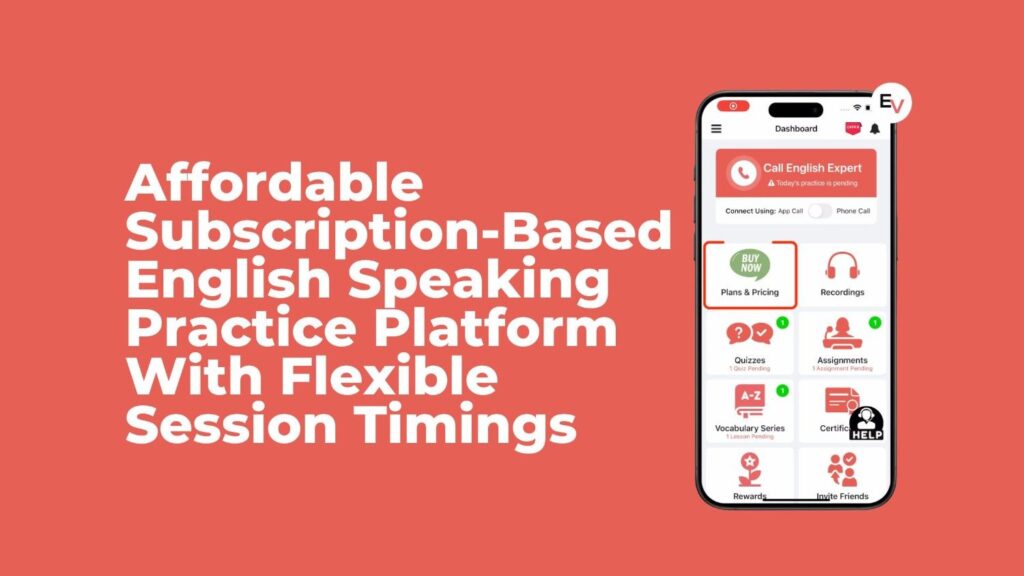
If you’ve ever searched for affordable English speaking practice platforms, you already know how crowded the market is—free YouTube lessons, group conversation clubs, AI chatbots, and paid apps that promise fluency in ‘30 days.’ But most learners eventually realize one truth: speaking improves when it becomes a daily habit, not just a hopeful goal.
That’s why subscription-based English speaking practice platforms with flexible session timings are growing so fast. They remove the biggest barriers—time and consistency. Among these platforms, EngVarta App stands out because it focuses on what truly builds fluency: real conversations, daily speaking practice, and meaningful feedback, all without rigid schedules or expensive coaching routines.
Why English speaking practice matters more than ever
English is rarely a “native vs non-native” conversation anymore. A British Council estimate notes 2.3 billion people speak English to some level, and a large share are non-native speakers—meaning most real-world English conversations happen between learners and multilingual professionals.
In India specifically, the payoff is not just confidence—it can be economic. Research summarized on Ideas for India reports a strong wage premium associated with English fluency (with different estimates by gender and other factors).
Now combine that with what employers keep repeating: communication is one of the most in-demand skills. One 2025 employer-insights piece highlights communication skills among top in-demand skills in India.
So the question isn’t “Should I practice speaking?” It’s: Which practice method actually fits daily life and stays affordable?
What “affordable + flexible” really means in a speaking platform
Affordability isn’t just about price. It’s about the value per week of consistent speaking. A platform is truly affordable when it helps you:
practice regularly (not occasionally)
get feedback (not just content)
fit sessions into your real schedule
build confidence through repetition
Flexible timing matters because most learners don’t fail due to “lack of motivation.” They fail because their day is chaotic: commuting, family responsibilities, shifts, college, deadlines. A platform that lets you practice when you’re actually free wins.
EngVarta app explicitly positions itself around practice with live experts and availability across 7 AM–11:59 PM IST—which is the kind of flexibility subscription learning is supposed to deliver.
Types of online English speaking practice platforms
1) Free options: great for input, weak for output
Free YouTube videos, podcasts, reels, and grammar content are amazing for exposure. But they don’t force you to speak—and speaking is a muscle. Free resources often improve understanding, not fluency.
2) Conversation communities and “nearby” opportunities
Local speaking groups, college clubs, coworking meetups, and community gatherings can help—if you’re comfortable showing up and if the group is consistent. The downside is irregularity and mixed feedback quality.
3) AI-based practice tools
AI practice tools are excellent for low-pressure rehearsal. They help with repetition and can provide quick feedback. But many learners still struggle when the conversation becomes human—because real conversations include interruptions, emotion, pace shifts, and unpredictability.
4) Subscription-based live speaking platforms
This category works best when it combines three things: human interaction + feedback + flexibility. That’s where EngVarta App is positioned: 1-on-1 live practice, real-time corrections, session recordings, and flexible hours.
Quick comparison: what you get (in practice)
Option
Cost
Flexibility
Feedback quality
Best for
YouTube / free videos
Free
High
Low
Listening + basics
Local clubs/meetups
Low/Free
Medium
Medium
Social confidence
AI chat practice
Low–Medium
Very high
Medium
Rehearsal + repetition
EngVarta (subscription)
Medium
High
High (live corrections)
Real fluency + confidence
EngVarta’s model is especially helpful for learners who say: “I know English, but I freeze when I speak.” That’s exactly the gap real-time practice closes.
Why EngVarta App is the best platform for subscription-based speaking practice
Real 1-on-1 speaking practice (not passive learning)
EngVarta App is designed as “practice-first.” It emphasizes speaking with live English experts rather than only lessons.
Use EngVarta App for real conversation conditioning
Then use EngVarta for:
handling interruptions
thinking on your feet
natural speed + flow
real-time correction patterns
AI helps you prepare. Live practice helps you perform.
How to pick the right plan (without overthinking)
If you’re choosing a subscription, the best strategy is to pick what you can sustain, not what looks impressive.
Start with a plan that allows:
at least 3 speaking sessions per week
consistent time slot you can keep
review time for recordings/notes
EngVarta’s own guidance emphasizes practice and mentions that a subscription is required to speak with experts.
How to get faster results on EngVarta (daily-use strategy)
1) Keep a “daily life script bank”
Write 10 short situations you face daily:
asking for updates at work
giving a status report
explaining a delay
booking an appointment
talking to a teacher/colleague
Repeat them until they feel automatic.
2) Use a 3-part session structure
Before the call: 30 seconds—what happened today? During the call: 1 main topic + 1 role play After the call: note 3 corrections + replay 1 minute of recording
3) Measure progress in confidence, not perfection
The examiner/boss/friend doesn’t need perfect grammar. They need clarity, flow, and confidence.
4) Make your schedule boring (boring = consistent)
The most powerful habit is the simplest one: same time window, same frequency.
Here’s a clean, engaging section you can use in your blog under the heading:
What Learners Are Saying About EngVarta App
Real learners often describe their English learning journey with EngVarta App in ways that go beyond test scores — they talk about confidence, real-life improvement, and meaningful progress. Here’s what users are sharing after practicing regularly:
Final Thoughts :
If you want the most effective blend of affordability and results, you need three ingredients:
A subscription model that makes practice consistent
Flexible session timings so life doesn’t break your routine
Feedback so you don’t repeat the same mistakes forever
EngVarta fits this framework strongly with its live 1-on-1 expert practice, real-time corrections, recordings, and wide timing window (7 AM–11:59 PM IST)—making it one of the most practical options for daily speaking practice.
Frequently Asked Questions (FAQs)
Frequently Asked Questions
How much time should I spend on English speaking practice daily?
Spending just 15–30 minutes a day on EngVarta App is enough to see steady improvement. Regular short speaking sessions build fluency, reduce hesitation, and help learners gain confidence faster than occasional long study sessions.
Do online speaking platforms help with real-life conversations?
Yes. EngVarta App connects learners with live English experts and real conversation practice, helping users get comfortable with natural speech, pronunciation, and everyday communication used in offices, interviews, and social situations.
How important are flexible session timings in English speaking practice?
Flexible timings are extremely important because consistency builds fluency. EngVarta App allows learners to practice from morning till late night, making it easy to fit English speaking into busy work, college, or family schedules.
Are subscription-based English speaking platforms better than free options?
Yes. Subscription-based platforms like EngVarta App provide structured daily speaking practice, live expert feedback, and real conversations, which free tools cannot offer. This helps learners improve faster and speak with confidence in real situations.
What is the best affordable English speaking practice platform?
The best affordable English speaking platform is one that offers real conversation practice, flexible timings, and continuous feedback. Subscription-based platforms like EngVarta App provide live one-to-one speaking sessions with experts, making practice consistent and cost-effective.
In today’s global economy, borders matter less than ever—but communication matters more than ever. Businesses operate across countries, cultures, and time zones, and one common thread connects them all: English. Not just basic English, but fluent English. The ability to communicate ideas clearly, confidently, and naturally in English has become a core business skill, not an optional advantage.
This is why Fluent English for International Business is no longer a “nice to have.” It is a requirement.
In this blog, we’ll explore why fluent English is essential for international business, how it impacts professional success, and how modern tools like EngVarta App help global professionals build real-world fluency that works in business settings.
English: The Operating Language of Global Business
English has emerged as the default language of international trade, technology, finance, consulting, and corporate communication. From emails and presentations to negotiations and client calls, English in international business is the medium through which decisions are made.
However, knowing English at a basic level is no longer enough. Global professionals are expected to:
Speak confidently in meetings
Respond quickly and clearly during discussions
Explain ideas without hesitation
Adapt their tone across cultures
This level of performance requires fluency, not memorization.
What Does Fluent English for International Business Really Mean?
Fluency is often misunderstood. It’s not about using complex vocabulary or sounding like a native speaker. In business, fluency means:
Expressing ideas smoothly and logically
Thinking in English instead of translating mentally
Handling questions and objections in real time
Communicating with clarity, confidence, and control
For business English for international professionals, fluency is about effectiveness. Can your message land correctly the first time? Can you hold attention in a global meeting? Can you build trust through your communication?
Why Fluent English Is Required—Not Optional
1. Clear Communication Prevents Costly Errors
In international business, miscommunication can be expensive. A poorly worded email, an unclear instruction, or hesitation during a call can lead to:
Project delays
Missed expectations
Contract misunderstandings
Loss of client trust
English for international business communication must be precise and unambiguous. Fluent English reduces the risk of confusion and ensures alignment across teams and stakeholders.
2. Fluency Builds Professional Credibility
In global workplaces, how you speak often shapes how you are perceived. Even highly skilled professionals may be underestimated if they struggle to express themselves clearly.
Fluent English:
Makes professionals sound confident and prepared
Enhances perceived competence
Strengthens leadership presence
This is why English fluency directly impacts career growth, especially for roles involving global exposure.
English in International Business Is Context-Driven
International business communication is not one-size-fits-all. The way you speak in:
A board meeting
A client pitch
A performance review
A conflict-resolution call
Professionals who are fluent can:
Adjust formality instantly
Choose culturally appropriate language
Handle sensitive conversations diplomatically
This adaptability is at the heart of international business English in everyday use.
Everyday Use of International Business English
Fluency is tested in daily moments, not just big presentations. Consider situations like:
Participating in cross-border brainstorming sessions
In these moments, hesitation or unclear phrasing can weaken impact. Fluent English allows professionals to stay calm, responsive, and effective—every single day.
Why Traditional Learning Falls Short for Business Professionals
Many professionals have studied English for years, yet still feel nervous speaking at work. This happens because traditional learning methods focus heavily on:
Grammar rules
Written exercises
Exams and certifications
While useful, these methods rarely prepare learners for spontaneous, real-world business conversations. As a result, professionals know English—but don’t feel fluent using it.
This gap has led many to search for the Best English Learning App, the Best English Practice App, or the Best English Speaking App—tools that prioritize speaking over theory.
The Role of Practice in Achieving Business English Fluency
Fluency is a skill, and like any skill, it improves through practice.
To build Fluent English for International Business, professionals need:
Regular speaking practice
Realistic business scenarios
Immediate, constructive feedback
A safe environment to make mistakes
This is where practice-based platforms outperform traditional courses.
How EngVarta App Supports Global Professionals
EngVarta App is designed for professionals who want to use English confidently, not just learn it. Its approach focuses on practical fluency, especially for business contexts.
Key benefits for international professionals include:
Live one-to-one speaking practice with trained experts
Conversations based on real business situations
Feedback on fluency, clarity, and confidence
Flexible sessions that fit busy work schedules
This makes EngVarta App a strong choice for professionals evaluating the Best English Practice App for international business needs.
Why Modern Professionals Choose Speaking-Focused Apps
Time is limited, and professionals want results. They prefer learning methods that:
Show improvement quickly
Are directly applicable at work
Build confidence through practice
This is why many global professionals turn to platforms like EngVarta App when searching for the Best English Speaking App—because speaking is the fastest path to fluency.
Building Long-Term Fluency, Not Short-Term Confidence
True fluency is sustainable. It doesn’t disappear after a few good conversations. It grows with consistent practice, feedback, and exposure to varied situations.
EngVarta App’s practice-first approach supports long-term fluency, helping professionals move from hesitation to ease in international business communication.
Final Thoughts
In the world of global business, communication is influential. And Fluent English for International Business is the tool that allows professionals to influence clearly, confidently, and consistently.
Fluency reduces friction, builds trust, and unlocks global opportunities. For professionals aiming to succeed internationally, fluent English is no longer optional—it is essential.
FAQs (Frequently Asked Questions)
Frequently Asked Questions
Who needs business English for international professionals?
Professionals working with global clients or teams need business English. The EngVarta App supports working professionals with flexible, practical speaking practice.
Why do professionals struggle with English in international business?
Many professionals lack speaking practice. The EngVarta App solves this by offering live one-to-one conversations focused on real workplace communication.
Can fluent English help career growth in international roles?
Yes. Fluent English improves confidence, visibility, and leadership presence. The EngVarta App helps professionals speak confidently and grow in global roles.
What is meant by fluent English for international business?
Fluent English for international business means speaking clearly and confidently in meetings and calls. The EngVarta App builds this fluency through real-time practice and feedback.
How is English used in international business every day?
English is used daily in emails, meetings, presentations, and client calls. The EngVarta App helps users practice these real business situations through live speaking sessions.