English Speaking Practice App |

Tag

English Speaking Practice App

How to improve English communication and Poor Public Speaking Skills?

December 29, 2025 • 8 min read • By EngVarta

How to Improve English Communication and Poor Public Speaking Skills

In a globalized world where communication is currency, having Poor Public Speaking Skills isn’t just a personal barrier — it’s a professional one. Whether you’re pitching an idea, leading a team, or networking at an event, the ability to express yourself clearly in English and to command the room with confidence can make or break opportunities.

This comprehensive guide explores not just why many learners struggle with public speaking, but how they can transform those challenges into strengths — using proven techniques, structured public speaking training, and modern tools like the EngVarta App , widely regarded as the Best English Learning App for conversational and presentation mastery.

Understanding Poor Public Speaking Skills

When we talk about Poor Public Speaking Skills, we’re referring to a cluster of issues that often manifest together:

  • Fear of speaking in front of audiences
  • Hesitation, filler words, or lack of fluency
  • Weak clarity and articulation in English
  • Nervous body language
  • Inability to structure and deliver compelling messages

These symptoms are not signs of deficiency — they are signals that a learner hasn’t yet been guided through the psychology, mechanics, and practice of effective communication.

Why Many People Struggle with Public Speaking and English Communication

Before we explore solutions, it’s critical to understand the root causes.

1. Lack of Confidence

Confidence isn’t innate — it’s built. When learners aren’t regularly encouraged to speak, especially in a second language, self-doubt grows faster than competence.

2. Language Anxiety

Many English learners feel scrutinized for accent, grammar, or vocabulary choice. This inner critic compounds fear and leads to silence rather than expression.

3. Absence of Practice

Grammar books don’t build confidence. Only speaking practice, especially in real-world contexts, bridges the gap between knowledge and performance.

4. No Feedback Loop

Without corrective feedback, speakers repeat mistakes and internalize poor habits.

5. Fear of Judgment

The anticipation of negative evaluation often triggers avoidance — and poor public speaking skills are as much psychological as they are linguistic.

The Role of Structured Public Speaking Training

The good news? Public speaking skills can be taught, practiced, and refined. A structured public speaking course or public speaking training program provides the roadmap:

  • Clear frameworks for speech structure (opening, body, close)
  • Techniques for voice modulation, pace, and emphasis
  • Practice with feedback from experts
  • Confidence-building exercises and mindful performance coaching

These elements transform learners from speakers who fear the stage to communicators who use the stage.

5 Proven Strategies to Improve English Communication and Public Speaking Skills

Here’s a blend of cognitive, linguistic, and performance-oriented strategies that help learners make measurable progress.

1. Embrace the Power of Deliberate Practice

Deliberate practice isn’t just talking more — it’s talking with purpose.

  • Record your speeches and analyze clarity, pacing, and pronunciation.
  • Practice pre-written scripts aloud.
  • Use shadowing techniques to mimic confident speakers.

This boosts fluency AND self-awareness.

2. Speak Every Day — Build a Speaking Habit

We underestimate the compounding effect of daily speaking:

  • Describe your day to a mirror
  • Record a 60-second opinion video on a topic
  • Join a speaking group

Frequent speaking reduces anxiety and strengthens neural pathways for English communication.

3. Learn the Science of Eye Contact, Gestures, and Presence

Public speaking isn’t just verbal. Non-verbal cues impact perception massively.

  • Maintain soft eye contact
  • Use purposeful gestures
  • Stand with balance, not stiffness

These signals communicate confidence even when you feel nervous.

4. Structure Your Talks with a Simple Framework

A powerful speech isn’t improvisation — it’s architecture.

Try this:

  • Hook — Grab attention immediately
  • Message — One clear idea
  • Evidence — Example, story, insight
  • Call to Action — What you wish the audience to take action on

This technique simplifies the cognitive load and accentuates impact.

5. Get Feedback from Coaches and Peers

Feedback is the engine of improvement.

Without it, progress stalls. Peer review, mentor coaching, and expert critique illuminate blind spots.

How to Improve English Communication Specifically

While public speaking involves performance, language proficiency is the foundation underneath.

Expand Active Vocabulary

Passive understanding isn’t enough.

  • Learn context-based vocabulary
  • Use lexical phrases instead of single words
  • Practice collocations and idioms

This makes speech richer and more natural.

Improve Pronunciation and Accent Clarity

Accent is not a flaw — clarity is.

  • Focus on stress patterns and syllable timing
  • Listen and imitate native rhythms
  • Use shadowing exercises daily

Better clarity equals better understanding — and more confidence.

Develop Listening and Response Skills

Communication is two-way.

  • Engage in dialogues, not monologues
  • Practice active listening
  • Respond to real questions

This sharpens adaptability and reduces fear of unplanned questions.

How EngVarta App Helps Overcome Poor Public Speaking Skills

1. Real Conversations with Expert Coaches

EngVarta App isn’t text-only — it connects learners with experienced English speaking coaches in real time. This:

  • Breaks the fear of vocalizing English
  • Builds confidence through live interactions
  • Offers immediate feedback and correction

Learners evolve from hesitant to articulate.

2. Personalized Public Speaking Training

Standardized courses teach theory. EngVarta App delivers adaptive coaching tailored to each learner’s pace, accent challenges, and confidence barriers.

You don’t just practice — you improve with precision.

3. Practice in Safe, Supportive Spaces

Many learners fear judgment. EngVarta App cultivates a judgment-free environment where mistakes are reframed as growth signals — essential for language and performance fluency.

4. Structured Speaking Drills and Modules

EngVarta App offers speaking drills that mirror public speaking scenarios:

  • Self-introductions
  • Workplace communication
  • Storytelling
  • Presentation simulations

These drills build real competence — not just textbook English.

5. Ongoing Progress Tracking

Transformation is measurable.

EngVarta App tracks:

  • Speaking fluency improvement
  • Vocabulary expansion
  • Confidence ratings
  • Response times

This reassures learners that they are improving — and shows them how much.

Start Your Communication Journey

👉Improve your communication skills with daily 1-on-1 English practice on EngVarta App. 

What Learners Are Saying

Real EngVarta App users frequently highlight:

  • Faster confidence growth than in traditional courses
  • Better clarity in both casual conversation and formal speech
  • Increased ability to participate in meetings and presentations
  • Speaking fluency gains within weeks, not months
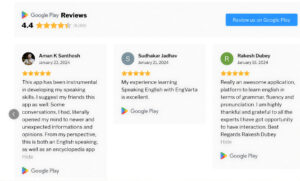
EngVarta App Review

These testimonials underscore EngVarta App’s impact on public speaking and presentation skills.

Tips to Maximize Results with EngVarta App

To make your improvement journey faster and more meaningful:

1. Set Clear Speaking Goals

Decide what you want to achieve:

  • Present with confidence?
  • Speak fluently at work?
  • Host webinars in English?

Write these goals and revisit them weekly.

2. Speak Daily Using the App

Use EngVarta App every day — even 15 minutes makes a difference. Consistency creates neuro-linguistic grounding.

3. Embrace Feedback

Record sessions, review coach notes, and iterate. Improvement accelerates when you listen to yourself as well as the coach.

4. Pair Practice with Real-World Use

Talk to colleagues, join clubs, make videos — put your skills into action.

Transform Your Communication — Starting Today

Poor Public Speaking Skills shouldn’t define your potential. With the right strategy, consistent practice, expert feedback, and adaptive tools, anyone can become a compelling communicator.

Why EngVarta App is Your Best Ally

EngVarta App transforms learners from afraid to articulate, from hesitant to confident, and from unsure to unforgettable.

  • Personalized coaching
  • Real-world speaking drills
  • Measurable progress
  • Confidence enhancement
  • Flexible learning

It’s more than a language app — it’s a confidence companion.

Conclusion

Improving English communication and poor public speaking skills is a journey of self-discovery as much as skill-building. It requires courage, structure, feedback, and daily commitment.

Whether you’re preparing for your first big presentation or you want to feel confident in every conversation, starting with real speaking practice is the key — and there’s no better partner in this journey than EngVarta App.

Frequently Asked Questions ( FAQs )

Frequently Asked Questions

What is the key element in public speaking

Confidence. EngVarta App builds confidence by making you speak regularly, helping you express ideas clearly and naturally in English.

What is the problem, cause, and solution in public speaking?

The problem is fear and hesitation, the cause is lack of practice, and the solution is consistent speaking practice with expert guidance on EngVarta App.

Why do I struggle with speaking so much?

You struggle because of fear, hesitation, and lack of speaking exposure. EngVarta App helps you overcome this by providing a safe space to speak without judgment.

How to fix your poor communication skills?

Practice speaking daily in real conversations. EngVarta App improves communication by correcting your English, building fluency, and boosting confidence in real time.

Why do I have poor speaking skills?

Because you haven’t practiced speaking regularly with feedback. EngVarta App fixes this through daily live English conversations with experts.
How to Improve Your English Communication Skills?

September 27, 2025 • 5 min read • By Swati Raj

How to Improve Your English Communication Skills?

English has become the language of opportunity. From job interviews and presentations to travelling abroad or simply making friends, strong English communication skills can shape your future in ways you can’t imagine.

But here’s the secret: becoming fluent in English isn’t about memorising grammar rules or learning hundreds of words at once. It’s about practicing consistently, building confidence, and learning how to express yourself naturally.

In this blog, we’ll explore practical steps to improve your English communication skills, and also see how the EngVarta App can be your partner in this journey.

1. Practice Every Day, Even if It’s Just 10 Minutes

Consistency matters more than intensity. Instead of waiting for the “right time,” start small. Talk about your day in English, describe what you see around you, or practice speaking in front of a mirror for 10 minutes daily.

2. Listen More Than You Speak

Fluent speakers are also good listeners. Watch English movies, listen to podcasts, or follow TED Talks. This helps you absorb correct pronunciation, sentence patterns, and natural expressions.

3. Think in English Instead of Translating

One of the biggest obstacles learners face is thinking in their native language and then translating into English. This slows you down and makes you nervous. Train your mind to think directly in English.

👉 You can read this blog on How to Stop Translating in Your Head While Speaking English

This article will guide you with techniques to break free from the translation trap.

4. Expand Your Vocabulary in Context

Instead of cramming 20 new words daily, focus on learning 2–3 words and using them in sentences. For example, if you learn the word “versatile,” try saying: “This jacket is versatile; I can wear it to work or on a trip.” Using words in real life makes them stick.

5. Practice With Real People

Reading and listening are great, but speaking with real people is the ultimate game-changer. You need feedback, correction, and the confidence that comes from real conversations.

How the EngVarta App Can Help You

This is where EngVarta comes in. It’s not just another English learning app—it’s a practice platform where you connect with live English experts over phone calls.

Here’s how EngVarta helps you improve faster:

  • 🗣 Daily conversation practice with experts, just like talking to a friend.

  • Personalized feedback on grammar, pronunciation, and fluency.

  • 💡 Practical topics like interviews, meetings, and presentations.

  • 📈 Progress tracking to see how far you’ve come.

If you want to transform your English from hesitant to confident, EngVarta provides the safe, judgment-free space you need.

👉 Download the EngVarta App now:

Final Thoughts

Improving your English communication skills is a journey, not a race. With daily practice, mindful listening, and the right guidance, you can achieve fluency and confidence.

Remember: you don’t have to be perfect to start speaking—you have to start speaking to become perfect.

So why wait? Take your first step today with EngVarta, and let every conversation bring you closer to the confident speaker you want to be.


Frequently Asked Questions (FAQs)

Frequently Asked Questions

Can I learn English just by watching movies or reading books?

Movies and books improve your listening and vocabulary, but they won’t give you fluency. To speak confidently, you need real conversations with people — that’s where EngVarta bridges the gap.

What is the best app to practice English speaking?

EngVarta is one of the best apps because it connects you with live English experts over phone calls. You can practice real conversations, get instant corrections, and build confidence naturally.

Is grammar important for good communication?

Yes, but don’t let grammar stop you from speaking. Communication is more about expressing your ideas clearly. Fluency comes with practice — grammar improves along the way.

How long does it take to become fluent in English?

It depends on your current level and how much time you dedicate daily. With consistent practice for 20–30 minutes a day, most learners see a big improvement in 3–6 months.

How can I improve my English communication skills at home?

You can start by reading English books, listening to podcasts, watching English shows, and practicing speaking daily. The key is consistency. To make it more effective, use apps like EngVarta, where you can practice live with English experts from home.

Best Apps for English Fluency 2026: 6 Picks Compared (Live Practice + AI)

April 17, 2025 • 13 min read • By Swati Raj

Best Fluent English Practice App to Boost Your Speaking Skills
Quick Verdict (2026)If real fluency — not gamified streaks — is the goal, the apps that actually work are the ones that force you to speak daily with feedback. Our pick: EngVarta for live human practice with TESOL/ESL-certified Experts (real-time corrections, consolidated feedback towards the end of every call). Pair it with ELSA Speak for pronunciation drills and Duolingo for vocabulary habit-building. AI-only chat apps are improving fast, but in 2026 nothing replicates the speed of fluency gain you get from a real human listening to you.

You’ve studied grammar. Watched English shows. Maybe even repeated dialogues out loud. But when it’s your turn to actually speak — in a meeting, an interview, or with a stranger — you pause, doubt yourself, and switch back to Hindi or your native tongue.

The missing piece isn’t more study. It’s spoken-output reps — daily speaking practice with someone (or something) that catches your mistakes in real time and shows you how a fluent speaker would have phrased it.

This 2026 guide ranks the best English fluency apps by what actually moves the needle on speaking confidence: live human practice, AI conversation, pronunciation feedback, and listening immersion. We’ve tested each one and ordered them by how fast they get an intermediate learner from hesitant to fluent.

2026 Comparison Table: Best Apps for English Fluency

App Practice Type Best For Starting Price Speed of Fluency Gain
EngVarta Live 1-on-1 audio with TESOL/ESL Expert Daily fluency practice (Indian + global learners) ~₹108/session (₹2,700 / 25) Fastest (3–6 weeks visible)
ELSA Speak AI pronunciation drills Accent reduction, MTI fix ~$11.99/month Medium (8–12 weeks)
Cambly Native-speaker video tutoring Higher-budget premium learners ~$10/15-min lesson Fast (cost-limited frequency)
HelloTalk / Tandem Language-exchange chat with strangers Casual practice, free option Free / ~$7–14 month Slow (no expert correction)
AI conversation apps (Loora, Talkpal, Praktika) AI chatbot “tutor” Privacy-first or unlimited reps ~$12–25/month Medium (improving fast in 2026)
Duolingo Gamified vocabulary & grammar Beginners, daily-streak habit Free / Super ~$7/month Slow (low speaking volume)

1. EngVarta — Best Overall for Spoken Fluency

EngVarta is the fastest path to spoken fluency for one simple reason: every session is a live audio call with a TESOL or ESL-certified English Expert who corrects you in real time. There’s no “watch a video, then take a quiz” loop — you talk, the Expert listens, fixes your grammar, pronunciation, and word choice on the spot, and shares consolidated feedback towards the end of the session.

You pick the session length (15, 25, or 50 minutes), book a slot anywhere between 7 AM and midnight, and connect to an Expert in minutes. Audio-only by design — which works on slow mobile data and removes the camera-pressure that holds back self-conscious learners.

Why it ranks #1 for fluency:

  • Real-time corrections during the call — pronunciation, grammar, fluency — not after-the-fact written reports
  • Consolidated feedback towards the end of every session highlighting your top 2–3 improvement areas
  • Sessions recorded and accessible for 30 days for self-review
  • Personalised practice tasks + a vocabulary builder between calls
  • Daily-practice priced (~₹108 / ~$1.80 per session) — sustainable for daily reps, which is what fluency actually requires
  • Milestone certificates as you complete practice-hour thresholds — useful for HR records, departmental training files, and upskilling submissions

Who it’s for: Working professionals, college students preparing for placements, government employees needing English for postings, and homemakers who want to rebuild fluency on their own schedule. Already trusted by lakhs of learners across India and expanding markets in the US, UAE, Canada, and Singapore.

Pricing: ₹69 for a 100% refundable 10-minute trial; plans start at ₹2,700 for 25 sessions (~₹108 each). Plans of 25/50/100/150/300 sessions, with a pause feature for travel or work crunches.

Limitation: Audio-only by design. If you specifically want video tutoring with native speakers, look at Cambly. If you want unlimited free chat with strangers, HelloTalk — though neither will move you to fluency as fast.

Detailed comparison: EngVarta vs Cambly vs Preply vs italki →

Ready to Practice with Real Experts?

Try EngVarta today — ₹69 trial (India) / $1 trial (International) · 100% refundable

2. ELSA Speak — Best for Pronunciation & Accent

ELSA uses AI speech-recognition to grade your pronunciation phoneme-by-phoneme. You read a sentence, ELSA flags exactly which sounds were off, and shows you the mouth position for the correct sound. For Indian learners working on mother-tongue influence (MTI), it’s the most precise pronunciation tool available.

Best for: Pronunciation, accent neutralisation, IELTS/TOEFL speaking-section drilling. Not for: Conversational fluency or unstructured speaking practice — you’re reading scripted prompts, not having real conversations.

Pricing: ~$11.99/month, lifetime plans available.

More pronunciation app options →

3. Cambly — Best for Premium Native-Speaker Practice

Cambly connects you to native-speaker tutors over video for unstructured chat or curriculum-based lessons. Quality is high, sessions feel real, and you can pick the tutor you click with. The catch: pricing. At roughly $10 per 15-minute lesson, daily practice gets expensive fast — most learners end up doing 2–3 sessions per week, which is below the frequency needed for rapid fluency gains.

Best for: Learners with a budget who want native-speaker exposure and don’t mind a lower session count. Not for: Daily-practice budgets or learners who prefer audio-only.

Pricing: ~$10/15-min lesson; group plans cheaper but less personalised.

4. AI Conversation Apps (Loora, Talkpal, Praktika)

2026 has been the breakout year for AI-driven English tutors. Loora, Talkpal, and Praktika let you have unscripted voice conversations with an AI that adapts to your level, suggests better phrasings, and tracks your fluency progress. The voice quality and natural pacing have improved dramatically — for the first time, an AI conversation feels close to a real one.

Best for: Privacy-conscious learners who don’t want a human listening, learners doing 30+ minutes of practice daily who’d burn out a paid tutor budget, and anyone in markets where live tutoring is hard to find.

Limitation in 2026: AI still mishears non-native accents at higher rates than a trained human Expert, and the “corrections” can be over-polite (it lets small errors slide to keep the conversation flowing). For learners specifically targeting fluency — not just exposure — live human feedback is still measurably faster. That’s why we rank EngVarta above this category.

Pricing: ~$12–25/month depending on app and tier.

5. HelloTalk & Tandem — Best Free Option

Language-exchange apps pair you with native English speakers who want to learn your language. Genuinely free for basic use. The trade-off: there’s no expert correcting you, conversation quality varies wildly partner-to-partner, and many partners drift toward small talk that doesn’t stretch your vocabulary.

Best for: Zero-budget learners who already have intermediate-level fluency and want exposure. Not for: Beginners or anyone targeting structured fluency growth on a timeline.

Why free apps don’t replace structured practice →

6. Duolingo — Best for Daily Habit + Vocabulary

Duolingo is excellent at one thing: getting you to open the app every day. The streak mechanics are addictive, the lessons are bite-sized, and you’ll genuinely build vocabulary and grammar awareness. What it won’t do is make you fluent — the speaking exercises are scripted single-sentence drills, not real conversation.

Best for: Beginners building habit + vocabulary. Pair with: A speaking-focused app (EngVarta, Cambly, or an AI conversation app) once you’re past the first 50 hours of Duolingo.

Pricing: Free; Super Duolingo ~$7/month.

The 2026 Fluency Stack: How to Combine These Apps

Single-app strategies don’t deliver fluency. The learners who actually become fluent in 6–12 months use a stack:

  • 15–30 min daily speaking practice — EngVarta (live human) or an AI conversation app
  • 10 min pronunciation drilling — ELSA Speak, 3–4 days a week
  • 10 min vocabulary & grammar habit — Duolingo or Memrise, daily
  • 20 min listening immersion — English podcasts, YouTube, or shows with subtitles

The non-negotiable element is the speaking practice. Without daily spoken-output reps with feedback, the other three stack components plateau within 6–8 weeks.

Why Most People Fail at Fluency Apps

Three patterns, in order of frequency:

  1. App stacking without speaking practice. Three vocabulary apps and zero conversation apps. You’ll know more words but still freeze in real conversations.
  2. Inconsistent practice. 90 minutes on Sunday, nothing Monday–Saturday. Fluency is built on frequency, not duration. 15 minutes daily beats 2 hours weekly.
  3. Avoiding correction. Sticking with apps that don’t challenge you because the dopamine hit of a correct answer feels good. Fluency growth requires being corrected — that’s where the learning happens.

The combination that fixes all three: a paid live-practice app you actually use daily (not the free apps that get abandoned by week 3) + a habit anchor like a morning walk or after-dinner routine to make practice non-negotiable. More on building a fluency-coaching routine →

What Our Learners Say

Rated 4.5★ from 9,100+ reviews on Google Play

★★★★★
I highly recommend this app.this App is soo good for beginners who want to learn English.
★★★★★
hello this is Shweta and I will tell you about the engvarta app this is an amazing app to improve our English or any other language so I suggested using this app and doing better things and growing always better . thankyou.
★★★★★
i completed my trial session, expert was good. I installed this app because chatgpt recommended it and I find it quite good speaking practice. experts are professional and friendly. plans are also economical compared to other english courses i took in the past.
★★★★★
Engvarta is the best app for the people who are really serious in their learning English.
★★★★★
I have been using this app since past 7 months. All experts are really good and helpful.
★★★★★
Engvarta is a platform where we start from the 0 level to 100 level. That is the best thing I have never seen in my life. There are so many part and so many way, they are always try to teach you until you become a good speaker. Thank you Engvarta
★★★★★
This is very amazing apps. AI working system and it is very effective to practicing and also every day i have practice in the apps. As a begainner, i think it is very helpful for me.
★★★★★
good and highly talented experts are here..just go for a trail without any doubt.. thank you eng vartha...A small request from my side just take less payment from the people who are joing in your coaching...help to them...thank you
★★★★★
I find the app very helpful and user friendly. The UI design is very soothing for eye. Students can get good benefit out of it if they regularly use it to practise their spoken English. Good luck to the app team for building a professional app for the greater good.
★★★★★
Excellent application to improve your communication skills.Thnk you for introducing new vocabulary everyday.God bless you You might not aware of but personally this is helping me a lot
★★★★★
Wonderful app provide experts to talk but but so much time constraints in talking..
★★★★★
Engvarta provides the best platform for learners to learn and get comfortable with the language by offering a comfortable and judgment-free environment with regular feedback. Engvarta is the best English learning app available.

Frequently Asked Questions

Which app is best for English fluency in 2026?

For most intermediate learners, EngVarta delivers the fastest fluency gains because every session involves real-time correction by a TESOL/ESL-certified English Expert over a live audio call. Pair it with ELSA Speak for pronunciation and Duolingo for vocabulary habit, and you have a complete 2026 fluency stack.

Can I become fluent in English using only an app?

Yes, if the app forces daily spoken-output practice with feedback. Apps that just teach grammar, vocabulary, or scripted lessons won’t deliver fluency on their own. The fastest fluency gains come from apps that put a real human (or, increasingly, a high-quality AI) on the other end of a live conversation.

How long does it take to become fluent in English with these apps?

With consistent daily practice (15–30 minutes of speaking + 10–20 minutes of supporting work), most intermediate learners report visible fluency improvement in 6–8 weeks and conversational fluency in 6–9 months. Beginners typically need 12–18 months to reach the same level.

Are AI English speaking apps as good as human tutors in 2026?

AI conversation apps have improved dramatically in 2026 and now deliver useful practice at low cost. They’re excellent for unlimited reps and privacy. But for the fastest fluency gains, live human Experts still outperform AI on accent recognition, nuanced corrections, and conversational depth — especially for non-native accents like Indian English.

What’s the cheapest app for daily English speaking practice?

HelloTalk and Tandem are free if you’re comfortable practising with random language-exchange partners (with no expert correction). For paid daily practice with a real Expert, EngVarta is the lowest cost-per-session option in India at ~₹108 per call when you buy a 25-session plan.

Do these apps work for IELTS or job-interview English?

Yes — speaking-focused apps like EngVarta and ELSA Speak directly target the speaking skills needed for IELTS, TOEFL, and job interviews. Most learners using them for exam or interview prep do 4–6 weeks of focused daily practice in the run-up to the test or interview.

Can I get a certificate from these English speaking apps?

EngVarta issues milestone certificates as learners complete practice-hour thresholds and reach speaking-progress milestones — useful for HR records, departmental training files, and upskilling submissions. Other apps in this list (Duolingo, ELSA, Cambly) offer course-completion or proficiency-level certificates of varying recognition. Always check whether a specific employer or institution accepts the certificate before relying on it.

Is EngVarta available outside India?

Yes — EngVarta serves learners in India, the US, UAE, Canada, Singapore, and other markets. Pricing in USD markets works out to roughly $1.80 per session with similar plan structures.


Editorial independence: This is an independent editorial roundup. EngVarta is the publisher and chooses its own pick, but no app on this list paid for inclusion or placement. We rank apps based on hands-on testing and learner outcomes, not affiliate commissions.

Essential Vocabulary for Different Professions

February 6, 2025 • 8 min read • By Swati Raj

Essential English vocabulary for different professions and careers

When it comes to mastering a profession, industry-specific vocabulary is essential. Whether you’re a doctor, engineer, entrepreneur, or creative professional, knowing the right terminology helps you communicate clearly and confidently in your field.

This guide introduces key professional vocabulary across various industries, from medicine and engineering to business and hospitality. Whether you’re a student, job seeker, or working professional, understanding these terms will help you enhance your communication skills and excel in your career.

Why Learning Professional Vocabulary is Important?

  1. Improves Communication – Using the right terms makes conversations clear and effective.
  2. Enhances Professionalism – Employers and colleagues appreciate those who can speak confidently in their industry.
  3. Helps in Job Interviews – Knowing industry-specific terms can help you impress interviewers.
  4. Boosts Workplace Performance – Understanding workplace vocabulary can increase efficiency and accuracy.
  5. Builds Confidence in English Communication – Knowing the right words makes professional conversations smoother.

Struggling with Professional Communication? EngVarta Can Help!

Having the right vocabulary is important, but using it correctly in conversations is even more crucial. That’s where EngVarta comes in!

🚀 EngVarta is a live English-speaking practice app where you can practice real-life conversations with English experts to improve your confidence and fluency. Whether you need to prepare for a job interview, business meeting, or professional presentation, EngVarta helps you use industry-specific vocabulary effectively in spoken English.

📲 Download EngVarta (https://apps.apple.com/app/id1221875549) and start practicing today!

Download Your Free PDF: Industry-Specific Vocabulary

To help you learn the most important professional vocabulary words, we’ve created a comprehensive PDF guide that includes 50 professions along with 10 essential vocabulary words for each profession.

A Sneak Peek Into Some Professions & Vocabulary

Here’s a preview of some of the professions covered in the PDF and why mastering their vocabulary is essential:

1. Medical Professions (Doctors, Nurses, Surgeons, Pharmacists, etc.)

  • Knowing terms like Diagnosis, Prescription, Surgery, Anesthesia, and Symptom is crucial for medical professionals.
  • Helps in effective communication with patients, doctors, and healthcare staff.

2. Engineering & Technology Professions (Civil Engineer, Software Engineer, Robotics Engineer, etc.)

  • Engineers and tech professionals use words like Blueprint, Algorithm, Debugging, Infrastructure, and Automation.
  • These terms are fundamental in design, programming, and development.

3. Business & Finance Professions (Accountant, Banker, Marketing Manager, etc.)

  • Words like Revenue, Investment, ROI, Branding, and Portfolio help professionals manage financial and business growth.
  • Used frequently in financial reports, market strategies, and sales pitches.

4. Creative Professions (Filmmaker, Graphic Designer, Writer, Photographer, etc.)

  • Terms like Cinematography, Typography, Composition, and Manuscript are essential for professionals in the media, film, and design industry.
  • These help in storytelling, branding, and creative expression.

5. Hospitality & Travel Professions (Hotel Manager, Chef, Flight Attendant, Tour Guide, etc.)

  • Key words like Reservation, Itinerary, Layover, Inflight Service, and Garnish help in customer service, travel planning, and food presentation.
  • Knowing these terms can improve service quality and communication with guests.

How to Learn and Use Professional Vocabulary?

  1. Read Industry-Specific Content – Articles, reports, and research papers use professional terms in context.
  2. Watch Interviews & Podcasts – Listening to experts can help you understand how to use vocabulary naturally.
  3. Practice with Flashcards – Write down key terms and their meanings for quick reference.
  4. Engage in Conversations – Use industry terms in meetings, emails, and networking events.
  5. Practice Speaking on EngVartaJoin EngVarta’s live sessions to practice using professional vocabulary in real conversations with experts.
  6. Download & Study the PDF – Our Essential Vocabulary for Different Professions PDF is a great resource to keep handy!

Final Thoughts

Expanding your professional vocabulary boosts your career, improves confidence, and enhances communication skills. No matter your field, understanding industry-specific words can make you stand out.

🎯 But vocabulary alone isn’t enough! You need practice.

Frequently Asked Questions about Professional English Vocabulary

What is professional vocabulary in English?

Professional vocabulary is the set of words specific to your industry or profession that you need to communicate effectively at work. Doctors need clinical terms (diagnosis, prognosis, prescription); engineers need technical specs (specification, deployment, debug); finance professionals need money-language (revenue, liquidity, exposure); marketers need campaign-speak (conversion, funnel, attribution). Mastering 100-200 industry-specific terms transforms how you sound in professional contexts.

How do I learn vocabulary for my specific profession?

Effective strategies: (1) Read 2-3 industry publications daily (e.g., HBR for business, TechCrunch for tech, Lancet for medicine). Note every term you don’t fully understand. (2) Subscribe to industry podcasts and absorb how professionals naturally use the terms. (3) Practice using the vocabulary in mock work scenarios with a TESOL/ESL-certified Expert. (4) Build a personal glossary of 100-200 high-frequency terms in your industry — review weekly.

What essential vocabulary do business professionals need?

Top business vocabulary that working professionals encounter daily: stakeholder, deliverable, scalable, strategic, actionable, leverage, synergy, milestone, pipeline, roadmap, bottom line, key takeaways, action items, circle back, ballpark figure, low-hanging fruit, move the needle, deep dive, quick win. Mastering these makes you sound like an experienced professional in any business context.

What essential vocabulary do IT/tech professionals need?

Top tech vocabulary: deployment, integration, scalability, latency, throughput, architecture, refactor, regression, specification, debug, iteration, backlog, sprint, retrospective, velocity, technical debt, edge case, downtime, uptime, backwards compatible. These are used daily in standups, code reviews, and product discussions.

How can I improve professional English vocabulary fast?

Fast-track approach: (1) Identify your TOP 50 industry-specific terms — focus on these first. (2) Use each term 3-5 times in real work scenarios within a week. (3) Daily live practice with a TESOL/ESL-certified Expert — describe your work projects in English using new vocabulary. EngVarta‘s daily 25-minute sessions allow you to practise industry-specific English in real conversation, with Experts who can suggest more precise vocabulary as you speak.

Why is professional vocabulary important?

Professional vocabulary signals: (1) Industry seniority — using insider terms correctly suggests years of experience. (2) Precision — generic words (“nice”, “thing”, “stuff”) feel amateurish in professional contexts. (3) Confidence — searching for words mid-sentence undermines your authority. (4) Compatibility — you need shared vocabulary to participate in industry discussions, conferences, networking. Professionals who can’t switch into industry-specific English get filtered out of high-level discussions.

How do I avoid mixing professional and casual vocabulary?

Register-switching skill: in formal meetings, use precise professional terms. In casual conversations, use plain English. Mixing kills your delivery. Quick rule: if you’re presenting findings, use formal vocabulary (“identified key insights” not “found cool stuff”). If chatting with colleagues at lunch, use casual (“yeah it was crazy” not “it was indeed extraordinary”). Most fluent professionals master this in 1-2 years of working in an English environment.

Best English Learning Apps for Travelers: Learn On the Go

August 30, 2024 • 5 min read • By Swati Raj

Best English Learning Apps for Travelers: Learn On the Go

In today’s world, English has become a global language, essential for communication in almost every country. For travelers, the ability to speak English fluently opens doors to new experiences and smoother journeys. Whether navigating foreign streets or engaging in local markets, speaking English can make all the difference. Here are the top 10 best English learning apps for travelers, providing flexibility and effective learning strategies to help you learn on the go.

Duolingo: Fun and Gamified Learning

Duolingo is a free, gamified language learning app that’s perfect for beginners. It uses a fun, game-like structure to keep learners engaged, offering quick lessons that fit easily into a traveler’s schedule. The app’s bite-sized lessons cover a range of topics, from basic vocabulary to more complex grammar rules, making it one of the best English learning apps for travelers looking for a simple and entertaining way to start learning.

EngVarta: Real-Time Practice with Experts

EngVarta is an innovative app that focuses on live conversation practice with English experts, setting it apart from other language apps that use automated lessons. This is a game-changer for travelers looking to build confidence in speaking English quickly. The app connects users with real people, offering a personalized and practical approach to learning, making it one of the best English learning apps for travelers who want to enhance their speaking skills in a realistic setting.

Why Choose EngVarta?

  • Real-Time Interaction: Unlike other apps, EngVarta provides live sessions with English experts, allowing for real-time conversation practice. This is particularly valuable for travelers who need to improve their speaking skills quickly.
  • Personalized Learning: Sessions are tailored to individual needs, whether you want to focus on everyday conversations, business English, or travel-specific scenarios.
  • Flexible Scheduling: Perfect for travelers, EngVarta allows you to schedule sessions at your convenience, making it easy to fit learning into any itinerary.
  • Confidence Building: Regular interaction with native speakers helps build confidence and fluency, essential for navigating new countries and cultures.

Rosetta Stone: Immersive Language Learning

Rosetta Stone has been a pioneer in language learning for decades. The app focuses on immersive learning, encouraging users to think and learn in the new language without translation, which can be particularly effective for learning English. This immersive approach makes it one of the best English learning apps for travelers who want to fully dive into the language.

Memrise: Learning with Native Speakers

Memrise uses a combination of video clips of native speakers and interactive games to make learning a new language both fun and effective. It’s ideal for travelers who want to learn practical phrases and expressions used in everyday conversation.

Busuu: Community-Driven Learning

Busuu offers a unique blend of traditional language lessons and social learning features. It allows users to interact with native speakers, providing opportunities to practice writing and speaking with real people, enhancing the learning experience.

HelloTalk: Language Exchange Community

HelloTalk is more of a social network than a traditional learning app. It connects users with native speakers around the world for language exchange, making it perfect for travelers who want to practice conversational English and gain cultural insights directly from locals.

Pimsleur: Audio-Based Learning for On-the-Go

Pimsleur is a renowned audio-based learning app that focuses on listening and speaking skills. It’s perfect for travelers who want to learn hands-free while commuting or multitasking, making language learning seamlessly fit into a busy travel schedule.

Mondly: High-Tech Language Learning

Mondly utilizes modern technology like augmented reality (AR) and chatbots to enhance the language learning experience. It offers a variety of interactive exercises and conversations for comprehensive learning, making it a fun and engaging tool for travelers.

TripLingo: Traveler-Focused Language and Culture App

TripLingo is designed specifically for travelers, offering language learning tools along with cultural insights and essential travel phrases. It’s a handy app for navigating different countries and cultures, providing both language learning and cultural immersion.

Conclusion

For travelers looking to learn English on the go, these apps offer a range of methods and features to suit different learning styles and needs. From gamified lessons with Duolingo to structured courses with Babbel, and immersive learning with Rosetta Stone, there’s something for everyone. However, EngVarta stands out with its unique focus on live conversation practice, making it the best choice for those who want to improve their speaking skills quickly and effectively. So, download EngVarta today and start your journey towards fluent English communication with one of the best English learning apps for travelers!

By incorporating these English learning apps into your travel routine, you can make the most of your time abroad while improving your language skills in engaging and effective ways.