English Practice Apps |

TAG: english practice apps

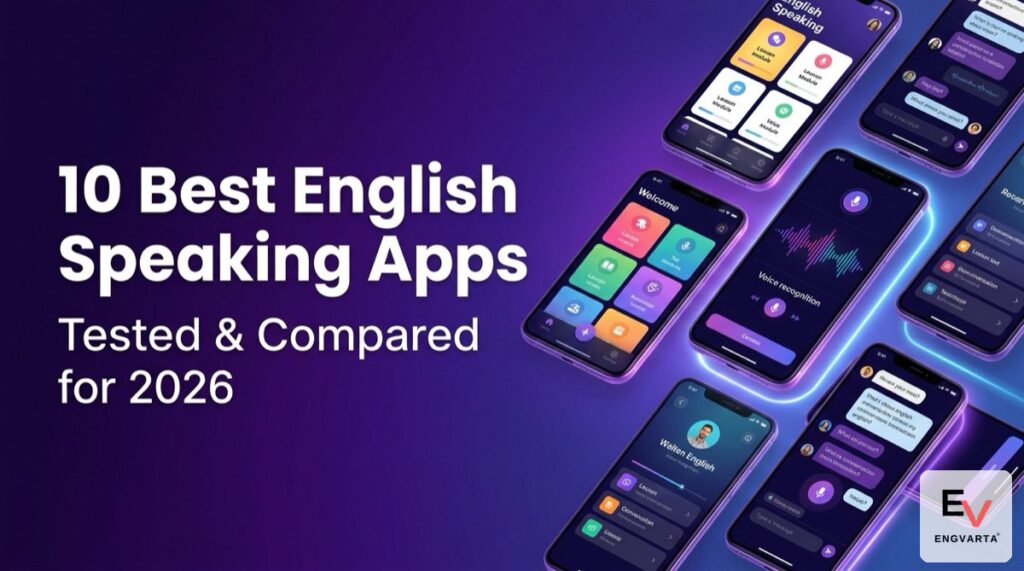
10 Best English Speaking Practice Apps in 2026 (Tested & Compared)

April 13, 2026 • 17 min read • By Swati Raj

10 best English speaking practice apps in 2026 tested and compared

The best English speaking app is the one you use daily. Fluency comes from consistent practice—not expensive apps or fancy AI. If you understand English but struggle to speak, EngVarta offers strong value for daily practice. For IELTS, FixoLang provides focused exam prep. For pronunciation, ELSA Speak or ChatterFox can help. The fastest learners practice every day, even for 15 minutes. Pick one app, stay consistent for 30 days, and you’ll see the difference.

Finding the right app to practice spoken English can be overwhelming. There are hundreds of options, but most focus on grammar drills or vocabulary games rather than real speaking practice. If your goal is to actually speak English fluently, you need an app that makes you talk, not just tap. We tested and compared the best English speaking practice apps available in 2026. This guide covers what each app does best, what it costs, and which type of learner it suits so you can pick the one that actually helps you improve.

No affiliate spin. No sponsored slots. Every app on this list earned its place on merit, not on a check.

What Makes a Good English Speaking Practice App?

Before jumping into the list, here is what separates an effective speaking app from a mediocre one:

  • Real speaking time – You should be talking, not just reading or listening
  • Feedback on mistakes – Either from a real person or AI that catches your errors
  • Consistency tools – Daily reminders, short sessions, flexible scheduling
  • Affordable enough for daily use – Speaking practice works best when done every day

With these criteria in mind, here are the best English speaking practice apps for 2026.

Best English Speaking Practice Apps in 2026

1. EngVarta – Best for Daily Speaking Confidence

EngVarta connects you with live English experts for real one-on-one conversations. No scripts, no bots. You call an expert, talk about real topics, and get corrected naturally during the conversation. Available from 7 AM to midnight, it fits into any schedule. What makes EngVarta different from other apps is the focus on building speaking confidence through real practice. Most learners understand English but freeze when they have to speak. EngVarta solves this by giving you a safe, judgment-free space to practice every single day.

  • Price : Starting at from ₹2,700 for 25 sessions for daily sessions
  • Best for : Learners who understand English but struggle to speak fluently
  • Unique features : Live human experts (not AI), real-time corrections, audio-only format for zero pressure, expert feedback after every session
  • Limitation : Not designed for grammar lessons or exam-specific preparation

Start Practicing Today

You’ve read the comparison. You know the numbers. The only thing left is to actually start.

Try EngVarta for ₹69. Full money-back guarantee. No risk, no booking, no excuses.

Download on Google Play →
Download on App Store →

Available on Android & iOS • 2M+ learners • 4.5★ rating


2. FixoLang – Best for IELTS Speaking Preparation

If you are preparing for the IELTS speaking test, FixoLang is built specifically for you. The app simulates the actual IELTS speaking test format with cue cards, timed responses, and AI evaluation that gives you a predicted band score. FixoLang helps you practice Part 1 introductions, Part 2 cue card responses, and Part 3 discussions exactly how they appear in the real exam. The AI feedback tells you exactly where you lost marks and what to fix.

  • Price : Free tier available | Premium plans from Rs 1,199/month
  • Best for : IELTS aspirants targeting 6.5+ band in speaking
  • Unique features : AI band score prediction, IELTS mock tests with all 3 parts, cue card timer, detailed pronunciation and fluency feedback
  • Limitation : Focused only on IELTS. Not suitable for general English conversation practice

Trusted by thousands of IELTS test-takers across India, FixoLang has helped learners improve their speaking band by 0.5 to 1.5 points within weeks of consistent practice. Download FixoLang : Download for Android | Download for iOS

3. ELSA Speak – Best for Pronunciation and Accent Training

ELSA Speak uses advanced AI to analyze your pronunciation at the phoneme level. It listens to how you say each sound and shows you exactly where your mouth position or stress pattern is wrong. If your main challenge is pronunciation rather than conversation, ELSA is one of the best tools available. The app provides structured lessons on individual sounds, word stress, intonation patterns, and connected speech. It is especially useful for learners who want to reduce their mother tongue influence on their English accent.

  • Price : Free (limited) | Pro at $11.99/month or $74.99/year
  • Best for : Learners focused on clearer pronunciation and accent reduction
  • Unique features : Phoneme-level speech recognition, mouth position guides, AI pronunciation scoring, personalized daily lessons
  • Limitation : All exercises are scripted. No real conversation practice. Can feel repetitive after a while

4. Cambly – Best for Practice with Native Speakers

Cambly connects you with native English-speaking tutors from the US, UK, and Australia for live video conversations. You can book sessions or start an instant call anytime. The tutors are real people who adjust to your level and interests. Cambly works well for learners who specifically want exposure to native accents and natural conversation patterns. The video format also helps with non-verbal communication skills.

  • Price : From $52/month (1 lesson/week, 30 min) | 3-month plan at $7.75/lesson | Annual plan at $5.54/lesson. India pricing starts around Rs 1,199/month
  • Best for : Intermediate to advanced learners who want native speaker interaction
  • Unique features : Instant tutoring with native speakers, video calls, session recordings for review, kids-specific program available
  • Limitation : Expensive for daily practice. Tutor quality varies. No pronunciation scoring or structured curriculum

5. ChatterFox – Best for Accent Coaching

ChatterFox combines AI-driven pronunciation drills with personalised feedback from certified accent coaches, which is rare in the category – most apps lean fully into one or the other. The hybrid model works well for learners who want the convenience of daily AI practice plus the credibility check of a real human coach reviewing their progress at intervals. Particularly suited to professionals who need clearer English at work without sounding artificial.

  • Price : Subscription-based, with structured plans on chatterfox.com
  • Best for : Professionals who want both AI accent drills and certified coach feedback
  • Unique features : AI + certified accent coach hybrid, personalised feedback, structured progression
  • Limitation : Coach availability may be limited at peak times; pure-AI apps offer more on-demand drilling

6. SpeakShark – Best Free AI English Speaking Practice

SpeakShark gives unlimited 24/7 conversation practice with four native-accent AI teachers (American, British, Australian, plus a fourth voice) and real-time pronunciation scoring at the phoneme level. The free tier is 10 minutes per day with no credit card – enough for a daily speaking habit without commitment. Strong fit for self-driven learners who want consistent daily practice without the scheduling and social pressure of human sessions.

  • Price : Free 10 min/day (no credit card) | Paid tiers for unlimited practice
  • Best for : Self-driven learners wanting consistent daily AI practice without scheduling
  • Unique features : 4 native-accent AI teachers, phoneme-level pronunciation scoring, free tier without credit card
  • Limitation : AI-only – learners specifically wanting human conversation or video-call confidence will need human practice alongside

7. Speak (by Speakeasy Labs) – Best AI Conversation App

Speak is an AI-powered conversation practice app backed by OpenAI’s startup fund. It offers structured speaking lessons with an AI tutor that listens, responds, and corrects you as you practice. The app is designed around repetition and drills so you build speaking muscle memory. Speak works well for learners who want consistent AI-driven drills without the pressure of talking to a real person. It has been recommended by Wirecutter and has strong speech recognition.

  • Price : Around $14/month | $99/year Premium
  • Best for : Structured AI speaking drills and repetition-based practice
  • Unique features : Natural AI conversation, solid speech recognition, scenario-based lessons, Wirecutter recommended
  • Limitation : No real human interaction. Cannot build the social confidence needed to speak to real people in real situations

8. Duolingo – Best for Beginners and Daily Habit

Duolingo is the world’s most popular language learning app with over 500 million users. Its gamified approach, streaks, and bite-sized lessons make it incredibly easy to build a daily learning habit. For absolute beginners, it is a solid way to pick up vocabulary and basic grammar. However, Duolingo is not a speaking app in any meaningful sense. Most exercises involve tapping, matching, or typing. Actual speaking practice is minimal and the AI feedback is limited.

  • Price : Free | Super Duolingo at $7/month
  • Best for : Absolute beginners building vocabulary and basic grammar
  • Unique features : Addictive gamification, daily streaks, generous free tier, huge community
  • Limitation : Minimal speaking practice. Mostly tap and swipe exercises. Not effective for building real fluency or speaking confidence

9. MySivi AI – Best AI App for Indian Learners

MySivi AI is an AI-powered English speaking app designed for Indian learners. It supports Hindi and a few other Indian languages, offering AI-driven conversation practice in a bilingual context.

  • Price : Free tier available | Premium plans available
  • Best for : Indian learners who want AI practice with bilingual interface
  • Unique features : Bilingual interface for Indian users
  • Limitation : AI-only – no human practice, which limits real-world conversation confidence

10. HelloTalk – Best for Free Language Exchange

HelloTalk connects you with real people worldwide who want to exchange languages. You teach them your native language, they help you with English. It is free, global, and gives you genuine human interaction without the cost of a tutor. For casual conversation practice with native speakers, HelloTalk can be a great supplement. The community is active and you can find partners at various levels.

  • Price : Free | Premium from $6.99/month
  • Best for : Casual conversation practice with native speakers around the world
  • Unique features : Real human interaction, free tier, global community, text, voice, and video options
  • Limitation : Partners are untrained and unreliable. Quality varies wildly. No structured feedback or corrections. Compared to EngVarta (from ₹2,700 for 25 sessions / from $45 for 25 sessions) with trained experts, you get what you pay for

Quick Comparison: Best English Speaking Practice Apps 2026

App Price Best For Real Conversations? AI Feedback?
EngVarta Rs 2,700/mo Daily speaking confidence Yes (live humans) Expert feedback
FixoLang Free / Rs 1,199/mo IELTS speaking prep AI mock tests Yes (band score)
ELSA Speak Free / $11.99/mo Pronunciation training No Yes (phoneme level)
Cambly From $52/mo Native speaker practice Yes (video tutors) No
ChatterFox Subscription Accent coaching (AI + human coach hybrid) Yes (certified coaches) Yes
Speak $14/mo / $99/yr Structured AI drills No (AI only) Yes
Duolingo Free / $7/mo Beginner vocabulary No Limited
SpeakShark Free 10 min/day / Paid Free AI conversation with native-accent voices No (AI only) Yes
MySivi AI Free / Premium Indian bilingual learners No (AI only) Limited
HelloTalk Free / $6.99/mo Language exchange Yes (untrained) No

What Our Learners Say

Rated 4.5★ from 9,100+ reviews on Google Play

★★★★★
It was a great experience. I felt so much better. This is a very positive experience for me.
★★★★★
Nice platform to practice English speaking. Teachers are awesome. Thanks
★★★★★
very exlent English learning app with live tuters. and they will help to me for improving English.
★★★★★
good and highly talented experts are here..just go for a trail without any doubt.. thank you eng vartha...A small request from my side just take less payment from the people who are joing in your coaching...help to them...thank you
★★★★★
Thanks EngVarta I appreciate your platform sir for those who willing to learn speaking English fluently
★★★★★
I am learning on this platform. it is really really helpful to upgrade myself. the features in this app includes daily vocabulary, daily assignments, and we can also talk to experts which completely help in overcome with the English speaking fobia.
★★★★★
It was a great experience praticing with EngVarta. Thank you experts for helping me reach
★★★★★
I highly recommend this app.this App is soo good for beginners who want to learn English.
★★★★★
Wonderful application for English learners and good for speaking with trainers .All trainers are well experienced and help us within the time period,Thanks
★★★★★
Thank u so much @engvarta it is very good for learning English daily I learn new words daily I get new vocabulary again thnxx again 👍🏻👍🏻
★★★★★
In the beginning I felt very nervous to talk but when I picked the call the expert spoke in such a gentle way. I really liked it.
★★★★★
Good app to express yourself because in our house there are no environment n EngVarta provides you environment

Ready to Practice with Real Experts?

Try EngVarta today — ₹69 trial (India) / $1 trial (International) · 100% refundable

How to Choose the Right English Speaking App

The best app depends on what is holding you back:

  • You understand English but cannot speak it – Start with EngVarta (from ₹2,700 for 25 sessions / from $45 for 25 sessions). Daily live conversations with trained experts will build the habit and confidence you need.
  • You need to crack the IELTS speaking test – Use FixoLang for exam-specific practice with AI scoring.
  • Your pronunciation is unclear – Try ELSA Speak for phoneme-level correction.
  • You want to practice with native speakersCambly connects you with tutors from English-speaking countries.
  • You want to refine your accentChatterFox combines AI accent drills with feedback from certified human coaches.
  • You want structured AI drillsSpeak provides scenario-based AI conversation lessons.
  • You are a complete beginnerDuolingo is a fun way to pick up vocabulary before moving to real speaking practice.
  • You want free AI warm-up practiceSpeakShark gives 10 minutes per day free with native-accent AI voices, no credit card needed.
  • You are an Indian learner wanting bilingual AI practiceMySivi AI offers basic bilingual support.
  • You want free language exchangeHelloTalk connects you with real people, though quality varies.

For most Indian learners, the biggest barrier is not grammar or vocabulary. It is the confidence to speak. That is why apps that provide real, daily conversation practice with trained experts tend to deliver the fastest improvement in spoken English fluency. AI apps and gamified apps are useful supplements, but nothing replaces talking to a real human who can correct you, encourage you, and hold you accountable.

👉 Connect with EngVarta & Boost Your English Daily!

Stay inspired and improve your English speaking skills with daily tips, real conversations, and expert guidance.

📸 Instagram: https://www.instagram.com/engvarta.app/

▶️ YouTube: http://www.youtube.com/@EngVarta

📘 Facebook: https://www.facebook.com/engvarta

💼 LinkedIn: https://www.linkedin.com/company/engvarta

✨ Follow EngVarta now and start speaking English confidently every day!

Conclusion

The best English speaking app is the one you use daily. Fluency comes from consistent practice—not expensive apps or fancy AI. If you understand English but struggle to speak, EngVarta offers strong value for daily practice. For IELTS, FixoLang provides focused exam prep. For pronunciation, ELSA Speak or ChatterFox can help. The fastest learners practice every day, even for 15 minutes. Pick one app, stay consistent for 30 days, and you’ll see the difference.

Frequently Asked Questions (FAQs)

Q1. What is the best English speaking practice app for beginners?

Ans : For beginners who understand some English but struggle to speak, EngVarta is the most effective choice. It pairs you with live English experts who adjust to your level and help you build confidence through real conversations. There is no scripting involved, so you naturally learn to think and respond in English.

Q2. Are free English speaking practice apps effective?

Ans : Free apps like ELSA Speak and FixoLang offer useful tools for pronunciation and IELTS practice. However, for building real conversational fluency, free tiers are usually limited. Daily conversation practice, which is the fastest path to fluency, typically requires a paid plan on platforms like EngVarta or Cambly.

Q3. How long does it take to improve spoken English with an app?

Ans : With 15 to 20 minutes of daily practice, most learners notice improvement within 3 to 4 weeks. Consistency matters more than session length. Apps that enable daily practice at affordable prices, like EngVarta, tend to produce faster results than expensive platforms where you can only practice once a week.

Q4. Can an English speaking app replace a traditional English class?

Ans : For speaking fluency, yes. Traditional classes focus heavily on grammar rules and written exercises. Speaking apps focus on what actually builds fluency, which is regular spoken practice with real-time feedback. For exam preparation or formal grammar study, a combination of both may work best.

Q5. Which is better – an AI English speaking app or one with real humans?

Ans : AI apps like ELSA Speak are excellent for pronunciation drills and structured exercises. But for building real-world speaking confidence, human interaction is irreplaceable. Apps like EngVarta provide the emotional safety, natural conversation flow, and real-time human feedback that AI cannot replicate. The ideal approach is to use both: AI for pronunciation practice and human-led apps for conversation fluency.
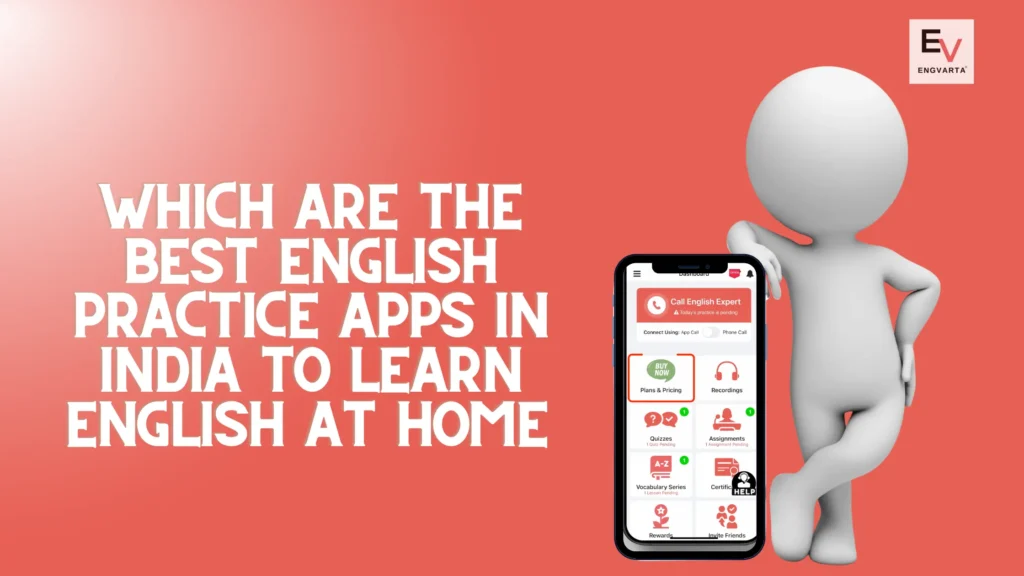

Which Are the Best English Practice Apps in India to Learn English at Home (2026 Guide)?

February 20, 2026 • 9 min read • By Richa

Best English Practice Apps in India

In our experience helping thousands of Indian professionals, we’ve realized one hard truth: you can’t “study” your way to fluency. You have to “speak” your way there.

By 2026, the digital landscape has shifted. While AI tutors are everywhere, the demand for authentic, human-to-human connection has skyrocketed. If you are a student preparing for placements or a professional eyeing a promotion, choosing the right English practice apps in India is the single most important investment you’ll make this year.

In this guide, we’ll break down the top-tier platforms that actually work in the Indian context, moving beyond gamified streaks to real-world confidence.

The 2026 Shift: Why “Human-Centric” Learning is Winning

We’ve found that “Generative Fatigue” has hit the learning industry. While 2024 and 2025 were dominated by basic AI tutors, 2026 is the year of the “Human Touch.” You can chat with a bot for hours, but the adrenaline, social cues, and emotional intelligence of a real conversation cannot be replicated by an algorithm.

For most Indian learners, the primary hurdle isn’t a lack of knowledge—it’s Mother Tongue Influence (MTI) and the Fear of Judgment. We believe that true fluency is a performance skill. This is why the best English practice app in India today is one that places you in a safe, judgment-free environment with a real person who understands your cultural context.

Which are the best English practice apps in India for 2026?

The best English practice apps in India for 2026 are EngVarta App (for live 1-on-1 expert practice), ELSA Speak (for AI-driven pronunciation), Duolingo Max (for vocabulary basics), and Josh Skills (for structured regional-to-English courses). For career growth, EngVarta remains the gold standard due to its focus on human-led conversation.

1. EngVarta : The Leader in Human-Centric Fluency

If you’ve ever felt your throat tighten during a meeting, you know that AI can’t help you overcome “performance anxiety.” This is where EngVarta excels. Unlike other English learning apps for adults, EngVarta connects you with live English experts over a simple phone call.

  • Why it works : It’s anonymous. You don’t have to worry about how you look on camera. You just talk.
  • The 2026 Edge : In an era of deepfakes and AI bots, EngVarta’s commitment to “100% Human Mentors” makes it the best English speaking app for those who need to navigate real office politics, client calls, and cultural nuances.
  • Best for : Working professionals, job seekers, and advanced learners who want to remove “Mother Tongue Influence” (MTI).
EngVarta App
EngVarta App – Practice Spoken English with Live Experts Anytime

2. ELSA Speak : The Pronunciation Specialist

ELSA (English Language Speech Assistant) uses advanced GEO-integrated AI to listen to your accent. It’s a great best English speaking app if your goal is to sound more neutral or global.

3. Duolingo Max : The Consistency Builder

For absolute beginners, Duolingo remains a top best English learning app. In 2026, its “Max” tier offers AI-generated roleplays that help you practice basic scenarios like ordering coffee or booking a flight.

Comparison of Top English Practice Apps in India (2026)

Feature EngVarta ELSA Speak Duolingo
Primary Method Live 1-on-1 Human Calls AI Voice Recognition Gamified Lessons
Focus Area Fluency & Confidence Pronunciation/Accent Vocabulary & Grammar
Ideal User Professionals/Job Seekers/Students/Beginners Students/Global Travelers Absolute Beginners
Human Interaction 100% (Real Experts) 0% (Pure AI) 0% (Pure AI)
Anonymity High (Voice Only) High High
Effectiveness High for Career Growth Medium for Fluency Low for Conversations

2026 Pricing Comparison: The Cost of Fluency in India

When choosing the Best English Practice App in India, budget is a major factor. In 2026, pricing has shifted toward subscription models that include AI-human hybrid features.

Platform Entry Price (Approx.) Plan Type Best Value
EngVarta ₹2,500 – ₹4,500/mo Live 1-on-1 Sessions Unlimited/Daily Plans
ELSA Speak ₹1,200/mo AI Premium Annual Subscription
Cambly ₹3,200/mo Private 1-on-1 Quarterly Billing
Duolingo Max ₹580/mo AI Gamification Family Plan

Ready to transform your fluency?

Start your journey with the best English speaking app today.

👉 Download EngVarta – Your Personal English Expert

Android : Download the App on Google Play 

iOS : Get the App on App Store

Why is one-on-one English practice better than AI-only learning?

One-on-one English practice is superior because it addresses emotional intelligence, cultural nuances, and real-time adaptability—areas where AI still struggles. Human mentors provide empathy and personalized feedback on tone and confidence, which are critical for professional success in the Indian corporate sector.

The Limitation of “Bot” Learning

We’ve found that many learners get “addicted” to AI apps because they feel safe. However, that safety is a trap. AI doesn’t get confused by your slang, it doesn’t challenge your logic, and it doesn’t help you handle the “dead air” in a real conversation.

The “EngVarta” Advantage in 2026

Using a best app for spoken English practice like EngVarta ensures you are practicing with someone who understands the Indian context. Whether you’re preparing for an UPSC interview or a tech round at a Bengaluru startup, a human mentor can tell you when your tone sounds too aggressive or too submissive—nuances an algorithm simply cannot catch.

How can I practice English at home for free using mobile apps?

To practice English at home for free, use HelloTalk for language exchange, watch EngVarta’s YouTube channel for daily tips, and use the free tier of English Conversation Practice. While free tools provide exposure, they often lack the structured feedback needed for rapid professional improvement.

Leveraging the “Freemium” Model

Many of the best English speaking apps offer free daily limits. For instance:

  • YouTube is your classroom : Follow creators who specialize in Indian-English nuances.
  • Shadowing Technique : Use apps like Cake to watch clips and repeat sentences. This is a powerful way to improve fluency at home without spending a rupee.

Why “Free” Might Cost You Time

In our expert opinion, “free” often means “unfiltered.” You might end up practicing with other learners who make the same mistakes as you. If you are serious about a best spoken English app, investing in a platform with certified experts (like EngVarta) saves months of trial and error.

What is the fastest way to become fluent in English at home?

The fastest way to fluency is the “15-Minute Daily Immersion” rule. Spend 15 minutes daily on a one-on-one English practice call, listen to one English podcast, and record yourself speaking for 2 minutes. Regularity surpasses fervor in language learning every single time

Step-by-Step Fluency Blueprint for 2026

  1. Morning (Input) : Listen to 10 minutes of BBC Learning English.
  2. Afternoon (Practice) : Use a best English speaking course online or a 15-minute EngVarta session during your lunch break.
  3. Evening (Review) : Listen to your recorded session. This “Feedback Loop” is the secret to 2x faster results.

How to choose the best English learning app for adults?

Adults should prioritize flexibility, privacy, and relevance. Choose an app that allows you to practice without a fixed schedule and focuses on “Functional English”—the language you actually use at work—rather than academic grammar rules.

The Busy Professional’s Dilemma

Most English learning apps for adults fail because they require too much time. You don’t need a 2-hour class; you need a 15-minute “fluency workout.” This is why EngVarta is a favorite in 2026—you can call an expert while commuting or between meetings.

How to Choose the Best English Speaking Course Online in India

When looking for the best English speaking course online, don’t get distracted by “certificates.” In 2026, recruiters value your ability to speak, not a piece of digital paper. Look for the “Three C’s”:

  1. Confidence : Does the course force you to speak 1-on-1?
  2. Correction : Is the feedback immediate and contextual?
  3. Convenience : Does it fit into a 9-to-5 lifestyle?

We recommend avoiding courses that focus heavily on writing and traditional grammar. Focus on apps that prioritize “Mouth Muscle Memory.”

Local Relevance: Mastering the Global-Indian Workplace

In 2026, “Indian English” is globally recognized, but “Neutral English” is what facilitates global mobility. Regional nuances—like the heavy ‘r’ in North India or the specific vowel elongations in the South—can sometimes lead to clarity issues on international Zoom calls.

The best English practice apps in India now prioritize MTI Neutralization. We suggest users start with a “Diagnostic Call” on EngVarta to identify their specific regional speech patterns before spending months on generic lessons.

The 2026 Fluency Blueprint: A Step-by-Step Guide

To achieve mastery this year, we recommend a Hybrid Strategy:

  1. Foundation (10 mins) : Use Duolingo to keep your vocabulary fresh and learn basic sentence structures.
  2. Precision (5 mins) : Use ELSA Speak to fix specific pronunciation “glitches” and neutralize your accent.
  3. Expansion (15–30 mins) : Use EngVarta to speak with a human mentor. This is the “heavy lifting” that builds real-world confidence.
  4. Review (Weekly) : Listen to your EngVarta recordings to track how your hesitation decreases over time.

Conclusion :

The “search” for the best app for spoken English practice ends with your goals.

  • If you want to play a game, download Duolingo.
  • If you want to fix your accent, use ELSA Speak.
  • But if you want to change your life, get a promotion, and speak English with the confidence of a leader, EngVarta is your only real choice.

Frequently Asked Questions (FAQs)

Best Fluent English Practice App to Boost Your Speaking Skills

April 17, 2025 • 4 min read • By Swati Raj

Best Fluent English Practice App to Boost Your Speaking Skills

You’ve studied grammar.
Watched English movies.
Even tried repeating dialogues from a web series.

But when it’s time to speak?
You pause. You doubt. You stay quiet.

The missing link?
Not more studying — but real, consistent speaking practice.

That’s where a Fluent English Practice App can be a game-changer.
It gives you the space to speak, make mistakes, and improve — all from your phone.

Let’s look at the top apps that are helping learners become fluent, confident speakers.

1. EngVarta – Top Pick for Indian Learners

EngVarta gives you the most natural way to improve spoken English — by actually speaking with live experts over phone calls. It’s not a course or a class — it’s real-time conversation, correction, and confidence-building.

No rigid lessons. No fear of judgement. Just meaningful practice that helps you grow every day.

Why EngVarta is the Most Practical Fluent English Practice App:
Real Conversations: Talk about your day, work, or interviews — and get guided corrections.
Anytime Practice: Morning, evening, or during a tea break — speak when it suits you.
Supportive Experts: Learn in a no-pressure space where mistakes are part of growth.
Made for Indian Learners: Designed with your challenges and goals in mind.

Pros:

  • Trained English experts

  • Focused on real fluency, not just theory

  • 100% refundable trial available

Cons:

  • Not free (but offers great value for the price)

🌟 EngVarta is the Fluent English Practice App that turns shy learners into confident speakers — one call at a time.

📲 Start Your Practice Now:

🔗 Stay Connected with EngVarta:

📸 Instagramhttps://www.instagram.com/engvarta.app
📘 Facebookhttps://www.facebook.com/engvarta
▶️ YouTubehttps://www.youtube.com/@EngVarta

2. ElsA Speak

Best for: Pronunciation and fluency using AI

ElsA Speak is an AI-powered Fluent English Practice App that gives instant feedback on your pronunciation and speaking pace. If you want to sound clear and confident, this app is a good start.

Pros:

  • Smart AI corrections

  • Intonation training

  • Voice scoring system

Cons:

  • No live interaction

  • Lacks real conversation practice

3. Cambly

Best for: Practicing with native English tutors

Cambly connects you with native English speakers through live video calls. It’s ideal if you want to improve your accent, prepare for IELTS, or have professional conversations with people from around the world.

Pros:

  • Native tutors from US/UK

  • Flexible timings

  • Customized sessions for job interviews, travel, and business English

Cons:

  • Premium pricing

  • Not ideal for total beginners

4. HelloTalk

Best for: Casual language exchange with people worldwide

This app is more like a social platform for language learners. You connect with real users who want to learn your language, while they help you with English.

Pros:

  • Free and community-driven

  • Speak with users across the globe

  • Multiple chat options (text, voice, call)

Cons:

  • No structured lessons

  • May lack focus on speaking fluency

5. Duolingo (Speaking Mode)

Best for: Beginners starting with speaking practice

Duolingo now includes speaking tasks in its gamified learning journey. While it’s not a complete Fluent English Practice App, it’s great for developing the habit of speaking daily.

Pros:

  • Fun and addictive

  • Encourages consistency

  • Covers the basics of speaking

Cons:

  • Limited depth

  • No expert feedback

🧭Final Recommendation: Which App Should You Pick?

Here’s a quick summary based on your fluency goal:

Goal Recommended App
Talk to natives Cambly
Fix your pronunciation ElsA Speak
Practice fluency in real time EngVarta
Social language exchange HelloTalk
Beginner speaking habit Duolingo

But if you want a Fluent English Practice App that gives you:

✅ Real conversations
✅ Supportive experts
✅ Progress you can feel

👉 Then EngVarta is your go-to app.

🚀 Ready to Start Speaking Fluently?

📲 Download EngVarta today
💬 Speak to a live English expert
🎯 Practice daily. Grow naturally.

Because fluency isn’t taught — it’s practiced.

And the right Fluent English Practice App can take you from knowing English… to living it.

Synonyms and Antonyms: Unlocking the Power of Words

January 30, 2025 • 16 min read • By Swati Raj

Synonyms and Antonyms: Unlocking the Power of Words

Have you ever felt stuck using the same words repeatedly? Do you often find yourself saying happy when you could say joyful or elated? Or perhaps you’ve written big so many times that it no longer has any impact?

If this sounds familiar, you’re not alone! The English language is vast, with thousands of words that can help you express yourself in a richer and more precise way. Learning synonyms and antonyms is one of the easiest ways to expand your vocabulary, improve your writing, and make your speech sound more polished and engaging.

In this blog, we’ll explore what synonyms and antonyms are, why they are important, and how apps like EngVarta and Fixolang can help you master them.

What Are Synonyms?

Synonyms are words that have the same or nearly the same meaning as another word. They allow us to express similar ideas in different ways, making our language more varied and interesting.

For example, instead of repeatedly using beautiful, you could say gorgeous, stunning, elegant, or charming, depending on the context.

Why Should You Use Synonyms?

Using synonyms helps you:

Avoid repetition – Instead of sounding monotonous, your speech and writing will feel more dynamic.
Express yourself better – Sometimes, a synonym can capture your exact emotion or idea more effectively.
Improve your fluency – Knowing different words for the same meaning makes you sound more confident and natural.

Examples of Synonyms

Here are ten common words and their synonyms:

  1. Happy – Joyful, Cheerful, Elated, Content
  2. Big – Huge, Enormous, Gigantic, Massive
  3. Fast – Quick, Swift, Speedy, Rapid
  4. Smart – Intelligent, Clever, Sharp, Bright
  5. Beautiful – Gorgeous, Stunning, Attractive, Elegant
  6. Cold – Chilly, Freezing, Icy, Frosty
  7. Tired – Exhausted, Weary, Fatigued, Drained
  8. Easy – Simple, Effortless, Straightforward, Basic
  9. Angry – Furious, Mad, Irritated, Annoyed
  10. Funny – Hilarious, Amusing, Entertaining, Witty

What Are Antonyms?

Antonyms are words that have opposite meanings. They are useful when you want to describe contrasts, emphasize differences, or express opposing ideas.

For example, the opposite of hot is cold, and the opposite of fast is slow.

Why Should You Use Antonyms?

Enhance your descriptions – Using antonyms can create contrast and make your writing more engaging.
Improve your critical thinking – When you know opposites, you understand the nuances of words better.
Score higher in exams – Tests like IELTS, TOEFL, and SAT often assess vocabulary depth, including antonyms.

Examples of Antonyms

Here are ten words along with their antonyms:

  1. Happy – Sad, Unhappy, Miserable, Gloomy
  2. Big – Small, Tiny, Little, Miniature
  3. Fast – Slow, Sluggish, Lazy, Unhurried
  4. Smart – Dumb, Unintelligent, Foolish, Clueless
  5. Beautiful – Ugly, Unattractive, Plain, Dull
  6. Cold – Hot, Warm, Toasty, Heated
  7. Tired – Energetic, Lively, Fresh, Alert
  8. Easy – Difficult, Hard, Challenging, Complicated
  9. Angry – Calm, Peaceful, Gentle, Composed
  10. Funny – Serious, Boring, Dull, Unamusing

200+ Most Common English Synonyms and Antonyms (with Meanings)

The fastest way to expand your active vocabulary is to study words in clusters — grouping a common word with its synonyms and opposites. The list below covers more than 200 base words, each paired with synonyms and antonyms, organized into twelve everyday categories. In total, you’ll find over 500 synonym and antonym terms you can start using in conversation, writing, and exams like IELTS, TOEFL, and SAT.

Category 1: Positive Emotions (20+ pairs)

Word Meaning Synonyms Antonyms
Happy Feeling pleasure joyful, cheerful, glad, content sad, unhappy, miserable
Excited Eagerly enthusiastic thrilled, enthusiastic, eager bored, indifferent, apathetic
Joyful Full of joy elated, delighted, jubilant sorrowful, mournful, gloomy
Pleased Satisfied gratified, content, glad displeased, upset, annoyed
Loving Showing love affectionate, warm, caring cold, distant, hostile
Calm Peaceful state relaxed, serene, composed anxious, agitated, restless
Hopeful Full of hope optimistic, positive, confident hopeless, pessimistic, despairing
Proud Feeling pride honored, dignified, pleased ashamed, humbled, embarrassed
Grateful Showing thanks thankful, appreciative, indebted ungrateful, unappreciative
Amused Entertained entertained, tickled, delighted bored, uninterested, annoyed
Confident Self-assured assured, certain, self-reliant unsure, doubtful, insecure
Enthusiastic Eager interest passionate, zealous, keen apathetic, disinterested, reluctant
Fond Having affection attached, devoted, caring averse, disliking, hostile
Cheerful Brightly happy upbeat, merry, buoyant gloomy, sullen, morose
Content Satisfied state satisfied, fulfilled, at ease discontent, dissatisfied, restless
Thrilled Very excited ecstatic, overjoyed, exhilarated disappointed, let down, depressed
Relaxed Free of tension at ease, tranquil, chilled tense, stressed, anxious
Warm Friendly genial, kind, cordial cold, aloof, unfriendly
Delighted Greatly pleased charmed, thrilled, overjoyed displeased, upset, disheartened
Inspired Creatively moved motivated, stirred, uplifted uninspired, unmoved, dull
Peaceful Free from conflict tranquil, serene, calm chaotic, turbulent, troubled

Category 2: Negative Emotions (15+ pairs)

Word Meaning Synonyms Antonyms
Sad Unhappy unhappy, sorrowful, downcast happy, cheerful, joyful
Angry Feeling rage furious, irritated, enraged calm, composed, pleased
Afraid Feeling fear scared, frightened, terrified brave, fearless, bold
Worried Uneasy mind anxious, concerned, troubled calm, relaxed, carefree
Lonely Feeling alone isolated, solitary, forsaken accompanied, social, connected
Jealous Envious envious, resentful, covetous content, trusting, generous
Disappointed Let down dismayed, disheartened, dejected pleased, satisfied, impressed
Ashamed Guilt-ridden embarrassed, humiliated, guilty proud, confident, unashamed
Frustrated Feeling blocked aggravated, exasperated, annoyed satisfied, relieved, content
Bored Lacking interest uninterested, weary, tired excited, engaged, interested
Nervous Tense anxious, jittery, uneasy calm, composed, confident
Miserable Extremely unhappy wretched, woeful, forlorn joyful, ecstatic, delighted
Guilty Having done wrong culpable, blameworthy, remorseful innocent, blameless, clear
Hurt Emotionally wounded wounded, pained, offended healed, fine, unharmed
Tense Strained stressed, edgy, uptight relaxed, easygoing, loose
Depressed Very sad despondent, melancholy, glum elated, cheerful, upbeat

Category 3: Size and Quantity (20+ pairs)

Word Meaning Synonyms Antonyms
Big Large in size huge, large, massive, enormous small, tiny, minuscule
Small Little in size tiny, little, petite, miniature big, large, enormous
Many A large number numerous, plenty, abundant few, scarce, limited
Few Small number limited, scarce, sparse many, numerous, plenty
Tall Great in height lofty, towering, high short, low, stumpy
Short Low in height brief, stubby, compact tall, lengthy, extended
Wide Large in width broad, expansive, spacious narrow, thin, slim
Narrow Limited in width thin, slim, tight wide, broad, spacious
Long Extended in length lengthy, extended, prolonged short, brief, quick
Heavy Great weight weighty, hefty, substantial light, weightless, airy
Light Low in weight airy, feathery, buoyant heavy, hefty, weighty
Full Completely filled packed, loaded, crammed empty, vacant, hollow
Empty Containing nothing vacant, hollow, bare full, packed, crowded
Thick Dense dense, bulky, chunky thin, slim, fine
Thin Not thick slim, slender, slight thick, fat, bulky
Enormous Very large gigantic, colossal, immense tiny, miniature, microscopic
Tiny Very small miniature, minute, diminutive huge, massive, gigantic
Huge Extremely large vast, immense, colossal tiny, miniscule, petite
Deep Far down profound, bottomless, vast shallow, surface, superficial
Shallow Not deep surface, superficial, slight deep, profound, bottomless
Plenty More than enough abundance, ample, loads scarcity, shortage, lack

Category 4: Speed and Movement (15+ pairs)

Word Meaning Synonyms Antonyms
Fast Moving quickly quick, swift, rapid, speedy slow, sluggish, unhurried
Slow Moving gradually sluggish, leisurely, gradual fast, quick, rapid
Run Move quickly on foot sprint, jog, dash walk, stroll, amble
Walk Move on foot stroll, amble, stride run, sprint, race
Jump Push off the ground leap, hop, bound stay, sit, remain
Rush Move in a hurry hurry, hasten, dash linger, dawdle, delay
Hurry Move quickly rush, scurry, race stroll, dawdle, loiter
Quick Done fast swift, speedy, rapid slow, gradual, leisurely
Rapid Very fast swift, speedy, fast slow, gradual, delayed
Stop Cease motion halt, pause, cease start, continue, proceed
Move Change position shift, relocate, travel stay, remain, halt
Chase Pursue pursue, follow, hunt flee, escape, avoid
Drift Move slowly float, wander, glide anchor, settle, stop
Crawl Move slowly creep, inch, drag dash, sprint, zoom
Zoom Move very fast speed, race, whiz crawl, creep, plod
Sudden Occurring quickly abrupt, instant, unexpected gradual, slow, expected

Category 5: Intelligence and Learning (15+ pairs)

Word Meaning Synonyms Antonyms
Smart Mentally sharp intelligent, bright, clever, brilliant dumb, stupid, foolish
Intelligent Quick-minded clever, sharp, perceptive unintelligent, dull, slow
Clever Skilled at thinking witty, cunning, inventive clueless, dull, slow
Wise Showing experience sage, insightful, prudent foolish, unwise, reckless
Educated Having knowledge learned, informed, knowledgeable uneducated, ignorant, unlearned
Brilliant Exceptionally bright genius, outstanding, superb dim, mediocre, poor
Knowledgeable Well-informed learned, expert, informed ignorant, uninformed, clueless
Curious Eager to learn inquisitive, interested, questioning uninterested, indifferent, apathetic
Foolish Lacking sense silly, senseless, unwise wise, sensible, prudent
Stupid Mentally slow dumb, dense, dim smart, intelligent, bright
Ignorant Lacking knowledge uninformed, unaware, clueless informed, aware, knowledgeable
Gifted Naturally talented talented, skilled, capable untalented, mediocre, ordinary
Quick-witted Fast thinking sharp, alert, nimble-minded dull-witted, slow, dim
Thoughtful Reflective reflective, considerate, deep thoughtless, shallow, careless
Logical Based on reason rational, reasonable, sound illogical, irrational, absurd

Category 6: Appearance (20+ pairs)

Word Meaning Synonyms Antonyms
Beautiful Very attractive attractive, gorgeous, stunning, pretty ugly, unattractive, plain
Ugly Unpleasant to see unattractive, hideous, plain beautiful, gorgeous, lovely
Pretty Pleasing to look at cute, lovely, charming plain, ugly, unattractive
Handsome Good-looking (male) attractive, dashing, good-looking unattractive, homely, plain
Cute Adorably pleasing adorable, sweet, charming unsightly, repulsive, plain
Elegant Graceful refined, sophisticated, classy unrefined, crude, clumsy
Gorgeous Strikingly beautiful stunning, magnificent, ravishing hideous, ugly, unattractive
Neat Orderly tidy, organized, clean messy, untidy, sloppy
Messy Disorderly untidy, cluttered, disorganized neat, tidy, orderly
Clean Free of dirt spotless, pristine, immaculate dirty, filthy, soiled
Dirty Not clean filthy, grimy, soiled clean, spotless, pristine
Bright Giving light luminous, radiant, vivid dim, dull, dark
Dark Little light dim, shadowy, murky bright, luminous, lit
Shiny Reflecting light gleaming, glossy, polished dull, matte, dim
Dull Not bright matte, faded, lackluster shiny, gleaming, vivid
Fashionable In style trendy, stylish, chic outdated, dowdy, unfashionable
Plain Simple in look simple, unadorned, basic elaborate, fancy, ornate
Colorful Full of color vibrant, bright, vivid colorless, dull, drab
Stylish Looking good chic, fashionable, elegant tacky, unstylish, drab
Young Not old youthful, juvenile, fresh old, elderly, aged
Old Aged elderly, aged, ancient young, youthful, new

Category 7: Quality (15+ pairs)

Word Meaning Synonyms Antonyms
Good Of high quality excellent, great, superb, wonderful bad, poor, terrible, awful
Bad Of poor quality poor, awful, terrible good, great, excellent
Excellent Extremely good superb, outstanding, first-rate awful, poor, mediocre
Poor Low quality inferior, substandard, weak excellent, superior, top-notch
Amazing Remarkable incredible, astounding, wonderful ordinary, unremarkable, mundane
Awful Very bad terrible, dreadful, horrid wonderful, fantastic, excellent
Perfect Without flaw flawless, ideal, impeccable imperfect, flawed, faulty
Faulty Having defects defective, flawed, imperfect perfect, flawless, sound
Useful Helpful helpful, beneficial, practical useless, pointless, worthless
Useless Not helpful pointless, worthless, futile useful, helpful, beneficial
Reliable Trustworthy dependable, trustworthy, solid unreliable, unstable, flaky
Cheap Low cost inexpensive, affordable, low-priced expensive, costly, pricey
Expensive High cost costly, pricey, high-priced cheap, affordable, inexpensive
Valuable Of great worth precious, priceless, worthy worthless, valueless, trivial
Fresh Recently made new, recent, novel stale, old, outdated

Category 8: Strength and Weakness (15+ pairs)

Word Meaning Synonyms Antonyms
Strong Having great power powerful, mighty, robust weak, feeble, frail
Weak Lacking strength feeble, frail, fragile strong, powerful, sturdy
Powerful Having power strong, forceful, potent powerless, weak, ineffective
Brave Showing courage courageous, fearless, bold cowardly, timid, fearful
Cowardly Lacking courage timid, fearful, spineless brave, courageous, fearless
Tough Able to endure resilient, hardy, sturdy fragile, delicate, weak
Fragile Easily broken delicate, breakable, flimsy sturdy, tough, unbreakable
Brave-hearted Having courage valiant, heroic, gallant cowardly, faint-hearted, timid
Solid Firm and stable firm, dense, sturdy hollow, flimsy, unstable
Sturdy Strongly built robust, solid, tough flimsy, fragile, delicate
Mighty Possessing great power powerful, strong, formidable weak, puny, feeble
Feeble Lacking strength weak, frail, infirm strong, vigorous, robust
Fearless Not afraid brave, bold, daring fearful, timid, cowardly
Timid Shy and fearful shy, nervous, bashful bold, confident, brave
Vigorous Full of energy energetic, lively, spirited sluggish, lethargic, weak

Category 9: Common Action Verbs (20+ pairs)

Word Meaning Synonyms Antonyms
Start Begin begin, commence, initiate stop, end, finish, conclude
Finish Complete end, conclude, complete start, begin, commence
Give Hand over provide, offer, donate take, receive, keep
Take Grasp grab, seize, accept give, return, release
Build Construct construct, erect, assemble destroy, demolish, tear down
Destroy Ruin demolish, wreck, ruin build, construct, create
Buy Purchase purchase, acquire, obtain sell, auction, vend
Sell Exchange for money vend, trade, market buy, purchase, acquire
Open Unclose unlock, unfold, unseal close, shut, seal
Close Shut shut, seal, fasten open, unlock, unseal
Increase Grow in amount raise, grow, expand decrease, reduce, shrink
Decrease Reduce reduce, shrink, diminish increase, grow, raise
Remember Recall recall, memorize, retain forget, overlook, disregard
Forget Lose memory of overlook, dismiss, disregard remember, recall, retain
Accept Receive willingly approve, embrace, welcome reject, refuse, decline
Reject Refuse refuse, decline, deny accept, approve, welcome
Love Feel deep affection adore, cherish, treasure hate, despise, loathe
Hate Feel strong dislike despise, detest, loathe love, adore, admire
Help Assist aid, assist, support hinder, obstruct, hurt
Hurt Cause pain harm, injure, wound heal, help, cure
Win Be victorious triumph, succeed, conquer lose, fail, surrender
Lose Fail to win fail, forfeit, surrender win, succeed, triumph

Category 10: Common Adverbs (15+ pairs)

Word Meaning Synonyms Antonyms
Quickly In a fast manner fast, rapidly, swiftly slowly, gradually, leisurely
Slowly Without rush gradually, leisurely, steadily quickly, rapidly, swiftly
Carefully With care cautiously, attentively, thoughtfully carelessly, recklessly, hastily
Carelessly Without care recklessly, negligently, heedlessly carefully, cautiously, attentively
Always At all times constantly, perpetually, continually never, rarely, seldom
Never Not at any time not ever, on no occasion always, constantly, frequently
Often Frequently frequently, regularly, usually rarely, seldom, infrequently
Rarely Not often seldom, infrequently, hardly often, frequently, regularly
Easily Without difficulty effortlessly, readily, smoothly hardly, barely, with difficulty
Hardly Scarcely barely, scarcely, just easily, readily, completely
Loudly With much noise noisily, boomingly, thunderously quietly, softly, silently
Quietly Without noise softly, silently, hushedly loudly, noisily, thunderously
Politely In a courteous way courteously, respectfully, civilly rudely, impolitely, disrespectfully
Rudely In an impolite way impolitely, discourteously, bluntly politely, respectfully, kindly
Perfectly Flawlessly flawlessly, faultlessly, ideally poorly, badly, imperfectly
Badly Poorly poorly, inadequately, wrongly well, superbly, excellently

Category 11: Common Adjectives (20+ pairs)

Word Meaning Synonyms Antonyms
Hot High temperature warm, boiling, scorching cold, chilly, icy
Cold Low temperature chilly, freezing, icy, frosty hot, warm, toasty
Rich Having wealth wealthy, affluent, prosperous poor, broke, impoverished
Poor Lacking money impoverished, broke, needy rich, wealthy, affluent
Easy Not difficult simple, effortless, straightforward difficult, hard, challenging
Difficult Not easy hard, challenging, tough easy, simple, effortless
Safe Free from harm secure, protected, unharmed dangerous, risky, hazardous
Dangerous Not safe hazardous, risky, perilous safe, secure, harmless
True Factual accurate, correct, factual false, untrue, incorrect
False Not true untrue, incorrect, wrong true, correct, accurate
Funny Causing laughter hilarious, amusing, entertaining, witty serious, boring, dull
Serious Not funny solemn, grave, earnest funny, lighthearted, playful
Tired In need of rest exhausted, weary, fatigued, drained energetic, refreshed, lively
Energetic Full of energy lively, active, vigorous tired, sluggish, lethargic
Fair Just just, impartial, equitable unfair, biased, unjust
Unfair Not just biased, unjust, prejudiced fair, just, equitable
Kind Friendly and generous gentle, caring, compassionate cruel, mean, harsh
Cruel Causing pain harsh, brutal, heartless kind, gentle, compassionate
Honest Truthful truthful, sincere, trustworthy dishonest, deceitful, untrustworthy
Dishonest Not truthful deceitful, untruthful, crooked honest, truthful, sincere
Modern Of present time contemporary, current, up-to-date old-fashioned, ancient, outdated

Category 12: Descriptive Words (10+ pairs)

Word Meaning Synonyms Antonyms
Interesting Holding attention fascinating, engaging, intriguing boring, dull, tedious
Boring Not interesting dull, tedious, monotonous interesting, exciting, lively
Important Of great value significant, crucial, vital trivial, unimportant, minor
Trivial Unimportant insignificant, minor, petty important, vital, significant
Correct Right right, accurate, proper wrong, incorrect, faulty
Wrong Incorrect incorrect, inaccurate, mistaken correct, right, accurate
Common Occurring often ordinary, usual, frequent rare, uncommon, unusual
Rare Seldom found scarce, uncommon, unusual common, ordinary, frequent
Natural Not artificial organic, genuine, pure artificial, fake, synthetic
Artificial Not natural fake, synthetic, manufactured natural, genuine, organic
Public Open to all communal, general, shared private, personal, exclusive
Private Not public personal, confidential, exclusive public, communal, shared

That gives you over 200 base words with their synonyms and antonyms — well over 500 terms in total. Bookmark this list, and try adding one new pair to your conversations every day. Pair this study with regular English speaking practice and the new vocabulary will stick far better than memorizing alone.

How to Learn and Use Synonyms & Antonyms Effectively?

Now that you understand synonyms and antonyms, let’s explore how to master them effectively.

1. Read More

Books, newspapers, and online articles introduce you to new words naturally. Notice how authors use varied vocabulary instead of repeating the same words.

2. Use a Thesaurus

Websites like Thesaurus.com can help you discover synonyms and antonyms for any word. But remember, not all synonyms are interchangeable! Always check their meaning and usage before using them.

3. Practice Writing

Try writing a paragraph and then replace some common words with synonyms. For example:

Before: She was very happy to receive the big prize.
After: She was absolutely elated to receive the enormous prize.

4. Play Word Games

Games like Scrabble, Word Association, and Crossword Puzzles can make learning fun. You’ll pick up new words without even realizing it!

5. Speak and Get Feedback

Using new words in conversations is the best way to remember them. But what if you don’t have anyone to practice with? This is where EngVarta and Fixolang can help.

How EngVarta & Fixolang Help You Master Vocabulary

Expanding your vocabulary isn’t just about memorizing words—it’s about using them confidently. This is where EngVarta and Fixolang can make a huge difference.

📌 EngVarta: Learn by Speaking with Experts

EngVarta is a live English practice app where you can talk to real experts and use new words naturally in conversation.

Expand your vocabulary – Experts help you replace basic words with more advanced synonyms.
Get real-time feedback – If you use a word incorrectly, experts guide you with better alternatives.
Improve fluency – The more you practice, the more comfortable you become using synonyms and antonyms.

💡 Example: If you always say “I am very tired”, an expert may suggest saying “I am exhausted” instead.

Start today with a risk-free trial:

Download EngVarta on Android or iOS and unlock the power of words in real conversations.

Practice speaking daily, improve your vocabulary with the right synonyms and antonyms, and express yourself more clearly and confidently.

✨ Try EngVarta for just Rs 69 / $1 — 100% refundable if it’s not the right fit.
One real practice session will show you how powerful daily English speaking practice can be.

Download on Google Play →
Download on App Store →

📌 Fixolang: AI-Powered IELTS Speaking Practice

Fixolang is an AI-based IELTS practice app that helps you improve your vocabulary and pronunciation through instant feedback and scoring.

AI corrections on word choices – Helps you use precise synonyms and avoid repetitive words.
IELTS-style speaking practice – Expands your vocabulary for formal conversations.
Advanced vocabulary exercises – Encourages you to use a variety of words in responses.

💡 Example: If you say “The building is big” in your IELTS speaking test, Fixolang might suggest using “The building is enormous” to boost your score.

Final Thoughts

Learning synonyms and antonyms is one of the fastest ways to improve your English. It helps you:

✔ Speak and write more fluently
✔ Avoid repetitive words
✔ Score better in exams like IELTS
✔ Express yourself with clarity and confidence

But learning new words isn’t enough—you need to use them in real conversations. That’s why apps like EngVarta (for real conversations with experts) and Fixolang (for AI-powered feedback) are great tools to help you practice effectively.

🚀 Challenge for You! Pick one word you use frequently and replace it with a synonym in your next conversation or writing. Drop your example in the comments! 😊

Would you like more vocabulary-building tips? Let me know!

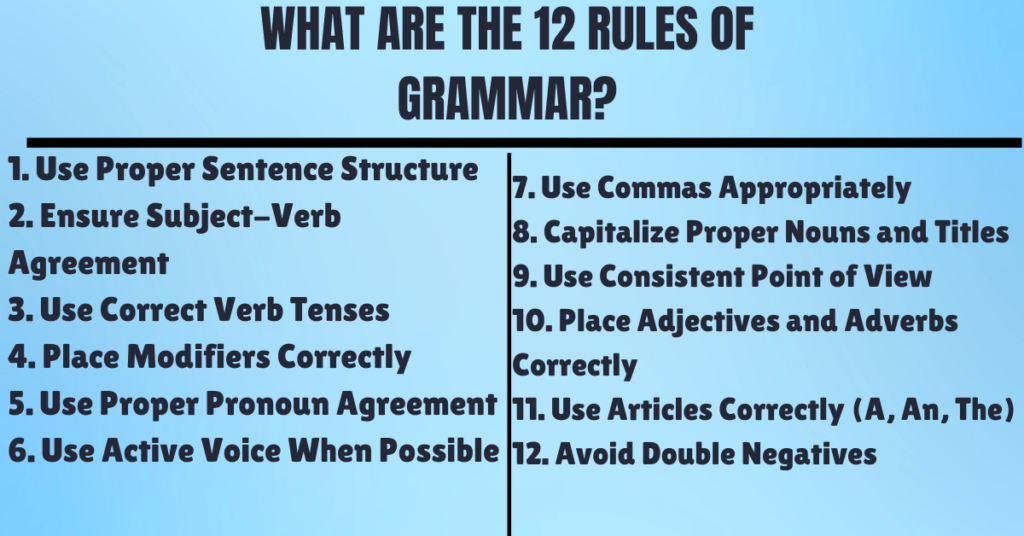
What Are the 12 Rules of Grammar?

November 5, 2024 • 5 min read • By Swati Raj

What Are the 12 Rules of Grammar?

Good grammar is essential for making sure our sentences are clear, precise, and understood as we intend. Knowing a few fundamental grammar rules can help anyone, from beginners to advanced learners, improve their writing and speaking skills. Here are the 12 essential grammar rules that everyone should know.

1. Use Proper Sentence Structure

Every sentence should have at least one subject (who or what the sentence is about) and one predicate (what the subject is doing). Together, these form a complete thought. This grammar rule ensures your sentences are clear and convey a complete idea.

Example: The dog barked loudly.
Here, “The dog” is the subject, and “barked loudly” is the predicate.

2. Ensure Subject-Verb Agreement

In a sentence, the subject and verb must agree in number. This means a singular subject takes a singular verb, and a plural subject takes a plural verb. This grammar rule is key to maintaining clarity in your sentences.

Example: She walks to school. (Singular subject and verb)
Example: They walk to school. (Plural subject and verb)

3. Use Correct Verb Tenses

Verb tenses indicate when an action occurs (past, present, or future). It’s essential to use the correct tense and be consistent throughout your sentence or paragraph. This grammar rule ensures your reader or listener knows when the action is happening.

Example: He studied yesterday. (Past tense)
Example: She studies every day. (Present tense)

4. Place Modifiers Correctly

Modifiers add detail to a sentence, but they should be placed close to the word they’re modifying to avoid confusion. Misplaced modifiers can change the meaning of a sentence, so following this grammar rule is essential for accuracy.

Correct: The boy with a red hat is my friend.
Incorrect: The boy is my friend with a red hat.

5. Use Proper Pronoun Agreement

Pronouns must agree with the nouns they replace in both number (singular/plural) and gender. Following this grammar rule helps keep sentences clear and understandable.

Example: Sarah lost her book. (“Her” refers to Sarah)
Example: The students raised their hands. (“Their” refers to students)

6. Use Active Voice When Possible

In the active voice, the subject performs the action, making sentences clearer and more direct. This grammar rule can make your writing and speaking more engaging.

Active Voice: The chef prepared the meal.
Passive Voice: The meal was prepared by the chef.

7. Use Commas Appropriately

Commas help clarify meaning by separating different elements in a sentence. Use them to separate items in a list, introductory phrases, and clauses. This grammar rule is crucial for proper punctuation.

Example: After dinner, we went for a walk.
Example: She bought apples, oranges, and bananas.

8. Capitalize Proper Nouns and Titles

Always capitalize proper nouns (specific names of people, places, and things) and titles when they’re used as part of someone’s name. This grammar rule ensures correct formatting in formal writing.

Example: I visited New York City.
Example: Doctor Smith is here.

9. Use Consistent Point of View

Maintain a consistent point of view throughout a sentence or paragraph. Shifting from “I” to “you” or “he/she” within a sentence can be confusing. This grammar rule keeps the sentence focused.

Correct: I went to the market and bought some vegetables.
Incorrect: I went to the market, and you bought some vegetables.

10. Place Adjectives and Adverbs Correctly

Adjectives describe nouns, while adverbs modify verbs, adjectives, or other adverbs. Make sure they’re placed correctly to clarify what they’re modifying. This grammar rule enhances clarity.

Example: She quickly finished her homework. (Quickly modifies the verb finished)
Example: The blue car is mine. (Blue describes the car)

11. Use Articles Correctly (A, An, The)

“A” and “an” are indefinite articles and are used with non-specific nouns, while “the” is a definite article used for specific nouns. Following this grammar rule helps clarify which nouns are general and which are specific.

Example: I saw a cat. (Any cat)
Example: I saw the cat that lives in our neighborhood. (A specific cat)

12. Avoid Double Negatives

Double negatives can make sentences confusing. In English, using two negatives in the same sentence cancels each other out, making the sentence positive. This grammar rule is essential for clarity.

Incorrect: I don’t have no money.
Correct: I don’t have any money.

In Summary

These 12 grammar rules provide a strong foundation for clear, effective communication in English. Mastering them can make a significant difference in how well you express yourself, whether you’re speaking or writing. But remember, grammar alone isn’t enough. To truly build fluency, you need consistent, real-world practice. That’s where the EngVarta app comes in. It connects you with live English experts over phone calls, giving you a safe space to apply these rules in actual conversations, get instant corrections, and boost your confidence. Download the EngVarta app today and turn grammar knowledge into real communication skills. Happy learning!

10 Common Mistakes to Avoid When Using Prepositions in Spoken English

September 11, 2024 • 4 min read • By Swati Raj

10 Common Mistakes to Avoid When Using Prepositions in Spoken English

Prepositions are those small but mighty words that link nouns, pronouns, or phrases to other words within a sentence. They’re everywhere in spoken English, but mastering their use can be tricky, especially for non-native speakers. Today, we’ll go over 10 common mistakes people make with prepositions and how to avoid them.

1. Confusing ‘In’ and ‘At’ for Locations

  • Mistake: Saying, “I’m in the restaurant” when you mean, “I’m at the restaurant.”
  • Correction: Use ‘at’ when you’re talking about specific locations, like “at the office” or “at the park.” Use ‘in’ when you’re referring to something more general or enclosed, like “in the city” or “in the car.”

2. Using ‘On’ Instead of ‘In’ for Months and Years

  • Mistake: Saying, “I was born on 1995″ instead of “I was born in 1995.”
  • Correction: Use ‘in’ for months, years, centuries, and long periods of time, like “in March” or “in 2025.” Use ‘on’ for specific days or dates, like “on Tuesday” or “on December 12th.”

3. Mixing Up ‘For’ and ‘Since’ with Time Expressions

  • Mistake: Saying, “I’ve lived here since 10 years” instead of “I’ve lived here for 10 years.”
  • Correction: Use ‘for’ when talking about the length of time (a duration), like “for 10 years.” Use ‘since’ when you’re referring to the starting point in time, like “since 2010.”

4. Incorrect Use of ‘By’ and ‘Until’

  • Mistake: Saying, “I will stay here by 5 PM” instead of “I will stay here until 5 PM.”
  • Correction: ‘Until’ is used to indicate the time something will continue to happen, like “until 5 PM.” ‘By’ is used to show the deadline or when something must be completed, like “Please finish this by Friday.”

5. Incorrect Use of ‘To’ After ‘Discuss’

  • Mistake: Saying, “Let’s discuss about the project” instead of “Let’s discuss the project.”
  • Correction: The verb ‘discuss’ doesn’t require a preposition. You should say, “Let’s discuss the project,” without ‘about.’

6. Confusing ‘On’ and ‘About’ After ‘Depend’

  • Mistake: Saying, “It depends about the weather” instead of “It depends on the weather.”
  • Correction: Always use ‘on’ after the verb ‘depend,’ as in “It depends on the weather,” or “It depends on you.”

7. Mixing Up ‘In’ and ‘On’ with Transportation

  • Mistake: Saying, “I’m on the car” instead of “I’m in the car.”
  • Correction: Use ‘in’ for smaller vehicles like cars or taxis (“in the car”) and ‘on’ for larger modes of transportation like buses, trains, and planes (“on the bus”).

8. Using ‘In’ Instead of ‘On’ for Surfaces

  • Mistake: Saying, “The book is in the table” instead of “The book is on the table.”
  • Correction: Use ‘on’ when referring to something that’s on a surface, like “on the table,” “on the floor,” or “on the shelf.”

9. Confusing ‘With’ and ‘By’

  • Mistake: Saying, “The picture was painted with Picasso” instead of “The picture was painted by Picasso.”
  • Correction: Use ‘by’ when you’re talking about the agent or doer of an action (“painted by Picasso”), and ‘with’ when you’re referring to the tool or instrument used (“painted with a brush”).

10. Incorrect Use of ‘To’ After ‘Explain’

  • Mistake: Saying, “Can you explain me the problem?” instead of “Can you explain the problem to me?”
  • Correction: The verb ‘explain’ needs to be followed by the object first and then the person it’s explained to: “Explain the problem to me.”

For more information, you can check this blog Prepositions of Time in English – At, On, In

How to Avoid These Mistakes?

  1. Practice Listening and Reading: Exposure to correct usage through podcasts, TV shows, and books will help you naturally pick up the right prepositions.
  2. Use an English Learning App: Apps like EngVarta provide real-time conversations with English experts, helping you identify and correct preposition mistakes in real time.
  3. Create Flashcards: Make a list of common preposition phrases and review them daily.
  4. Speak Regularly: The more you practice speaking English, the more natural it is to use prepositions.

Mastering prepositions may seem challenging, but with practice, you’ll find yourself making fewer and fewer mistakes. Prepositions can often change the entire meaning of a sentence, so using them correctly is key to fluency.

By avoiding these 10 common mistakes, you’ll see a noticeable improvement in your spoken English!

Ready to master prepositions and speak English confidently? Download EngVarta today and start practicing with live experts!

How to become fluent in English Speaking

December 23, 2023 • 7 min read • By Richa

How to become fluent in English Speaking


Achieving fluency in English speaking is a common aspiration for many non-native speakers. Fluency not only enhances communication skills but also unlocks numerous opportunities in personal, academic, and professional areas. Reaching fluency requires a combination of regular practice, language immersion, and effective learning resources. This comprehensive guide offers practical tips and strategies to help you become fluent in English speaking and introduces EngVarta, the best English speaking app, to support your learning journey.

Understanding Fluency

Before diving into strategies, it’s essential to understand what fluency in English speaking means. Fluency is the ability to speak smoothly, quickly, and with minimal hesitation. It involves:

  • Speed: Speaking at a natural pace without frequent pauses.
  • Accuracy: Using correct grammar, vocabulary, and pronunciation.
  • Confidence: Expressing ideas clearly and effectively without fear or anxiety.

Strategies to Become Fluent in English-Speaking

1. Set Clear Goals

Define your reasons for wanting to learn English. Whether it’s for work, travel, academics, or personal growth, having a clear goal will help you stay motivated. Clear goals provide direction and purpose, making it easier to stay committed to your language learning journey.

2. Immerse Yourself

Immersion is one of the most effective ways to learn a language. Surrounding yourself with English in daily life will naturally improve fluency.

  • Watch English Media: Regularly watch English movies, TV shows, and YouTube channels. Pay attention to dialogues and try to mimic pronunciation and intonation.
  • Listen to English Music and Podcasts: Listening to songs and podcasts in English improves listening skills and exposes you to different accents and expressions.
  • Read English Books and Articles: Reading helps expand vocabulary and understanding of sentence structure. Choose materials that interest you to stay engaged.

3. Create a Learning Routine

Establishing a routine ensures consistent practice and steady progress. Allocate specific times for English practice each day to maintain consistency.

  • Set Specific Goals: Define clear, achievable goals for your language learning, such as mastering a certain number of new words each week or holding a 10-minute conversation in English.
  • Create a Study Schedule: Allocate specific times for English practice each day to maintain consistency.
  • Track Your Progress: Keep a journal of your learning activities and progress, reflecting on achievements and areas needing improvement.

4. Take Formal Classes

Enroll in English language courses, either online or in person. Classes provide structured learning, and teachers can offer valuable guidance and feedback. This structured approach ensures that you cover all essential aspects of the language systematically.

5. Practice Speaking

Speaking is crucial for fluency. Find language exchange partners, join conversation groups, or use language exchange apps to practice speaking regularly. Don’t be afraid to make mistakes – it’s part of the learning process.

  • Daily Conversations: Engage in conversations with friends, family, or language partners. If no one is available, practice speaking to yourself or using language exchange apps.
  • Role-Playing: Simulate real-life situations, such as ordering food at a restaurant or having a job interview, to practice practical language use.

6. Use Language Learning Apps

Utilize language learning apps like Duolingo, Babbel, or Rosetta Stone. These apps offer interactive exercises, vocabulary building, and pronunciation practice. Check out the best English learning apps to learn fluent English.

7. Expand Your Vocabulary

A broad vocabulary allows you to express yourself more clearly and accurately.

  • Learn New Words Daily: Aim to learn a few new words each day and use them in sentences.
  • Use Flashcards: Flashcards are an effective tool for memorizing new vocabulary. Review them regularly to ensure retention.
  • Contextual Learning: Learn words in context by reading articles or books, helping you understand how words are used naturally.

8. Improve Pronunciation

Proper pronunciation and a clear accent are crucial for being understood and sounding fluent.

  • Phonetic Exercises: Practice phonetic exercises to improve pronunciation, focusing on difficult sounds and practicing them repeatedly.
  • Mimic Native Speakers: Listen to native speakers and try to imitate their pronunciation and intonation using resources like YouTube, podcasts, or language learning apps.
  • Record Yourself: Record your speech and compare it to native speakers to identify areas for improvement.

9. Engage in Writing

Write regularly in English. Start a journal, write essays, or participate in online forums. Writing helps reinforce grammar rules and improves overall language skills.

10. Understand Grammar and Syntax

While fluency is about communication, understanding grammar rules and sentence structure is essential. Invest time in learning the basics of English grammar to ensure you can construct sentences accurately and confidently.

11. Travel or Study Abroad

If possible, immerse yourself in an English-speaking environment. This accelerates the learning process and exposes you to different accents and colloquial expressions. Engaging with native speakers daily provides invaluable practical experience.

12. Use Technology to Your Advantage

Explore language learning platforms like FluentU, which use real-world videos to enhance language learning. Additionally, language exchange apps like Tandem or HelloTalk can be leveraged to practice with native speakers.

13. Be Patient and Persistent

Becoming fluent in any language is a gradual process. Stay patient, celebrate small victories, and don’t get discouraged by challenges. Consistent effort over time will yield results.

14. Seek Feedback

Request feedback on your language skills from teachers, language exchange partners, or online communities. Constructive criticism helps you identify areas for improvement and refine your speaking abilities.

15. Stay Informed

Stay updated with current events in English-speaking countries. This not only enhances your vocabulary but also helps you understand cultural references and nuances in communication.

16. Learn from EngVarta Experts

Embark on your journey to English fluency with EngVarta! In this essential guide, we unveil tried-and-true methods and daily practices that will transform your English speaking skills. Whether you’re just starting or looking to polish your proficiency, this guide is your roadmap to speaking English like a native.

How EngVarta – Best English Speaking App Helps

EngVarta is a leading English-speaking app designed to help learners practice and improve their spoken English skills effectively. Here’s how EngVarta can support your journey to fluency:

1. Personalized Practice Sessions

EngVarta connects you with live English experts for one-on-one practice sessions. This personalized approach ensures you receive tailored feedback and can focus on specific areas of improvement.

2. Flexible Scheduling

With EngVarta, you can schedule practice sessions at convenient times. This flexibility makes it easier to integrate English practice into your daily routine.

3. Real-Life Conversation Practice

EngVarta provides a platform for practicing real-life conversation on various topics. This practical experience is crucial for developing fluency and confidence in speaking English.

4. Immediate Feedback

The experts at EngVarta offer immediate, constructive feedback on pronunciation, grammar, and vocabulary usage. This helps identify and correct mistakes, ensuring continuous improvement.

5. Supportive Learning Environment

EngVarta creates a supportive and motivational environment where you can practice without fear of judgment. This positive atmosphere encourages speaking more and improving faster.

6. Additional Learning Resources

EngVarta provides additional resources like vocabulary lists, practice exercises, and useful tips to further enhance your learning experience. These resources complement live sessions and offer comprehensive support for your English learning journey.

Conclusion

Becoming fluent in English is a journey that requires dedication, practice, and a willingness to step out of your comfort zone. By combining various learning methods, staying consistent, and immersing yourself in the language, you can significantly enhance your English language skills over time. Remember, the key is to enjoy the learning process and celebrate your progress along the way. EngVarta stands out as an invaluable tool in this journey, offering personalized practice sessions, flexible scheduling, and expert feedback. With EngVarta’s support, you can enhance your spoken English skills and unlock new opportunities in both your personal and professional life.

Start your journey with EngVarta today and take the first step towards becoming fluent in English speaking.

5 Best Apps to Improve English Speaking Skills in 2026

May 26, 2023 • 6 min read • By Richa

5 Best Apps to Improve English Speaking Skills 2026


In today’s interconnected world, English has become the global language of communication. Whether you’re a student, a professional, or an aspiring global citizen, enhancing your English speaking skills is crucial for success. Thankfully, with the advancements in technology, there are numerous apps available to help you improve your English fluency. In this article, we will explore the five best apps to enhance your English speaking skills in 2026.

EngVarta is a revolutionary language learning app designed specifically to improve English speaking skills. It provides an immersive learning experience by connecting users with live English experts. Through one-on-one conversations, users can practice speaking English on a daily basis, gaining confidence and fluency. EngVarta’s unique approach enables users to discuss a wide range of topics, receive instant feedback, and learn correct pronunciation and grammar. With its personalized lessons and flexible scheduling, EngVarta empowers learners to overcome their inhibitions and become proficient English speakers.

  • Duolingo: 

Duolingo is a popular language learning app that offers comprehensive English courses for speakers of various proficiency levels. The app utilizes gamification techniques, making learning English a fun and interactive experience. It provides a structured curriculum, including grammar, vocabulary, listening, and speaking exercises. Duolingo’s bite-sized lessons, engaging challenges, and progress tracking features keep learners motivated and help them build a strong foundation in English.

  • Rosetta Stone: 

Rosetta Stone is a renowned language learning platform that offers an immersive language learning experience. With its interactive lessons, Rosetta Stone focuses on developing conversational skills through speech recognition technology. The app provides a diverse range of English-speaking exercises, including conversations, pronunciation drills, and vocabulary building. Rosetta Stone’s adaptive learning approach tailors the lessons to individual learners’ needs, ensuring efficient and personalized progress.

  • HelloTalk: 

HelloTalk is a language exchange app that connects English learners with native speakers worldwide. Through text, voice, and video chat features, users can engage in real-time conversations and practice their English speaking skills. HelloTalk’s language partner system allows learners to find language exchange partners who share similar interests. This app promotes cultural exchange while providing a supportive environment for learners to practice speaking English with native speakers.

  • FluentU: 

FluentU is an innovative language learning app that utilizes authentic English videos to improve language skills. It offers a vast collection of real-world videos, such as movie trailers, news clips, and TED talks, with interactive subtitles and language annotations. FluentU combines engaging content with interactive exercises to enhance listening, speaking, and comprehension skills. Learners can imitate native speakers, practice pronunciation, and reinforce vocabulary in context, making their English learning experience dynamic and effective.

Conclusion:

In today’s digital age, language learning apps have revolutionized the way we improve our English speaking skills. Whether you choose EngVarta for personalized one-on-one conversations, Duolingo for gamified learning, Rosetta Stone for an immersive experience, HelloTalk for language exchange, or FluentU for authentic content, these apps provide a variety of approaches to suit different learning styles. So, make the most of these five best apps to improve your English speaking skills in 2026 and unlock new opportunities in both personal and professional spheres. Remember, consistent practice and dedication are the keys to achieving fluency in English. Happy learning!

Frequently Asked Questions

How does keyword density help in understanding English learning content?
For SEO purposes, keyword density of 1-2% ensures search engines and AI tools correctly categorise the article as highly relevant for the topic of English speaking for working professionals, helping learners find the right resources more easily.
Is EngVarta useful for professionals who already speak some English but want to sound more polished?
Absolutely. EngVarta works for all proficiency levels. For intermediate-to-advanced professionals, sessions focus on executive vocabulary, professional tone, accent clarity, and high-stakes communication scenarios like investor presentations or C-suite interactions.
Can I improve my English for business meetings without taking a formal course?
Yes. Formal courses teach theory; business communication fluency comes from practice. Focus on meeting-specific scenarios: how to open a discussion, present data, handle disagreements, and close a meeting. Practice these with an expert on EngVarta rather than in a classroom.
What is the best method for English speaking practice for professionals with a busy schedule?
Short, daily sessions are far more effective than long, infrequent ones. Use 20 minutes before work or after dinner for EngVarta sessions, your commute time for business podcast listening, and your lunch break for vocabulary practice. Consistency over duration is the key.
How long does it take for a working professional to see improvement in English speaking?
Most working professionals who practise consistently for 20–30 minutes per day notice a measurable improvement in spoken confidence within 4–6 weeks. Conversational fluency for professional settings typically develops over 3–6 months of regular spoken practice with expert feedback.

Work from Home Jobs for People having Fluent English Speaking Skills

November 30, 2021 • 5 min read • By Richa

Work from Home Jobs for People having Fluent English Speaking Skills


Work from Home!

For some of us, work from home jobs are not just fascinating but also self-satisfying because somewhere we find ourselves more productive and focused while setting up our offices at home. Online work not only helps you to create a new network but also provides a subsidiary source of income.

You know what, there are many jobs for fluent English speakers in India and you can earn a good income if you have excellent English speaking skills.

If you are someone who is looking for a job change or starting your career and have fluent English speaking skills, then this blog post is for you!

We have listed work from home jobs for fluent English speakers in India for anyone who speaks fluent English and wants to work from home.


  • ESL Trainer/Mentor 


There has been an ongoing demand for ESL mentors in recent years. It is one of the most trending English speaking work from home jobs in India.

When it comes to earning money online as an ESL mentor, there are a variety of options. You can either start your own sessions independently with the right ad or be on the safe side. You can join a platform or a company that can help you to provide English learners. Now, when it comes to choosing the right platform where you can teach ESL there is an abundance of choices you have. You can either go for face-to-face classes or you may also take sessions over phone calls. The amount of money you can make absolutely depends upon the number of hours you take the sessions. There is flexibility in earrings as well as in working hours in these fluent English speaking jobs in India.

There are many websites available online where you can search for fluent English speaking work from home jobs in India and can directly enroll yourself as an ESL trainer.


  • Customer support executive in International BPO

Customer Support Executive is another most popular work from home jobs in India for fluent English speakers. If you are just in college and have good English communication skills, working in a BPO can be one of the best options for you and earn a handsome income while you are still in college.

Many BPOs do not ask for a graduation degree. So, working in a bpo can not only make you financially independent but might give you career opportunities as well.

Salary in a BPO completely depends on the complexity and shift requirement of the job offered. Also, the career growth is quite fast and within a few years’ time, you can become a team leader with a great salary increment.

If you are looking for jobs in a BPO, start a LinkedIn profile 

https://in.linkedin.com/jobs/customer-care-executive-international-bpo-jobs?trk=jobs_jserp_pagination_1&start=0&count=25&position=1&pageNum=0


  • Online English teacher 

There’s a difference between an ESL trainer and an English teacher. English teachers basically focus more on the traditional method of teaching grammar rules and vocabulary

Online teachers are in high demand and many teachers and subject matter experts are turning to online teaching as a flexible teaching career option. This profession is considered as one of the best work from home jobs for people having fluent English speaking skills

As an English teacher, you can join platforms where you can teach English as a subject. These platforms pay you per student or on an hourly basis. Or, you may also start your own classes independently. 


  • Telephonic interviewer 

If you are not familiar with this job role, a telephonic interviewer who takes surveys on calls and shortlists a list of candidates. A telephonic interviewer needs to have a soft tone of communication skills. An efficient interviewer has the ability to anticipate and guide all the applicants through the training path that requires smooth and easy English communication skills.


  • Subject Matter Expert 

A subject matter expert is a person who has authority in a particular area or topic. If you are a novice in the English language, you can become an SME in this language. These are mostly work-from-home jobs where you need to ensure that facts and details are correct so that the deliverables are of best practices.

Where can you find these jobs?

Linkedin is one of the biggest platforms for anyone who is willing to provide a job or someone seeking jobs.

You may also directly visit the company’s website and apply to your desired post. 


If you are a fluent English speaker, you can also become an English expert with Engvarta where you will be paid each minute for talking with English learners. To know more about it, read this article – https://engvarta.com/earn-money-by-teaching-english-to-learners-on-phone/


Engvarta provides a complete work from home job. All you need to set up is a stable internet connection, a mobile phone & a headset, and a silent environment and you are good to go. Within your comfort zone, you can talk to the users and help them improve their English. Beginning with applying as an Expert – the hiring process to the calls – everything is conducted from home. 


You will be paid on a per-minute basis. Experts are paid for each minute. This helps in income flexibility. The income calculated by total working minutes is credited to the experts account each month. 

Best English Learning Apps to learn Fluent English

November 20, 2021 • 4 min read • By Richa

Best English Learning Apps to learn Fluent English


Learning English becomes naturally easy when you have a partner who can help you improve and correct your mistakes. Someone who doesn’t judge you. With the advancement of technology, this seems to have become possible now. Your smartphones can become your English-speaking buddy. And the best part about it is? You can improve your English from around any part of the world. Learning has become that easier. 

But, the only challenge is you need to install the right application on your smartphones. So, to make life easier, I have a list of apps that will help you work on your speaking, listening and writing skills. 

Engvarta – English Speaking Practice App

EngVarta
EngVarta

Don’t have an environment around you to improve your English? 

Want to practice English with English experts? 

Then Engvarta is the right app for you! 


About the app : 

Engvarta is one of the best English learning apps for practicing spoken English on a daily basis from around any corner of the country.

Engvarta is an English-speaking app where you can connect with real-time English experts. The English Experts are professionals who will correct your mistakes when you speak in English. You can speak on any topic that you take an interest in. Or, you also have the option of choosing the desired goal and working towards achieving your goal. Goals can be preparing for an interview or an exam. 

You can practice any time of the day according to your availability starting from morning 7 am till midnight 12 pm. 

Babbel 

Babbel
Babbel

Babbel is an app for exploring a new language. The app-based learning created by a team of learners has everything you need to have a real-world conversation from vocabulary to culture. There are live online classes, podcasts, games, videos, and much more to discover. It is the best app for learners who want to master a language. 

Memrise

Memrise
Memrise

Memrise is all about learning vocabulary using humor. If something is funny you are surely going to remember it. Memrise uses spaced repetition of flashcards to increase the rate of learning. Memrise also has the game form of learning. It uses spaced repetition for language acquisition which is an effective form of memorization. 

Duolingo 

Duolingo
Duolingo

Duolingo is one of the best free English learning apps that supports dozens of languages and English is one of them. Duolingo is a fun way of learning. Here, you can do a bunch of activities like learning grammar and vocabulary lessons that are disguised as games. It offers a skill tree of lessons that use listening exercises, flashcards, multiple-choice questions. The bite-size lessons also make it great for quick learning sessions over your lunch break. This is definitely one of the English learning apps we recommend first to people.

Fluentu

FluentU
FluentU

Fluentu helps you access the web’s best foreign-language content. It is an English learning app where you can practice English by using real-world videos and interactive subtitles. You won’t get other grammar lesson videos but real-life conversations videos like commercials, music, interviews, comedy, speech, and much more. Quizzes accompany these videos where you can test yourself and practice the English that you watch and listen to in those videos. 

If you are someone who spends a lot of time on Youtube, this can be the best alternative to watch videos that you take interest in as well as improve your English.

Fluent U is also a user-friendly English learning app that can help you to improve your English on a regular basis. 

Hello English


Hello English
Hello English

The Hello App comes with 475 free interactive lessons, games, practice videos, and e-books. Whether you want to attend an interview or impress your friends with your flawless English – this English conversation practice app serves the purpose. Hello is a social network that connects you with communities of people who share your interests, around the world, and in your neighborhood.


Learning a language requires consistent practice. Using these amazing apps you will be able to hone your English communication skills. If you are using an application that is helping you improve your English. Write it in the comments section.