Build Confidence In English Speaking |

TAG: build confidence in english speaking

Why English Speaking Courses Don’t Work (And What Actually Does)

April 22, 2026 • 10 min read • By Rishish Pandey

Why English speaking courses don’t work and what actually helps improve fluency through real conversation and daily practice

Every city in India has dozens of English speaking courses. British Council runs premium programs costing ₹16,000 per module. Local institutes advertise ₹5,000 bootcamps on every street corner. Online platforms sell lifetime access for ₹3,999. And yet, if you talk to the learners who have taken these courses, the most honest version of their story is the same: they completed the course, got a certificate, and still freeze when they need to speak English at work.

This is not rare. It is the norm. The reason is not that the teachers are bad or the students lazy. It is that the format itself — the traditional English speaking course — is fundamentally mismatched with how speaking fluency is actually built. Here is what goes wrong, and what actually works instead.

Why Traditional English Speaking Courses Do Not Work

Most English speaking courses — online and offline — share the same structural problems. These problems have nothing to do with the quality of individual teachers. They are built into the format.

Problem 1: You speak for 3 minutes per class, not 30

A typical group English speaking class has 10-15 students. The teacher explains concepts, asks questions, and gives examples. Each student might get called on two or three times during a 60-minute session, speaking for 30-60 seconds each time. Total speaking time per student: 2-4 minutes.

Over a 3-month course of two sessions per week, that works out to roughly 60-90 minutes of actual speaking — across the entire course. Ninety minutes of speaking practice is not enough to build fluency. It is barely enough to stop being nervous about speaking at all.

Problem 2: Classes meet twice a week, but fluency needs daily reps

Speaking fluency is a motor skill like driving or playing an instrument. The brain consolidates motor skills through daily repetition — not weekly sessions. A class that meets Tuesday and Thursday for 60 minutes leaves five days between sessions where your speaking muscles do not fire. By the time you come back on Tuesday, your brain has partly reset.

Research in second language acquisition, including studies published in Cambridge’s Studies in Second Language Acquisition journal, shows that daily short practice outperforms weekly long sessions by a significant margin — often 3-4x faster skill consolidation. Traditional courses violate this principle by design.

Problem 3: Teachers correct from the front, not in the flow

In a classroom, corrections happen after the fact. You say a sentence, the teacher writes it on the board, explains the mistake, and moves on. By then you have already said three more sentences with the same error. Even worse, the correction feels like a public performance evaluation — which discourages you from speaking the next time.

Real-time, one-on-one correction works differently. The correction happens during the conversation, in the flow, without breaking your confidence. This only happens when there is no audience and the expert is working with you specifically.

Problem 4: The content is generic, not personalized

Most courses follow a standard curriculum: introduction module, daily conversations, job interview English, phone etiquette, presentation skills, and so on. Every student works through the same material regardless of their actual goals.

But a software engineer preparing for a tech interview and a homemaker who wants to talk to her child’s school have completely different needs. Generic material is useful for nobody specifically. Personalized practice is needed for everyone specifically.

Problem 5: Courses end — but fluency needs maintenance

A 3-month course ends. You stop practising daily. Within 4-6 weeks, your speaking confidence degrades noticeably. You have a certificate but not the ability. This is called “fluency decay” — and it happens to almost every course graduate.

The only solution is ongoing, low-intensity daily practice — which is exactly what a 3-month course cannot provide, because it ends.

Traditional Courses vs What Actually Works — Side-by-Side

Factor Traditional course What actually builds fluency
Speaking time per session 2-4 minutes (group class) 10-15 minutes (1-on-1)
Frequency 2 sessions/week Daily
Corrections After the fact, publicly Real-time, privately, in flow
Personalization Generic curriculum Tailored to your goals
Duration 3 months fixed Ongoing while needed
Cost (India) ₹5,000 to ₹30,000 ₹2,700 per 25 sessions (daily)
Maintenance after course None — fluency decays Continuous — no decay
Typical outcome Certificate, still frozen Visible fluency in 30-60 days

What Actually Builds English Speaking Fluency

Three conditions need to be met simultaneously. Any approach that checks all three will work. Any approach that misses even one will fail consistently.

Condition 1: Daily speaking practice

Not studying, not listening, not reading. Actually speaking out loud, with someone responding. Minimum 10 minutes, every day. The daily cadence matters more than the session length. Thirty minutes once a week is dramatically less effective than ten minutes every day.

Condition 2: Real human on the other end

Talking to yourself, an AI, or in a group does not work. The human element introduces the social pressure your brain needs to transfer skill from practice to real-world performance. We explain this in detail in our guide on why AI English apps do not build fluency, and the same logic applies to group classes — the social pressure is there but diluted across 15 people, not focused on you.

Condition 3: Real-time, trained correction

Someone who notices your grammar errors, your pronunciation mistakes, and your word choice problems — and corrects them gently while the conversation flows. Not a friend (who will not correct you), not a partner (who gets used to your errors), not a teacher with 15 students (who cannot focus on you). A trained expert, working one-on-one.

Where Traditional Courses Still Make Sense

To be fair, traditional courses are not useless. They work well for specific situations:

  • Absolute beginners learning alphabet, phonetics, basic grammar — A structured classroom is genuinely helpful here. The British Council, for example, does this well for A1 and A2 learners.
  • Written English, reading comprehension, academic writing — These are best taught through traditional instruction.
  • Exam-specific preparation (IELTS, TOEFL) with clear syllabi — A structured course with mock tests works.
  • Peer community and motivation — Classroom cohorts provide accountability that solo practice cannot.

What traditional courses do NOT do well is the specific thing most Indian learners actually need: build the fluency to speak confidently in real-world situations. For that, the course format is wrong.

Why EngVarta Exists (And How It Is Different)

EngVarta was created because classroom courses were failing the people who needed fluency most — working professionals, students, homemakers, and business owners who could not afford to take 3-month courses that did not deliver results.

EngVarta is an app-based English speaking practice platform. You open the app, press one button, and get connected with a certified English expert for a live audio-only conversation. Each session is tailored to your specific goals. You can do 10 minutes a day, 15 minutes, or longer — whatever fits your schedule. The expert co rrects your grammar, pronunciation, and vocabulary in real time during the conversation.

The design addresses each problem traditional courses have:

  • Speaking time per session: 10-15 minutes of continuous conversation (vs 2-4 in a group class)
  • Frequency: Daily, because ₹108 per session is cheap enough for daily use
  • Corrections: Real-time, private, conversational
  • Personalization: You pick the topic, the expert adapts
  • Duration: Ongoing — buy more sessions whenever you need them
  • Cost in India: ₹2,700 for 25 sessions (one month of daily practice) vs ₹5,000-30,000 for 3 months of classroom

Over 2 million learners across 50+ countries have used EngVarta since 2017. The app is rated 4.5 stars on Google Play and the App Store with 10,000+ verified reviews. International pricing is $45 for 25 sessions. A trial session is available for ₹69 / $1, 100% refundable if it is not for you.

Ready to Practice with Real Experts?

Try EngVarta today — ₹69 trial (India) / $1 trial (International) · 100% refundable

What Our Learners Say

Rated 4.5★ from 9,100+ reviews on Google Play

★★★★★
This is very amazing apps. AI working system and it is very effective to practicing and also every day i have practice in the apps. As a begainner, i think it is very helpful for me.
★★★★★
Thank u so much @engvarta it is very good for learning English daily I learn new words daily I get new vocabulary again thnxx again 👍🏻👍🏻
★★★★★
I have been using this app since three months. I am very much satisfied with their services , experts are too good and their support team members are very supportive and helpful. I must suggest this app to everyone. Thank you Engvarta for helping me.❤️
★★★★★
All the experts are really good. Every day talking to a new expert and all taught me something new.
★★★★★
Really we can see the positive results from the app. Well done!
★★★★★
Good app to express yourself because in our house there are no environment n EngVarta provides you environment
★★★★★
It's a incredible app... It builds my confidence to speak English fluently, gives you practice to start your conversation without any hesitation, provides daily free vocabulary and quizes also...Expensive but amazing & worth it...
★★★★
This app is nice but I think you should increase the time because charges are very much high
★★★★★
It's a beautiful app for beginners. All experts are so good. They talk with you frankly like your friends, so you don't feel bored and you get interest to learn English.
★★★★★
It was a great experience praticing with EngVarta. Thank you experts for helping me reach
★★★★★
Good app to express yourself because in our house there are no environment n EngVarta provides you environment
★★★★★
Engvarta provides the best platform for learners to learn and get comfortable with the language by offering a comfortable and judgment-free environment with regular feedback. Engvarta is the best English learning app available.

A 30-Day Plan (Instead of a 3-Month Course)

Here is what actually works, compared to what you would get from a traditional course:

  1. Week 1 : 10-minute daily EngVarta sessions. Topic: basic introductions, describing your day, talking about your work. Build comfort.
  2. Week 2 : 15-minute sessions. Topic: opinions, current events, your hobbies. Start handling more complex conversation.
  3. Week 3 : Scenario-based. Job interviews, meetings, client calls. Practice the actual situations you need English for.
  4. Week 4 : Free-flowing conversation on topics of your choice. Your brain has already become accustomed to creating English under duress..

Our detailed 30-day English speaking improvement plan has the full structure if you want to follow it step by step.

Cost: ₹2,700 for the month (India) or $45 (international). Compared to a 3-month classroom course at ₹15,000, that is 80% cheaper — and delivers the actual outcome you wanted.

What About Specific Courses — British Council, Local Institutes, Online?

We have written detailed comparisons for most major course options. In each case, the analysis is the same: good for certain narrow use cases, wrong format for general fluency.

👉 Connect with EngVarta
Stay inspired and improve your English every day with us:

📸 Instagram : https://www.instagram.com/engvarta.app/
▶️ YouTube : http://www.youtube.com/@EngVarta
📘 Facebook : https://www.facebook.com/engvarta
💼 LinkedIn : https://www.linkedin.com/company/engvarta

✨ Follow us and start your English learning journey today!

Bottom Line

Traditional English speaking courses — offline or online — are built the wrong way for the problem most Indian learners actually have. Not enough speaking time, not enough frequency, not enough personal attention, and a fixed end date that triggers fluency decay.

What actually works is the opposite: daily, short, one-on-one speaking practice with a trained expert, for as long as you need it, at a price you can sustain. EngVarta is built for exactly this. Start with a ₹69 / $1 trial session — refundable if it is not the right fit.

Common Questions About English Speaking Courses

If English speaking courses do not work, why do so many people take them?

Two reasons. First, courses are the familiar format — everyone has taken school and college classes, so paying for another class feels normal. Second, courses sell certificates, and certificates feel like progress. The actual outcome (being able to speak English confidently) is invisible until you try to use it in real life, at which point the course has usually ended and there is no refund.

Is the British Council English speaking course worth it?

For absolute beginners who need a structured foundation, yes — British Council does this well. For working professionals who already understand English but cannot speak confidently, the ₹16,000 per module is not well spent. That money goes further as 5-6 months of daily EngVarta practice.

What about online English speaking courses with lifetime access?

Lifetime access courses typically provide recorded lectures and downloadable materials. These have the same problem as classroom courses plus one more: there is no live interaction at all. Recorded lectures cannot build speaking fluency because there is nobody for you to speak to. Use them for grammar reference, not fluency training.

I already took a course and it did not work. What should I do?

Stop buying more courses. Start daily speaking practice with a real human. Your ceiling is not knowledge — it is reps. Every day you speak English with a trained expert, your fluency improves. EngVarta lets you start with a ₹69 / $1 trial session to see the difference before committing.

How quickly can I build fluency without a course?

With 10-15 minutes of daily live speaking practice, most learners see noticeable improvement within 2-3 weeks. Real workplace-level fluency typically takes 2-3 months of consistent daily practice. This is dramatically faster than most 3-month classroom courses, which often leave graduates still unable to hold confident conversations.

Related reading:

Which Apps I Have to Use to Build My Confidence in English? (2026 Expert Guide)

March 7, 2026 • 7 min read • By Mahesh .

apps to build English confidence

In our experience helping thousands of working professionals, we’ve found that the biggest barrier to career growth isn’t a lack of vocabulary—it’s the “hesitation gap.” You might know the grammar, but when the Zoom camera turns on, your confidence vanishes. In 2026, the market is flooded with AI bots, but the most effective apps to build English confidence are those that bridge the gap between “knowing” and “doing.”

What are the best apps to build English confidence?

The best apps to build English confidence in 2026 are EngVarta (for 1-on-1 human mentorship), ELSA Speak (for AI-driven pronunciation), and Cambly (for native immersion). For job seekers, EngVarta is the gold standard because it provides anonymous, judgment-free practice with real experts, which is essential for overcoming social anxiety in professional settings.

When searching for apps to build English confidence, most learners make the mistake of choosing “game-like” tools. While these are fun, they rarely help you survive a high-stakes board meeting. To truly improve English speaking, you need a platform that simulates real-world pressure while providing a safety net. This is why a dedicated app to build confidence in English is no longer a luxury—it’s a career necessity.

Why Most English Learning Apps Fail but EngVarta App is Best

In our years of analyzing educational technology, we’ve noticed that most apps to improve English speaking fail because they are “passive.” You click buttons, match words, and listen to pre-recorded audio. But the brain only builds confidence when it is forced to produce speech in real-time. This is why we categorize the EngVarta app differently; it’s an active training ground.

Apps to build English confidence often fail because:

  1. AI Lacks Empathy : A bot can correct your grammar, but it can’t sense when you’re nervous.
  2. No Cultural Nuance : Only a human-centric English conversation practice app can teach you how to sound persuasive, not just “correct.”
  3. The Gamification Trap : You don’t need a “streak” to get a promotion; you need to speak clearly under pressure.

By choosing the best app to learn English speaking, you are investing in your “vocal identity.” The EngVarta app excels here because it focuses on the psychology of speaking, making it the superior choice among apps to build English confidence.

EngVarta: The Premium “Human-First” Choice for Professionals

When we look for the best app to learn English speaking, we prioritize results over flashy interfaces. EngVarta has revolutionized the market by offering something AI cannot: The Human Mirror. For anyone serious about a learn English speaking at home app, EngVarta is the only platform that treats you like an executive, not a student.

Key Features of EngVarta :

  • 1-on-1 Live Calls : No group classes where you can hide behind others. Just you and a mentor using the English speaking practice app for 15 minutes of focused output.
  • Confidentiality & Security : This is the “crucial element” of the application to build trust in English. You don’t have to turn on your camera. You can make mistakes without feeling “watched.”
  • On-Demand Access : As the best app to learn English speaking, EngVarta doesn’t force you to schedule weeks in advance. Tap to talk whenever you have 15 minutes.
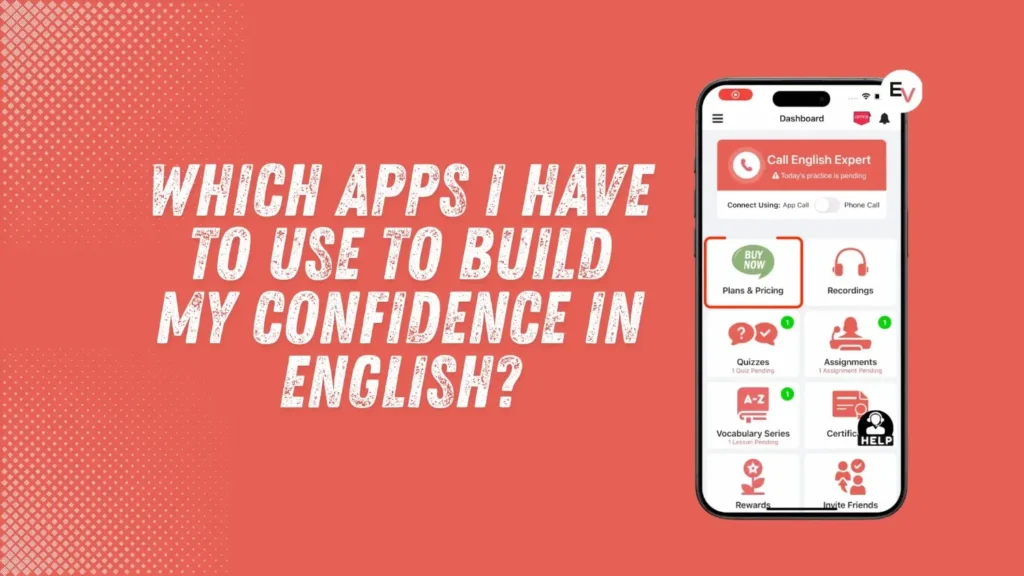
  • Call Recordings : Every session on this English conversation practice app is recorded so you can listen back and spot your own hesitation patterns.

Comparison Table: Top Apps to Build English Confidence in 2026

App Name Primary Focus Human or AI? Best For Confidence Level
EngVarta Real-world Fluency 100% Human Job Interviews & Meetings Highest
ELSA Speak Pronunciation AI MTI Reduction Medium
Cambly Native Exposure Human Casual Networking High
Duolingo Max Basics/Vocabulary AI Absolute Beginners Low
HelloTalk Exchange Peer-to-Peer Casual Chatting Medium

This table shows why apps to build English confidence are not created equal. If your goal is professional success, you need the human-led expertise of an English speaking practice app like EngVarta.

Who Should Use EngVarta?

In our professional opinion, not every free English speaking app is suitable for a career transition. If you are a working professional, the EngVarta app is specifically designed for your “high-pressure” lifestyle.

  1. The “Silent” Manager : You have 10 years of experience but stay quiet in meetings. You need apps to build English confidence that force you to lead the conversation.
  2. The Ambitious Job Seeker : You need an English conversation practice app to simulate mock interviews.
  3. The Global Traveler : You need to improve English speaking to interact with international clients.
  4. The Shy Learner : You need a learn English speaking at home app that offers total anonymity to remove the fear of judgment.

What are the common mistakes while learning English speaking?

The most common mistakes include over-prioritizing grammar rules over conversation, practicing in “low-stakes” environments (like talking to yourself), and avoiding feedback. To build confidence, you must shift from passive listening to active output using an English conversation practice app that provides real-time human correction.

⚠️ Common Mistakes to Avoid in 2026

Before you choose a learn English speaking at home app, stop these three self-sabotaging habits:

  • The Perfectionism Paradox : Waiting until your grammar is “perfect” before you start speaking is like waiting to get fit before you join a gym. You get fit at the gym. This is why you need apps to build English confidence that encourage messy, real-world mistakes.
  • Passive Consumption : Watching “English with [Influencer]” videos for 4 hours a day is entertainment, not practice. To build confidence, you need “Active Output” via an English speaking practice app.
  • The “Solo-Practice” Ceiling : Talking to yourself in the mirror is great for beginners, but it doesn’t prepare you for the unpredictability of a real conversation. You need apps to build English confidence that introduce a second, unpredictable person into the mix.

Before vs. After Using EngVarta: The Transformation

Aspect Before EngVarta After 30 Days of EngVarta
Mental Translation Constant pausing to translate thoughts. Thinks directly in English.
Meeting Presence Mic remains on mute; camera off. Actively contributes; leads Q&A.
Interview Performance Answers are short and robotic. Persuasive, story-driven communication.
Vocabulary Usage Uses simple “safe” words only. Uses high-level professional idioms.

This transformation is why we recommend EngVarta over any other app to build confidence in English. It changes your “Speaking Identity.”

How EngVarta Helps You Succeed (The Review)

Our detailed review of the EngVarta app reveals that its success lies in “Desensitization.” By speaking to a stranger daily on an English conversation practice app, your brain stops viewing English as a “threat.”

As you improve English speaking through 1-on-1 sessions, the experts provide contextual feedback that AI simply cannot. They help you with your “Tone” and “Executive Presence,” making this the best app to learn English speaking for 2026. If you want to learn English speaking at home app style, this is the most efficient path to fluency.
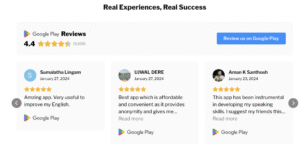
Real Experiences, Real Success EngVarta Review
See how learners from different backgrounds improved their English confidence through daily conversations and real practice with EngVarta experts.

Ready to Speak English Confidently?

Stop just learning English—start speaking it.
Practice real conversations with expert mentors and build your confidence faster.

Download EngVarta today and start your first live English speaking session.

👉  Android And IOS App 

Conclusion :

In 2026, your ability to communicate is your greatest asset. While there are thousands of apps to build English confidence, don’t settle for a game when you need a growth engine. The EngVarta app is the only best app to learn English speaking that prioritizes your career outcomes over “points” and “badges.”

Join our Community for Daily Tips :

Frequently Asked Questions ( FAQs )

How to Improve Your English Speaking Skills Everyday: The 2026 Master Guide

February 17, 2026 • 11 min read • By Richa

English Speaking Skills Everyday

In our experience coaching over 100,000 learners worldwide, we’ve witnessed a massive shift in how people achieve true fluency. By 2026, the traditional “study first, speak later” model has officially been replaced by dynamic, real-time engagement. Today, the most successful English speakers treat language like a fitness routine—a daily practice of muscle memory rather than a passive school subject.

To truly master English speaking skills everyday, you must bridge the gap between “knowing” the language and “using” it under pressure. Whether you are a working professional aiming for a C-suite promotion or a student trying to find your voice in a global environment, this guide provides the exact 2026 protocol for daily improvement.

What is the fastest way to improve English speaking skills Everyday?

The fastest way to improve English speaking skills is through Active Output for at least 20 to 30 minutes daily. Prioritize live conversation over passive listening. Using “Output-First” methods—where you speak first and receive real-time corrections—builds the neural pathways required for real-time fluency and eliminates “mental translation.”

The 80/20 Output Rule for 2026

We have found that the “Fluency Gap” exists because most learners spend 80% of their time in “Input Mode” (reading and listening) and only 20% in “Output Mode.” In 2026, the gold standard for rapid growth is the 80/20 Output Rule. This requires you to spend the vast majority of your practice time actually producing sound. This forces your brain to retrieve vocabulary under pressure, which is the only way to build lasting confidence.

Breaking the “Mental Translation” Barrier

Most learners struggle because they translate from their native language to English in their heads. This creates a “lag” in conversation. To fix this, you need to practice high-frequency phrases until they become “automatic.” In our experiments, students who practiced the same 5-minute conversation scenario for seven days straight saw a 40% increase in speaking speed.

Leveraging Emotional Connection in Speech

One of the most overlooked daily English speaking practice tips is involving emotion. When you speak about things you care about—your career, your family, or your passions—your brain creates stronger synaptic links. We always tell our students: don’t just speak English; feel English.

What are the best daily English speaking practice tips for professionals?

For professionals, the best daily English speaking practice tips involve “Scenario Simulation.” Practice upcoming meetings, pitches, or feedback sessions out loud. Integrating English into your professional workflow—such as thinking in English during deep work—reduces the cognitive load of switching languages during high-stakes corporate calls or negotiations.

Master the Art of “Global English”

In the corporate world of 2026, “Global English” is valued over a perfect “British” or “American” accent. Global English is about clarity, brevity, and impact. We recommend professionals focus on Intonation and Stress rather than just rote grammar.

The Professional’s “Warm-Up” Routine

Before any important meeting, spend 5 minutes speaking English out loud. Read a professional article or practice your introduction. This “lubricates” the vocal cords and prepares your brain for the linguistic shift, preventing the “stumble” that often happens in the first few minutes of a call.

Handling Q&A Sessions with Confidence

Practice answering unexpected questions. We suggest recording yourself answering “Why should we hire you?” or “What went wrong with the project?” five different ways. This builds the flexibility needed for real-time corporate negotiations.

Using Connectors for Executive Presence

To sound like a leader, you must use linguistic “glue.” Practice incorporating phrases like:

  • “In light of recent developments…”
  • “To play devil’s advocate for a moment…”
  • “Moving forward, our primary objective is…”

Is there an app to help me speak English fluently everyday?

EngVarta is the best English practice app to speak English fluently everyday. Unlike AI bots, EngVarta focuses on “Human-Centric Learning,” connecting you with live English experts for 1-on-1 sessions. This provides real-time feedback, cultural nuance, and the emotional connection that automated tools simply cannot replicate in 2026.

Why EngVarta is the Ultimate Tool for English Speaking Skills

We’ve tested dozens of platforms, from AI-powered avatars to massive open online courses (MOOCs). However, EngVarta consistently ranks as our top recommendation for the 2026 learner. It isn’t just an app; it’s a bridge to the real world.

1. Anonymous Practice (The Psychological Safety Net)

The dread of being judged is the largest obstacle to fluency. EngVarta allows you to speak with experts anonymously. This removes the “ego” from the equation, allowing you to make mistakes, laugh at them, and learn without social anxiety. When you don’t have to worry about a video camera, you focus 100% on your English speaking skills.

2. Real-World Feedback from Human Experts

AI tools can tell you if a sentence is grammatically correct, but they can’t tell you if it sounds “rude,” “too formal,” or “unnatural” in a specific corporate culture. EngVarta mentors provide contextual feedback that helps with MTI (Mother Tongue Influence). They act as a mirror to your linguistic habits.

3. On-Demand Access for Busy Lifestyles

In our fast-paced world, scheduling a class for 6 PM next Tuesday is a recipe for failure. EngVarta’s “tap to talk” model allows you to practice whenever you have a 15-minute gap—during a commute, a lunch break, or late at night. This accessibility is why it is widely considered the best English practice app.

Comparison: Why Human Mentorship Wins in 2026

Feature AI Language Apps Legacy Language Schools EngVarta (Human-Led)
Feedback Type Grammatical/Syntax Textbook-based Contextual/Professional
Emotional Intelligence Zero Medium High
Confidence Building Low (No social pressure) Medium (Group fear) High (1-on-1 support)
Personalization Algorithm-based Syllabus-based Expert-tailored to your career
Convenience High Low High

Ready to transform your career? Download the EngVarta App  today on Android And IOS App and start your first 1-on-1 session with a live English expert. The confidence you gain today will be appreciated by your future self.

Expert Insights: Why “Thinking in English” is the 2026 Fluency Hack

We’ve noticed that the most fluent speakers don’t translate; they “think” in the target language. This is a skill that can be developed through specific, graduated phases.

Phase 1 : Labeling Your World

Start by labeling your environment. Don’t just look at a chair; think “Chair.” When you see a problem at work, think “Issue” or “Challenge.” This builds a direct link between the object/concept and the English word, bypassing your native language entirely.

Phase 2 : The Internal Monologue

Start a conversation with yourself. Argue with yourself. If you are deciding what to eat for dinner, weigh the pros and cons in English. Use complex structures like “On the other hand” or “Considering the options.” This is how you learn how to speak English fluently everyday.

Phase 3 : Removing the Safety Net

In 2026, AI-generated subtitles and instant translations are everywhere. They are your enemy. Turn off subtitles when watching content. Force your brain to struggle. The “struggle” is where the actual growth of your English speaking skills happens.

Advanced Strategies: How to speak English fluently everyday like a Native

You can learn how to speak English fluently everyday by immersing yourself in “High-Cognitive” tasks. Don’t just chat; debate, explain complex concepts, and tell stories. Using EngVarta to simulate high-pressure scenarios—like a job interview or a project pitch—builds the “executive function” of your brain for seamless fluency.

The Power of Idioms and Phrasal Verbs

Native speakers rarely use “pure” textbook English. We say “get over it” instead of “recover from it.” We say “touch base” instead of “contact you.” To truly improve English speaking skills, you must master these natural expressions.

Why AI Fails at Idiomatic English

While AI can list idioms, it can’t tell you when they are appropriate. Using a business idiom in a casual setting sounds jarring. This is where EngVarta mentors provide the social nuance you need to sound truly sophisticated.

Incorporating Connectors for Flow

To sound fluent, you must connect your thoughts. Practice using “Having said that,” “In light of this,” and “To put it simply.” These are the “glue” of fluent English speaking skills.

Detailed Plan: Your 30-Day Fluency Roadmap

If you want to see real results, you need a structured plan. We recommend the following schedule to improve English speaking skills at home efficiently using the resources available in 2026.

Week 1 : The Foundation (Phonetics & Confidence)

  • Daily : 15 minutes of Shadowing.
  • Daily : 1 session on EngVarta focusing on basic introductions and casual small talk.
  • Goal : Get used to the sound of your own voice and overcome the initial “speech anxiety.”

Week 2 : Expanding the Vocabulary (Contextual Learning)

  • Daily : Label 50 items in your house/office and use them in a sentence.
  • Daily : 1 session on EngVarta focusing on describing your daily work tasks and professional responsibilities.
  • Goal : Stop “searching” for common words and build a bank of high-frequency vocabulary.

Week 3 : Professional Polish (Impact & Clarity)

  • Daily : Record a 2-minute elevator pitch and listen for filler words (um, uh).
  • Daily : 1 session on EngVarta simulating a professional meeting or a conflict resolution scenario.
  • Goal : Reduce MTI and improve sentence stress for a more authoritative presence.

Week 4 : Total Immersion (The Fluency Breakthrough)

  • Daily : No native language for the first 2 hours of the day (Thought-control).
  • Daily : 2 sessions on EngVarta (one morning, one evening) to maintain linguistic momentum.
  • Goal : Achieve a state where you “forget” you are speaking a second language.

    👉 Stay Connected with EngVarta on Social Media

    Follow us on our official social media platforms for the latest updates, tips, and English learning resources:

    Stay updated and engage with the community to accelerate your English learning journey!

Conclusion:

Improving your English speaking skills is a journey built on a thousand small, daily conversations. Whether you are performing English speaking exercises for beginners in your living room or leveling up your career with daily English speaking practice tips from a mentor, the only “wrong” move is staying silent.

In 2026, the world belongs to those who can communicate their ideas clearly and confidently. Don’t let a language barrier hold your potential hostage.

Frequently Asked Questions (FAQs)

Frequently Asked Questions

What if I don’t have enough time for a class?

The EngVarta app is built for busy people. You don’t need an hour; you only need 15 minutes. Consistent 15-minute daily bursts are statistically more effective for language retention than a single 3-hour weekly marathon session.

Can I practice English speaking daily if I’m an introvert?

Yes! Introverts make up a large portion of our most accomplished students. The tips to practice English conversation daily we provide—like Voice-to-Text Journaling and anonymous calls on EngVarta—are designed to build your skills without the “social drain” of a physical classroom.

How do I stop stuttering when I speak English?

Stuttering usually comes from the fear of making a mistake (the “Ego Block”). By practicing anonymously on EngVarta, you lower your cortisol levels. As your anxiety drops, your brain can access vocabulary faster, leading to smoother speech.

What are the best English speaking exercises for beginners?

We recommend three: 1. The Mirror Drill, 2. Reading aloud for 5 minutes daily, and 3. Using the EngVarta App for low-pressure, anonymous conversation practice with real people.

How do I get rid of a heavy accent?

In 2026, we focus on “Neutralization” rather than “Elimination.” You don’t need to sound like a BBC newsreader; you need to be understood globally. Platforms like EngVarta provide specialized mentors who help you smooth out specific sounds that cause misunderstandings in international business.