How to Find Language Exchange Partners for English Speaking Practice Online

English Speaking Practice Online

You know the feeling. You’ve spent years studying grammar. You can read a business report without a dictionary and watch Hollywood movies with ease. But the moment you need to open your mouth to practice English speaking online, your mind goes blank. Your heart races, your throat tightens, and the words simply won’t come.

In our experience, this is the “Fluency Gap.” It is the frustrating space between knowing English and using it. In 2026, the global economy demands more than just “understanding”—it requires English speaking practice online that translates into real-world confidence.

If you are a working professional or a serious student, finding the right partner isn’t just about “chatting.” It’s about building a bridge to your next career breakthrough.

What is English Speaking Practice Online and Why Does It Matter in 2026?

English speaking practice online is the process of engaging in real-time, verbal communication with partners or experts via digital platforms. In 2026, it is essential because global remote work and AI-driven industries prioritize “Strategic Communication”—the ability to explain complex ideas clearly, empathetically, and without hesitation.

In today’s environment, the “Language Learning Market” has evolved. It is no longer enough to use gamified apps that ask you to translate “The apple is red.” Research shows that learners who don’t engage in online speaking practice lose 40% of their active vocabulary within six months.

We’ve found that the most successful learners are those who treat English like a gym workout. You don’t get muscles by watching others lift weights; you get fluent by actually speaking.

How to Find Reliable Language Exchange Partners Online?

To find reliable partners, use “Tandem” learning apps or specialized communities. Focus on filters like “Native Language,” “Interests,” and “Availability.” However, for consistent results, look for platforms that offer verified experts rather than casual learners to avoid the common “ghosting” trend of 2026.

Finding a partner for English conversation practice online used to be easy, but today, the internet is crowded. To find a quality partner, we recommend this 3-Step Filter System:

  1. Define Your Goal : Are you practicing for a job interview or just casual travel? A casual partner won’t help you with “Corporate English.”
  2. Check Reciprocity : In a traditional exchange, you must teach your language for 30 minutes to get 30 minutes of English. Ensure your partner is actually serious about teaching.
  3. Vibe Check : Start with a 5-minute voice note. If the audio quality is bad or the energy is low, move on. Your time is too valuable for poor connections.

Which are the best language exchange apps in 2026?

In 2026, the best apps are those that offer high user verification and built-in AI correction tools. While apps remain the standard for practise English speaking online for hobbyists, professionals are increasingly turning to expert-led platforms like EngVarta to ensure their practice leads to career growth.

To help you decide, we have analyzed the top-performing platforms based on user engagement, feedback quality, and professional utility.

Platform Name Primary Target Key 2026 Feature Professional Utility
HelloTalk Casual Learners AI-Powered Voice Transcripts Low (Mostly Social)
Tandem Serious Hobbyists Verified “Pro-Learner” Badges Medium
Speaky Beginners Instant “Flash-Match” Video Low
EngVarta Working Professionals 1-on-1 Anonymous Expert Calls High (Career Focused)
Reddit Niche Learners Reputation-based Matching Medium

While these language exchange apps serve different needs, the trend in 2026 is moving toward “Micro-Coaching.” Even within peer apps, users are starting to look for partners who can offer more than just small talk. However, for those searching for a dedicated english speaking app, the difference between a peer and an expert becomes clear the moment you need to discuss complex business logic or prepare for a high-stakes interview.

What are the Pros and Limitations of Language Exchange Apps?

Language exchange apps offer great accessibility and exposure to different cultures, making them a popular starting point for learners exploring english speaking practice online. However, they often come with challenges like the “Reciprocity Trap,” inconsistent partner commitment, and limited corrective feedback. While these platforms can support casual, social learning, they may not be enough for professionals who need structured english speaking practice online with consistent guidance and expert-level improvement.

The Reality of Casual Apps in 2026

We’ve monitored thousands of learner journeys, and a pattern emerges. Casual language exchange apps are fun for the first week. But soon, you encounter the “Ghosting Phase.” Your partner gets busy, or they spend the whole time talking about themselves.

Feature Casual Language Exchange Apps Expert-Led English Speaking Apps (e.g., EngVarta)
Cost Often subscription-free (but time-heavy) Premium investment
Feedback Rare or “too polite” to correct Real-time, professional corrections
Consistency Low (Partners often disappear) High (Experts available 15/7)
Pressure High (Video/Social anxiety) Low (Focus on voice & anonymity)
Structure Random “How are you?” chats Scenario-based & Goal-oriented

Why Do Most Language Exchanges Fail? (The Reciprocity Trap)

Most learners struggle with English speaking practice online because of what is known as the Reciprocity Trap. In many language exchanges, you are expected to spend half your time teaching your own language instead of focusing on improving your English. As a result, your actual speaking practice gets limited. On top of that, casual partners are usually not trained to explain why a mistake happens. This often leads to fossilized errors, where you keep repeating the same incorrect phrases without realizing it.

In our experience, the biggest problem with trying to practise english speaking online for free is the lack of authority. If you say, “I have went to the office,” a casual partner might understand you and keep talking. They won’t stop to explain that it should be “I went” or “I have gone.” Over time, these small errors become permanent habits that make you sound unprofessional in boardrooms.

How to Choose the Right Partner for Online Speaking Practice?

When you are looking for someone to practice English with native speakers, look for these five “Green Flags”:

  • Patience over Speed : A good partner doesn’t interrupt; they wait for you to finish your thought before correcting.
  • Active Listening : They ask follow-up questions rather than waiting for their turn to speak.
  • Correction Preference : They ask you, “Do you want me to correct you now or at the end?”
  • Shared Professional Interest : If you’re an engineer, find a partner who understands technical context.
  • Timezone Compatibility : Consistency is the “Secret Sauce” of fluency.

The Professional Solution: Why EngVarta is the Ultimate English Speaking App

If you are fatigued by the “Hi, how are you?” To navigate casual apps effectively, a structured setting is

AI Grammar Checkessential. This is where EngVarta changes the game. It isn’t just another english speaking app; it is a professional training ground.

Why EngVarta Solves the “Speaking Gap”

  1. 1-on-1 Live Calls : You don’t have to wait for a partner to “match” with you. You press a button and instantly connect with a live English expert.
  2. The Power of Anonymity : We’ve found that learners are 60% more likely to speak boldly when they don’t have the “video pressure.” EngVarta focuses on your voice, reducing the social anxiety of making mistakes.
  3. Expert Feedback, Not Just Chat : Unlike a casual partner, EngVarta experts are trained to identify your specific “L1 Interference” (how your native language affects your English) and fix it.
  4. Real-Life Scenarios : You aren’t just talking about the weather. You can practice for job interviews, client presentations, or IELTS speaking tests.
  5. Consistency System : With flexible timings (7 AM to Midnight), you can fit a 15-minute “Fluency Workout” into your lunch break or commute.

Stop just learning English—start speaking it.

Practice real conversations with expert mentors and build your confidence faster.

Download EngVarta today and start your first live English speaking session.

Android And IOS App 

“From Hesitation to Confidence: Real Users Share Their EngVarta Experience”
Real Experiences, Real Success EngVarta Review
Discover how people from diverse backgrounds built their English confidence through consistent daily conversations and real-life practice with EngVarta experts.

What is the Best Daily Routine for English Speaking Practice Online?

A high-impact 30-minute routine consists of 5 minutes of “Input” (listening/reading), 15 minutes of “Active Output” (live speaking on an app like EngVarta), and 10 minutes of “Review” (listening to your call recordings to spot errors).

The 15-Minute Fluency Framework:

  • Minutes 1-3 : Warm up. Talk about your day’s top priority.
  • Minutes 4-12 : Scenario Practice. Role-play a difficult conversation you expect to have this week.
  • Minutes 13-15 : The Feedback Loop. Note down 3 specific corrections provided by the expert.

Common Mistakes Learners Make During Online Speaking Practice

We see these three mistakes repeatedly:

  1. The “Translation” Trap : Trying to translate complex sentences from your native language into English. Solution: Use simpler English sentences to build speed first.
  2. Fear of the “Silence” : Filling every gap with “Um” or “Uh.” Solution: Embrace short silences to think; it makes you sound more authoritative.
  3. Passive Learning Overload : Watching 5 hours of YouTube but speaking for 0 minutes. Solution: For every 1 hour of watching, you must do 15 minutes of live speaking.

Connect with EngVarta on Social Media:

Conclusion :

While casual language exchange apps are excellent for cultural exposure, they rarely lead to professional fluency. For learners who are serious about english speaking practice online and want to grow in their careers, relying only on peer conversations can slow progress. That’s where an expert-led platform like EngVarta becomes more effective, offering structured english speaking practice online with real feedback, helping you move from hesitation to clarity much faster.

In 2026, communication is your most valuable currency. You can choose to spend months searching for a “free” partner who might ghost you tomorrow, or you can invest in a system designed to make you a confident communicator.

Frequently Asked Questions ( FAQ )

  • Can I practice speaking English online with native speakers easily?
    • It’s possible, but not easy—finding a consistent partner on exchange apps can be difficult..  With EngVarta, you get instant access to experts and consistent English speaking practice online without the hassle.

  • How many hours of online speaking practice do I need to become fluent?
    • It’s not about hours—it’s about daily consistency.Just 15 minutes of focused English speaking practice online every day is far more effective than long weekly sessions. Fluency improves with regular use and feedback.

      With EngVarta, you can practice daily and get expert guidance to improve faster.

  • What is the best way to practice english conversation for shy people?
    • The best method is audio-only, 1-on-1 practice. This removes the “visual judgment” of video calls. Many EngVarta reviews highlight that the anonymity of the platform was the single most important factor in overcoming their fear of speaking.

  • How can I practice speaking English online without a partner?
    • You can use “Shadowing” techniques with YouTube or AI-voice assistants. However, while this helps with pronunciation, it lacks the “unpredictability” of human conversation. Real-world fluency requires a live feedback loop that only a human mentor can provide.

  • Is there a useful english speaking app in 2026?
    • Yes, EngVarta is highly useful as it focuses on daily 15-minute high-intensity sessions. It is specifically designed to eliminate hesitation by connecting you with experts instantly, making it a powerful tool for career growth.

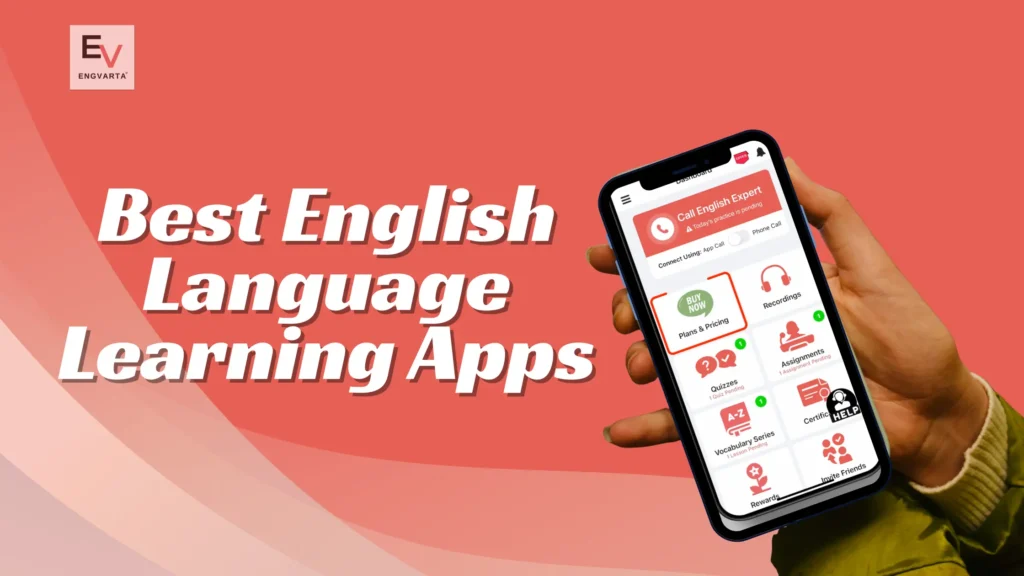
Best English Language Learning Apps in 2026 for Real Speaking Fluency

Best English Language Learning Apps

In 2026, studying English involves more than just memorizing grammar rules. It’s about speaking confidently in real-life situations — in meetings, interviews, college presentations, client calls, and daily conversations.

But here’s the honest truth:

Most learners don’t struggle with understanding English.
They struggle with speaking it without fear.

That’s why choosing the Best English Language Learning Apps today isn’t about flashy design or streak counters. It’s about one question:

Does this app actually help me speak fluently in real conversations?

In this detailed guide, we’ll explore the Best English Language Learning Apps in 2026, compare their strengths and limitations, and show you how to use them effectively for real speaking fluency.

If your goal is confidence — not just certificates — this article is for you.

Why Choosing the Best English Language Learning Apps Matters in 2026

The internet is flooded with apps claiming to be the Best English Learning App or the Best Spoken English App.

But here’s the problem:

  • Many apps focus only on vocabulary.
  • Some only teach grammar.
  • Others gamify learning but ignore real conversation.
  • Very few offer live speaking practice.

In 2026, the demand is different. Learners want:

  • Real-time correction
  • Practical speaking confidence
  • Accent clarity
  • Natural sentence framing
  • Business & professional communication

The Best English Language Learning Apps today combine technology with real communication practice.

Let’s break down what to look for.

What Makes the Best English Language Learning Apps Truly Effective?

Before we list the apps, here are 6 criteria that define the Best English Language Learning Apps in 2026:

1. Real Speaking Practice

If you’re not speaking, you’re not improving fluency.

2. Practical Usage

Can you use what you learn in office meetings or interviews?

3. Structured Learning Path

Does the app guide beginners step-by-step?

4. Live Feedback

Fluency improves when someone corrects you.

5. Beginner-Friendly Interface

Especially important for English Speaking Apps for Beginners.

6. Consistency Tools

Reminders, daily practice modules, progress tracking.

Now let’s explore the top options.

Top 7 Best English Language Learning Apps in 2026

1. EngVarta – Live English Speaking Practice with Experts

If your goal is real speaking fluency, EngVarta stands out among the Best English Language Learning Apps.

Unlike many apps that focus on passive learning, EngVarta provides live English speaking practice with real human experts.

Key Features:

  • 1-on-1 live speaking sessions
  • Flexible timings (morning to midnight)
  • Practice for interviews, daily conversation, business English
  • Vocabulary + sentence framing guidance
  • Personalized correction

Why It’s Among the Best English Language Learning Apps:

  • You speak daily.
  • You get real-time feedback.
  • You overcome hesitation.
  • You practice spontaneous conversation.

Pros:

✔ Real human interaction
✔ Practical speaking confidence
✔ Customized practice
✔ Beginner-friendly

Cons:

✘ Requires active participation
✘ Not a self-paced passive app

If you are searching for the Best English Speaking App or the Best English Practice App for real conversation, EngVarta fits perfectly.

It works especially well as a supplementary platform alongside other learning apps.

Ready to Speak Confident English?

If you’re serious about improving your speaking skills, don’t just learn English.

Practice it live.

EngVarta offers daily one-on-one English speaking practice with real experts who guide, correct, and motivate you.

Stop waiting to feel “ready.”

Start speaking today.

👉 Download EngVarta App on Google Play | Download on iOS

🎥 Want to see real English speaking tips in action?
Watch our latest videos on YouTube and start improving today:
👉 Subscribe to EngVarta on YouTube Channel

2. Duolingo – Gamified English Learning

Duolingo is often considered the Best English Learning App for beginners.

Key Features:

  • Short daily lessons
  • Vocabulary & grammar exercises
  • Gamified streak system
  • Beginner-friendly

Best For:

  • Vocabulary building
  • Daily habit creation
  • Absolute beginners

Limitations:

  • Limited real conversation practice
  • No live speaking partner

It’s one of the most popular Online English Learning Platforms, but for real fluency, it needs support from a speaking-focused app.

3. Elsa Speak – AI-Based Pronunciation Training

Elsa focuses on pronunciation using AI voice detection.

Key Features:

  • Accent correction
  • Pronunciation scoring
  • Speaking drills

Best For:

  • Accent improvement
  • Clarity in speech

Limitations:

  • AI feedback lacks human nuance
  • No natural conversation flow

Good pronunciation support, but not enough for complete fluency.

4. Cambly – Live Native Tutors

Cambly connects learners with international tutors.

Key Features:

  • Video-based live sessions
  • Native English tutors
  • Flexible scheduling

Pros:

✔ Real conversations
✔ Exposure to different accents

Cons:

✘ Expensive
✘ Internet-dependent
✘ Less structured for beginners

It’s among strong Spoken English Practice Apps, but affordability can be a barrier for many Indian learners.

5. HelloTalk – Language Exchange App

HelloTalk connects learners with global language partners.

Features:

  • Chat & voice messaging
  • Cultural exchange
  • Free interaction

Limitations:

  • No structured curriculum
  • Quality varies
  • Not ideal for beginners

It can complement the Best English Language Learning Apps, but not replace structured learning.

6. Cake App – Speaking Practice via Videos

Cake uses short videos and speaking repetition.

Features:

  • Real-life conversation clips
  • Practice repetition
  • Useful phrases

Good for exposure, but lacks real interactive conversation.

7. Busuu – Structured English Learning

Busuu offers structured lessons and exercises.

Features:

  • Grammar lessons
  • Vocabulary exercises
  • Some speaking tasks

Helpful for foundational learning but limited real-time speaking.

How to Choose the Best English Language Learning Apps for You

Ask yourself:

  • Are you shy while speaking?
  • Do you freeze in meetings?
  • Do you translate from Hindi before speaking?
  • Do you avoid phone calls in English?

If yes, you need apps focused on speaking, not just learning.

The Best English Language Learning Apps for you will depend on your goal:

Goal Recommended App Type
Vocabulary Duolingo
Pronunciation Elsa
Casual chat HelloTalk
Real fluency EngVarta
Structured course Busuu

How to Use the Best English Language Learning Apps for Maximum Fluency

Most learners download apps but don’t use them strategically.

Here’s how to maximize results:

1. Combine Passive + Active Learning

Use:

  • Duolingo for vocabulary
  • EngVarta for live conversation

This makes your learning balanced.

2. Practice Daily Speaking

Speaking improves only through repetition.

Even 15 minutes daily on a Best English Speaking App like EngVarta can:

  • Reduce hesitation
  • Improve sentence flow
  • Increase confidence

3. Focus on Sentence Framing

Instead of memorizing words:

Wrong approach:

Learn 20 random words daily.

Better approach:

Use those words in 5 sentences during live practice.

That’s where real Apps to Improve English Fluency matter.

4. Simulate Real-Life Scenarios

Practice:

  • Job interview answers
  • Client presentations
  • Self-introduction
  • Office discussions

EngVarta experts guide learners through such scenarios, making it feel like a practical Best English Speaking Course Online.

Why Real Conversation Is the Future of English Learning

In 2026, learners don’t just want certificates.

They want:

  • Confidence
  • Clarity
  • Career growth
  • Social ease

That’s why the Best English Language Learning Apps are shifting toward live conversation models.

AI can correct pronunciation.
But only humans can:

  • Understand context
  • Correct tone
  • Improve natural flow
  • Boost emotional confidence

That’s why combining technology with live speaking is powerful.

Beginner’s Guide: Choosing English Speaking Apps for Beginners

If you’re just starting, don’t feel overwhelmed by the number of Best English Language Learning Apps available.

Follow this simple path:

Step 1: Choose One Vocabulary App

Keep it simple.

Step 2: Add One Speaking App

Preferably with real conversation practice.

Step 3: Practice 15–20 Minutes Daily

Consistency beats intensity.

Beginners often think they must speak perfectly.

Wrong.

You must speak imperfectly first.

That’s why the Best Spoken English App is the one that allows you to make mistakes safely.

EngVarta provides that safe environment with supportive experts.

How to Track Your Fluency Progress

Most people don’t measure improvement correctly.

Instead of tracking:

❌ “How many lessons completed?”
Track:

✅ Can I speak 2 minutes without stopping?
✅ Can I introduce myself confidently?
✅ Can I explain my work clearly?
✅ Can I disagree politely in English?

The Best English Language Learning Apps help you measure practical ability — not just streaks.

Real-Life Example: How Fluency Improves in 90 Days

Imagine this learner:

Month 1:

  • Hesitates
  • Uses broken sentences
  • Thinks in Hindi first

Month 2:

  • Speaks simple structured sentences
  • Less hesitation
  • Better clarity

Month 3:

  • Expresses opinions confidently
  • Uses advanced vocabulary naturally
  • No longer afraid of meetings

That’s what happens when you combine:

  • The Best English Language Learning Apps
  • Daily speaking
  • Real feedback

Learn English Online 2026: The Future Is Hybrid

The future of Learn English Online 2026 is hybrid.

Not AI alone.
Not humans alone.

But:

AI for structure
Humans for confidence

The smartest learners use:

  • AI for pronunciation drills
  • Structured apps for grammar
  • EngVarta for live speaking

That combination makes a real difference.

Expert Advice: If You Want Real Fluency, Do This

If I had to give 5 expert tips after reviewing the Best English Language Learning Apps, here they are:

1. Speak Daily, Even If It’s 10 Minutes

Fluency is muscle memory.

2. Stop Translating

Think in simple English.

3. Practice Full Sentences, Not Words

Confidence grows in sentence flow.

4. Simulate Pressure

Practice interview-style responses.

5. Get Human Feedback

Apps alone can’t correct tone and emotional delivery.

This is where EngVarta plays a unique role among the Best English Language Learning Apps.

Conclusion :

Here’s the truth:

No single app does everything perfectly.

The Best English Language Learning Apps strategy in 2026 is:

  • Use structured apps for vocabulary.
  • Use pronunciation apps for clarity.
  • Use live speaking apps for fluency.

If your goal is real confidence — not just English knowledge — you must practice speaking daily.

And that’s where EngVarta becomes powerful.

Because fluency is not built by reading.

It’s built by speaking.

Frequently Asked Questions ( FAQs )


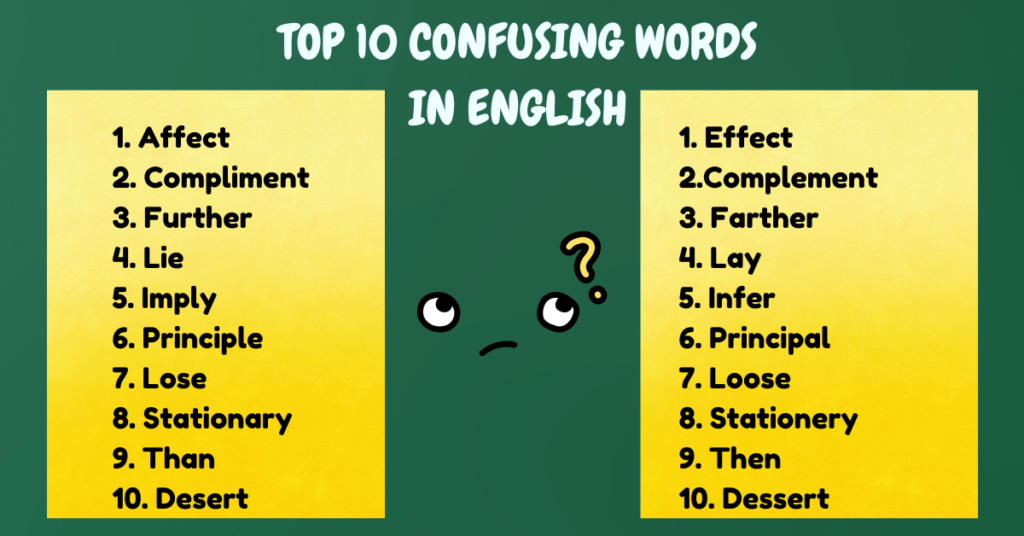
Top 10 Confusing Words in English (and How to Use Them Correctly)

Top 10 Confusing Words in English (and How to Use Them Correctly)

English can be a tricky language, especially when certain words look similar, sound alike, or seem interchangeable but actually have distinct meanings. These confusing words often trip up even the most proficient speakers. To help you navigate this linguistic minefield, we’ve compiled a list of the top 10 confusing words in English—and how to use them correctly.

1. Affect vs. Effect

  • Affect (verb): To influence something.
    • Example: The weather can affect your mood.
  • Effect (noun): The result or consequence of an action.
    • Example: The new policy had a positive effect on employee productivity.

Tip: If you’re talking about an action, use “affect.” If you’re talking about a result, use “effect.”

2. Compliment vs. Complement

  • Compliment (noun/verb): A polite expression of praise or admiration.
    • Example: She gave me a nice compliment about my dress.
  • Complement (noun/verb): Something that completes or enhances something else.
    • Example: The wine complements the meal perfectly.

Tip: Remember, “I” in “compliment” stands for admiration, while “E” in “complement” stands for enhancement.

3. Further vs. Farther

  • Further (adjective/adverb): Refers to metaphorical or abstract distance.
    • Example: Let’s discuss this further.
  • Farther (adjective/adverb): Refers to physical distance.
    • Example: The store is farther down the street.

Tip: Use “farther” for measurable distances and “further” for abstract concepts like time or conversation.

4. Lie vs. Lay

  • Lie (verb): To recline or rest on a surface.
    • Example: I need to lie down after a long day.
  • Lay (verb): To place something down.
    • Example: Lay the book on the table.

Tip: People lie down, but you lay things down.

5. Imply vs. Infer

  • Imply (verb): To suggest something without saying it directly.
    • Example: He implied that he wasn’t happy with the decision.
  • Infer (verb): To deduce or conclude something from evidence.
    • Example: From her tone, I could infer that she was upset.

Tip: The speaker implies, while the listener infers.

6. Principle vs. Principal

  • Principle (noun): A fundamental truth or law.
    • Example: Honesty is a key principle in life.
  • Principal (noun/adjective): The head of a school or organization, or the most important thing.
    • Example: The principal of the school gave a speech.

Tip: Remember that your principal is your “pal,” while principle refers to a rule or standard.

7. Lose vs. Loose

  • Lose (verb): To fail to keep, win, or maintain something.
    • Example: I don’t want to lose my keys.
  • Loose (adjective): Not tight or free.
    • Example: The shirt is too loose on me.

Tip: Double the “O” when something is not tight, but just one “O” when you misplace something.

8. Stationary vs. Stationery

  • Stationary (adjective): Not moving, remaining in one place.
    • Example: The car remained stationary at the red light.
  • Stationery (noun): Writing materials like paper and envelopes.
    • Example: She bought new stationery for her office.

Tip: “E” in stationery is for “envelope,” while “A” in stationary is for “at rest.”

9. Than vs. Then

  • Than (conjunction): Used for comparisons.
    • Example: She is taller than her brother.
  • Then (adverb): Refers to time or what comes next.
    • Example: First, we’ll have dinner, then we’ll watch a movie.

Tip: Use “than” for comparisons and “then” for time sequences.

10. Desert vs. Dessert

  • Desert (noun): A dry, sandy area with little to no vegetation.
    • Example: The Sahara is the largest desert in the world.
  • Dessert (noun): The sweet course at the end of a meal.
    • Example: I’ll have chocolate cake for dessert.

Tip: To remember “dessert” has two “s,” think of wanting seconds of something sweet!

Conclusion

Mastering these confusing words is key to becoming more confident in your English writing and speaking. Although some words may seem tricky at first, understanding the context in which they are used can help you avoid mistakes. The more you practice, the more naturally these distinctions will come.

If you’re looking to improve your spoken English and clarify any lingering doubts about word usage, apps like EngVarta (download now https://engvarta.com/) offer one-on-one conversation practice with experts, helping you gain fluency and precision in English. Happy learning!