



Improving English grammar and vocabulary is not just an academic goal anymore—it is a practical life skill. Whether you are a working professional, a student, or someone preparing for interviews, presentations, or global communication, strong grammar and vocabulary directly influence how confident, clear, and credible you sound in spoken English.
Many learners reach an intermediate level where they understand English well but struggle to express ideas fluently and accurately. This gap usually exists not because of lack of intelligence, but because grammar and vocabulary have not yet become automatic in real conversations.
This blog offers a structured, evidence-based guide on how to improve English grammar and vocabulary in a way that supports spoken English mastery, not just written correctness. You’ll also learn how modern tools like the EngVarta App and educational YouTube channels can accelerate progress when used correctly.
Why English Grammar and Vocabulary Matter in Spoken English
Grammar Shapes Clarity
Grammar determines how clearly your ideas are understood. Incorrect tense usage, subject-verb disagreement, or sentence structure errors can confuse listeners—even if your vocabulary is good.
Example:
- ❌ I am working there since two years.
- ✅ I have been working there for two years.
The difference is grammatical, but the impact is communication clarity.
Vocabulary Builds Precision and Confidence
Vocabulary allows you to express exact meaning, emotions, and intent. Limited vocabulary leads to repetition, hesitation, and filler words like umm or actually.
Strong vocabulary helps you:
- Sound confident
- Avoid pauses
- Explain ideas naturally
Grammar and vocabulary together create fluency, not separately.
How can I improve English grammar and vocabulary effectively?
You can improve English grammar and vocabulary by combining daily speaking practice, contextual learning, active usage, and guided feedback—rather than memorization alone.
Common Problems Learners Face
Understanding the challenges helps solve them effectively.
1. Knowing Rules but Not Using Them
Many learners can explain grammar rules but hesitate while speaking. This happens because grammar is learned theoretically, not practically.
2. Passive Vocabulary
Learners recognize words while reading but cannot use them while speaking. This means vocabulary is passive, not active.
3. Fear of Making Mistakes
Fear leads to silence. Silence stops progress.
4. Overdependence on Translation
Thinking in the native language and translating slows down speech and causes errors.
Step 1: Shift from Rule-Based Learning to Usage-Based Learning
Grammar improves fastest when learned through use, not definitions.
Practical Strategy
Instead of memorizing:
“Present perfect continuous tense is used for…”
Practice sentences like:
- I have been learning English for six months.
- She has been working late these days.
Your brain learns patterns faster than rules.
Step 2: Improve Grammar Through Daily Speaking Practice
Why Speaking Is Essential
Grammar becomes natural only when your brain uses it in real time. Writing helps accuracy; speaking builds fluency.
Daily Spoken Practice Ideas
- Describe your day aloud
- Explain your job or studies
- Talk about plans, experiences, or opinions
This activates grammar subconsciously.
How Engvarta Helps Improve Grammar and Vocabulary Faster
Engvarta offers one-on-one live English practice sessions with expert trainers, helping learners apply grammar and vocabulary in real conversations.
Benefits of Practicing with Engvarta
- Real-time grammar correction
- Vocabulary expansion through conversation
- Confidence building
- Personalized feedback
- Flexible learning schedule
Instead of memorizing rules, you learn by speaking, which leads to faster and long-lasting improvement.
Practice real conversations, get instant feedback, and improve your communication skills with daily 1-on-1 English sessions on EngVarta.
👉 Get Started on EngVarta:
📱 Download for Android 📱 Download for iOS
Step 3: Learn Vocabulary in Context, Not Lists
Memorizing word lists rarely improves spoken English.
Better Approach: Contextual Vocabulary
Learn words with:
- Situations
- Emotions
- Real-life usage
Example:
Instead of learning “anxious”, learn:
I felt anxious before my interview.
This makes recall faster during conversations.
Step 4: Activate Vocabulary (From Passive to Active)
Knowing a word is not enough—you must use it repeatedly.
Activation Technique
For every new word:
- Say it aloud
- Create your own sentence
- Use it in a conversation within 24 hours
This transforms vocabulary into usable speech.
EngVarta’s Role
EngVarta sessions naturally push learners to reuse vocabulary in conversations, helping words move from memory to muscle.
Step 5: Use Immersive Learning Methods
Immersion helps grammar and vocabulary grow together.
Effective Immersion Methods
- Listening to English podcasts
- Watching English videos with subtitles
- Thinking in English during daily tasks
YouTube Channels for Grammar & Vocabulary
Educational YouTube channels are useful when used intentionally:
- Watch short videos
- Note one grammar pattern
- Apply it while speaking the same day
Passive watching alone does not improve fluency—application does.
Step 6: Focus on High-Impact Grammar Areas
You don’t need to master all grammar to speak well.
Priority Grammar Topics for Spoken English
- Tenses (present, past, present perfect)
- Subject-verb agreement
- Question formation
- Prepositions in speech
- Sentence connectors
These cover most real-life conversations.
Step 7: Build Vocabulary for Daily and Professional Use
Vocabulary Types You Should Focus On
- Daily-life expressions
- Workplace vocabulary
- Opinion phrases
- Common collocations
Examples:
- take a decision → ❌
- make a decision → ✅
Such small improvements significantly raise spoken quality.
Step 8: Reduce Grammar Anxiety While Speaking
Overcorrecting yourself breaks fluency.
Smart Rule for Spoken English
- Clarity first
- Accuracy second
- Perfection later
Listeners value understanding more than perfection.
How EngVarta Builds Confidence
EngVarta provides a low-pressure speaking environment where learners are guided—not judged. This reduces anxiety and increases speaking frequency, which is essential for improvement.
Step 9: Consistency Beats Intensity
Learning grammar for 3 hours once a week is less effective than 20 minutes daily.
Ideal Daily Routine (20–30 Minutes)
- 10 minutes speaking practice
- 10 minutes vocabulary usage
- 5 minutes review
This routine leads to measurable progress within weeks.
Read Regularly to Improve Grammar and Vocabulary Naturally
Reading is one of the most powerful ways to improve English grammar and vocabulary without conscious memorization. When you read, your brain absorbs sentence structures, word usage, and grammar patterns naturally.
Benefits of Reading in English
- Improves sentence formation
- Expands vocabulary in context
- Strengthens grammar understanding
- Enhances comprehension skills
Best Reading Materials for English Learners
- Novels and short stories
- Newspapers and magazines
- Blogs and online articles
- Academic or professional content
Read content related to your goals—business English, spoken English, or exam preparation.
Practice Writing to Strengthen Grammar Accuracy
Writing forces you to apply grammar rules actively. It helps you identify mistakes and improve sentence clarity over time.
Importance of Writing Practice
- Improves grammar accuracy
- Reinforces new vocabulary
- Builds sentence confidence
- Enhances structured thinking
Effective Writing Exercises
- Daily journaling
- Writing short essays
- Drafting emails or messages
- Creating short stories
📌 Tip: After writing, review your sentences or get feedback to correct errors.
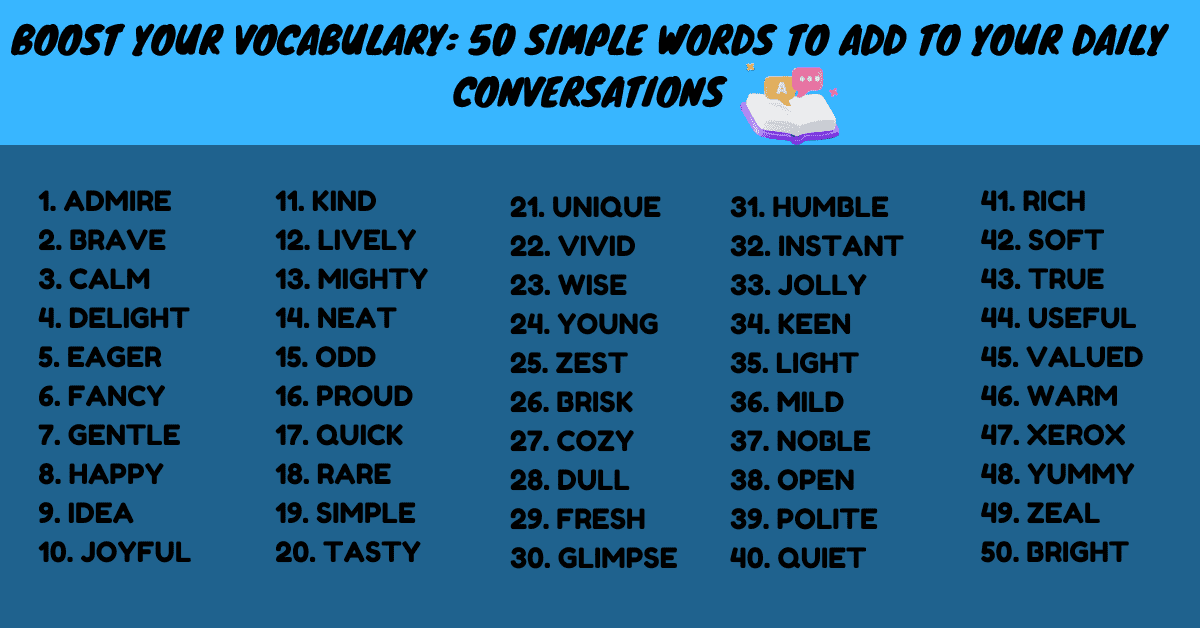
Learn New English Words Daily (Without Memorizing Lists)
Vocabulary building works best when words are learned in context, not isolation.
Techniques to Learn New Words Daily
- Maintain a vocabulary notebook
- Use flashcards or spaced repetition apps
- Learn words by themes (travel, office, food)
- Use new words in sentences immediately
🎯 Set a realistic goal: 5–10 new words per day.
Engage in Conversations to Improve Spoken Grammar
Speaking is where improve english grammar and vocabulary truly come alive. Many learners know rules but struggle to speak fluently.
Benefits of Speaking Practice
- Improves real-time grammar usage
- Builds confidence
- Improves pronunciation
- Reduces hesitation
Conversation Practice Ideas
- Speak with friends or colleagues
- Join English-speaking clubs
- Participate in online discussion forums
- Practice with language partners
Consistent speaking is the fastest way to convert knowledge into fluency.
Use Mobile Apps for Daily Grammar and Vocabulary Practice
Mobile apps make English practice convenient and consistent.
Features to Look For
- Grammar exercises
- Vocabulary builders
- Pronunciation support
- Interactive quizzes
Best Apps for English Learning
- EngVarta – vocabulary focus, grammar correction, Speaking Practice
- Duolingo – gamified learning
- Memrise – vocabulary focus
- Grammarly – grammar correction
Using apps daily, even for 15 minutes, creates long-term improvement.
Why This Matters for Indian Learners
In India, many learners:
- Study English academically
- Rarely speak English daily
- Fear being judged for mistakes
This creates a fluency gap despite strong understanding.
Platforms like EngVarta address this by offering India-focused, real-world speaking practice, helping learners bridge the gap between knowledge and usage.
Connect with EngVarta on Social Media
Follow us for practical English tips, live speaking insights, and updates.
Instagram | YouTube | Facebook | LinkedIn
Final Thoughts:
Improving English grammar and vocabulary is not about becoming perfect—it’s about becoming clear, confident, and comfortable while speaking.
When you:
- Practice speaking daily
- Learn grammar through usage
- Activate vocabulary through conversation
- Use guided platforms like EngVarta App
…your English naturally improves.
Grammar stops feeling like a rulebook. Vocabulary stops feeling limited. And spoken English becomes a tool, not a challenge.
FAQs (Frequently Asked Questions)
-
What is the EngVarta App and how does it help?
EngVarta provides 1-on-1 live English practice with expert trainers, helping learners improve grammar, expand vocabulary, and speak confidently. It offers personalized feedback in a flexible, real-world learning environment.
-
Do apps really help with spoken English?
Yes, apps like EngVarta, Duolingo, Memrise, and Grammarly can improve grammar, vocabulary, and pronunciation. They work best when combined with real-life conversations and contextual practice, rather than just passive usage.
-
Is vocabulary more important than grammar?
Both are essential. Vocabulary allows you to express ideas precisely, while grammar ensures clarity and structure. For spoken English, learning vocabulary in context combined with natural grammar usage boosts fluency and confidence.
-
Can I improve grammar without studying rules?
Yes! Grammar can be learned naturally through speaking, writing, reading, and listening in context. Using the EngVarta App for live, 1-on-1 practice helps internalize patterns faster, making your speaking fluent and confident without rote study.
-
How long does it take to improve English grammar and vocabulary?
With consistent daily practice of 20–30 minutes, learners can see noticeable improvement in 3–6 months. Using EngVarta’s live sessions accelerates learning by combining real conversation, feedback, and contextual vocabulary and grammar practice.