How to Improve English Grammar and Vocabulary?

How to Improve English Grammar and Vocabulary

Improving English grammar and vocabulary is not just an academic goal anymore—it is a practical life skill. Whether you are a working professional, a student, or someone preparing for interviews, presentations, or global communication, strong grammar and vocabulary directly influence how confident, clear, and credible you sound in spoken English.

Many learners reach an intermediate level where they understand English well but struggle to express ideas fluently and accurately. This gap usually exists not because of lack of intelligence, but because grammar and vocabulary have not yet become automatic in real conversations.

This blog offers a structured, evidence-based guide on how to improve English grammar and vocabulary in a way that supports spoken English mastery, not just written correctness. You’ll also learn how modern tools like the EngVarta App and educational YouTube channels can accelerate progress when used correctly.

Why English Grammar and Vocabulary Matter in Spoken English

Grammar Shapes Clarity

Grammar determines how clearly your ideas are understood. Incorrect tense usage, subject-verb disagreement, or sentence structure errors can confuse listeners—even if your vocabulary is good.

Example:

  • I am working there since two years.
  • I have been working there for two years.

The difference is grammatical, but the impact is communication clarity.

Vocabulary Builds Precision and Confidence

Vocabulary allows you to express exact meaning, emotions, and intent. Limited vocabulary leads to repetition, hesitation, and filler words like umm or actually.

Strong vocabulary helps you:

  • Sound confident
  • Avoid pauses
  • Explain ideas naturally

Grammar and vocabulary together create fluency, not separately.

How can I improve English grammar and vocabulary effectively?

You can improve English grammar and vocabulary by combining daily speaking practice, contextual learning, active usage, and guided feedback—rather than memorization alone.

Common Problems Learners Face

Understanding the challenges helps solve them effectively.

1. Knowing Rules but Not Using Them

Many learners can explain grammar rules but hesitate while speaking. This happens because grammar is learned theoretically, not practically.

2. Passive Vocabulary

Learners recognize words while reading but cannot use them while speaking. This means vocabulary is passive, not active.

3. Fear of Making Mistakes

Fear leads to silence. Silence stops progress.

4. Overdependence on Translation

Thinking in the native language and translating slows down speech and causes errors.

Step 1: Shift from Rule-Based Learning to Usage-Based Learning

Grammar improves fastest when learned through use, not definitions.

Practical Strategy

Instead of memorizing:

“Present perfect continuous tense is used for…”

Practice sentences like:

  • I have been learning English for six months.
  • She has been working late these days.

Your brain learns patterns faster than rules.

Step 2: Improve Grammar Through Daily Speaking Practice

Why Speaking Is Essential

Grammar becomes natural only when your brain uses it in real time. Writing helps accuracy; speaking builds fluency.

Daily Spoken Practice Ideas

  • Describe your day aloud
  • Explain your job or studies
  • Talk about plans, experiences, or opinions

This activates grammar subconsciously.

How Engvarta Helps Improve Grammar and Vocabulary Faster

Engvarta offers one-on-one live English practice sessions with expert trainers, helping learners apply grammar and vocabulary in real conversations.

Benefits of Practicing with Engvarta

  • Real-time grammar correction
  • Vocabulary expansion through conversation
  • Confidence building
  • Personalized feedback
  • Flexible learning schedule

Instead of memorizing rules, you learn by speaking, which leads to faster and long-lasting improvement.

Practice real conversations, get instant feedback, and improve your communication skills with daily 1-on-1 English sessions on EngVarta.

👉 Get Started on EngVarta:

 📱 Download for Android 📱 Download for iOS

Step 3: Learn Vocabulary in Context, Not Lists

Memorizing word lists rarely improves spoken English.

Better Approach: Contextual Vocabulary

Learn words with:

  • Situations
  • Emotions
  • Real-life usage

Example:
Instead of learning “anxious”, learn:

I felt anxious before my interview.

This makes recall faster during conversations.

Step 4: Activate Vocabulary (From Passive to Active)

Knowing a word is not enough—you must use it repeatedly.

Activation Technique

For every new word:

  1. Say it aloud
  2. Create your own sentence
  3. Use it in a conversation within 24 hours

This transforms vocabulary into usable speech.

EngVarta’s Role

EngVarta sessions naturally push learners to reuse vocabulary in conversations, helping words move from memory to muscle.

Step 5: Use Immersive Learning Methods

Immersion helps grammar and vocabulary grow together.

Effective Immersion Methods

  • Listening to English podcasts
  • Watching English videos with subtitles
  • Thinking in English during daily tasks

YouTube Channels for Grammar & Vocabulary

Educational YouTube channels are useful when used intentionally:

  • Watch short videos
  • Note one grammar pattern
  • Apply it while speaking the same day

Passive watching alone does not improve fluency—application does.

Step 6: Focus on High-Impact Grammar Areas

You don’t need to master all grammar to speak well.

Priority Grammar Topics for Spoken English

  • Tenses (present, past, present perfect)
  • Subject-verb agreement
  • Question formation
  • Prepositions in speech
  • Sentence connectors

These cover most real-life conversations.

Step 7: Build Vocabulary for Daily and Professional Use

Vocabulary Types You Should Focus On

  • Daily-life expressions
  • Workplace vocabulary
  • Opinion phrases
  • Common collocations

Examples:

  • take a decision → ❌
  • make a decision → ✅

Such small improvements significantly raise spoken quality.

Step 8: Reduce Grammar Anxiety While Speaking

Overcorrecting yourself breaks fluency.

Smart Rule for Spoken English

  • Clarity first
  • Accuracy second
  • Perfection later

Listeners value understanding more than perfection.

How EngVarta Builds Confidence

EngVarta provides a low-pressure speaking environment where learners are guided—not judged. This reduces anxiety and increases speaking frequency, which is essential for improvement.

Step 9: Consistency Beats Intensity

Learning grammar for 3 hours once a week is less effective than 20 minutes daily.

Ideal Daily Routine (20–30 Minutes)

  • 10 minutes speaking practice
  • 10 minutes vocabulary usage
  • 5 minutes review

This routine leads to measurable progress within weeks.

Read Regularly to Improve Grammar and Vocabulary Naturally

Reading is one of the most powerful ways to improve English grammar and vocabulary without conscious memorization. When you read, your brain absorbs sentence structures, word usage, and grammar patterns naturally.

Benefits of Reading in English

  • Improves sentence formation
  • Expands vocabulary in context
  • Strengthens grammar understanding
  • Enhances comprehension skills

Best Reading Materials for English Learners

  • Novels and short stories
  • Newspapers and magazines
  • Blogs and online articles
  • Academic or professional content

Read content related to your goals—business English, spoken English, or exam preparation.

Practice Writing to Strengthen Grammar Accuracy

Writing forces you to apply grammar rules actively. It helps you identify mistakes and improve sentence clarity over time.

Importance of Writing Practice

  • Improves grammar accuracy
  • Reinforces new vocabulary
  • Builds sentence confidence
  • Enhances structured thinking

Effective Writing Exercises

  • Daily journaling
  • Writing short essays
  • Drafting emails or messages
  • Creating short stories

📌 Tip: After writing, review your sentences or get feedback to correct errors.

Learn New English Words Daily (Without Memorizing Lists)

Vocabulary building works best when words are learned in context, not isolation.

Techniques to Learn New Words Daily

  • Maintain a vocabulary notebook
  • Use flashcards or spaced repetition apps
  • Learn words by themes (travel, office, food)
  • Use new words in sentences immediately

🎯 Set a realistic goal: 5–10 new words per day.

Engage in Conversations to Improve Spoken Grammar

Speaking is where improve english grammar and vocabulary truly come alive. Many learners know rules but struggle to speak fluently.

Benefits of Speaking Practice

  • Improves real-time grammar usage
  • Builds confidence
  • Improves pronunciation
  • Reduces hesitation

Conversation Practice Ideas

  • Speak with friends or colleagues
  • Join English-speaking clubs
  • Participate in online discussion forums
  • Practice with language partners

Consistent speaking is the fastest way to convert knowledge into fluency.

Use Mobile Apps for Daily Grammar and Vocabulary Practice

Mobile apps make English practice convenient and consistent.

Features to Look For

  • Grammar exercises
  • Vocabulary builders
  • Pronunciation support
  • Interactive quizzes

Best Apps for English Learning

  • EngVarta – vocabulary focus, grammar correction, Speaking Practice
  • Duolingo – gamified learning
  • Memrise – vocabulary focus
  • Grammarly – grammar correction

Using apps daily, even for 15 minutes, creates long-term improvement.

Why This Matters for Indian Learners

In India, many learners:

  • Study English academically
  • Rarely speak English daily
  • Fear being judged for mistakes

This creates a fluency gap despite strong understanding.

Platforms like EngVarta address this by offering India-focused, real-world speaking practice, helping learners bridge the gap between knowledge and usage.

Connect with EngVarta on Social Media

Follow us for practical English tips, live speaking insights, and updates.

Instagram | YouTube | Facebook | LinkedIn

Final Thoughts:

Improving English grammar and vocabulary is not about becoming perfect—it’s about becoming clear, confident, and comfortable while speaking.

When you:

  • Practice speaking daily
  • Learn grammar through usage
  • Activate vocabulary through conversation
  • Use guided platforms like EngVarta App

…your English naturally improves.

Grammar stops feeling like a rulebook. Vocabulary stops feeling limited. And spoken English becomes a tool, not a challenge.

FAQs  (Frequently Asked Questions)

  • What is the EngVarta App and how does it help?
    • EngVarta provides 1-on-1 live English practice with expert trainers, helping learners improve grammar, expand vocabulary, and speak confidently. It offers personalized feedback in a flexible, real-world learning environment.

  • Do apps really help with spoken English?
    • Yes, apps like EngVarta, Duolingo, Memrise, and Grammarly can improve grammar, vocabulary, and pronunciation. They work best when combined with real-life conversations and contextual practice, rather than just passive usage.

  • Is vocabulary more important than grammar?
    • Both are essential. Vocabulary allows you to express ideas precisely, while grammar ensures clarity and structure. For spoken English, learning vocabulary in context combined with natural grammar usage boosts fluency and confidence.

  • Can I improve grammar without studying rules?
    • Yes! Grammar can be learned naturally through speaking, writing, reading, and listening in context. Using the EngVarta App for live, 1-on-1 practice helps internalize patterns faster, making your speaking fluent and confident without rote study.

  • How long does it take to improve English grammar and vocabulary?
    • With consistent daily practice of 20–30 minutes, learners can see noticeable improvement in 3–6 months. Using EngVarta’s live sessions accelerates learning by combining real conversation, feedback, and contextual vocabulary and grammar practice.

Essential Vocabulary for Different Professions

When it comes to mastering a profession, industry-specific vocabulary is essential. Whether you’re a doctor, engineer, entrepreneur, or creative professional, knowing the right terminology helps you communicate clearly and confidently in your field.

This guide introduces key professional vocabulary across various industries, from medicine and engineering to business and hospitality. Whether you’re a student, job seeker, or working professional, understanding these terms will help you enhance your communication skills and excel in your career.

Why Learning Professional Vocabulary is Important?

  1. Improves Communication – Using the right terms makes conversations clear and effective.
  2. Enhances Professionalism – Employers and colleagues appreciate those who can speak confidently in their industry.
  3. Helps in Job Interviews – Knowing industry-specific terms can help you impress interviewers.
  4. Boosts Workplace Performance – Understanding workplace vocabulary can increase efficiency and accuracy.
  5. Builds Confidence in English Communication – Knowing the right words makes professional conversations smoother.

Struggling with Professional Communication? EngVarta Can Help!

Having the right vocabulary is important, but using it correctly in conversations is even more crucial. That’s where EngVarta comes in!

🚀 EngVarta is a live English-speaking practice app where you can practice real-life conversations with English experts to improve your confidence and fluency. Whether you need to prepare for a job interview, business meeting, or professional presentation, EngVarta helps you use industry-specific vocabulary effectively in spoken English.

📲 Download EngVarta (https://apps.apple.com/in/app/english-learning-app-engvarta/id1221875549) and start practicing today!

Download Your Free PDF: Industry-Specific Vocabulary

To help you learn the most important professional vocabulary words, we’ve created a comprehensive PDF guide that includes 50 professions along with 10 essential vocabulary words for each profession.

📥 Click the link below to download the full PDF:
[Download PDF] – Essential Vocabulary for Different Professions]

A Sneak Peek Into Some Professions & Vocabulary

Here’s a preview of some of the professions covered in the PDF and why mastering their vocabulary is essential:

1. Medical Professions (Doctors, Nurses, Surgeons, Pharmacists, etc.)

  • Knowing terms like Diagnosis, Prescription, Surgery, Anesthesia, and Symptom is crucial for medical professionals.
  • Helps in effective communication with patients, doctors, and healthcare staff.

2. Engineering & Technology Professions (Civil Engineer, Software Engineer, Robotics Engineer, etc.)

  • Engineers and tech professionals use words like Blueprint, Algorithm, Debugging, Infrastructure, and Automation.
  • These terms are fundamental in design, programming, and development.

3. Business & Finance Professions (Accountant, Banker, Marketing Manager, etc.)

  • Words like Revenue, Investment, ROI, Branding, and Portfolio help professionals manage financial and business growth.
  • Used frequently in financial reports, market strategies, and sales pitches.

4. Creative Professions (Filmmaker, Graphic Designer, Writer, Photographer, etc.)

  • Terms like Cinematography, Typography, Composition, and Manuscript are essential for professionals in the media, film, and design industry.
  • These help in storytelling, branding, and creative expression.

5. Hospitality & Travel Professions (Hotel Manager, Chef, Flight Attendant, Tour Guide, etc.)

  • Key words like Reservation, Itinerary, Layover, Inflight Service, and Garnish help in customer service, travel planning, and food presentation.
  • Knowing these terms can improve service quality and communication with guests.

How to Learn and Use Professional Vocabulary?

  1. Read Industry-Specific Content – Articles, reports, and research papers use professional terms in context.
  2. Watch Interviews & Podcasts – Listening to experts can help you understand how to use vocabulary naturally.
  3. Practice with Flashcards – Write down key terms and their meanings for quick reference.
  4. Engage in Conversations – Use industry terms in meetings, emails, and networking events.
  5. Practice Speaking on EngVartaJoin EngVarta’s live sessions to practice using professional vocabulary in real conversations with experts.
  6. Download & Study the PDF – Our Essential Vocabulary for Different Professions PDF is a great resource to keep handy!

Final Thoughts

Expanding your professional vocabulary boosts your career, improves confidence, and enhances communication skills. No matter your field, understanding industry-specific words can make you stand out.

🎯 But vocabulary alone isn’t enough! You need practice.

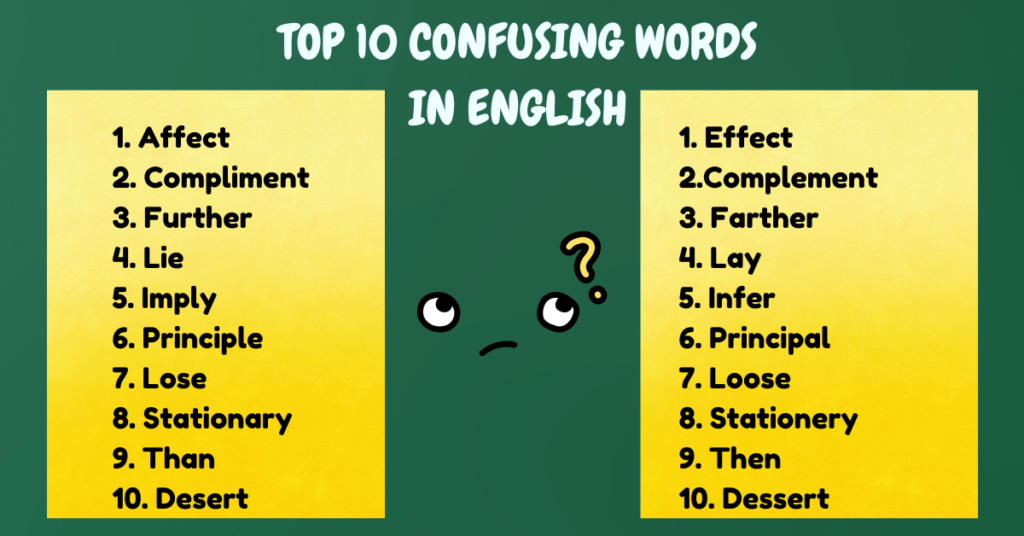
Top 10 Confusing Words in English (and How to Use Them Correctly)

Top 10 Confusing Words in English (and How to Use Them Correctly)

English can be a tricky language, especially when certain words look similar, sound alike, or seem interchangeable but actually have distinct meanings. These confusing words often trip up even the most proficient speakers. To help you navigate this linguistic minefield, we’ve compiled a list of the top 10 confusing words in English—and how to use them correctly.

1. Affect vs. Effect

  • Affect (verb): To influence something.
    • Example: The weather can affect your mood.
  • Effect (noun): The result or consequence of an action.
    • Example: The new policy had a positive effect on employee productivity.

Tip: If you’re talking about an action, use “affect.” If you’re talking about a result, use “effect.”

2. Compliment vs. Complement

  • Compliment (noun/verb): A polite expression of praise or admiration.
    • Example: She gave me a nice compliment about my dress.
  • Complement (noun/verb): Something that completes or enhances something else.
    • Example: The wine complements the meal perfectly.

Tip: Remember, “I” in “compliment” stands for admiration, while “E” in “complement” stands for enhancement.

3. Further vs. Farther

  • Further (adjective/adverb): Refers to metaphorical or abstract distance.
    • Example: Let’s discuss this further.
  • Farther (adjective/adverb): Refers to physical distance.
    • Example: The store is farther down the street.

Tip: Use “farther” for measurable distances and “further” for abstract concepts like time or conversation.

4. Lie vs. Lay

  • Lie (verb): To recline or rest on a surface.
    • Example: I need to lie down after a long day.
  • Lay (verb): To place something down.
    • Example: Lay the book on the table.

Tip: People lie down, but you lay things down.

5. Imply vs. Infer

  • Imply (verb): To suggest something without saying it directly.
    • Example: He implied that he wasn’t happy with the decision.
  • Infer (verb): To deduce or conclude something from evidence.
    • Example: From her tone, I could infer that she was upset.

Tip: The speaker implies, while the listener infers.

6. Principle vs. Principal

  • Principle (noun): A fundamental truth or law.
    • Example: Honesty is a key principle in life.
  • Principal (noun/adjective): The head of a school or organization, or the most important thing.
    • Example: The principal of the school gave a speech.

Tip: Remember that your principal is your “pal,” while principle refers to a rule or standard.

7. Lose vs. Loose

  • Lose (verb): To fail to keep, win, or maintain something.
    • Example: I don’t want to lose my keys.
  • Loose (adjective): Not tight or free.
    • Example: The shirt is too loose on me.

Tip: Double the “O” when something is not tight, but just one “O” when you misplace something.

8. Stationary vs. Stationery

  • Stationary (adjective): Not moving, remaining in one place.
    • Example: The car remained stationary at the red light.
  • Stationery (noun): Writing materials like paper and envelopes.
    • Example: She bought new stationery for her office.

Tip: “E” in stationery is for “envelope,” while “A” in stationary is for “at rest.”

9. Than vs. Then

  • Than (conjunction): Used for comparisons.
    • Example: She is taller than her brother.
  • Then (adverb): Refers to time or what comes next.
    • Example: First, we’ll have dinner, then we’ll watch a movie.

Tip: Use “than” for comparisons and “then” for time sequences.

10. Desert vs. Dessert

  • Desert (noun): A dry, sandy area with little to no vegetation.
    • Example: The Sahara is the largest desert in the world.
  • Dessert (noun): The sweet course at the end of a meal.
    • Example: I’ll have chocolate cake for dessert.

Tip: To remember “dessert” has two “s,” think of wanting seconds of something sweet!

Conclusion

Mastering these confusing words is key to becoming more confident in your English writing and speaking. Although some words may seem tricky at first, understanding the context in which they are used can help you avoid mistakes. The more you practice, the more naturally these distinctions will come.

If you’re looking to improve your spoken English and clarify any lingering doubts about word usage, apps like EngVarta (download now https://engvarta.com/) offer one-on-one conversation practice with experts, helping you gain fluency and precision in English. Happy learning!

Learn English with EngVarta – Both Free and Paid Ways to Become Fluent

Learn English with EngVarta – Both Free and Paid Ways to Become Fluent

When it comes to learning English, everyone has their own style and preferences. Some want a fully immersive experience with live practice, while others are happy picking up tips and lessons at their own pace. With EngVarta, you have the freedom to choose both options – whether you want to pay for live expert sessions or prefer to learn English for free. But here’s the exciting part: if you want to learn English for absolutely free, EngVarta’s YouTube channel is your perfect go-to resource!

Let’s explore how EngVarta provides both paid and free learning opportunities, with a focus on how you can start your English learning journey without any cost.

The Free Way to Learn English – EngVarta’s YouTube Channel

If you’re looking to learn English without any financial commitment, EngVarta’s YouTube channel is your treasure chest. Packed with hundreds of videos covering everything from vocabulary building to speaking hacks, this channel makes English learning fun, accessible, and absolutely FREE.

The videos are designed to help learners of all levels – from beginners to advanced speakers. And the best part is that you can learn English anytime, anywhere, and at your own pace. Here are some highlights of what the YouTube channel offers:

  1. Daily English Lessons: The channel covers a wide range of topics, such as grammar rules, sentence structures, and practical speaking tips.
  2. Improve Your Vocabulary: Whether you’re looking to build your day-to-day vocabulary or want to learn advanced words, the channel provides easy-to-understand explanations and examples.
  3. Speaking Tips & Conversation Practice: The channel offers practical advice to help you speak English more naturally and confidently. Learn common phrases, pronunciation tips, and how to start conversations in English.
  4. Motivational Content to Keep You Going: EngVarta not only focuses on language lessons but also shares motivational content that inspires you to keep learning and growing as an English speaker.

👉 Visit and Subscribe to EngVarta’s YouTube Channel for Free English Lessons 👈

Subscribing to the channel gives you instant access to all their free content, ensuring you never miss an update or a new lesson. It’s a fantastic way to keep your English practice fresh and exciting without spending a dime!

The Paid Way – EngVarta App for Live Practice

While the YouTube channel is an excellent way to learn English for free, EngVarta also offers a more personalized and immersive experience through its paid app services. The app connects you with live English experts for one-on-one practice sessions, where you can focus on improving your fluency, pronunciation, and confidence in real-time conversations.

Here’s what the paid EngVarta app offers:

  1. Live Practice Sessions: Practice speaking English with real experts who guide you through conversations, helping you build confidence and correct mistakes.
  2. Customized Learning Experience: Whether you’re a student, a professional, or someone who simply wants to improve their conversational skills, the experts on EngVarta adapt to your level and needs.
  3. Flexible Scheduling: Choose when and how often you want to practice. The app provides flexibility, allowing you to schedule sessions at your convenience.

Why Start Learning with EngVarta’s YouTube Channel?

  1. Access to Quality Lessons Anytime: The channel is filled with quick, informative, and engaging videos that allow you to learn English on the go. No matter where you are, you can access these lessons on your phone or computer.
  2. Comprehensive Range of Topics: From grammar and vocabulary to speaking hacks and pronunciation tips, the YouTube channel covers all the key areas you need to improve your English skills.
  3. Self-Paced Learning – No Pressure: Unlike traditional classes, you can watch these videos at your own pace. Revisit lessons as many times as you need to fully understand and practice the concepts.
  4. Completely Free – No Subscription Needed: Perhaps the best part about EngVarta’s YouTube channel is that it is 100% free. You don’t need to worry about subscriptions or fees. All you have to do is hit the subscribe button and start learning!

How to Start Your Free English Learning Journey

It’s as simple as heading over to EngVarta’s YouTube channel and clicking “Subscribe.” Once subscribed, you’ll have a world of English learning resources at your fingertips. From easy-to-understand grammar lessons to practical speaking tips, you can start improving your English fluency today without paying a single penny.

👉 Subscribe to EngVarta’s YouTube Channel Now! 👈

And if you’re ready to take your learning to the next level with live speaking practice, you can download the EngVarta app and explore their personalized, expert-led sessions.

Wrapping Up: Two Paths to Fluent English – Choose Yours!

EngVarta provides two amazing ways to learn English:

  1. The Free Path: Use EngVarta’s YouTube channel to access tons of free lessons and start improving your English from day one.
  2. The Paid Path: Download the EngVarta app to connect with experts and practice speaking live, getting personalized feedback and support.

Whether you choose to learn for free or go for a paid experience, EngVarta makes sure you have the right resources to improve your English fluency and confidence.

Start your journey to fluent English with EngVarta today, and remember – the best way to learn is to practice, practice, practice! 😊

Best English Learning Apps for Travelers: Learn On the Go

Best English Learning Apps for Travelers: Learn On the Go

In today’s world, English has become a global language, essential for communication in almost every country. For travelers, the ability to speak English fluently opens doors to new experiences and smoother journeys. Whether navigating foreign streets or engaging in local markets, speaking English can make all the difference. Here are the top 10 best English learning apps for travelers, providing flexibility and effective learning strategies to help you learn on the go.

Duolingo: Fun and Gamified Learning

Duolingo is a free, gamified language learning app that’s perfect for beginners. It uses a fun, game-like structure to keep learners engaged, offering quick lessons that fit easily into a traveler’s schedule. The app’s bite-sized lessons cover a range of topics, from basic vocabulary to more complex grammar rules, making it one of the best English learning apps for travelers looking for a simple and entertaining way to start learning.

EngVarta: Real-Time Practice with Experts

EngVarta is an innovative app that focuses on live conversation practice with English experts, setting it apart from other language apps that use automated lessons. This is a game-changer for travelers looking to build confidence in speaking English quickly. The app connects users with real people, offering a personalized and practical approach to learning, making it one of the best English learning apps for travelers who want to enhance their speaking skills in a realistic setting.

Why Choose EngVarta?

  • Real-Time Interaction: Unlike other apps, EngVarta provides live sessions with English experts, allowing for real-time conversation practice. This is particularly valuable for travelers who need to improve their speaking skills quickly.
  • Personalized Learning: Sessions are tailored to individual needs, whether you want to focus on everyday conversations, business English, or travel-specific scenarios.
  • Flexible Scheduling: Perfect for travelers, EngVarta allows you to schedule sessions at your convenience, making it easy to fit learning into any itinerary.
  • Confidence Building: Regular interaction with native speakers helps build confidence and fluency, essential for navigating new countries and cultures.

Download EngVarta Now:

Connect with EngVarta on social media to get tips, updates, and more:

Babbel: Structured Lessons for In-Depth Learning

Babbel is known for its structured approach to language learning. It offers lessons crafted by language experts that focus on grammar, vocabulary, and practical conversation skills, ideal for serious learners who want a thorough understanding of English.

Rosetta Stone: Immersive Language Learning

Rosetta Stone has been a pioneer in language learning for decades. The app focuses on immersive learning, encouraging users to think and learn in the new language without translation, which can be particularly effective for learning English. This immersive approach makes it one of the best English learning apps for travelers who want to fully dive into the language.

Memrise: Learning with Native Speakers

Memrise uses a combination of video clips of native speakers and interactive games to make learning a new language both fun and effective. It’s ideal for travelers who want to learn practical phrases and expressions used in everyday conversation.

Busuu: Community-Driven Learning

Busuu offers a unique blend of traditional language lessons and social learning features. It allows users to interact with native speakers, providing opportunities to practice writing and speaking with real people, enhancing the learning experience.

HelloTalk: Language Exchange Community

HelloTalk is more of a social network than a traditional learning app. It connects users with native speakers around the world for language exchange, making it perfect for travelers who want to practice conversational English and gain cultural insights directly from locals.

Pimsleur: Audio-Based Learning for On-the-Go

Pimsleur is a renowned audio-based learning app that focuses on listening and speaking skills. It’s perfect for travelers who want to learn hands-free while commuting or multitasking, making language learning seamlessly fit into a busy travel schedule.

Mondly: High-Tech Language Learning

Mondly utilizes modern technology like augmented reality (AR) and chatbots to enhance the language learning experience. It offers a variety of interactive exercises and conversations for comprehensive learning, making it a fun and engaging tool for travelers.

TripLingo: Traveler-Focused Language and Culture App

TripLingo is designed specifically for travelers, offering language learning tools along with cultural insights and essential travel phrases. It’s a handy app for navigating different countries and cultures, providing both language learning and cultural immersion.

Conclusion

For travelers looking to learn English on the go, these apps offer a range of methods and features to suit different learning styles and needs. From gamified lessons with Duolingo to structured courses with Babbel, and immersive learning with Rosetta Stone, there’s something for everyone. However, EngVarta stands out with its unique focus on live conversation practice, making it the best choice for those who want to improve their speaking skills quickly and effectively. So, download EngVarta today and start your journey towards fluent English communication with one of the best English learning apps for travelers!

By incorporating these English learning apps into your travel routine, you can make the most of your time abroad while improving your language skills in engaging and effective ways.

Enhance Your Word Power: Discover the Benefits of the FixoLang App for English Vocabulary

Enhance Your Word Power: Discover the Benefits of the FixoLang App for English Vocabulary

Improving your vocabulary is not just about adding more words to your knowledge; it’s about shaping the way you communicate and understands the world—particularly if you are preparing for the IELTS exam. In this context, the FixoLang app emerges as a light for many learners. It is not merely a tool; it is a companion on the journey to mastering English vocabulary effectively and efficiently. Let’s delve into how this innovative app stands out in the crowded field of language learning tools.

Unpacking the FixoLang App: A Gateway to Richer Vocabulary

Understanding the Core Features

The FixoLang app is designed with the specific goal of helping users expand their English vocabulary. This is crucial for any part of the IELTS exam, whether it’s Reading, Writing, Speaking, or Listening. The app provides a user-friendly interface that makes learning new words not just necessary but also enjoyable.

Personalized Learning Journeys

One of the standout features of the FixoLang app is its ability to create personalized learning journeys. Based on initial assessments and ongoing performance analysis, the app tailors vocabulary lists that are most relevant to the user’s learning level and goals. This bespoke approach ensures that learners are neither overwhelmed by the complexity of words that are too advanced nor bored by the simplicity of those they already know.

Innovative Strategies to Enhance Vocabulary Engagement

Innovative strategies to enhance vocabulary engagement can significantly benefit learners. One effective approach is using platforms like FixoLang, that offers an extensive range of cue cards. These cue cards cover various categories, providing learners with diverse contexts and themes. This variety not only helps in learning new words but also in understanding their usage in different situations. Engaging with such tools makes the learning process more interactive and less monotonous, encouraging deeper engagement and better retention of vocabulary. Such strategies are especially useful for exam preparation, where a broad vocabulary is essential.

Real-World Application: Preparing for IELTS

Targeted Practice for Each IELTS Section

The FixoLang app understands that each section of the IELTS test challenges different aspects of language competence. It offers targeted vocabulary lists that are curated to improve performance in each specific section. For instance, vocabulary that enhances descriptive language skills for the Writing section or idiomatic expressions that are often used in the Speaking section.

Simulated IELTS Tests

Practicing under real exam conditions is vital. The FixoLang app provides simulated tests where vocabulary understanding is put to the test in an exam-like environment. This not only helps in applying the learned vocabulary in appropriate contexts but also builds confidence in handling the pressure of the actual exam.

Personalized Feedback

The app also provides personalized feedback to every individual. This feature is invaluable for learners who need a bit more help in understanding complex vocabulary or for those who are stuck at a particular level and need professional advice to move forward.

Conclusion

In the search to conquer English vocabulary for the IELTS, the FixoLang app is more than just a tool—it is a strategic ally. With its personalized learning paths, innovative retention strategies, and a supportive community, the app provides a comprehensive platform for serious IELTS candidates. By integrating the FixoLang app into your study routine, you are setting yourself up for success, equipped with a robust vocabulary that will serve not only in acing the exam but in all your English communications.

FAQs on Vocabulary Learning with FixoLang

Can beginners use the app effectively?

Absolutely! The FixoLang is designed to cater to all levels of learners, from beginners to advanced. The personalized learning paths ensure that every learner starts from their comfort level and progresses at their own pace.

What makes the FixoLang app different from other language learning tools?

Unlike generic language learning tools, the FixoLang app focuses specifically on vocabulary needed for the IELTS exam. It includes features like personalized learning paths, extensive cue card categories, and simulated IELTS tests that provide a comprehensive and targeted learning experience.

What kind of vocabulary is covered in the app?

The app covers a wide range of vocabulary that includes day-to-day words, academic vocabulary, business English, idiomatic expressions, and phrasal verbs, among others.

Is there any feature in the app that helps with pronunciation?

Yes, the app includes audio pronunciations for each word, which is crucial for improving speaking and listening skills, especially in preparation for the IELTS.

ENGVARTA VIDEO VOCABULARY SERIES – How does it work?


Engvarta vocabulary series - Learn new words daily
Engvarta vocabulary series – Learn new words daily


EngVarta has its own video vocabulary series where you get to learn three new words daily through our video lessons in the app. These video lessons include explanations of word meanings, usage in sentences, and examples to help learners understand and remember new words.

How to subscribe to the Vocabulary series? 

Follow the three simple steps to use EngVarta free vocabulary series – 

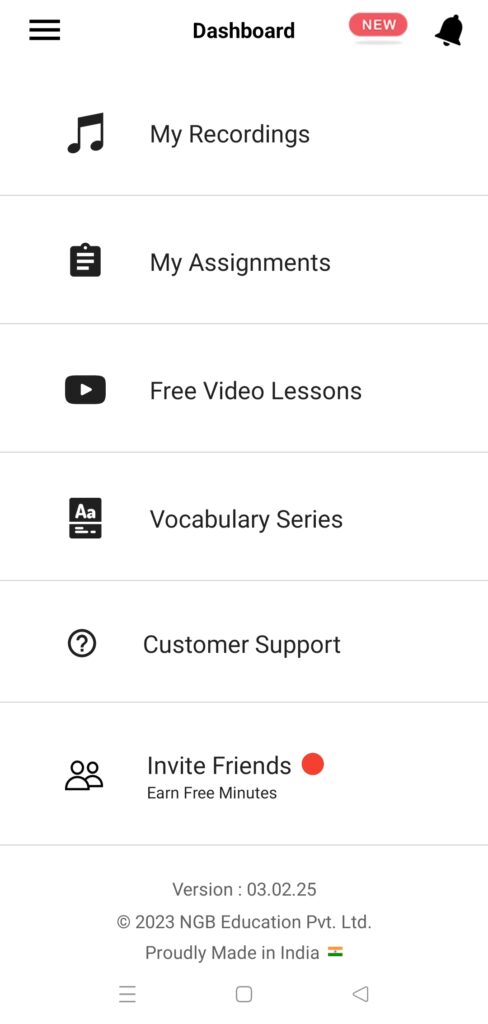
  1. Download the EngVarta app
  2. Go to the ‘Menu’ option
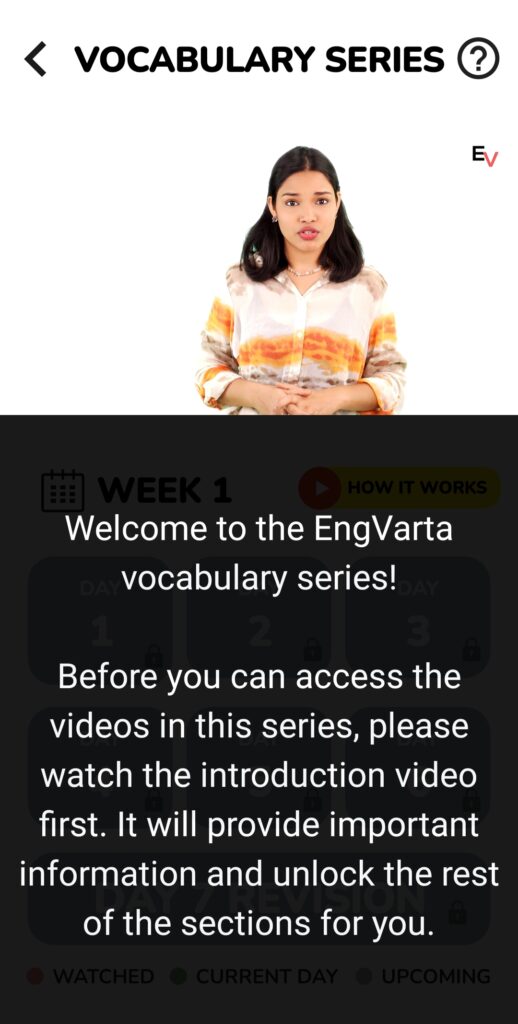
  3. Select Vocabulary series


IMG 20230911 121423

4. You need to watch the introduction video to provide you with important information before you can access the vocabulary series.

IMG 20230911 121504

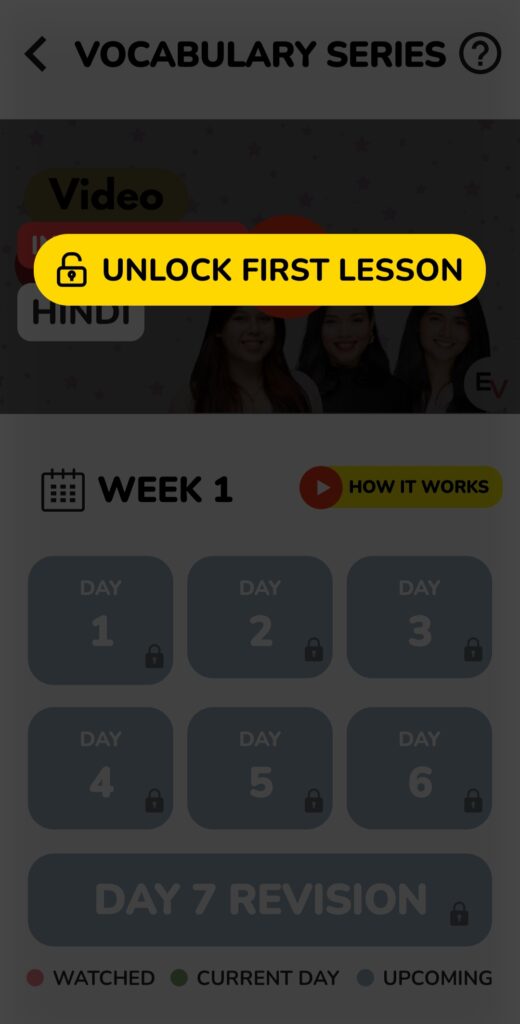
5. After you have watched the introduction video, you will see an option to ‘Unlock First Lesson’

IMG 20230911 121532

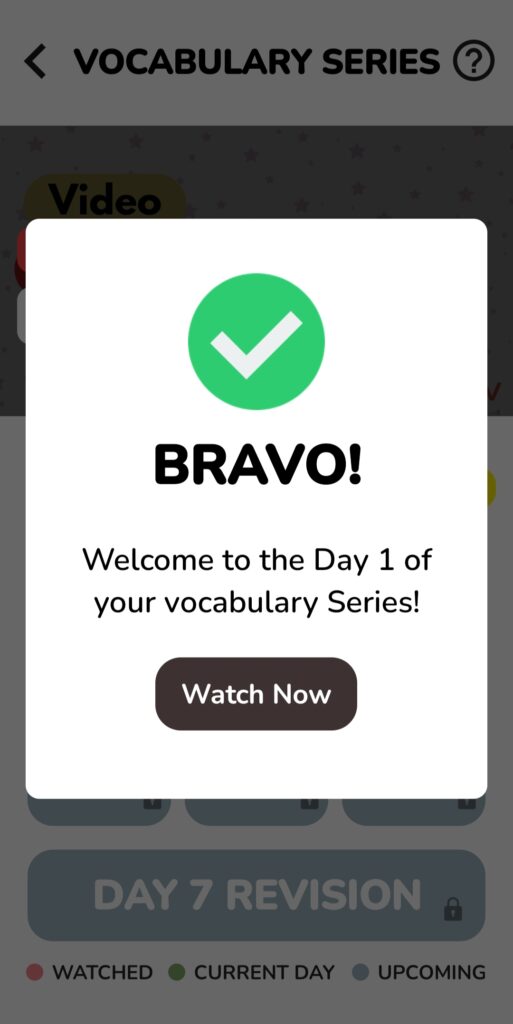
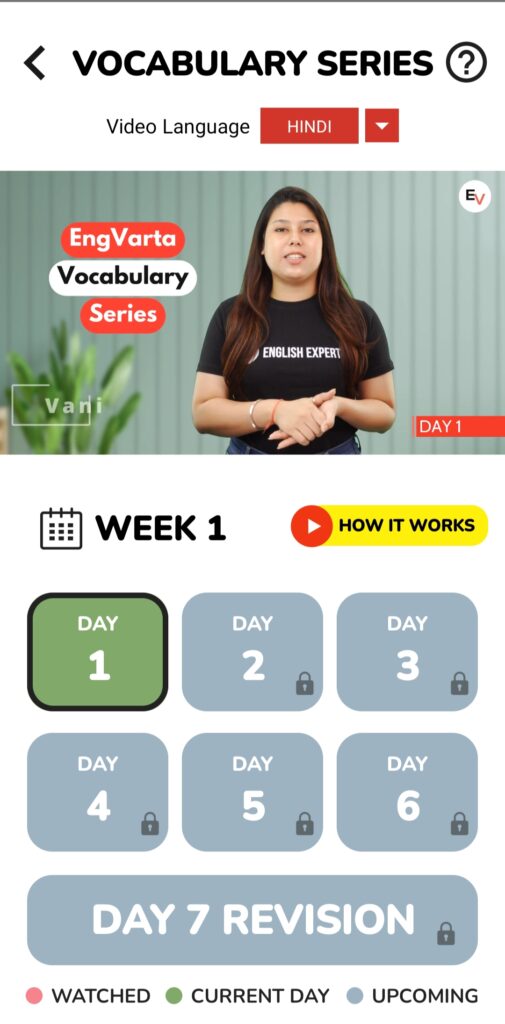
6. After clicking on ‘Unlock first Session’ you will be able to watch the video of Day 1 of your vocabulary series! In this video you will get to learn 3 new words daily!

IMG 20230911 121551

7. You can select the language preference to watch the video.


IMG 20230911 121607

8. Then the next day you will be able to unlock your Day 2 of vocabulary series.

Continue learning new words and use them in your daily English conversation. Isn’t it great? So what are you waiting for? Download the EngVarta app now and start your English learning journey today!

Learn more about EngVarta vocabulary series. It’s free! 

Best Ways to Improve Your English Speaking Vocabulary

Ways to improve vocabulary

Are you in a situation where you want to speak English using some fancy and more expressive language or vocabulary?😃

 But then, you have limited words 😕 

It’s time for you to learn vocabulary using some proven strategies. 

Let’s begin – 

It is not new to you that to enhance your vocabulary, you must read. Read a lot. And why not 

“ Reading is a mere makeshift for original thinking.

                                                                                       ~ Arthur Schopenhauer

Read anything and everything. Read fiction, non-fiction, biographies, autobiographies, spiritual text, history, philosophy, etc. Anything and everything!


So, my first suggestion is Read a lot. Make it a habit. 

 Use Thesaurus – cut off boring vocabulary 

A learner never stops learning. I keep updating myself with new and better vocabulary instead of using the same one repeatedly. And using a thesaurus is one of the best ways that I find. You don’t have to do anything much. Just google thesaurus, type a word, normally a word that you use most of the time. 

Let’s have a look – 

13

If you type the word ‘Good’, you get an abundance of words. 

Wait! That’s not enough. How to use words in sentences?

  1. 14

You can also learn how to apply the word in sentences and use them in your English conversation. Isn’t it one of the powerful ways? 

ENGVARTA VOCABULARY SERIES – IT’S FREE !

Engvarta has its own vocabulary series where they have unlimited words daily delivered to your mail account. You get three words along with their meaning, their pronunciation, and sentences. It’s quite a handy way. You don’t have to look for words. It’s all there every morning delivered. 

15

How to subscribe to the Vocabulary series? 

16

Follow the three simple steps – 

  1. Download the Engvarta app
  2. Go to the ‘Menu’ option
  3. Subscribe to Engvarta vocabulary series

Use Journal

Keeping is a journal is the best thing that you could do for yourself. Where it is said that maintaining a regular journal is a great habit, maintaining a journal solely for the purpose of building strong vocabulary is also an amazing idea.

Note down every new word you read or hear. A journal will help you to keep a check on the new words you are learning and will motivate you to push the boundaries.

Whenever you read a novel, keep your dictionary, thesaurus, and journal handy.

Inculcate Practical Vocabulary

You must not start by learning the fancy and difficult words. Start developing practical vocabulary. Learn the words that you hear yourself using every day.

For instance, if you are a doctor, you must select the words pertaining to your field first and then graduate to other levels.

Reach the roots

Many people just read the new words, search their meanings and memorize them. But the best way is to reach the roots of the words. Every single word in the vocabulary has Latin or Greek roots. Reaching the roots will also introduce you to another set of words coming from the same root. This will enhance your vocabulary by leaps and bounds.

Mix Learning and Fun

Learning by playing is one of the best ways to build vocabulary. There are many interesting games that are not just fun to play but also, boost the vocabulary.

Play games like Scrabble, crossword puzzles, boggle, word jumble, anagrams, etc. You can download these games on your mobile phones and play these games on the go.

Watch English Movies and Series

Watching English movies and series is also an amazing way to boost the vocabulary. You will discover many new words. Note them down in your journal.

There are several movies that actually help in boosting English speaking skills. Watch movies like The Social Network, The Hunger Games, Cast Away, Twilight, The Hangover, Toy Story, etc.

You can also watch series like Friends, Keeping Up with the Kardashians, The Simpsons, Game of Thrones, House of Cards, etc.

Talk

While having conversations with people, you will surely come across many new words. Regular practice will not only improve your vocabulary but also boost your confidence to speak in English. If you do not have an English-speaking environment around you, you can always take some help from the EngVarta app. The app will connect you with live English Experts who will help you polish your English speaking skills.

EngVarta app offers you a perfect environment to talk in English confidently.

Bring in Use Whatever You Learn

Incorporate the newly learned words into conversations and writing. You are not learning the new words to forget them at some point in time. Making them a part of your regular slang is also important.

Follow the above-mentioned tips and you will see yourself conversing in English with utmost confidence.

Here are some books that will surely help you to boost your vocabulary: 

“Leaving Time” by Jodi Picoult

“Mr. “Mercedes” by Stephen King

“Until the End of Time” by Danielle Steel

“Sincerely, Carter” by Whitney Gracia Williams

“Harry Potter and the Sorcerer’s Stone” by J.K. Rowling

“The Martian” by Andy Weir

“Ender’s Game” by Orson Scott Card

“Evil Under the Sun” by Agatha Christie

“The Wright Brothers” by David McCullough

“Outliers” by Malcolm Gladwell

So, these were some ways in which you can improve your vocabulary. 

If you are practicing any other methods. Do let me know in the comments below.