For Indian learners who need daily English speaking practice, EngVarta is the better choice. It costs roughly ₹2,700/month for daily sessions, connects you with trained experts within minutes, and is built specifically for Indian professionals and students. italki is a strong platform for self-directed learners who want to handpick tutors across 150+ languages — but for the specific goal of practising spoken English every day, it is more expensive and requires more effort to manage.
That said, this is not a clearcut “one is good, the other is bad” situation. italki has been around since 2006, has 10 million+ learners globally, and offers something no other platform does: a massive marketplace of 30,000+ tutors across every language imaginable. If you want to learn Korean and French alongside English, italki is unmatched. But if you are an Indian professional or student whose one goal is to get fluent in spoken English — and you need a simple, affordable way to practise daily — the two platforms serve very different purposes. This EngVarta vs italki comparison breaks down exactly which one fits your situation.
What Is italki and What Is EngVarta?
italki — The Global Language Marketplace
italki is a Hong Kong-based marketplace founded in 2006 that connects language learners with tutors worldwide. Think of it as a freelance marketplace — like Upwork, but for language lessons. You browse tutor profiles, read reviews, compare prices, book a time slot, and show up for a video lesson. It covers 150+ languages with both “community tutors” (native speakers without formal training) and “professional teachers” (certified instructors). Any italki review India learners write tends to praise the variety but flag the overhead of finding and managing tutors yourself.
EngVarta — The India-Focused Speaking Practice App
EngVarta is an Indian english conversation practice app built for one purpose: helping you speak English confidently. No marketplace browsing, no booking, no tutor management. You open the app, tap a button, and get connected with a trained English expert within minutes. Sessions are audio-only — which removes the pressure of being on camera — and every session comes with personalized feedback and recordings you can replay. Over 2 million learners use it, with a 4.5-star rating. It runs from 7 AM to midnight IST, every day.
How Do EngVarta and italki Compare Side by Side?
Here is a direct comparison across every factor that matters when choosing between these two platforms for spoken english practice online.
| Feature | EngVarta | italki |
|---|---|---|
| Focus | English speaking for Indian learners | 150+ languages, global audience |
| Founded | India | 2006, Hong Kong |
| Learners | 2M+ | 10M+ |
| How It Works | Open app, get connected within minutes | Browse tutors, book slots, attend lesson |
| Session Format | Audio-only (removes judgment) | Video call |
| Tutor Quality | Curated, trained experts | Varies widely — you vet them yourself |
| Pricing Model | Monthly subscription | Pay per lesson |
| Daily Practice Cost | ₹2,700/month (~₹90/day) | $4-10/day = ₹10,000-25,000/month |
| Trial | ₹69 with money-back guarantee | 30-min trial at 30-50% discount |
| Feedback | Personalized feedback + recordings | Depends on tutor |
| Availability | 7 AM – midnight IST | 24/7 (depends on tutor timezone) |
| Curriculum | Guided conversation practice | No built-in curriculum |
| Rating | 4.5 stars | Mixed on Trustpilot |
How Does italki Pricing Compare to EngVarta for Daily Practice?
This is where the EngVarta vs italki comparison gets decisive. italki’s pay-per-lesson model is great for occasional practice — you only pay when you learn. But if your goal is daily English speaking practice, the numbers change dramatically.
italki pricing India breakdown: Community tutors on italki charge $4-$20 per lesson. Indian tutors start around $3-5 per lesson. Professional English teachers range from $10-$40. italki Plus adds $5.99/month for extra features. Let us do the math for daily practice — 30 sessions per month.
| Scenario | Per Lesson | Monthly (30 sessions) |
|---|---|---|
| italki — cheapest Indian tutor | $3 (~₹250) | ~₹7,500/month |
| italki — average community tutor | $8 (~₹670) | ~₹20,000/month |
| italki — professional teacher | $15 (~₹1,250) | ~₹37,500/month |
| EngVarta — daily sessions | ~₹90 | ₹2,700/month |
Even at the cheapest italki rate for an Indian tutor, you are paying nearly 3x what EngVarta costs. At average community tutor rates, it is 7x more expensive. This is why anyone searching for an affordable english tutor india should understand the pricing structure before committing. italki’s per-lesson model is economical for 2-3 sessions per week. For daily practice — which is what actually builds fluency — a flat subscription wins every time. Check EngVarta’s pricing plans for current rates.
What Is the Learning Experience Like on Each Platform?
italki: The Marketplace Experience
Using italki requires effort before you ever speak a word of English. You need to browse tutor profiles, read reviews, compare pricing, check availability in your timezone, book a trial lesson, evaluate whether the tutor is good, and then commit to future lessons. If that tutor cancels or their internet drops mid-session — common complaints in italki india review threads — you start the search again.
Some learners enjoy this process. They like choosing their tutor, building a relationship, and customizing their learning path. If you are a self-directed learner who wants control over every detail, italki gives you that. The global tutor pool means you can find specialists in business English, interview prep, IELTS, or accent training.
The downsides are real, though. Tutor quality is inconsistent — some are experienced professionals, others are people with a webcam and a wifi connection. There is no built-in curriculum, so lesson structure depends entirely on who you book. Cancellation policies cause frustration. And if you are busy — which most Indian professionals are — the booking and scheduling overhead can become a barrier to consistent practice.
EngVarta: The On-Demand Experience
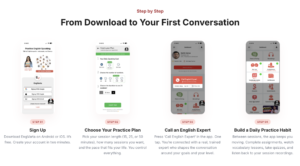
EngVarta eliminates everything between “I want to practise English” and actually practising. No browsing, no booking, no scheduling. Open the app, get connected to a trained expert, and start talking. Sessions are audio-only, which might sound like a limitation but is actually one of EngVarta’s biggest advantages — it removes the self-consciousness of being on camera and lets you focus entirely on speaking.
Every expert is trained and curated by EngVarta’s team, so you never have to worry about quality. After each session, you get personalized feedback highlighting what you did well and where to improve, plus session recordings to review later. This built-in feedback loop is something italki does not offer as a platform feature — on italki, feedback quality depends entirely on the individual tutor.
The trade-off? You do not get to choose your expert. If building a long-term relationship with one specific tutor matters to you, italki is better for that. EngVarta is designed for consistent daily practice with any qualified expert, not for tutor loyalty.
Learn more about how EngVarta works.
Which Platform Works Better for Indian Learners Specifically?
For the specific use case of “I am an Indian professional or student who needs to improve my spoken English” — EngVarta is the better fit. Here is why this matters more than generic comparisons.
Understanding Indian English challenges : Indian learners face specific issues — mother tongue influence from Hindi, Tamil, Bengali, or Marathi; direct translation habits; hesitation rooted in fear of judgment; formal-but-stiff English from textbook learning. EngVarta’s experts are trained to address these exact patterns. On italki, most tutors are generalists serving a global audience. A Filipino community tutor or an American professional teacher may not understand why a Hindi speaker says “I am having a doubt” instead of “I have a question.”
“Cultural Context in Communication : It’s more than accent and grammar. An italki tutor from another culture may teach phrases that work in their context but create friction in yours. For instance, “Shut up!” is excitement in the US but rude in India, and “I don’t care” means flexibility in the West, but dismissive in India. Misunderstanding these nuances can damage professional relationships. EngVarta experts teach English tailored to Indian cultural norms, ensuring smoother communication in Indian workplaces.”
Pricing in rupees : EngVarta prices in INR. italki prices in USD. When the rupee fluctuates, your italki costs change. For students on tight budgets, ₹2,700/month is predictable. $90-300/month on italki is not.
Availability during Indian hours : EngVarta runs 7 AM to midnight IST — covering every reasonable waking hour for Indian learners. On italki, finding tutors available during IST hours requires filtering and planning. Many popular English tutors are based in the US or Europe, making scheduling a puzzle.
The confidence factor : Audio-only sessions remove a massive barrier for Indian learners who feel judged on video calls. No one is watching your facial expressions, your background, or your appearance. You just speak. This single feature has helped thousands of learners break through their English speaking anxiety. Read real learner testimonials to see the difference it makes.
When Should You Pick italki Over EngVarta?
italki is genuinely better in several scenarios. Being fair about this matters — it is an italki alternative india comparison, not a takedown.
You want to learn multiple languages. italki covers 150+ languages. If you need English plus Japanese, or French plus Spanish, italki is the only platform that handles all of them in one place. EngVarta is English-only.
You want to choose and build a relationship with a specific tutor. Some learners thrive with one consistent tutor who knows their weaknesses, their goals, and their progress over time. italki lets you find that person. EngVarta connects you with available experts — excellent for practice consistency, but not for tutor loyalty.
You want occasional lessons, not daily practice. If you only need 1-2 sessions per week, italki’s pay-per-lesson model can be cheaper than a monthly subscription. At $3-5 per session for an Indian tutor, that is ₹1,000-1,700/month for weekly sessions — less than EngVarta’s ₹2,700.
You want native speaker practice. italki has tutors from the US, UK, Australia, and Canada. If accent exposure from native speakers is your priority, italki’s global tutor pool has more variety. EngVarta’s experts are India-based.
You want video lessons with screen sharing. italki lessons happen over video with the option to share materials, documents, and screens. If you need structured lesson materials or visual aids, italki accommodates that. EngVarta is audio-only by design.
Which Platform Should You Choose? A Decision Guide
Use this table to match your situation with the right platform. Whether you are searching for the best english speaking app or a full online english tutor india platform, your specific needs determine the right answer.
| Your Situation | Pick This | Why |
|---|---|---|
| Need daily English speaking practice | EngVarta | ₹2,700/month flat vs ₹7,500-25,000/month on italki for daily sessions |
| Want to learn multiple languages | italki | 150+ languages in one marketplace — EngVarta is English-only |
| Indian student on a budget | EngVarta | ₹69 trial, ₹2,700/month, priced in INR, no hidden costs |
| Want to handpick your tutor | italki | Browse 30,000+ profiles, read reviews, choose your match |
| Nervous about speaking on camera | EngVarta | Audio-only removes self-consciousness and judgment |
| Need 1-2 lessons per week only | italki | Pay-per-lesson is cheaper at low frequency |
| Working professional, unpredictable schedule | EngVarta | No booking needed — open app, talk, done in 15 minutes |
| Want native speaker accent exposure | italki | US/UK/Australian tutors available globally |
| Preparing for job interviews or presentations | EngVarta | Daily practice simulates real pressure — feedback after every session |
| Self-directed learner who likes managing everything | italki | Full control over tutor, schedule, lesson content |
The Bottom Line: EngVarta vs italki for English Speaking Practice in India
Both platforms are legitimate and well-built. italki is an excellent global marketplace that gives self-directed learners complete control over their language learning across 150+ languages. If you want variety, tutor choice, and you are comfortable managing your own learning schedule, italki delivers.
But for the specific question — “I am in India and I need to improve my English speaking” — EngVarta vs italki has a clear answer. EngVarta costs less for daily practice (₹2,700 vs ₹7,500-25,000), requires zero scheduling effort, provides curated experts who understand Indian learners, and removes the anxiety of video calls with audio-only sessions. It is the best english speaking app for people who want to just open an app and talk, every single day, without managing a marketplace.
italki is a Swiss Army knife. EngVarta is a scalpel. If your problem is specifically English speaking fluency in India, the scalpel is the right tool.
Try It and Decide for Yourself
You do not need to take anyone’s word for it. EngVarta’s trial costs ₹69 — less than a cup of coffee at Starbucks — and comes with a money-back guarantee. Do one session. See if it clicks. If it does not, you have lost nothing.
Start with a ₹69 trial. Full money-back guarantee. No risk.
Download on App Store →
Available on Android & iOS • 2M+ learners • 4.5★ rating
Frequently Asked Questions ( FAQs )
Q1. Is italki good for Indian learners who want to improve spoken English?
Ans: italki works for Indian learners, but it is not built specifically for them. You will need to search for tutors who understand Indian English challenges, check their IST availability, and manage bookings yourself. For occasional practice with a chosen tutor, it is solid. For daily spoken english practice online, the per-lesson cost adds up fast — ₹7,500 to ₹25,000 per month for daily sessions compared to EngVarta’s flat ₹2,700.
Q2. How much does italki cost per month for daily English practice?
Ans: There is no monthly subscription for lessons on italki — you pay per session. italki pricing India ranges from $3 for the cheapest Indian community tutors to $40 for professional teachers. For daily practice (30 sessions/month), expect ₹7,500 at the absolute minimum, going up to ₹37,500 for professional teachers. italki Plus at $5.99/month adds features but does not reduce lesson costs.
Q3. Can EngVarta replace italki for English speaking practice?
Ans: For daily speaking practice focused on building fluency and confidence, yes. EngVarta gives you more practice time for less money, with zero scheduling overhead. Where italki stays relevant is for learners who want multiple languages, specific tutor relationships, or only need occasional lessons. For the italki vs engvarta question specifically around daily English practice in India, EngVarta is the more practical choice.
Q4. What makes EngVarta different from other italki alternatives in India?
Ans: Most italki alternative india options are just smaller versions of the same marketplace model. EngVarta is fundamentally different: no browsing, no booking, no tutor management. You open the app and start speaking within minutes. Audio-only sessions, curated experts, personalized feedback, and session recordings — all for a flat monthly rate. It is purpose-built for Indian learners, not adapted from a global platform. Visit the English speaking course page for details.
Q5. Is EngVarta or italki better for working professionals?
Ans: EngVarta is better for most Indian working professionals. The reason is simple: professionals have unpredictable schedules. Booking an italki lesson for 7 PM and then getting stuck in a meeting until 7:30 means a wasted lesson and potential cancellation fees. EngVarta requires no booking — practise at 7 AM, 10 PM, or whenever you have 15 minutes free. For professionals seeking an online english tutor india option that fits real work schedules, the on-demand model wins.
Q6. Does italki have Indian English tutors?
Ans: Yes. italki has Indian tutors starting from around $3-5 per lesson. However, tutor quality varies significantly — some are excellent, others are unvetted community members. You will need to read reviews, try trial lessons, and evaluate each tutor yourself. EngVarta’s experts are all trained and curated, so quality is consistent across every session without any effort on your part.