English Grammar Tips |

Tag

English grammar tips

Is EngVarta Free? Free vs Paid Ways to Learn English (2026)

October 3, 2024 • 13 min read • By Swati Raj

Learn English with EngVarta – Both Free and Paid Ways to Become Fluent
Quick Verdict (2026)Yes, EngVarta has a free way and a paid way to learn English. What’s 100% free: the EngVarta vocabulary series, quizzes, and video lessons — all available both on the EngVarta YouTube channel and inside the EngVarta app. What’s paid: live 1-on-1 audio practice sessions with TESOL/ESL-certified Experts, starting at ~₹108 per session (₹2,700 for 25 sessions). The trial is ₹69 and 100% refundable. Most learners use both: free vocabulary + quizzes to learn the rules, paid live sessions to practise speaking out loud with real-time correction.

Updated for 2026. Everyone has a different way of learning English. Some want full immersion with a live expert correcting them in real time. Others prefer to pick up tips and lessons at their own pace, on their own schedule, without spending money. EngVarta gives you both options — a completely free YouTube channel and a paid live-practice app — so you can pick whichever fits your budget, time, and goal.

This guide breaks down exactly what’s free, what’s paid, what each path is best for, and how to combine the two for the fastest fluency results.

The Free Way to Learn English — Vocabulary Series, Quizzes & Video Lessons

If you want to learn English without spending anything, EngVarta’s entire self-learning library is 100% free. The vocabulary series, daily quizzes, and video lessons are all available at no cost — you can access them on the EngVarta YouTube channel or directly inside the EngVarta app. Completely free. No signup wall. No trial period that converts to paid. No ads to dismiss. Open the app or YouTube and start learning.

The videos are designed for learners at every level — beginners building their first vocabulary, intermediate learners ironing out grammar gaps, and advanced speakers polishing pronunciation and accent. You can watch on your phone or laptop, on the bus, during a tea break, or before bed. Your pace, your schedule, your choice.

What’s included free (on YouTube and inside the app):

  1. EngVarta vocabulary series — everyday words for beginners through to advanced and academic vocabulary, with examples and pronunciation guidance
  2. Daily quizzes — vocabulary, grammar, and comprehension quizzes to test what you’ve learned and reinforce retention
  3. Video lessons — grammar rules, sentence structures, and practical speaking tips that apply to real-world conversations
  4. Speaking tips and conversation patterns — how to start conversations, common phrases, and natural-sounding response patterns
  5. Pronunciation drilling — sounds Indian learners commonly struggle with, mother-tongue-influence (MTI) fixes, and accent-neutralisation tips
  6. Motivational content — learner stories, study habit tips, and ideas to keep you consistent past the first 30 days

👉 Visit the EngVarta YouTube channel and subscribe for free English lessons 👈

One subscribe = instant access to everything. New videos are added regularly, so subscribing means you’ll see the latest lessons in your YouTube feed without searching for them. It’s the easiest, lowest-friction way to start your English learning journey without spending a rupee.

The Paid Way — The EngVarta App for Live 1-on-1 Practice

The YouTube channel teaches you English. The EngVarta app helps you actually speak it. That’s the difference: watching videos builds knowledge, but only live practice with someone correcting you builds fluency.

The EngVarta app connects you to a TESOL or ESL-certified English Expert over a live audio call. You pick the session length you want (15, 25, or 50 minutes), book a slot any time between 7 AM and midnight, and you’re connected to an Expert in minutes. The Expert listens to you speak, corrects your pronunciation, grammar, and word choice in real time during the call, and shares consolidated feedback towards the end of the session highlighting your top improvement areas.

Sessions are recorded and accessible for 30 days, so you can replay your weak spots and track your progress over time. Between sessions, the app gives you personalised practice tasks and a vocabulary builder to keep momentum going.

What the paid app gives you:

  1. Live 1-on-1 audio practice with TESOL/ESL-certified Experts — real conversations, not scripted lessons or AI bots
  2. Real-time correction during the call on pronunciation, grammar, and fluency — not after-the-fact written reports
  3. Consolidated feedback towards the end of every session, summarising what you covered and what to work on next
  4. Session recording for 30 days so you can review and self-correct between practice sessions
  5. Flexible scheduling from 7 AM to midnight, daily — works around morning routines, after-work hours, or late-night study sessions
  6. Personalised practice tasks + a vocabulary builder between sessions to keep daily progress going
  7. Audio-only design — works on slow mobile data and removes the camera-pressure that holds back self-conscious learners
  8. Milestone certificates as you complete practice-hour thresholds and reach speaking-progress milestones — useful for HR records, departmental training files, and upskilling submissions

What does the EngVarta app cost in 2026?

  • Trial: ₹69 for a 10-minute session, 100% refundable if you don’t want to continue
  • Starter plan: ₹2,700 for 25 sessions (~₹108 per session)
  • Larger plans: 50, 100, 150, and 300 sessions available with proportional discounting
  • Pause feature: built-in for travel, work crunches, or breaks — your sessions don’t expire
  • USD markets: roughly $1.80 per session for learners outside India (US, UAE, Canada, Singapore)

EngVarta is trusted by lakhs of learners who’ve used the app for daily speaking practice since 2017 — over 10 lakh sessions completed across India and expanding markets.

Ready to Practice with Real Experts?

Try EngVarta today — ₹69 trial (India) / $1 trial (International) · 100% refundable

Why Start with EngVarta’s Free Self-Learning Library?

  1. Quality lessons, anytime, anywhere — quick, informative videos you can watch on your phone or laptop, on your own schedule
  2. Comprehensive coverage — grammar, vocabulary, speaking patterns, pronunciation, and accent guidance, all in one place
  3. Self-paced learning, no pressure — watch a video once, twice, ten times until it clicks; no instructor waiting on you
  4. Completely free, no subscription needed — the vocabulary series, quizzes, and video lessons are 100% free on both YouTube and inside the app. No hidden upgrades, no “free trial that auto-renews” trap

How to Combine the Free and Paid Paths for Faster Fluency

The fastest fluency gains come from combining both paths. Here’s the proven pattern most successful EngVarta learners follow:

  1. Start with the free self-learning library — spend 15 minutes a day on the vocabulary series, daily quizzes, and video lessons (use either the EngVarta YouTube channel or the app, whichever you prefer). Build the foundation, learn the rules, expand your vocabulary, no cost.
  2. Add the ₹69 refundable trial after a week or two of YouTube — book a 10-minute live session to feel the difference between watching and actually speaking with feedback.
  3. If the trial works, move to the 25-session starter plan — do one 25-minute session every weekday morning (or after dinner). At ~₹108 per session, the daily cost of fluency practice is less than a cup of coffee.
  4. Keep watching YouTube alongside — the videos reinforce what your Expert corrected during practice. Lesson on one platform, application on the other.

👉 Subscribe to the EngVarta YouTube channel 👈 to start the free path today.

Ready to add live practice? Download the EngVarta app on Android, find it on the iOS App Store, or use the web version at engvarta.com.

Frequently Asked Questions

Is EngVarta free?

EngVarta has both free and paid features. Free: the EngVarta vocabulary series, daily quizzes, and video lessons — all available on the EngVarta YouTube channel and inside the EngVarta app, with no signup wall and no subscription. Paid: live 1-on-1 audio practice sessions with TESOL/ESL-certified English Experts, starting at ~₹108 per session. There’s a ₹69 trial that’s 100% refundable if you decide not to continue.

Is the EngVarta app free or paid?

The EngVarta app has both free and paid parts. Free inside the app: vocabulary series, daily quizzes, and video lessons — the same self-learning content available on the YouTube channel, just packaged inside the app. Paid inside the app: the live 1-on-1 audio practice sessions with English Experts, starting at ₹2,700 for 25 sessions (~₹108 per session), with a ₹69 refundable trial. The live practice is paid because each session involves a real certified English Expert giving you 1-on-1 correction in real time — that’s the value the cost covers.

How much does EngVarta cost in 2026?

The starter plan is ₹2,700 for 25 sessions (~₹108 per session). Larger plans (50, 100, 150, and 300 sessions) are available with proportional discounting. The trial is ₹69 for a 10-minute session and 100% refundable. In USD markets (US, UAE, Canada, Singapore), pricing works out to roughly $1.80 per session.

Does EngVarta have a free trial?

EngVarta has a refundable trial, not a free trial. The trial costs ₹69 for a 10-minute live session and is 100% refundable if you decide not to continue. The reason it isn’t free is that the trial connects you to a real, certified English Expert who spends 10 minutes 1-on-1 with you — the ₹69 covers their time. The refund means you take zero financial risk.

What’s the difference between EngVarta YouTube and the EngVarta app?

The free self-learning content (vocabulary series, quizzes, video lessons) is the same on both — you can access it via the YouTube channel or inside the EngVarta app, whichever fits your habit. The only thing the app adds on top of YouTube is the paid feature: live 1-on-1 audio practice sessions with a real, certified English Expert who corrects you in real time and shares consolidated feedback at the end of each call. Self-learning content builds knowledge; live practice builds fluency. Most learners use both.

Where can I download the EngVarta app?

The EngVarta app is available on the Google Play Store for Android, on the Apple App Store for iOS, and on the web at engvarta.com. The same account works across all three platforms.

Does EngVarta give certificates?

Yes — EngVarta issues milestone certificates as learners complete practice-hour thresholds and reach speaking-progress milestones. These are useful for HR records, departmental training files, and upskilling submissions. They’re earned through actual practice (not seat-time in a curriculum or exam-based), so the certificate reflects real spoken-English progress.

Can absolute beginners use EngVarta?

Yes. The YouTube channel covers content for absolute beginners through to advanced learners. For the paid app, beginners can book sessions with Experts who specialise in early-stage learners — the Expert will pace the conversation, use simpler vocabulary, and gradually increase complexity as your confidence grows.

What ages and audiences does EngVarta serve?

EngVarta serves working professionals, college students preparing for placements and interviews, government employees needing English for postings, homemakers rebuilding fluency on their own schedule, and learners preparing for IELTS, TOEFL, or job-interview English. The platform serves lakhs of learners across India and expanding markets in the US, UAE, Canada, and Singapore.

What Our Learners Say

Rated 4.5★ from 9,100+ reviews on Google Play

★★★★★
Excellent application to improve your communication skills.Thnk you for introducing new vocabulary everyday.God bless you You might not aware of but personally this is helping me a lot
★★★★★
Engvarta is a platform where we start from the 0 level to 100 level. That is the best thing I have never seen in my life. There are so many part and so many way, they are always try to teach you until you become a good speaker. Thank you Engvarta
★★★★★
The app has been great in improving your English speaking skills. Experts have great knowledge and indeed all are amicable and they create the environment which is necessary for learning the language.
★★★★★
Engvarta is a platform where we start from the 0 level to 100 level. That is the best thing I have never seen in my life. There are so many part and so many way, they are always try to teach you until you become a good speaker. Thank you Engvarta
★★★★★
Its just great, I mean in terms of environment that it gives you is just awesome. Thnx again for boosting my confidence.
★★★★★
Thanks EngVarta I appreciate your platform sir for those who willing to learn speaking English fluently
★★★★★
I have been using EngVarta for the past three months and from the period I am using I feel a considerable amount of difference in how I was speaking earlier and now how I am speaking and I think the EngVarta team has done a commendable job in improving my English fluency skill.
★★★★★
An awesome app to learn and practice English especially for those who don't have English speaking people around them. EngVarta is something I had missed and must have known about much before.
★★★★★
I enjoyed this course.experts encouraged me to use advanced vocabulary, idioms and phrases daily dose of assignment, quizzes and new vocabulary keep your toes
★★★★★
I have been using this app since three months. I am very much satisfied with their services , experts are too good and their support team members are very supportive and helpful. I must suggest this app to everyone. Thank you Engvarta for helping me.❤️
★★★★★
good and highly talented experts are here..just go for a trail without any doubt.. thank you eng vartha...A small request from my side just take less payment from the people who are joing in your coaching...help to them...thank you
★★★★★
Wonderful application for English learners and good for speaking with trainers .All trainers are well experienced and help us within the time period,Thanks

Wrapping Up — Two Paths to Fluent English in 2026

EngVarta gives you two ways to learn English in 2026:

  1. The Free Path: Use the EngVarta vocabulary series, quizzes, and video lessons — available on both the YouTube channel and inside the EngVarta app. Zero cost, zero subscription, zero catches.
  2. The Paid Path: Download the EngVarta app. Live 1-on-1 audio practice with TESOL/ESL-certified Experts, real-time corrections, consolidated feedback, recordings for 30 days. From ~₹108 per session, with a ₹69 refundable trial.

If your budget is zero, start with the YouTube channel today. If you want to actually speak fluently — not just understand English — add the app once you’ve built some foundation through the videos. The combination of both is what most successful learners use.

Either way: the best way to learn is to practise — daily, out loud, with feedback. Start today.

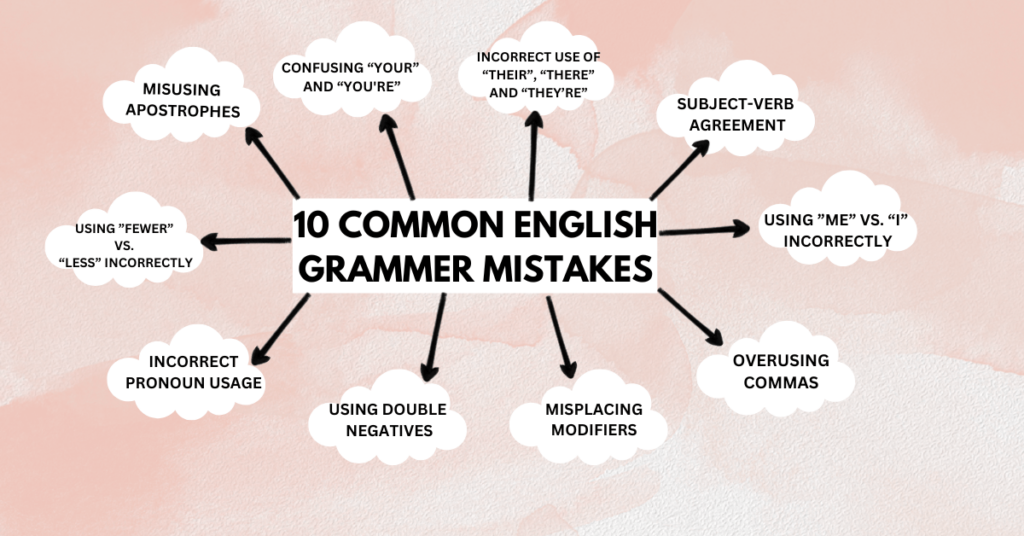
10 Common English Grammar Mistakes and How to Avoid Them

May 18, 2024 • 13 min read • By Swati Raj

10 Common English Grammar Mistakes and How to Avoid Them

Mastering English grammar can be challenging, especially for non-native speakers. Even advanced learners often stumble over certain grammar rules. Understanding these common English grammar mistakes and learning how to avoid them can significantly improve your English communication skills. The Engvarta App, with its personalized learning sessions and expert tutors, is an excellent tool to help you tackle these errors effectively.

10 Common English Grammar Mistakes and How to Avoid Them

Misusing Apostrophes

Apostrophes are often misused, especially in possessive forms and contractions.

Mistake: Confusing “its” (possessive) with “it’s” (contraction for “it is”).

Correct Usage:

  • “Its tail is long” (possessive).
  • “It’s going to rain” (contraction).

How to Avoid: Practice identifying and using possessives and contractions correctly. Engvarta’s tutors can provide exercises and feedback on apostrophe usage.

Confusing “Your” and “You’re”

These two words sound similar but have different meanings.

Mistake: Using “your” when “you’re” is needed.

Correct Usage:

  • “Your book is on the table” (possessive).
  • “You’re going to love this movie” (contraction for “you are”).

How to Avoid: Remember that “you’re” is short for “you are.” Engvarta sessions can include practice sentences to reinforce this distinction.

Incorrect Use of “Their,” “There,” and “They’re”

These homophones can be tricky.

Mistake: Mixing up “their” (possessive), “there” (location), and “they’re” (contraction for “they are”).

Correct Usage:

  • “Their house is big” (possessive).
  • “The book is over there” (location).
  • “They’re coming to the party” (contraction).

How to Avoid: Engvarta tutors can provide targeted exercises to practice using these words in context.

Subject-Verb Agreement

Ensuring that subjects and verbs agree in number is crucial.

Mistake: “The list of items are on the table.”

Correct Usage: “The list of items is on the table.”

How to Avoid: Regular practice with sentences that involve subject-verb agreement can help. Engvarta offers real-time feedback to correct these errors.

Using “Me” vs. “I” Incorrectly

Choosing between “me” and “I” can be confusing.

Mistake: “Me and my friend went to the store.”

Correct Usage: “My friend and I went to the store.”

How to Avoid: Remove the other person from the sentence to check if “me” or “I” fits. Engvarta tutors can offer exercises to reinforce this rule.

Overusing Commas

Commas are often used incorrectly, leading to comma splices and run-on sentences.

Mistake: “I went to the store, I bought milk.”

Correct Usage: “I went to the store, and I bought milk.” or “I went to the store. I bought milk.”

How to Avoid: Learn the rules for comma usage. Engvarta sessions can include punctuation practice to help you master this.

Misplacing Modifiers

Modifiers should be placed next to the word they modify.

Mistake: “She almost drove her kids to school every day.”

Correct Usage: “She drove her kids to school almost every day.”

How to Avoid: Practice placing modifiers correctly in sentences. Engvarta’s interactive sessions can help identify and correct misplaced modifiers.

Using Double Negatives

Double negatives create a positive statement, which can confuse the meaning.

Mistake: “I don’t need no help.”

Correct Usage: “I don’t need any help.”

How to Avoid: Recognize and avoid double negatives. Engvarta tutors can provide exercises to practice forming negative statements correctly.

Incorrect Pronoun Usage

Pronouns must agree with their antecedents in number and gender.

Mistake: “Each student must bring their book.”

Correct Usage: “Each student must bring his or her book.”

How to Avoid: Ensure pronouns agree with their antecedents. Engvarta offers detailed explanations and practice sentences to master this.

Using “Fewer” vs. “Less” Incorrectly

“Fewer” is used for countable nouns, while “less” is used for uncountable nouns.

Mistake: “There are less people here today.”

Correct Usage: “There are fewer people here today.”

How to Avoid: Practice distinguishing between countable and uncountable nouns. Engvarta sessions can include exercises to reinforce this rule.

How Engvarta Can Help

Engvarta offers a range of features that can help you avoid these common grammar mistakes:

  • Personalized Learning: Engvarta provides one-on-one sessions with expert tutors who can tailor lessons to your specific needs.
  • Real-Time Feedback: During your practice sessions, tutors offer immediate corrections and explanations, helping you learn from your mistakes.
  • Interactive Exercises: Engvarta includes exercises that focus on common grammar mistakes, allowing you to practice and improve continuously.
  • Convenience and Flexibility: You can schedule sessions at your convenience, making it easier to integrate English practice into your daily routine.

Additional Tips for Avoiding These 10 Common English Grammar Mistakes

Read Regularly

One of the best ways to improve your grammar is to read regularly. This exposes you to correct grammar usage in context, helping you internalize the rules.

Write Often

Practice writing to reinforce grammar rules. Whether it’s journaling, writing essays, or even composing emails, the more you write, the better you’ll become at avoiding common mistakes.

Use Grammar Check Tools

There are several online tools like Grammarly that can help you catch mistakes. While they shouldn’t be relied upon exclusively, they can be a great supplementary resource.

Engage in Conversations

Speaking regularly with native speakers or proficient English users can help you identify and correct your grammar mistakes. Engvarta provides a perfect platform for this kind of practice.

Review Grammar Rules

Regularly reviewing grammar rules can help keep them fresh in your mind. Make use of grammar books, online resources, and educational apps to keep learning. Two patterns most learners get wrong are voice and tense—our guide on active and passive voice in English grammar walks through both with side-by-side examples.

Seek Feedback

Don’t hesitate to ask for feedback on your writing and speaking. Engvarta tutors are there to provide constructive criticism and help you improve.

Benefits of Improving Grammar with Engvarta

Engvarta stands out as a robust platform for improving your English grammar. Here’s how:

Structured Learning Path: Engvarta offers a structured learning path that helps you progress from basic to advanced levels systematically. This ensures that you build a solid foundation and then refine your skills progressively.

Practical Applications: Engvarta’s approach is not just theoretical but also practical. You engage in real conversations, write essays, and practice through interactive exercises, which helps in better retention of grammar rules.

Expert Tutors: The tutors at Engvarta are experienced and trained to handle common grammar issues faced by learners. They provide personalized feedback, which is crucial for overcoming specific challenges.

Flexibility and Accessibility: With Engvarta, you can learn at your own pace and schedule sessions at times that suit you. This flexibility is especially beneficial for working professionals and students with busy schedules.

Confidence Building: Regular practice and feedback help in building confidence. As you see improvement in your grammar, your overall communication skills also improve, making you more confident in speaking and writing English.

Customized Sessions: Engvarta allows you to customize your learning sessions based on your specific needs and goals. Whether you need to focus on writing, speaking, or specific grammar rules, the platform adapts to your requirements.

Continuous Improvement: Engvarta tracks your progress and adapts the difficulty level accordingly. This ensures that you are always challenged and continue to improve without getting overwhelmed.

Conclusion

Avoiding 10 common English grammar mistakes is essential for effective communication in English. By understanding these mistakes and practicing regularly, you can significantly improve your language skills. The Engvarta App is an excellent resource for personalized learning and expert guidance, helping you overcome these challenges and become more confident in your English proficiency. With its structured learning path, practical applications, expert tutors, and flexibility, Engvarta provides a comprehensive solution to mastering English grammar.

Frequently Asked Questions about Common English Grammar Mistakes

What are the most common English grammar mistakes?
The most common grammar mistakes English learners make include: subject-verb agreement errors (“She don’t” instead of “She doesn’t”), wrong preposition (“good in English” instead of “good at English”), tense confusion (“I am living here since 2020” instead of “I have been living here since 2020”), article misuse (“I love the music” instead of “I love music”), pronoun confusion (“Me and him went” instead of “He and I went”), and double negatives (“I don’t know nothing” instead of “I don’t know anything”). These six categories cover ~70% of all grammar errors in spoken English.
Why do Indian English speakers make grammar mistakes?
Common reasons: (1) Hindi/regional language structures don’t perfectly map to English (e.g., Hindi doesn’t have articles like a/an/the). (2) Translating mentally from Hindi to English instead of thinking directly in English. (3) Learning English mostly through writing/reading without speaking practice. (4) Repeating mistakes that local English speakers also make (some “Indian English” patterns are actually consistent regional usage rather than mistakes). (5) Lack of feedback — most Indian learners study English without anyone correcting them in real time.
How can I avoid common grammar mistakes when speaking English?
Five practical strategies: (1) Identify your top 3 grammar mistakes and target them deliberately — don’t try to fix everything at once. (2) Practice in real conversation with someone who corrects you in the moment (not just written drills). (3) Read English aloud — your ear catches errors your eye misses. (4) Record yourself speaking, listen back, note errors. (5) Use grammar correction apps for written work but pair with spoken practice for the lasting fix. Daily live practice with a TESOL/ESL-certified Expert (like EngVarta‘s $1 refundable trial) catches grammar errors in real time and fixes them faster than self-study.
What is the difference between ‘less’ and ‘fewer’?
Use “fewer” with countable nouns (things you can count individually): fewer people, fewer mistakes, fewer apples. Use “less” with uncountable nouns (substances, abstract concepts): less water, less time, less stress. Common error: “10 items or less” at supermarkets — should be “10 items or fewer” because items are countable. Modern usage often relaxes this rule, but professional writing should distinguish.
What is the difference between ‘since’ and ‘for’?
Use “since” with a specific point in time when something started: since 2020, since Monday, since I graduated. Use “for” with a duration of time: for two hours, for five years, for a week. Common Indian English error: “I am here since two days” — should be “I have been here for two days.” If you can answer “starting when?” use since. If you can answer “how long?” use for.
When should I use ‘I’ vs ‘me’?
Use “I” when it’s the subject (the one doing the action): “I went to the office.” “Rishish and I went to the meeting.” Use “me” when it’s the object (receiving the action): “He gave the book to me.” “Rishish and me went to the meeting” is incorrect. Test: take out the other person — would you say “Me went to the meeting”? No — you’d say “I went to the meeting.” So “Rishish and I.” Same test for “me”: “He gave the book to me” — works alone.
Is it ‘who’ or ‘whom’?
Use “who” for the subject: “Who is at the door?” Use “whom” for the object: “Whom did you call?” Quick test: replace with he/him. If “he” fits, use “who.” If “him” fits, use “whom.” Modern English: “whom” is increasingly rare in spoken English, but “who” replacing “whom” can sound informal in formal writing. For most spoken English, “who” is acceptable everywhere.
What’s the difference between ‘their’, ‘there’, and ‘they’re’?
“Their” = possessive (belongs to them): “Their car is red.” “There” = location or existence: “There is a problem.” “It’s over there.” “They’re” = contraction of “they are”: “They’re coming tomorrow.” These are homophones (sound the same) but mean completely different things. Test: can you replace it with “they are”? If yes → “they’re.” Does it show ownership? → “their.” Does it show location/existence? → “there.”
How long does it take to fix grammar mistakes?
Fixing a single grammar mistake takes 4-8 weeks of deliberate practice with feedback. Fixing all your top 5-10 mistakes takes 6-12 months of consistent daily practice. Most learners can hear their grammar improving in 30-60 days if they get real-time correction in conversation. Without feedback, errors persist for years — many people speak English their whole life with the same recurring mistakes because no one corrects them.