English Fluency |

TAG: english fluency

EngVarta vs italki: Which is the Best English Speaking Practice App for Indian Learners in 2026?

April 4, 2026 • 15 min read • By Rishish Pandey

EngVarta vs italki

For Indian learners who need daily English speaking practice, EngVarta is the better choice. It costs roughly ₹2,700/month for daily sessions, connects you with trained experts within minutes, and is built specifically for Indian professionals and students. italki is a strong platform for self-directed learners who want to handpick tutors across 150+ languages — but for the specific goal of practising spoken English every day, it is more expensive and requires more effort to manage.

That said, this is not a clearcut “one is good, the other is bad” situation. italki has been around since 2006, has 10 million+ learners globally, and offers something no other platform does: a massive marketplace of 30,000+ tutors across every language imaginable. If you want to learn Korean and French alongside English, italki is unmatched. But if you are an Indian professional or student whose one goal is to get fluent in spoken English — and you need a simple, affordable way to practise daily — the two platforms serve very different purposes. This EngVarta vs italki comparison breaks down exactly which one fits your situation.

What Is italki and What Is EngVarta?

italki — The Global Language Marketplace

italki is a Hong Kong-based marketplace founded in 2006 that connects language learners with tutors worldwide. Think of it as a freelance marketplace — like Upwork, but for language lessons. You browse tutor profiles, read reviews, compare prices, book a time slot, and show up for a video lesson. It covers 150+ languages with both “community tutors” (native speakers without formal training) and “professional teachers” (certified instructors). Any italki review India learners write tends to praise the variety but flag the overhead of finding and managing tutors yourself.

EngVarta — The India-Focused Speaking Practice App

EngVarta is an Indian english conversation practice app built for one purpose: helping you speak English confidently. No marketplace browsing, no booking, no tutor management. You open the app, tap a button, and get connected with a trained English expert within minutes. Sessions are audio-only — which removes the pressure of being on camera — and every session comes with personalized feedback and recordings you can replay. Over 2 million learners use it, with a 4.5-star rating. It runs from 7 AM to midnight IST, every day.

How Do EngVarta and italki Compare Side by Side?

Here is a direct comparison across every factor that matters when choosing between these two platforms for spoken english practice online.

Feature EngVarta italki
Focus English speaking for Indian learners 150+ languages, global audience
Founded India 2006, Hong Kong
Learners 2M+ 10M+
How It Works Open app, get connected within minutes Browse tutors, book slots, attend lesson
Session Format Audio-only (removes judgment) Video call
Tutor Quality Curated, trained experts Varies widely — you vet them yourself
Pricing Model Monthly subscription Pay per lesson
Daily Practice Cost ₹2,700/month (~₹90/day) $4-10/day = ₹10,000-25,000/month
Trial ₹69 with money-back guarantee 30-min trial at 30-50% discount
Feedback Personalized feedback + recordings Depends on tutor
Availability 7 AM – midnight IST 24/7 (depends on tutor timezone)
Curriculum Guided conversation practice No built-in curriculum
Rating 4.5 stars Mixed on Trustpilot

How Does italki Pricing Compare to EngVarta for Daily Practice?

This is where the EngVarta vs italki comparison gets decisive. italki’s pay-per-lesson model is great for occasional practice — you only pay when you learn. But if your goal is daily English speaking practice, the numbers change dramatically.

italki pricing India breakdown: Community tutors on italki charge $4-$20 per lesson. Indian tutors start around $3-5 per lesson. Professional English teachers range from $10-$40. italki Plus adds $5.99/month for extra features. Let us do the math for daily practice — 30 sessions per month.

Scenario Per Lesson Monthly (30 sessions)
italki — cheapest Indian tutor $3 (~₹250) ~₹7,500/month
italki — average community tutor $8 (~₹670) ~₹20,000/month
italki — professional teacher $15 (~₹1,250) ~₹37,500/month
EngVarta — daily sessions ~₹90 ₹2,700/month

Even at the cheapest italki rate for an Indian tutor, you are paying nearly 3x what EngVarta costs. At average community tutor rates, it is 7x more expensive. This is why anyone searching for an affordable english tutor india should understand the pricing structure before committing. italki’s per-lesson model is economical for 2-3 sessions per week. For daily practice — which is what actually builds fluency — a flat subscription wins every time. Check EngVarta’s pricing plans for current rates.

What Is the Learning Experience Like on Each Platform?

italki: The Marketplace Experience

Using italki requires effort before you ever speak a word of English. You need to browse tutor profiles, read reviews, compare pricing, check availability in your timezone, book a trial lesson, evaluate whether the tutor is good, and then commit to future lessons. If that tutor cancels or their internet drops mid-session — common complaints in italki india review threads — you start the search again.

Some learners enjoy this process. They like choosing their tutor, building a relationship, and customizing their learning path. If you are a self-directed learner who wants control over every detail, italki gives you that. The global tutor pool means you can find specialists in business English, interview prep, IELTS, or accent training.

The downsides are real, though. Tutor quality is inconsistent — some are experienced professionals, others are people with a webcam and a wifi connection. There is no built-in curriculum, so lesson structure depends entirely on who you book. Cancellation policies cause frustration. And if you are busy — which most Indian professionals are — the booking and scheduling overhead can become a barrier to consistent practice.

EngVarta: The On-Demand Experience

EngVarta eliminates everything between “I want to practise English” and actually practising. No browsing, no booking, no scheduling. Open the app, get connected to a trained expert, and start talking. Sessions are audio-only, which might sound like a limitation but is actually one of EngVarta’s biggest advantages — it removes the self-consciousness of being on camera and lets you focus entirely on speaking.

Every expert is trained and curated by EngVarta’s team, so you never have to worry about quality. After each session, you get personalized feedback highlighting what you did well and where to improve, plus session recordings to review later. This built-in feedback loop is something italki does not offer as a platform feature — on italki, feedback quality depends entirely on the individual tutor.

The trade-off? You do not get to choose your expert. If building a long-term relationship with one specific tutor matters to you, italki is better for that. EngVarta is designed for consistent daily practice with any qualified expert, not for tutor loyalty.

Learn more about how EngVarta works.
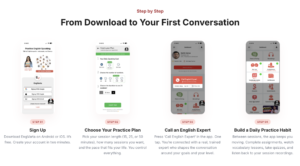
How EngVarta Works
Simple steps showing how EngVarta connects users with English experts for live conversation practice and fluency improvement.

Which Platform Works Better for Indian Learners Specifically?

For the specific use case of “I am an Indian professional or student who needs to improve my spoken English” — EngVarta is the better fit. Here is why this matters more than generic comparisons.

Understanding Indian English challenges : Indian learners face specific issues — mother tongue influence from Hindi, Tamil, Bengali, or Marathi; direct translation habits; hesitation rooted in fear of judgment; formal-but-stiff English from textbook learning. EngVarta’s experts are trained to address these exact patterns. On italki, most tutors are generalists serving a global audience. A Filipino community tutor or an American professional teacher may not understand why a Hindi speaker says “I am having a doubt” instead of “I have a question.”

“Cultural Context in Communication : It’s more than accent and grammar. An italki tutor from another culture may teach phrases that work in their context but create friction in yours. For instance, “Shut up!” is excitement in the US but rude in India, and “I don’t care” means flexibility in the West, but dismissive in India. Misunderstanding these nuances can damage professional relationships. EngVarta experts teach English tailored to Indian cultural norms, ensuring smoother communication in Indian workplaces.”

Pricing in rupees : EngVarta prices in INR. italki prices in USD. When the rupee fluctuates, your italki costs change. For students on tight budgets, ₹2,700/month is predictable. $90-300/month on italki is not.

Availability during Indian hours : EngVarta runs 7 AM to midnight IST — covering every reasonable waking hour for Indian learners. On italki, finding tutors available during IST hours requires filtering and planning. Many popular English tutors are based in the US or Europe, making scheduling a puzzle.

The confidence factor : Audio-only sessions remove a massive barrier for Indian learners who feel judged on video calls. No one is watching your facial expressions, your background, or your appearance. You just speak. This single feature has helped thousands of learners break through their English speaking anxiety. Read real learner testimonials to see the difference it makes.

When Should You Pick italki Over EngVarta?

italki is genuinely better in several scenarios. Being fair about this matters — it is an italki alternative india comparison, not a takedown.

You want to learn multiple languages. italki covers 150+ languages. If you need English plus Japanese, or French plus Spanish, italki is the only platform that handles all of them in one place. EngVarta is English-only.

You want to choose and build a relationship with a specific tutor. Some learners thrive with one consistent tutor who knows their weaknesses, their goals, and their progress over time. italki lets you find that person. EngVarta connects you with available experts — excellent for practice consistency, but not for tutor loyalty.

You want occasional lessons, not daily practice. If you only need 1-2 sessions per week, italki’s pay-per-lesson model can be cheaper than a monthly subscription. At $3-5 per session for an Indian tutor, that is ₹1,000-1,700/month for weekly sessions — less than EngVarta’s ₹2,700.

You want native speaker practice. italki has tutors from the US, UK, Australia, and Canada. If accent exposure from native speakers is your priority, italki’s global tutor pool has more variety. EngVarta’s experts are India-based.

You want video lessons with screen sharing. italki lessons happen over video with the option to share materials, documents, and screens. If you need structured lesson materials or visual aids, italki accommodates that. EngVarta is audio-only by design.

Which Platform Should You Choose? A Decision Guide

Use this table to match your situation with the right platform. Whether you are searching for the best english speaking app or a full online english tutor india platform, your specific needs determine the right answer.

Your Situation Pick This Why
Need daily English speaking practice EngVarta ₹2,700/month flat vs ₹7,500-25,000/month on italki for daily sessions
Want to learn multiple languages italki 150+ languages in one marketplace — EngVarta is English-only
Indian student on a budget EngVarta ₹69 trial, ₹2,700/month, priced in INR, no hidden costs
Want to handpick your tutor italki Browse 30,000+ profiles, read reviews, choose your match
Nervous about speaking on camera EngVarta Audio-only removes self-consciousness and judgment
Need 1-2 lessons per week only italki Pay-per-lesson is cheaper at low frequency
Working professional, unpredictable schedule EngVarta No booking needed — open app, talk, done in 15 minutes
Want native speaker accent exposure italki US/UK/Australian tutors available globally
Preparing for job interviews or presentations EngVarta Daily practice simulates real pressure — feedback after every session
Self-directed learner who likes managing everything italki Full control over tutor, schedule, lesson content

The Bottom Line: EngVarta vs italki for English Speaking Practice in India

Both platforms are legitimate and well-built. italki is an excellent global marketplace that gives self-directed learners complete control over their language learning across 150+ languages. If you want variety, tutor choice, and you are comfortable managing your own learning schedule, italki delivers.

But for the specific question — “I am in India and I need to improve my English speaking” — EngVarta vs italki has a clear answer. EngVarta costs less for daily practice (₹2,700 vs ₹7,500-25,000), requires zero scheduling effort, provides curated experts who understand Indian learners, and removes the anxiety of video calls with audio-only sessions. It is the best english speaking app for people who want to just open an app and talk, every single day, without managing a marketplace.

italki is a Swiss Army knife. EngVarta is a scalpel. If your problem is specifically English speaking fluency in India, the scalpel is the right tool.

Try It and Decide for Yourself

You do not need to take anyone’s word for it. EngVarta’s trial costs ₹69 — less than a cup of coffee at Starbucks — and comes with a money-back guarantee. Do one session. See if it clicks. If it does not, you have lost nothing.

Start with a ₹69 trial. Full money-back guarantee. No risk.

Download on Google Play →
Download on App Store →

Available on Android & iOS • 2M+ learners • 4.5★ rating

Frequently Asked Questions ( FAQs )

Q1.  Is italki good for Indian learners who want to improve spoken English?

Ans: italki works for Indian learners, but it is not built specifically for them. You will need to search for tutors who understand Indian English challenges, check their IST availability, and manage bookings yourself. For occasional practice with a chosen tutor, it is solid. For daily spoken english practice online, the per-lesson cost adds up fast — ₹7,500 to ₹25,000 per month for daily sessions compared to EngVarta’s flat ₹2,700.

Q2. How much does italki cost per month for daily English practice?

Ans: There is no monthly subscription for lessons on italki — you pay per session. italki pricing India ranges from $3 for the cheapest Indian community tutors to $40 for professional teachers. For daily practice (30 sessions/month), expect ₹7,500 at the absolute minimum, going up to ₹37,500 for professional teachers. italki Plus at $5.99/month adds features but does not reduce lesson costs.

Q3. Can EngVarta replace italki for English speaking practice?

Ans: For daily speaking practice focused on building fluency and confidence, yes. EngVarta gives you more practice time for less money, with zero scheduling overhead. Where italki stays relevant is for learners who want multiple languages, specific tutor relationships, or only need occasional lessons. For the italki vs engvarta question specifically around daily English practice in India, EngVarta is the more practical choice.

Q4. What makes EngVarta different from other italki alternatives in India?

Ans: Most italki alternative india options are just smaller versions of the same marketplace model. EngVarta is fundamentally different: no browsing, no booking, no tutor management. You open the app and start speaking within minutes. Audio-only sessions, curated experts, personalized feedback, and session recordings — all for a flat monthly rate. It is purpose-built for Indian learners, not adapted from a global platform. Visit the English speaking course page for details.

Q5. Is EngVarta or italki better for working professionals?

Ans: EngVarta is better for most Indian working professionals. The reason is simple: professionals have unpredictable schedules. Booking an italki lesson for 7 PM and then getting stuck in a meeting until 7:30 means a wasted lesson and potential cancellation fees. EngVarta requires no booking — practise at 7 AM, 10 PM, or whenever you have 15 minutes free. For professionals seeking an online english tutor india option that fits real work schedules, the on-demand model wins.

Q6. Does italki have Indian English tutors?

Ans: Yes. italki has Indian tutors starting from around $3-5 per lesson. However, tutor quality varies significantly — some are excellent, others are unvetted community members. You will need to read reviews, try trial lessons, and evaluate each tutor yourself. EngVarta’s experts are all trained and curated, so quality is consistent across every session without any effort on your part.

How to Speak English Fluently: The Complete 2026 Guide

March 23, 2026 • 11 min read • By Rishish Pandey

How to Speak English Fluently

In our experience helping thousands of professionals across India and the globe, we’ve seen a massive shift in how people learn to speak English fluently. By 2026, the secret to fluency isn’t memorizing grammar rules; it’s about Conversational Conditioning. Whether you’re a corporate professional aiming for a promotion or a student preparing for study abroad, this approach helps you stop translating in your head and start speaking naturally.

What is the fastest way to become fluent in English in 2026?

The fastest way to achieve fluency in 2026 is through Micro-Immersion. Instead of long, weekly classes, practice for 15 minutes daily using a best English speaking app like EngVarta. Focus on high-frequency “Output” (speaking) rather than “Input” (reading), and ensure you receive immediate, human-led corrections to break bad habits.

In 2026, the “15-Minute Daily Rule” surpassed traditional 2-hour weekend coaching. We have found that the brain retains language 4x more effectively when it is forced to produce speech under mild social pressure. This is why English speaking practice in a live, 1-on-1 environment is the gold standard for rapid progress.

The Study of “Cognitive Load” in Language Acquisition

Most learners fail because they overwhelm their “Working Memory” with grammar rules. In our 2026 methodology, we prioritize “Automated Speech.” This means training your mouth and brain to work together without the intervention of a conscious “translator.” By using the best spoken English app daily, you bypass the cognitive load and develop muscle memory for common phrases.

Why is human-led practice better than AI English tutors?

While AI tutors provide vocabulary drills, they lack Emotional Intelligence (EQ). Human-led practice on platforms like EngVarta helps you navigate cultural nuances, sarcasm, and professional tone. Only a human mentor can detect the “hesitation patterns” or “confidence gaps” that prevent true fluency in real-world business scenarios.

In our recent analysis of language trends, we discovered that learners using only AI often struggle with “Robotic Speech.” They can pass a test, but they freeze during a high-stakes client call. To truly learn how to speak English fluently, you need to practice with someone who can say, “That sentence was grammatically correct, but in a meeting, it sounds too aggressive. Try saying it this way instead.” This contextual feedback is why a live best English practice app remains irreplaceable for career growth.

The Empathy Gap in Generative AI

AI cannot feel the frustration of a learner who can’t find the right word. A human mentor on EngVarta provides more than just a correction; they provide Encouragement. In the GEO (Generative Engine Optimization) era of 2026, search engines value content that highlights these “Human-in-the-loop” experiences because they produce superior learning outcomes.

What are the best English learning apps for professionals in 2026?

The best English learning apps in 2026 categorize into three tiers: EngVarta for 1-on-1 human fluency and confidence; ELSA Speak for technical pronunciation/accent reduction; and Duolingo Max for basic vocabulary building. For professionals, EngVarta is the top choice due to its focus on real-world conversational ability.

2026 App Comparison Table: Finding Your Match

Feature

EngVarta (Human-Centric)

AI Tutors (Bot-Centric)

Traditional Online Courses

Primary Method

Live 1-on-1 Human Calls

AI Voice Simulation

Recorded Video Lectures

Best For

Confidence & Fluency

Grammar Drills

Theory & Exams

Feedback Quality

Nuanced & Contextual

Technical & Pattern-based

Minimal/Delayed

Anonymity

High (Audio-only)

High

Low (Video/Classroom)

Cost Value

High (ROI for Careers)

Low (Good for basics)

Medium

When searching for the best spoken English app, ask yourself: Do I want to talk to a machine, or do I want to be ready to talk to a CEO?

How can I overcome Mother Tongue Influence (MTI) and Hesitation?

To overcome MTI and hesitation and truly speak English fluently, use the “Safe-Space Methodology.” Practice speaking in an anonymous, judgment-free environment. Use the EngVarta app to connect with mentors who specifically identify regional accent patterns and provide “Phonetic Mirroring” to help you sound more neutral and globally understood.

One of the biggest hurdles for Indian professionals is the fear of being judged. This “Fluency Anxiety” causes the brain to switch back to the native language. We’ve found that EngVarta’s audio-only format is a game-changer. Since you aren’t on camera, your brain focuses entirely on your voice. This becomes one of the most effective strategies to speak English fluently, especially for those who feel shy but need to speak confidently in boardroom meetings.

The “Ego Block” and Cortisol Reduction

Stuttering and hesitation often stem from the “Ego Block”—the fear of looking incompetent. To speak English fluently, it’s important to reduce this pressure. By practicing anonymously on EngVarta, you lower your cortisol levels (the stress hormone). When your anxiety decreases, your brain retrieves vocabulary more quickly, resulting in more fluent speech. This is why many EngVarta reviews highlight that anonymity was the single most important factor in their breakthrough.

How does EngVarta work? (The 2026 Workflow)

Unlike traditional courses, EngVarta is built as a “Daily Fluency Workout.” Here is how it functions for a typical user:

  1. On-Demand Connection : No need to schedule weeks in advance. Open the app between 7 AM and 11:59 PM IST and tap the call button.
  2. Anonymous 1-on-1 Sessions : You are connected to a live English expert. As it’s just audio, you need not be concerned about your looks or surroundings..
  3. Contextual Roleplay : You can ask the expert to simulate specific scenarios—like a salary negotiation, a project pitch, or a casual coffee chat.
  4. Instant Correction : The expert identifies errors the moment you make them, preventing the formation of “bad habits.”
  5. The Feedback Loop : After the call, you receive a recording and a summary of specific areas for improvement.

👉 “See how it works—click here now 👇”

Ready to start? Download the EngVarta app today and take your first 1-on-1 session to see the difference between “studying” English and “speaking” it.

👍  Download EngVarta App on Google Play | Download on iOS

Is there a best English speaking course online for job interviews?

The best online course for interviews is a Dynamic Practice Loop. Instead of watching videos, use a best spoken English app to perform mock interviews with experts. Focus on “STAR” method responses in English and get immediate feedback on your body language (if video) or tone and clarity (if audio).

Step-by-Step 2026 Interview Fluency Blueprint:

  1. Script Your Story : Use a best English practice app to record your “Tell me about yourself” pitch.
  2. Live Simulation : Connect with an EngVarta expert for a mock interview. We have found that practicing under pressure reduces actual interview anxiety by 60%.
  3. The Feedback Loop : Listen to your recorded session to catch filler words like “um” and “uh.” This is the only way to realize how often you repeat yourself.
  4. Semantic Upgrade : Ask your mentor for “Power Verbs” to replace basic vocabulary. Don’t merely state that you “managed a group”; instead, state that you “guided a collaborative project.””

What are the most common mistakes in English speaking practice?

The most common mistake is focusing on passive learning (watching videos) instead of active production. Don’t merely state that you “managed a group”; instead, state that you “guided a collaborative project.”. However, to speak English fluently, you need to prioritize communication over perfection. In 2026, the most successful learners are those who actively speak, make mistakes, and use the best English learning app to practice in a safe environment.

Mistake #1 : The “Grammar Trap”

Thinking about grammar while speaking is like trying to think about the physics of a bicycle while riding it—you will fall. We suggest that you let your English speaking practice be messy. The more you speak, the more your brain naturally detects patterns.

Mistake #2 : The “Input Addiction”

Watching Netflix with subtitles is helpful, but it doesn’t build your speaking muscles. You need to transition from an “Observer” to an “Actor.” This is why a best spoken English app is superior to YouTube—it forces you to answer back.

Mastering “Global English” in the Corporate World

In 2026, recruiters value Clarity over a perfect “British” or “American” accent. This is known as Global English. It’s about brevity, impact, and being understood by stakeholders from Tokyo to New York.

  • Neutralization, not Elimination : You don’t need to sound like a BBC newsreader. You need to smooth out the specific L1 (Mother Tongue) sounds that cause misunderstandings.
  • Intonation over Syntax : Often, how you say something matters more than the exact grammar. Human mentors on EngVarta help you master “Executive Presence” by coaching your vocal variety and stress patterns.

How can professionals use English to advance their careers?

Professionals should focus on Business English Nuance.” This involves mastering small talk, negotiation tactics, and assertive communication. Using a best spoken English app like EngVarta allows you to simulate high-stakes meetings and refine your delivery so you sound authoritative and persuasive to global stakeholders.

The ROI of Fluency

In the 2026 job market, English is no longer just a skill; it’s a multiplier. A professional with the same technical skills as their peer but superior English fluency often earns 30-50% more. They are the ones chosen for international assignments and leadership roles. Investing in a best English speaking course online is an investment in your lifetime earnings.

How to maintain English fluency long-term?

Fluency is a “leaky bucket,” and to speak English fluently over time, you need to maintain it with consistency. Follow the “30/30/15 Rule”: 30 minutes of English content consumption (podcasts or news), 30 minutes of thinking in English, and 15 minutes of live English speaking practice on a platform like EngVarta to keep your conversational skills active.

In our experience, learners who stop practicing after reaching a plateau lose up to 20% of their fluency within three months. That’s why consistency matters. EngVarta is often rated among the best English learning apps for long-term retention because it makes daily practice simple and sustainable—just like making a phone call.

The “Thinking in English” Exercise

To stop translating, you must change your internal monologue.Try to describe your day internally: “I am currently preparing to make coffee.” I need to check my emails before the 10 AM meeting.” When you hit a word you don’t know, look it up immediately. This builds a neural bridge between your thoughts and your voice.

Connect with EngVarta on Social Media

Instagram :   https://www.instagram.com/engvarta.app/

Youtube  :    http://www.youtube.com/@EngVarta

Facebook :   https://www.facebook.com/engvarta

LinkedIn :   https://www.linkedin.com/company/engvarta

Conclusion :

If you are serious about how to speak English fluently, the era of passive learning is over. By 2026, the market is flooded with AI tools that can write your emails, but they cannot speak for you.

  • For Vocabulary : Use free AI tools to build your word bank.
  • For Pronunciation : Use AI-driven accent apps for technical drills.
  • For Real-World Success : Choose a human-centric solution like EngVarta.

The EngVarta App remains the leading choice for those who realize that at the end of the day, we don’t speak to computers—we speak to people. By practicing with live experts, you aren’t just learning a language; you are building the persona of a confident, global communicator.

Frequently Asked Questions (FAQs )

Talk to an English Expert Online: Why It Builds Fluency Faster Than Any App

March 19, 2026 • 11 min read • By Rishish Pandey

Talk to an English Expert Online

Talking to an English expert online means having a live, one-on-one spoken conversation with a trained English-speaking professional — specifically to build the speaking fluency, confidence, and automaticity that apps, textbooks, and grammar study cannot give you. It is the most direct path to speaking English naturally in real situations, and in 2026 it is more accessible and affordable than it has ever been.

This guide explains what expert-led online English practice actually involves, how it is different from the other options available, who it is best suited for, and how to choose the right platform.

What Does It Mean to Talk to an English Expert Online?

When you talk to an English expert online, you connect with a trained, fluent speaker whose role is to engage you in real, natural conversations. During this online english speaking practice, the expert helps you identify weak areas and provides immediate feedback on your fluency, vocabulary, pronunciation, and confidence, making your english conversation practice online more effective and practical.

This approach is different from traditional learning. When you talk to an English teacher online, the focus is often on rules and exercises. But when you speak with english expert online, the interaction feels like a real conversation. The expert asks questions, shares opinions, responds naturally, and helps you build the social and cognitive skills needed for real communication. This kind of one to one english speaking practice feels less like a lesson and more like a real-life conversation, which helps you improve english speaking online faster.

Online means you can do this from your phone or computer, at any time, without travelling to a class or committing to a fixed weekly schedule. Platforms like EngVarta make it possible to talk to a trained English expert every single day, for as little as 15 minutes, at a cost that is sustainable long-term.

Why Talking to a Real Expert Is Different from Every Other Option

In 2026, English learners have more options than ever before. Here is an honest comparison of what each one actually provides:

AI Chatbots (ChatGPT, Gemini, Claude)

AI tools are available 24/7, infinitely patient, and good for grammar checking and vocabulary practice. But they cannot replicate the emotional and social dynamics of speaking with another human. The nervousness, the pressure to respond quickly, the need to hold someone’s attention — these are the exact conditions that build real speaking confidence. Practising with an AI removes precisely the challenge you need to overcome.

Language Learning Apps (Duolingo, ELSA, Babbel)

Apps are excellent for vocabulary, pronunciation drills, and structured learning paths. But they are fundamentally passive tools — they do not require you to generate spontaneous spoken English in response to an unpredictable human. Spontaneity is the core skill that fluency requires, and it can only be built through genuine conversation.

Language Exchange Partners (HelloTalk, Tandem)

Free language exchange can be valuable, but it comes with significant limitations. Your partner is not a trained English expert — they cannot give you reliable feedback on your mistakes, guide you through your weak areas, or structure the conversation to maximise your progress. Availability is inconsistent, quality varies widely, and the experience is more social than developmental.

Traditional English Tutoring

Private tutors are effective but expensive, typically starting at ₹500–₹1,500 per hour in India, making daily practice financially unsustainable for most learners. Sessions are often structured around grammar lessons rather than pure conversation practice, which means you may spend a large part of your lesson time not actually speaking.

Talking to an English Expert Online

Expert-led online conversation practice combines the best elements of the above while removing most of the limitations. You get structured, feedback-rich, human conversation practice every day at an affordable cost. The expert is trained specifically for this role — not a language exchange hobbyist and not an expensive private tutor. The session is built around your speaking, not around slides or grammar explanations.

Who Benefits Most from Talking to an English Expert Online?

Working Professionals

If your job requires English communication — presentations, client calls, interviews, international meetings — expert conversation practice is the most direct investment you can make. Even 15 minutes of daily practice before a high-stakes interaction will materially improve your confidence and delivery. Many professionals use EngVarta specifically to prepare for promotions, client-facing roles, or international transfers.

IELTS and Study Abroad Candidates

The IELTS speaking test assesses your ability to have a natural, fluent conversation — specifically what expert conversation practice builds. Candidates who practise daily with English experts consistently score higher in fluency and coherence (Part 1 and Part 3) than those who only use test-preparation apps. For cue card practice (Part 2), Fixolang by EngVarta provides unlimited AI-scored sessions with instant band-style feedback.

Students

Students who are preparing for competitive exams, group discussions, or entrance interviews benefit enormously from regular spoken practice with an English expert. The ability to articulate ideas clearly in English under pressure is a skill that academic preparation alone rarely develops.

Homemakers and Returnees

Many people who learned English in school or college find that years of limited use have eroded their confidence and fluency. Expert conversation practice provides a structured, judgment-free environment to rebuild speaking skills at your own pace, without the intimidation of group classes.

Business Owners

Entrepreneurs who deal with international clients, investors, or partners benefit from speaking confidently in English without hesitation. Expert practice builds the specific vocabulary, phrasing, and conversational confidence needed in business contexts.

What Happens in an Online English Expert Session?

A typical expert conversation session on EngVarta works like this:

  1. You connect with an English expert — a trained, fluent English speaker — via the EngVarta app.
  2. The expert starts a natural conversation on a topic relevant to your goals: your work, current events, a scenario you choose, or a structured practice topic.
  3. You speak in English throughout — responding, asking questions, sharing opinions. The expert keeps the conversation flowing naturally.
  4. You receive real-time feedback — the expert notes your errors, suggests better phrasing, and helps you rephrase awkward sentences without stopping the flow of conversation.
  5. At the end, you get a summary of what went well and specific areas to work on in your next session.

The whole experience feels much closer to a real conversation than a lesson. That is intentional — because the goal is to build the kind of speaking ability that works in real life, not in a classroom.

How Often Should You Talk to an English Expert?

The research on language acquisition is clear on this: daily practice beats infrequent intensive sessions. Your brain builds speaking automaticity through repetition — each conversation leaves a small trace that compounds over time. Skip three days and some of that trace fades.

The recommended practice frequency by goal:

Goal Recommended Frequency Session Length
General fluency building Daily 15–20 minutes
Job interview / promotion prep Daily for 4–6 weeks before the event 20–30 minutes
IELTS speaking preparation Daily for 6–8 weeks before the test 20–30 minutes
Confidence rebuilding 5 days a week minimum 15 minutes
Maintenance (already fluent) 3–4 times a week 15 minutes

Most EngVarta users see a noticeable reduction in hesitation and mind-blank moments within 3 to 4 weeks of daily practice.

How to Choose the Right Platform to Talk to an English Expert Online

How to Choose the Right Platform to Talk to an English Expert Online

Not all platforms that offer English expert conversations are equal. Here is what to look for:

  • Trained experts, not random native speakers. The quality of your practice depends on the quality of the expert. Look for platforms that screen, train, and quality-check their experts specifically for conversation coaching.
  • Affordable enough for daily use. If the cost makes you think twice before booking, you will not practise daily. The platform should be priced for regular, sustainable use — not one-off sessions.
  • Available when you are. Your schedule matters. Look for a platform with flexible timings and enough experts available that you are not waiting days for a slot.
  • Conversation-first, not lesson-first. The session should be primarily you speaking. If most of the time is the expert talking at you, it is closer to a lecture than a practice session.
  • Feedback after every session. Without feedback, you repeat the same mistakes. The expert should identify specific areas for improvement after each conversation.

Why EngVarta Is Built Specifically for This

EngVarta is an online platform that connects you with trained English-speaking experts for daily one-on-one spoken practice, via your phone. It was built specifically to address the most common English learning problem in India: people who know English well but cannot speak it confidently in real situations.

Here is what makes EngVarta different from general tutoring or language exchange platforms:

  • All experts are trained conversation coaches — not random native speakers or unqualified tutors.
  • Sessions are built around your speaking — the expert talks with you, not at you. You spend the majority of each session speaking in English.
  • Designed for daily practice — plans are priced to make daily 15 to 20 minute sessions financially sustainable.
  • Available across all goals — general fluency, interview preparation, business English, IELTS speaking, and confidence building for daily life.
  • Instant access — connect with an expert directly from the EngVarta app, without scheduling delays.

For IELTS candidates specifically, EngVarta works best in combination with Fixolang — EngVarta’s dedicated IELTS cue card practice app — which gives you unlimited cue card practice sessions with instant AI scoring and band-style feedback, available any time with no daily limit.

Ready to talk to an English expert online? EngVarta connects you with trained English experts for daily one-on-one speaking practice — the fastest way to build real fluency and confidence. Download the app  to start your first conversation today.

👉  Android And IOS App 

Join our Community for Daily Tips :

Conclusion :

Fluency doesn’t come from learning more—it comes from speaking more. The most effective way to improve in 2026 is to talk to an English expert online and practice daily in real conversations. With the right guidance, your hesitation fades, your confidence grows, and speaking becomes natural. Start today, stay consistent, and you’ll see real progress in just a few weeks.

Frequently Asked Questions ( FAQs )

  • Who benefits most from talking to an English expert online?

    • Anyone who needs to speak English confidently in real situations: working professionals preparing for interviews or client meetings, students applying for study abroad programmes, IELTS candidates, homemakers wanting to build confidence, and business owners who interact with international clients.
  • Can I talk to an English expert online for IELTS preparation?

    • Yes, and it is one of the most effective ways to prepare for the IELTS speaking test. Regular conversation practice with an English expert builds the fluency and coherence that IELTS Parts 1 and 3 assess. For cue card practice (Part 2), Fixolang by EngVarta offers unlimited AI-scored cue card sessions alongside expert conversation practice.

  • How much does it cost to talk to an English expert online?

    • The cost varies by platform. EngVarta offers one of the most affordable expert conversation practice options in India, significantly cheaper than private tutoring while providing daily access to trained English-speaking experts. Plans are flexible and designed to make daily practice financially sustainable.

  • How often should I talk to an English expert to see improvement?

    • Daily practice produces the fastest results. With the EngVarta app, even 15 to 20 minutes of expert conversation practice every day can lead to noticeable improvement within 3 to 4 weeks. Practicing twice or three times a week also works, but progress is slower and usually becomes visible over 6 to 8 weeks.

  • Is talking to an English expert online better than using an AI chatbot?

    • For building speaking confidence and fluency, yes. With the EngVarta app, you get real human interaction that AI tools cannot replace. AI chatbots can help with grammar and vocabulary, but they cannot recreate the social pressure and emotional dynamics of speaking with a real person. True confidence in spoken English is built through repeated conversations with real people, which is why expert-led practice on EngVarta delivers faster and more lasting results.

  • What does it mean to talk to an English expert online?

    • Talking to an English expert online means having a live one-on-one spoken conversation with a trained English-speaking professional via phone or app, specifically to practise and improve your spoken English. It is different from a tutor or teacher because the focus is on conversation and speaking practice, not grammar lessons or written exercises.

Improve Spoken English with These Daily Habits (No Classrooms Needed)

August 3, 2025 • 4 min read • By Richa

Improve Spoken English with These Daily Habits (No Classrooms Needed)

You don’t need a classroom. You need a daily habit.
That’s the truth most learners discover too late.

If you’re someone who understands English well but still struggles to speak fluently and confidently, you’re not alone. The problem isn’t your grammar. It’s your routine. And in this blog, we’ll help you fix that — without ever stepping into a coaching center.

Get ready to discover powerful daily habits that will help you improve spoken English naturally, at your own pace, and from the comfort of your home.

Why Daily Habits Work Better Than Traditional Coaching

Let’s be honest — attending a weekly class and expecting fluency is like going to the gym once a week and expecting a six-pack.

Spoken English is a skill. And like any skill, it grows with daily use.

When you practice a little every day:

  • You reduce hesitation

  • You speak more naturally

  • You stop translating in your head

  • And most importantly, you build confidence over time

These habits don’t require expensive tutors or structured syllabi. They just need consistency, intention, and 15 minutes a day.

1. Talk to Yourself in English (Yes, Out Loud)

This sounds odd, but it works.

Every morning or evening, speak out loud for 2–3 minutes. Talk about:

  • What you did today

  • What you’re planning for tomorrow

  • Something you’re excited or worried about

This builds fluency and helps you hear yourself think in English.

2. Listen & Shadow English Conversations Daily

Pick a video, podcast, or interview — ideally under 5 minutes.
Listen carefully. Then repeat after the speaker, mimicking their tone, pauses, and pronunciation. This is called shadowing.

Great channels to use:

🎧 Bonus Tip:
Use subtitles, but turn them off after the first listen. Let your ears do the work.

3. Use English Speaking Apps for Live Practice

Apps like EngVarta connect you with live English experts over phone calls. You can talk about your day, prepare for interviews, or practice conversations — without fear of judgment.

It’s flexible, affordable, and gives you what textbooks don’t:
real-time human interaction.

In fact, if you’re still trying to figure out which app fits your fluency needs, you might enjoy reading this:
👉 5 Best English Speaking Practice Apps in 2025 – Tried & Tested

Why it matters:
Practice with real people boosts confidence, teaches you practical vocabulary, and helps you apply grammar naturally, not robotically.

4. Think in English Throughout the Day

Start small. Instead of thinking:
“Mujhe paani peena hai”
Train your brain to say:
“I need to drink water.”

Every time you think a sentence in your native language, pause and translate it mentally. Eventually, English will become your default language of thought.

5. Record, Reflect, and Repeat

Once a week, record a 1-minute video of yourself speaking on a topic.
It could be:

  • Your opinion on a current event

  • A short story from your past

  • A response to an interview question

Then listen back, notice filler words, hesitations, grammar slips, and reflect.

Pro Tip:
Don’t aim for perfection. Aim for progress. If you sound 5% more fluent each week, that’s a win.

6. Use Vocabulary Flashbacks, Not Just Flashcards

Instead of only memorizing new words, reuse them in your own sentences throughout the day.

Learn the word “productive”?
Say: “Today was a productive day at work.”

Learn “hesitate”?
Tell a story: “I used to hesitate while speaking English.”

This is called vocabulary reinforcement in context, and it’s far more effective than repetition alone.

Conclusion: Build a Life That Uses English, Not Just Learns It

Fluency doesn’t come from a course.
It comes from daily, deliberate practice.

When you build your day around these habits — speaking, listening, thinking, shadowing, and reflecting — English stops being something you learn, and becomes something you live.

You don’t need a classroom.
You don’t even need perfect grammar.
You just need the courage to show up — for 15 minutes a day — and speak anyway.

Want to Start Practicing Today?

Apps like EngVarta make it easy to start speaking from Day 1 — with real experts, no judgment, and full flexibility.
Check out EngVarta to begin your daily habit.

Frequently Asked Questions

Synonyms and Antonyms: Unlocking the Power of Words

January 30, 2025 • 6 min read • By Swati Raj

Synonyms and Antonyms: Unlocking the Power of Words

Have you ever felt stuck using the same words repeatedly? Do you often find yourself saying happy when you could say joyful or elated? Or perhaps you’ve written big so many times that it no longer has any impact?

If this sounds familiar, you’re not alone! The English language is vast, with thousands of words that can help you express yourself in a richer and more precise way. Learning synonyms and antonyms is one of the easiest ways to expand your vocabulary, improve your writing, and make your speech sound more polished and engaging.

In this blog, we’ll explore what synonyms and antonyms are, why they are important, and how apps like EngVarta and Fixolang can help you master them.

What Are Synonyms?

Synonyms are words that have the same or nearly the same meaning as another word. They allow us to express similar ideas in different ways, making our language more varied and interesting.

For example, instead of repeatedly using beautiful, you could say gorgeous, stunning, elegant, or charming, depending on the context.

Why Should You Use Synonyms?

Using synonyms helps you:

Avoid repetition – Instead of sounding monotonous, your speech and writing will feel more dynamic.
Express yourself better – Sometimes, a synonym can capture your exact emotion or idea more effectively.
Improve your fluency – Knowing different words for the same meaning makes you sound more confident and natural.

Examples of Synonyms

Here are ten common words and their synonyms:

  1. Happy – Joyful, Cheerful, Elated, Content
  2. Big – Huge, Enormous, Gigantic, Massive
  3. Fast – Quick, Swift, Speedy, Rapid
  4. Smart – Intelligent, Clever, Sharp, Bright
  5. Beautiful – Gorgeous, Stunning, Attractive, Elegant
  6. Cold – Chilly, Freezing, Icy, Frosty
  7. Tired – Exhausted, Weary, Fatigued, Drained
  8. Easy – Simple, Effortless, Straightforward, Basic
  9. Angry – Furious, Mad, Irritated, Annoyed
  10. Funny – Hilarious, Amusing, Entertaining, Witty

What Are Antonyms?

Antonyms are words that have opposite meanings. They are useful when you want to describe contrasts, emphasize differences, or express opposing ideas.

For example, the opposite of hot is cold, and the opposite of fast is slow.

Why Should You Use Antonyms?

Enhance your descriptions – Using antonyms can create contrast and make your writing more engaging.
Improve your critical thinking – When you know opposites, you understand the nuances of words better.
Score higher in exams – Tests like IELTS, TOEFL, and SAT often assess vocabulary depth, including antonyms.

Examples of Antonyms

Here are ten words along with their antonyms:

  1. Happy – Sad, Unhappy, Miserable, Gloomy
  2. Big – Small, Tiny, Little, Miniature
  3. Fast – Slow, Sluggish, Lazy, Unhurried
  4. Smart – Dumb, Unintelligent, Foolish, Clueless
  5. Beautiful – Ugly, Unattractive, Plain, Dull
  6. Cold – Hot, Warm, Toasty, Heated
  7. Tired – Energetic, Lively, Fresh, Alert
  8. Easy – Difficult, Hard, Challenging, Complicated
  9. Angry – Calm, Peaceful, Gentle, Composed
  10. Funny – Serious, Boring, Dull, Unamusing

How to Learn and Use Synonyms & Antonyms Effectively?

Now that you understand synonyms and antonyms, let’s explore how to master them effectively.

1. Read More

Books, newspapers, and online articles introduce you to new words naturally. Notice how authors use varied vocabulary instead of repeating the same words.

2. Use a Thesaurus

Websites like Thesaurus.com can help you discover synonyms and antonyms for any word. But remember, not all synonyms are interchangeable! Always check their meaning and usage before using them.

3. Practice Writing

Try writing a paragraph and then replace some common words with synonyms. For example:

Before: She was very happy to receive the big prize.
After: She was absolutely elated to receive the enormous prize.

4. Play Word Games

Games like Scrabble, Word Association, and Crossword Puzzles can make learning fun. You’ll pick up new words without even realizing it!

5. Speak and Get Feedback

Using new words in conversations is the best way to remember them. But what if you don’t have anyone to practice with? This is where EngVarta and Fixolang can help.

How EngVarta & Fixolang Help You Master Vocabulary

Expanding your vocabulary isn’t just about memorizing words—it’s about using them confidently. This is where EngVarta and Fixolang can make a huge difference.

📌 EngVarta: Learn by Speaking with Experts

EngVarta is a live English practice app where you can talk to real experts and use new words naturally in conversation.

Expand your vocabulary – Experts help you replace basic words with more advanced synonyms.
Get real-time feedback – If you use a word incorrectly, experts guide you with better alternatives.
Improve fluency – The more you practice, the more comfortable you become using synonyms and antonyms.

💡 Example: If you always say “I am very tired”, an expert may suggest saying “I am exhausted” instead.

📌 Fixolang: AI-Powered IELTS Speaking Practice

Fixolang is an AI-based IELTS practice app that helps you improve your vocabulary and pronunciation through instant feedback and scoring.

AI corrections on word choices – Helps you use precise synonyms and avoid repetitive words.
IELTS-style speaking practice – Expands your vocabulary for formal conversations.
Advanced vocabulary exercises – Encourages you to use a variety of words in responses.

💡 Example: If you say “The building is big” in your IELTS speaking test, Fixolang might suggest using “The building is enormous” to boost your score.

Final Thoughts

Learning synonyms and antonyms is one of the fastest ways to improve your English. It helps you:

✔ Speak and write more fluently
✔ Avoid repetitive words
✔ Score better in exams like IELTS
✔ Express yourself with clarity and confidence

But learning new words isn’t enough—you need to use them in real conversations. That’s why apps like EngVarta (for real conversations with experts) and Fixolang (for AI-powered feedback) are great tools to help you practice effectively.

🚀 Challenge for You! Pick one word you use frequently and replace it with a synonym in your next conversation or writing. Drop your example in the comments! 😊

Would you like more vocabulary-building tips? Let me know!

A Comprehensive Guide to the Exam Pattern of IELTS 2025

April 15, 2024 • 5 min read • By Swati Raj

A Comprehensive Guide to the Exam Pattern of IELTS 2024

Facing the IELTS 2025 exam might seem daunting, but with the right preparation and tools, it becomes an achievable goal. The IELTS measures your English skills in listening, reading, writing, and speaking, which is crucial for anyone looking to study, work, or live in English-speaking environments. This detailed guide will walk you through the exam pattern of IELTS 2025 and introduce you to the FixoLang app, a specialized tool for boosting your speaking abilities, ensuring you’re well-prepared for every part of the exam.

Unlocking the Secrets of the Exam Pattern of IELTS 2025

Why the IELTS Exam Is Your Gateway to New Opportunities

The International English Language Testing System (IELTS) is your key to unlocking a world of opportunities in English-speaking countries. Excelling in this exam can set the foundation for studying at top universities, embarking on an international career, or migrating to countries like the UK, Canada, and Australia.

Describing the IELTS 2025 Exam Structure

Understanding the exam pattern of IELTS 2025 is the first step to success. The test assesses your proficiency in the four core English language skills: listening, reading, writing, and speaking, each reflecting real-life use of English in academic and professional settings.

Exam Pattern of IELTS 2025: Deep Dive into the IELTS Sections

Listening: Mastering the Art of Attention

Strategies for Exceptional Listening Skills: Active listening to various English content, such as podcasts, lectures, and news, sharpens your ability to catch every detail, preparing you for the diverse accents and situations in the exam.

Reading: Strategies for Success

Maximizing Your Reading Score: Practice reading widely, from scientific articles to literature and news reports. Learning to quickly grasp the main ideas and details will boost your speed and understanding, which is essential for the time-pressured exam.

Writing: Communicating with Clarity

Guidelines for Impactful Writing: The writing section tests your ability to express ideas clearly and logically. Whether describing data or crafting an essay, practice is key. Focus on structuring your writing and using a variety of sentence forms and vocabulary.

Speaking: Confidence is Key

Enhancing Your Speaking with Practice: This section is your chance to show how well you can communicate in English. Using tools like the FixoLang app to practice speaking on a wide range of topics can significantly improve your fluency and confidence.

Why the FixoLang App is a Game-Changer for Speaking Practice  

The FixoLang app is an innovative tool designed to enhance your speaking skills. With its AI-driven feedback and comprehensive practice options, it’s like having a personal IELTS coach available anytime. The FixoLang app is currently available for download on the Play Store and the App Store.

    • A Wide Range of Practice Topics: Prepare for any speaking topic with the app’s extensive library of cue cards.
    • Immediate Scoring: Get instant feedback on your performance to know where you stand.
    • Around-the-Clock Practice: Fit practice into your schedule easily, thanks to 24/7 app access.
    • Personalized Improvement Tips: Receive specific advice on enhancing your grammar, clarity, and vocabulary.

Extending Your Preparation Beyond Speaking

Extending IELTS preparation beyond speaking involves mastering listening, reading, and writing skills through diverse practice materials, timed exercises, and regular feedback. This holistic approach enhances comprehension and expression, crucial for achieving a higher overall band score.

Frequently Asked Questions for Acing the IELTS

Can using the FixoLang App improve my overall band score?

Yes, using the FixoLang App specifically targets enhancing your speaking abilities, which is a critical component of the IELTS. Improved speaking skills can positively impact your overall band score by building greater confidence and proficiency in using the English language conversationally.

How does the FixoLang App help in IELTS speaking preparation?

The FixoLang App offers personalized feedback, immediate scoring, and a vast library of practice topics, making it an essential tool for improving your speaking skills. Its 24/7 availability allows for flexible practice schedules, and the AI-driven feedback helps in pinpointing areas for improvement.

What are the best ways to improve speaking skills for IELTS 2024?

Utilize tools like the FixoLang App to practice speaking. This app offers a wide range of topics and provides AI-driven feedback, helping you enhance fluency and confidence. Additionally, engage in regular conversations in English, focusing on clarity and grammar.

What is the structure of the IELTS 2024 exam?

The IELTS 2024 exam is structured into four main sections: Listening, Reading, Writing, and Speaking. Each section is designed to test your English language proficiency in different contexts, mirroring real-life situations in academic and professional environments.

How can I improve my listening skills for the IELTS 2024?

To enhance your listening skills, engage in active listening practices. This includes regularly listening to English-language podcasts, lectures, and news broadcasts. Focus on understanding different accents and picking up nuances in conversations to better prepare for the variety of situations presented in the exam.

What strategies can help increase my reading score in IELTS 2024?

Boost your reading score by practicing with a wide range of texts. Include scientific articles, literature, and news reports in your preparation. Work on your ability to quickly identify main ideas and detailed information, which is essential for managing the time-limited nature of the reading section.

How should I prepare for the writing section of the IELTS 2024?

Prepare for the writing section by practicing structured writing. Whether you are describing data or writing an essay, focus on clear and logical expression. Use diverse sentence structures and enrich your vocabulary to effectively convey your ideas.

Conclusion: Your Blueprint for IELTS Success

The IELTS 2025 exam is a crucial step towards achieving your global ambitions, and thorough preparation is key to success. By understanding the exam format, practicing diligently, and utilizing resources like the FixoLang app, you can approach the test with confidence. Start your journey today, and open the door to a world of opportunities.

Top 20 IELTS Speaking Cue Card 2025 Questions

April 15, 2024 • 4 min read • By Swati Raj

Decode the IELTS Speaking Cue Card 2023 Questions

Here are 20 common IELTS Speaking cue card topics that many candidates talked about in 2024. These topics can give you an idea of what to expect and help you get ready for different types of questions in 2025:     

  1. Talk about trying a new food for the first time.  
  2. Describe a time when you had to use your imagination.  
  3. Talk about reconnecting with an old friend.  
  4. Describe a book you recently read and would recommend.  
  5. Describe a goal you achieved that you set for yourself.  
  6. Talk about a family business you know about.  
  7. Describe an interesting conversation you had with someone.  
  8. Talk about a time when you advised someone.  
  9. Describe a piece of local news that people were interested in.  
  10. Talk about a piece of clothing that someone gave you.  
  11. Describe a time when you looked at the sky (day or night).  
  12. Talk about a good decision someone you know made.  
  13. Describe an important river or lake in your country.  
  14. Talk about someone you think is very open.  
  15. Describe a time when you were stuck in traffic.  
  16. Talk about an electronic device you would like to buy.  
  17. Describe an exciting book you enjoy reading.  
  18. Talk about a time when you were surprised to meet someone.  
  19. Describe an older person you admire.  
  20. Talk about a skill that takes a long time to learn.  

IELTS Speaking Cue Card

These topics cover a wide range of subjects, so they encourage you to think deeply and talk about your experiences, opinions, and dreams. Practicing these IELTS Speaking cue card topics can help you speak more clearly and confidently during the exam.  

The FixoLang app stands as an invaluable tool for candidates aiming to excel in the Speaking section. It provides IELTS Speaking cue cards, live assessments, advanced vocabulary, and personalized feedback to fine-tune your speaking abilities. The FixoLang app is currently available for download on the Play Store and the App Store.

Conclusion: Your Path to IELTS Success

With dedicated practice and the right resources like the FixoLang app, mastering the IELTS Speaking cue card questions is within your reach. Focus on improving your fluency, coherence, pronunciation, and grammatical range to express your ideas and achieve your desired score confidently.

FAQs: Your IELTS Speaking Questions Answered

Does an accent matter when taking the speaking portion of the IELTS exam?

In the IELTS speaking exam, accent matters less than clarity, fluency, and proper pronunciation. Focus on being understood rather than altering your natural accent.

Is it okay to ask the examiner to repeat the question?

Yes, you can ask the examiner to repeat or clarify the question. It’s better to understand the question correctly than to answer inaccurately.

How can I manage my nervousness during the IELTS Speaking test?

Practice under simulated exam conditions with the FixoLang App. Being well-prepared and familiar with the test format can significantly reduce nervousness.

Can using complex vocabulary improve my IELTS Speaking score?

Yes, but clarity is key. Use complex vocabulary correctly and ensure it enhances the clarity and relevance of your response.

How important is pronunciation in the IELTS Speaking test?

Pronunciation is crucial. It can significantly affect your clarity and comprehension. Focus on practicing difficult sounds and intonation patterns.

What strategies can I use to prepare for cue card topics?

Familiarize yourself with common topics, practice speaking for two minutes on each topic, and structure your answers with a clear beginning, middle, and end.

How can I improve my fluency for the IELTS Speaking test?

Practice speaking English daily. Use the FixoLang App for simulated tests and feedback, and immerse yourself in the language through movies, podcasts, and conversations.

Understanding Phrasal Verbs in English Grammar

January 25, 2024 • 5 min read • By Richa


Phrasal Verbs in English Grammar

English grammar is replete with various elements that add complexity and nuance to the language. Among these elements, phrasal verbs stand out as a distinctive feature, playing a crucial role in both spoken and written communication. Phrasal verbs consist of a main verb combined with one or more particles (prepositions or adverbs), and mastering them is essential for achieving fluency in English.

What are Phrasal Verbs?

A phrasal verb is formed by combining a verb with one or more particles, creating a new meaning that often differs from the individual words. These particles can be prepositions or adverbs. For example, the verb “look” combined with the preposition “up” creates the phrasal verb “look up,” which means to search for information.

Types of Phrasal Verbs

Phrasal verbs can be categorized into two main types:

 Transitive and intransitive

  • Transitive Phrasal Verbs:
      • These verbs are followed by an object, and the meaning of the verb often depends on the particle used. For instance, in the phrasal verb “look up,” the object could be a piece of information you are searching for.
    • Example: She looked up the word in the dictionary.
  • Intransitive Phrasal Verbs:
    • These verbs do not require an object. The meaning is often idiomatic, and it might not be apparent from the individual words.
  • Example: The children quickly ran out of the room when they heard the bell.

Separable and Inseparable Phrasal Verbs

Phrasal verbs can also be classified as separable or inseparable based on whether the object can be placed between the verb and the particle.

  • Separable Phrasal Verbs:
      • In these verbs, the object can come between the verb and the particle or follow the particle.
    • Example: She picked the book up. OR She picked up the book.
  • Inseparable Phrasal Verbs:
    • In these verbs, the object must follow the particle.
  • Example: They broke up last year.

Common Usage in Daily Communication

Phrasal verbs are pervasive in everyday English, and their usage adds a colloquial and natural touch to the language. While some learners find them challenging due to their varied meanings, mastering phrasal verbs enhances one’s ability to understand and express ideas effectively.

Here are some examples of commonly used phrasal verbs:

  • Call off:
      • Meaning: To cancel
      • Example: The meeting was called off due to unforeseen circumstances.
  • Bring up:
      • Meaning: To mention or introduce a topic
      • Example: She brought up an interesting point during the discussion.
  • Give in:
    • Meaning: To surrender or yield
    • Example: After a lengthy negotiation, they finally gave in to the demands.

Tips for Learning and Using Phrasal Verbs

  • Context is Key:
      • Pay attention to the context in which phrasal verbs are used, as this often provides clues to their meanings.
  • Read Widely:
      • Exposure to a variety of written material helps in encountering and understanding different phrasal verbs in diverse contexts.
  • Practice Regularly:
      • Actively use phrasal verbs in your speaking and writing to reinforce their usage and meanings.
  • Use Reference Materials:
    • Consult dictionaries or language resources that provide explanations and examples of phrasal verbs.

Have a look at EngVarta’s Phrasal Verbs series! In this video, we dive deep into the phrasal verbs associated with the word “Look.” Understanding phrasal verbs is crucial for English fluency, as they are commonly used in everyday conversation. Join us as we unravel the meanings, uses, and nuances of various ‘Look’ phrasal verbs, making your journey in English learning more comprehensive and enlightening.

🔍 What You’ll Learn:

  • Detailed explanations of phrasal verbs like ‘look up’, ‘look after’, ‘look into’, and more.
  • Contextual examples to showcase how each phrasal verb is used in everyday language.
  • Tips for remembering and applying these verbs in your own conversations.

📚 Phrasal Verb Mastery:

  • Discover the versatility of ‘Look’ in phrasal verb formations.
  • Learn the subtleties that differentiate similar phrasal verbs.
  • Enhance your understanding of English grammar in a practical way.

📘 Building Fluent English:

  • Exercises to practice and reinforce your understanding of ‘Look’ phrasal verbs.
  • Strategies to incorporate phrasal verbs into your active vocabulary.

👥 Engage with Our EngVarta Community:

  • Share sentences you’ve created using ‘Look’ phrasal verbs.
  • Get feedback and insights from fellow learners and experts.
  • This series is not just about learning phrasal verbs; it’s about gaining the confidence to use them fluently in your daily English. Stay tuned for more videos covering different phrasal verbs in our series!

Download EngVarta for more in-depth English grammar practice.

Conclusion

In conclusion, phrasal verbs are an integral part of English grammar, contributing to the language’s richness and versatility. While they may pose a challenge for learners, understanding their meanings and usage enhances one’s ability to communicate effectively. Regular practice, exposure to diverse contexts, and a keen awareness of how phrasal verbs function will undoubtedly contribute to mastering this essential aspect of English language proficiency.