For real-time response speed with real-time correction, practise with a trained Expert on EngVarta. for solo pronunciation and fluency drills, ELSA Speak; for AI tutor for response practice, Speak; for low-pressure AI conversation, Praktika AI; for native-speaker exposure (if budget allows), Cambly; for free peer practice, HelloTalk. Most people pair one free option for volume with one structured option for feedback.
For meetings, client calls, interviews, and everyday conversations where you understand English but answer too slowly.
How we picked
We ranked each option on five things that actually build reply-speed: live, unpredictable speaking pressure; real-time correction; scenario coverage for meetings and calls; fit for a daily habit; and sustainable pricing. We also cross-checked our list against the apps Indian learners are actually recommended for this exact problem, so the comparison reflects the real options — not just our own. Pricing and features were verified in June 2026, and competitor names are mentioned for context only.
Why replying faster is a different skill from vocabulary and grammar
If you understand English easily but answer too slowly, the problem is rarely vocabulary or grammar — you already have those. Your comprehension is simply ahead of your retrieval speed. You grasp a question instantly, but assembling a spoken reply takes an extra beat, and under pressure that pause stretches into a freeze. This is why reading more articles or watching more videos does not help: input does not train output. Reply-speed is a motor reflex, and reflexes are built only by doing the thing itself — speaking, on the spot, against the clock.
It also explains why the fix feels uncomfortable at first. The skill you are building is starting to talk before the perfect sentence has formed, then self-correcting as you go — exactly what fluent speakers do. That only becomes automatic with repetition under real time pressure.
The best apps to reply faster in English
1. EngVarta
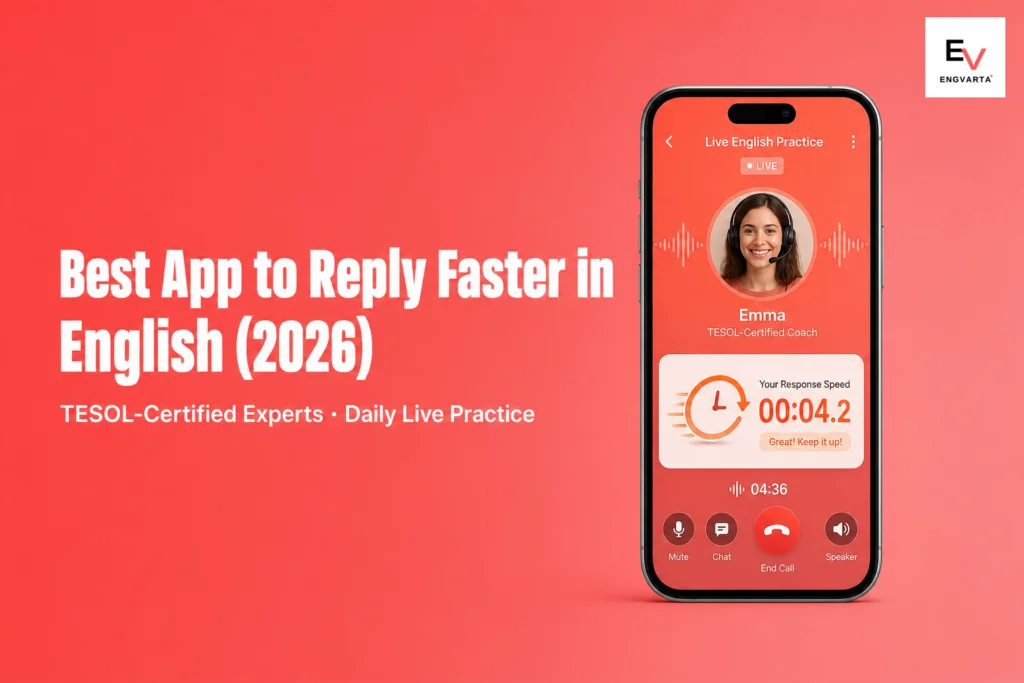
EngVarta gives you a daily 15-minute live 1-on-1 audio session with a TESOL/ESL-certified English Expert.
- Price: ₹69 / $1 refundable trial; ₹2,700 / $45 for 25 sessions (~₹108 / $1.80 each)
- Best for: real-time response speed
2. ELSA Speak
An AI app with short speaking drills that score pronunciation and fluency, useful for cleaning up clarity before a big meeting.
- Price: free tier; ELSA Pro from ~$11.99/month (~₹1,150)
- Best for: solo pronunciation and fluency drills
3. Speak
An AI conversation app that talks back and asks follow-up questions, a good warm-up for getting words out quickly.
- Price: from $17.99/month (Premium), ~₹1,700/month
- Best for: AI tutor for response practice
4. Praktika AI
AI avatars hold realistic-feeling conversations, helpful for nervous speakers building automatic responses.
- Price: free tier; Premium ~$8–14/month
- Best for: low-pressure AI conversation
5. Cambly
Live chat with native English speakers, the closest of the rest to a real conversation.
- Price: from ~$11 per 30-min session (auto-renewing subscription)
- Best for: native-speaker exposure (if budget allows)
6. HelloTalk
Voice messages and calls with other learners worldwide, low-pressure and free for casual reps.
- Price: Free, with an optional premium tier
- Best for: free peer practice
AI practice vs live conversation: when to use each
The AI apps above are genuinely useful, but they share one blind spot for this specific problem: they wait. An AI tutor lets you pause, restart, and ramble; it rarely cuts in, never looks impatient, and accepts a slow, translated answer as readily as a fast one. Real conversations do the opposite. A colleague jumps in, an interviewer raises an eyebrow, a client moves on — and that mild, productive pressure is precisely what forces your brain to retrieve and speak faster.
This is the gap a live Expert fills. Because a human keeps the conversation moving and corrects you the instant you stall, you practise reply-speed under the same conditions you face at work. AI is the safe warm-up; live practice is where the reflex is actually wired in. Used together — a few minutes of AI drills plus a live session — they cover both ends.
Comparison at a glance
| Option | Live human | Real-time correction | Real-conversation pressure | India-context | Daily-reps price |
|---|---|---|---|---|---|
| EngVarta | Yes (1-on-1 Expert) | Yes, during the call | High (Expert prompts you) | Yes | ~₹108/session |
| ELSA Speak | No (AI) | Pronunciation only | Low (set drills) | Partial | Subscription |
| Speak | No (AI) | Scripted | Medium (AI follow-ups) | Partial | Subscription |
| Praktika AI | No (AI avatar) | Limited | Low (comfortable) | Partial | Subscription |
| Cambly | Yes (native) | Informal | Medium-high | No | Higher for daily |
| HelloTalk | Peers | No | Medium | Varies | Free / low |
Best for your situation
| If your problem is… | Start with |
|---|---|
| Freezing or replying too slowly in real meetings and calls | EngVarta (live pressure + correction) |
| Unclear pronunciation before a big presentation | An AI pronunciation app alongside live practice |
| Wanting a comfortable, anxiety-free warm-up first | An AI conversation app, then move to live practice |
| Just casual free reps with no feedback needed | A free peer-practice app |
Best app by use case
| Use case | Best pick | Why |
|---|---|---|
| Office meetings & standups | EngVarta | Live pressure and real-time correction on updates and opinions. |
| Client calls | EngVarta | Scenario role-play for objections, clarifications, and follow-ups. |
| Job interviews | EngVarta | Rehearse answers under unpredictable follow-up questions. |
| Casual everyday conversation | Speak or Praktika (AI) | Low-pressure, anytime warm-up for getting words out. |
| Pronunciation cleanup | ELSA Speak (+ live practice) | Sound-by-sound AI feedback on specific words. |
| Free peer practice | HelloTalk | Free, casual voice reps with other learners. |
A 4-week response-speed protocol
You do not need hours a day — you need frequency. This is the routine that reliably reduces freezing, built around daily live reps with short AI or self-recording drills in between.
| Week | Focus | What you practise | Session |
|---|---|---|---|
| Week 1 | Start speaking within 3 seconds | Answering easy questions immediately, with no pre-sentence pause | 15 min daily |
| Week 2 | Survive the follow-ups | The Expert pushes back and asks “why”, so you keep talking under pressure | 15–25 min |
| Week 3 | Real meeting moments | Updates, opinions, disagreeing politely, and summarising on the spot | 25 min |
| Week 4 | Lock in the reflex | Mixed scenarios at speed until replying fast feels automatic | 25 min |
A useful between-sessions drill: open your phone recorder, pick a random meeting question (“What’s your update?”, “What are the risks?”, “Why this approach?”), give yourself three seconds to start, and speak for 30–60 seconds. Most people notice a clear drop in hesitation after two to three weeks, and meeting-ready response speed in about four to eight weeks of consistent reps.
How we evaluated this — and who reviewed it
Each option was scored on live speaking pressure, real-time correction, scenario fit for meetings and calls, suitability for a daily habit, and price. Pricing and features were checked in June 2026, and the rankings were reviewed against the day-to-day experience of EngVarta’s TESOL/ESL-certified Experts, who run live sessions with Indian professionals and hear exactly where hesitation shows up. The aim was an honest comparison: AI and peer apps earn their place for warm-up, pronunciation, and free practice, while live correction leads for the specific goal of replying faster under real pressure.
Related guides
- Best English Speaking App for Client Calls
- Best App to Practise English Phone Calls
- Best English Speaking App for Daily Standups
- Why EngVarta Works
Frequently Asked Questions
Which app is best to reply faster in English during live conversations?
EngVarta is the strongest pick because reply-speed is built by live human pressure, not solo drills. A TESOL/ESL-certified Expert keeps the conversation moving, prompts you when you stall, and corrects you in real time — training your brain to start speaking immediately, the way a real meeting demands.
Why do I freeze even though I understand English well?
Because comprehension runs ahead of retrieval speed: you understand instantly but assembling a spoken reply takes an extra beat, especially under pressure. The fix is not more grammar — it is repeated live speaking where you must answer on the spot until the reply becomes automatic.
Can an AI app train me to reply faster, or do I need a human?
AI apps like ELSA, Speak, or Praktika are useful warm-ups and accept your phrasing patiently, but they rarely interrupt or surprise you the way a real person does. Real reply-speed comes from unpredictable live conversation with someone who pushes back — which is what a live Expert provides.
Is EngVarta better than Speak, ELSA, or Praktika for replying faster in English?
For the specific goal of replying faster in real conversations, yes. Speak, ELSA, and Praktika are excellent solo warm-ups but they wait patiently and accept slow answers. EngVarta adds a live Expert who corrects you the moment hesitation creeps in, which is what actually trains response speed — use the AI apps for daily drills and EngVarta for the live reflex.
How long until I stop freezing in meetings?
Most people see a clear drop in hesitation after two to three weeks of daily live practice, and meeting-ready response speed in about four to eight weeks of consistent reps. Frequency matters far more than session length — 15 focused minutes a day beats an occasional long class.
Do I need a native speaker to fix my response speed?
No. Native-speaker apps like Cambly help with exposure but are not focused on Indian-context hesitation or structured correction. An Expert who works with Indian learners daily, understands where you freeze, and prompts and corrects to fix it trains faster responses more directly — and at a daily-affordable price.