Non-verbal communication is an essential aspect of effective communication, often conveying more meaning than words alone. In English, as in any other language, non-verbal cues such as body language, facial expressions, gestures, and eye contact play a pivotal role in interpreting and understanding messages. These elements can reinforce what is being said, indicate emotions, and provide feedback without the need for words. Understanding the importance of non-verbal communication in English can greatly enhance one’s ability to communicate effectively and build stronger relationships in both personal and professional contexts.
Understanding Non-Verbal Communication
Non-verbal communication refers to the transmission of messages or information without the use of words. It encompasses a wide range of behaviors and physical cues, including:
- Body Language : Posture, movements, and physical stance.
- Facial Expressions : Movements of the facial muscles that convey emotions.
- Gestures : Hand and arm movements that emphasize or illustrate spoken words.
- Eye Contact : The use of eye movements and gaze to communicate attention and interest.
- Proxemics : The use of personal space and distance in communication.
- Haptics : The use of touch in communication.
- Paralanguage : Vocal elements such as tone, pitch, and volume.
Each of these components plays a crucial role in the communication process, adding depth and meaning to verbal interactions.
7 Non-Verbal Signals That Matter Most in English Communication
While non-verbal communication covers many elements, there are seven signals that carry the most weight in English conversations — whether you’re speaking to a colleague, giving a presentation, attending a job interview, or making small talk with a native speaker. Master these seven, and your spoken English will feel more natural, confident, and impactful, even before your words do the work.
1. Eye Contact
Eye contact is the single most powerful non-verbal signal in English-speaking cultures. It communicates confidence, honesty, and engagement. Research suggests that 60-70% eye contact during a conversation is ideal — enough to signal interest without feeling like a stare. Too little eye contact makes you appear unsure or evasive; too much can feel aggressive.
Cultural differences matter here. In many Indian and East Asian contexts, lowering your gaze shows respect, especially when speaking to elders or seniors. But in American, British, Australian, and most Western business settings, avoiding eye contact is often misread as a lack of confidence or even dishonesty. When you’re speaking English in a global setting, learn to hold steady, soft eye contact for a few seconds at a time.
Common mistake Indian speakers make: Looking down at notes, the floor, or the table while answering a question. What to practice: During your next conversation, aim to hold eye contact for about three to five seconds, then look briefly to the side, then return. It feels awkward at first, but it becomes natural with repetition.
2. Facial Expressions
Your face is constantly broadcasting signals — often before you say a word. A genuine smile, a raised eyebrow, a slight frown — these micro-expressions shape how your English is received. A warm smile at the start of a conversation instantly puts the other person at ease. A furrowed brow while listening shows you’re thinking hard about what was said.
One of the most effective techniques is to mirror the facial expressions of the person you’re talking to. If they smile, smile back. If they look concerned, match their concern. This mirroring builds rapport subconsciously and makes the other person feel heard. It also helps when you’re nervous — a small, deliberate smile sends a signal to your own brain that you’re relaxed.
Common mistake Indian speakers make: Keeping a flat, neutral expression when speaking English because they’re concentrating on grammar. What to practice: Record yourself on your phone during a two-minute answer. Watch it with the sound off. Does your face tell the same story your words are telling?
3. Body Posture
Your posture tells the listener how you feel about yourself and the conversation before you open your mouth. Open posture — shoulders back, chest slightly forward, arms uncrossed — communicates confidence, openness, and willingness to engage. Closed posture — slumped shoulders, crossed arms, turned away — signals discomfort, defensiveness, or disinterest.
Leaning slightly forward when someone is speaking to you communicates attention and genuine interest. Leaning back — especially with your arms crossed — can be read as skepticism or boredom. In a video call, where only your upper body is visible, posture matters even more because the listener has fewer cues to read.
What to practice: Before an English conversation, take a deep breath, pull your shoulders back, and plant both feet on the floor. This “power posture” takes two seconds and physically shifts your confidence. If you’re building confidence for English conversations overall, our guide on how to build English speaking confidence walks through more techniques.
4. Hand Gestures
Hand gestures add emphasis, illustrate ideas, and help you explain concepts when a word slips your mind. Fluent English speakers naturally use hand movements to underline key points, count items (“first, second, third”), show sizes, and express contrast (one hand here, another hand there). Gestures also help your own brain retrieve vocabulary — research shows speakers who gesture recall words more quickly.
That said, cultural variation is huge. The thumbs-up is positive in most English-speaking countries but rude in parts of the Middle East. Pointing with your index finger is neutral in the US but considered impolite in many Asian cultures — use an open palm instead. Keep gestures above the waist and below the shoulders; excessive or wild gesturing can be distracting.
Common mistake Indian speakers make: Either hiding hands completely (stiffness) or gesturing so frequently that it becomes distracting. What to practice: Rehearse answering a simple question like “tell me about your last project” and deliberately use three or four clear hand gestures. Don’t overdo it — let the gestures follow the meaning, not precede it.
5. Tone and Pitch (Paralanguage)
Paralanguage — the how of your voice, not the what — often carries more weight than the words themselves. The exact same sentence (“That’s fine”) can mean approval, sarcasm, or irritation depending on your tone. In English, a rising pitch at the end usually signals a question; a falling pitch signals a statement or conclusion. Flat, monotone delivery sounds uninterested, even if your content is strong.
Emphasis also changes meaning. Say “I didn’t say he stole it” seven different times, stressing a different word each time — the meaning shifts completely each time. Native English speakers stress the most important word in a sentence to guide the listener’s attention. Learning where to place that stress is one of the fastest ways to sound more fluent.
What to practice: Pick a short sentence and read it five times with different emotions — happy, disappointed, curious, confident, sarcastic. Record each version. This trains your voice to carry meaning, not just words. If you’re working on sentence rhythm and flow, check out the best English speaking apps for sentence framing for structured practice.
6. Proxemics (Personal Space)
Proxemics is the silent distance you keep from others during a conversation — and it varies dramatically between cultures. In Western business settings, people generally maintain about 3 to 4 feet (roughly an arm’s length) during a professional exchange. Getting closer feels intrusive; standing further back feels cold or disengaged.
In many Asian cultures — including parts of India — people stand closer during conversations, and this is perfectly normal. When you speak English with native speakers from the US, UK, or Australia, being aware of their comfort zone is a silent mark of respect. In virtual meetings, proxemics translates to how centered and how close you position yourself relative to the camera — too close feels aggressive, too far feels distant.
What to practice: Watch how native English speakers position themselves in movies, interviews, and meetings. Notice the distance they keep. If someone takes a small step back, give them space — they’re signaling their comfort zone without saying a word.
7. Touch and Handshake
In most English-speaking professional settings, a firm handshake is the standard opening signal. A weak, limp handshake communicates low confidence; a crushing, overpowering one can feel aggressive. The sweet spot is firm, brief (two or three seconds), with steady eye contact and a warm smile. Your handshake is often the first impression a native English speaker has of you.
Beyond the handshake, touch is used sparingly in Western professional contexts — a light pat on the shoulder during an introduction, for example, is fine between established colleagues but generally off-limits with strangers. Cultural awareness matters enormously. In some cultures, a namaste, a slight bow, or no physical contact at all is the norm, and Westerners traveling or working globally have become more comfortable matching these customs.
Common mistake Indian speakers make : Offering a very soft handshake out of politeness. In most Western business settings, this reads as a lack of confidence rather than respect. What to practice: Shake hands with a friend and ask for honest feedback — is your grip firm enough, too tight, or just right?
The Role of Body Language in English Communication
Body language is a powerful form of non-verbal communication that can convey a wide range of emotions and intentions. In English communication, body language often complements verbal messages, helping to clarify meaning and express feelings that words alone may not fully capture.
Positive Body Language
Positive body language includes open gestures, relaxed posture, and appropriate eye contact, which can help build rapport and trust. Examples include:
- Open Gestures : Using open hand movements and avoiding crossed arms to appear approachable and engaged.
- Relaxed Posture : Standing or sitting with a straight but relaxed posture to convey confidence and attentiveness.
- Appropriate Eye Contact : Maintaining eye contact without staring to show interest and respect.
Negative Body Language
Negative body language, such as closed gestures, tense posture, and avoiding eye contact, can create barriers in communication and convey disinterest or discomfort. Examples include:
- Closed Gestures : Crossing arms or legs, which can indicate defensiveness or reluctance.
- Tense Posture : Stiffness or rigidity in posture, which may signal anxiety or hostility.
- Avoiding Eye Contact : Looking away or down, which can suggest dishonesty or lack of confidence.
Facial Expressions and Their Impact
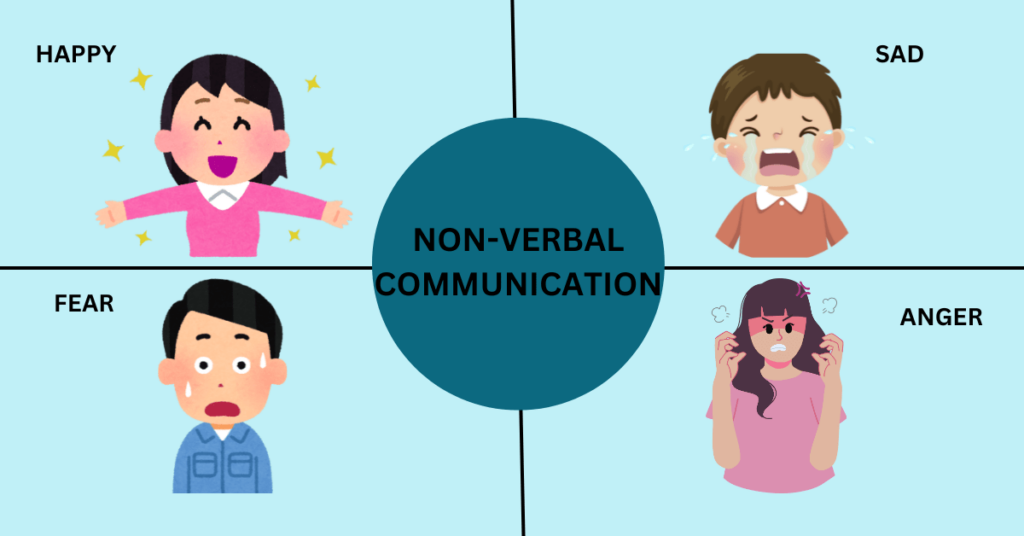
Facial expressions are a universal form of non-verbal communication that can convey a wide range of emotions, from happiness and surprise to anger and sadness. In English communication, facial expressions play a key role in expressing emotions and reinforcing verbal messages.
Key Facial Expressions
- Smiling : Indicates friendliness, approval, and positivity. A genuine smile can help build rapport and create a positive atmosphere.
- Frowning : Shows disapproval, concern, or confusion. A furrowed brow can indicate that someone is thinking deeply or is displeased.
- Raised Eyebrows : Often signal surprise, curiosity, or skepticism. Raised eyebrows can prompt further explanation or clarification.
- Eye Movements : Rapid eye movements or blinking can indicate nervousness or discomfort, while steady eye contact can show confidence and engagement.
Cultural Considerations
While many facial expressions are universally recognized, cultural differences can influence their interpretation. For instance, in some cultures, direct eye contact is considered respectful, while in others, it may be seen as confrontational. Understanding these cultural nuances is essential for effective communication in diverse settings.
The Power of Gestures
Gestures are deliberate movements of the hands, arms, or other body parts that communicate specific messages. In English communication, gestures can enhance verbal messages, illustrate points, and convey enthusiasm or emphasis.
Common Gestures
- Thumbs Up : Indicates approval or agreement. It is a universally recognized positive gesture.
- Nodding : Shows agreement, understanding, or encouragement. Nodding can reinforce that you are listening and engaged.
- Pointing : Directs attention to specific objects or directions. However, pointing can be considered rude in some cultures, so it should be used with caution.
- Handshakes : A traditional gesture of greeting or agreement. The firmness and duration of a handshake can convey confidence and respect.
Cultural Variations
Gestures can vary significantly across cultures, and what is considered a positive gesture in one culture may have a different meaning in another. For example, the “OK” hand gesture (forming a circle with the thumb and forefinger) is positive in many Western cultures but can be offensive in some parts of the world. Being aware of these cultural differences is crucial for effective non-verbal communication.
Eye Contact and Its Significance
Eye contact is a fundamental aspect of non-verbal communication that conveys attention, interest, and respect. In English communication, eye contact can enhance the connection between speakers and listeners, making interactions more engaging and meaningful.
Positive Effects of Eye Contact
- Builds Trust : Maintaining eye contact can help build trust and rapport between individuals.
- Shows Engagement : It indicates that you are paying attention and are interested in the conversation.
- Facilitates Feedback : Eye contact allows for the exchange of non-verbal feedback, such as nodding or smiling, which can encourage the speaker.
Negative Effects of Poor Eye Contact
- Disinterest : Avoiding eye contact can suggest that you are not interested or engaged in the conversation.
- Dishonesty : Lack of eye contact can be perceived as a sign of dishonesty or evasiveness.
- Discomfort : Excessive or intense eye contact can make others feel uncomfortable or intimidated.
Cultural Differences
Similar to other forms of non-verbal communication, the interpretation of eye contact varies across cultures. In some cultures, prolonged eye contact is seen as respectful and attentive, while in others, it can be considered disrespectful or confrontational. Understanding these cultural variations is important for effective communication.
Proxemics: The Use of Space in Communication
Proxemics refers to the use of personal space and distance in communication. In English communication, the appropriate use of space can affect the comfort level and interaction dynamics between individuals.
Personal Space Zones
- Intimate Distance : Reserved for close relationships and private conversations (0 to 18 inches).
- Personal Distance : Used for conversations with friends and family (18 inches to 4 feet).
- Social Distance : Appropriate for interactions in social and professional settings (4 to 12 feet).
- Public Distance : Used for public speaking or addressing large groups (12 feet or more).
Impact on Communication
- Respecting Boundaries : Maintaining appropriate personal space shows respect for others’ comfort and boundaries.
- Building Comfort : Adjusting the distance based on the relationship and context can create a more comfortable and effective communication environment.
- Cultural Sensitivity : Different cultures have varying norms regarding personal space, and understanding these differences is crucial for effective cross-cultural communication.
Paralanguage: The Voice Beyond Words
Paralanguage refers to the vocal elements that accompany speech, such as tone, pitch, volume, and speed. These elements add nuance and emotion to verbal communication, significantly impacting how messages are received and interpreted.
Key Elements of Paralanguage
- Tone : The emotional quality of the voice that conveys feelings and attitudes.
- Pitch : The highness or lowness of the voice, which can indicate questions, statements, or emphasis.
- Volume : The loudness or softness of the voice, which can convey urgency, importance, or intimacy.
- Speed : The rate of speech, which can reflect excitement, nervousness, or confidence.
Enhancing Communication
- Matching Tone to Message : Ensure that your tone aligns with the content and emotion of your message.
- Adjusting Volume : Use appropriate volume levels to match the context and setting of the conversation.
- Controlling Speed : Speak at a moderate pace to ensure clarity and comprehension.
How EngVarta Helps Improve Non-Verbal Communication in English Skills
EngVarta is an innovative platform designed to help individuals improve their English communication skills through real-time practice and expert feedback. Here’s how EngVarta can support your journey to mastering non-verbal communication:
Real-Time Practice with Experts
EngVarta connects you with English experts who provide real-time practice sessions. These sessions allow you to practice non-verbal communication in a controlled environment, receive immediate feedback, and build confidence gradually.
- Personalized Sessions : EngVarta offers personalized practice sessions tailored to your specific needs and goals.
- Immediate Feedback : Receive constructive feedback on your body language, facial expressions, gestures, and overall delivery to identify areas for improvement.
Flexible and Convenient Learning
EngVarta App provides a flexible learning environment that fits your schedule, making it easier to practice regularly.
- Anytime, Anywhere : Practice non-verbal communication skills at your convenience, whether from home, work, or on the go.
- Consistent Practice : Regular practice is crucial for building confidence, and EngVarta’s flexible scheduling ensures you can maintain a consistent practice routine.
Safe and Supportive Environment
EngVarta offers a safe and supportive environment for practicing English communication without the fear of judgment.
- Judgment-Free Zone : Engage in practice sessions without the fear of being judged or criticized, allowing you to focus on improvement.
- Encouraging Experts : EngVarta’s experts are trained to provide positive reinforcement and constructive feedback, helping you build confidence in your non-verbal communication skills.
Try for just Rs 69 / $1 — 100% refundable if it is not the right fit. One real practice session will show you how much daily English speaking practice can transform your results.
Conclusion
Non-verbal communication is a crucial aspect of effective communication in English, playing a significant role in conveying emotions, reinforcing verbal messages, and building rapport. By understanding and mastering the various components of non-verbal communication—body language, facial expressions, gestures, eye contact, proxemics, and paralanguage—you can enhance your overall communication skills and build stronger relationships.
EngVarta serves as a valuable tool in this journey, offering real-time practice, expert feedback, and a supportive environment to help you improve your non-verbal communication skills and gain confidence in English. By leveraging the resources and guidance provided by EngVarta, you can develop the ability to communicate more effectively and confidently in both personal and professional settings.
Frequently Asked Questions about Non-Verbal Communication in English
What is non-verbal communication in English?
Non-verbal communication is everything you communicate WITHOUT using words — facial expressions, eye contact, body posture, hand gestures, tone of voice, and physical distance. Studies suggest that 60-70% of meaning in face-to-face conversation comes from non-verbal cues, not the actual words. For English speakers (especially non-native), getting non-verbal communication right is as important as grammar and vocabulary.
Why is non-verbal communication important in English?
Non-verbal cues build trust, signal confidence, and clarify meaning. In English-speaking professional environments (interviews, presentations, client meetings), people make snap judgments based on your eye contact, posture, and tone within the first 7 seconds. Strong verbal English with weak non-verbal communication creates mixed signals — listeners hear correct words but feel uncertain about you. Strong non-verbal communication can compensate for accent or vocabulary gaps.
What are the types of non-verbal communication?
Main types: (1) Facial expressions — smiling, frowning, raised eyebrows. (2) Eye contact — direct, averted, blinking patterns. (3) Body posture — open vs closed, upright vs slouched. (4) Gestures — hand movements, head nods, pointing. (5) Tone of voice — pitch, volume, pace, pauses. (6) Physical distance — how close you stand to someone. (7) Touch — handshakes, pat on shoulder. (8) Appearance — dress, grooming. Different cultures interpret each differently, so context matters.
What are common non-verbal communication mistakes?
Frequent mistakes in English-speaking contexts: (1) Avoiding eye contact (interpreted as untrustworthy or uninterested). (2) Closed body posture — crossed arms, leaning back (looks defensive). (3) Weak handshake (interpreted as low confidence). (4) Speaking too softly (interpreted as uncertain). (5) Nodding too much (looks like over-eagerness or insincerity). (6) Standing too close (invades personal space in Western cultures). (7) Looking at phone during conversation (signals disrespect).
How is non-verbal communication different across cultures?
Big cultural differences exist: Eye contact — direct in US/UK is respectful, less direct in many Asian cultures is also respectful. Personal space — Americans/Northern Europeans prefer 2-3 feet; Latin Americans/Middle Easterners prefer closer. Head nodding — yes/agreement in most cultures, but in India/Bulgaria a head wobble can mean “I hear you” not “I agree.” For Indian and South Asian English speakers in international contexts, learning Western non-verbal norms (firm handshake, direct eye contact, open posture) helps career outcomes significantly.
How can I improve my non-verbal communication in English?
Practical steps: (1) Record yourself speaking on video — watch for posture, eye contact, gestures. (2) Practice in front of a mirror to make natural smiles and confident posture habitual. (3) Watch English TED talks and copy presenters’ gestures and tone. (4) Practice power-poses before high-stakes calls. (5) Get feedback from a coach or expert. EngVarta sessions are audio-only by design but Experts can guide you on tone, pace, and confidence cues that come through voice — and many learners practice video presentations separately. The $1 refundable trial lets you experience this on a topic where you typically struggle.
Does tone of voice count as non-verbal communication?
Yes. Tone is “paralanguage” — non-verbal vocal communication. The same words said with different tones convey completely different meanings. “That’s interesting” can be sincere, sarcastic, dismissive, or curious depending on tone. For English learners, mastering tonal patterns (rising intonation for questions, falling for statements, stress on key words) is one of the most under-practised skills. Most learners focus on grammar; tone determines whether you sound natural or stiff.
How important is body language in English job interviews?
Critical. Hiring managers form impressions in the first 30 seconds, mostly from non-verbal cues. Strong body language for interviews: firm but not crushing handshake, direct eye contact (look at the bridge of nose if direct eye contact feels intense), upright posture leaning slightly forward, controlled hand gestures, smile naturally when greeted, sit fully back in the chair. Weak body language: slouching, crossing arms, looking down, fidgeting with hair or pen, weak handshake. Even with perfect verbal English, weak body language can lose the offer.