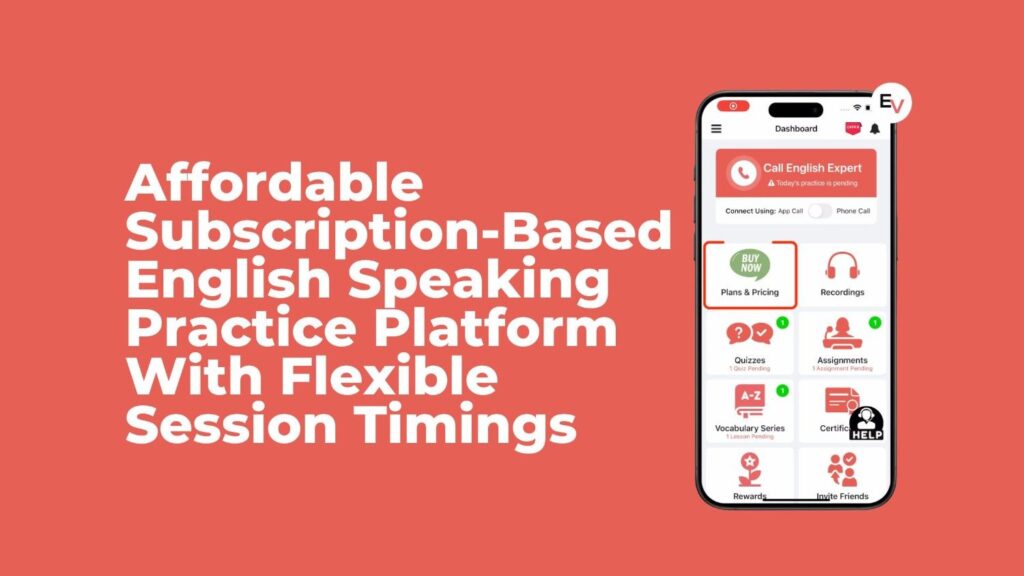
English Speaking Practice At Home |

Tag

English speaking practice at home

English Speaking Practice for Indian Parents Supporting Their Children’s English (2026): PTMs, Homework Help, Reading Aloud

May 24, 2026 • 12 min read • By Rishish Pandey

English Speaking Practice for Indian Parents — banner

Quick Answer

For Indian parents who feel weak in spoken English, the best practice is daily 15-minute live speaking correction focused on school situations like PTMs, homework help, reading aloud, and teacher messages. EngVarta works well because parents can practise privately with 1-on-1 English Experts.

Why this answer:

  • Best for: Indian parents supporting children in English-medium schools
  • Practice focus: PTMs, school WhatsApp replies, homework conversations, and reading aloud
  • Not ideal for: parents who struggle to understand basic spoken English conversations

Why This Problem Is Different From Generic “Improve Your English” Advice

Most “improve your English speaking” content treats you as a learner with general goals — fluency, confidence, vocabulary expansion. English Speaking Practice for Indian Parents is different because the goal is functional and scenario-bound. You need to handle specific situations, not become bilingual.

The scenarios are:

  • The parent-teacher meeting (PTM) — 10-15 minutes, usually in English, sometimes with multiple teachers in sequence, often in front of other parents.
  • The teacher WhatsApp group — you read messages but rarely reply because you are unsure how to phrase questions in English.
  • Homework help — your child asks “what does this word mean?” or “is this sentence correct?” and you cannot confidently answer.
  • Reading aloud — story-reading with younger children, where your pronunciation and pacing affect their English exposure at home.
  • Birthday parties and school events — chatting with other parents in English-medium school circles.
  • Phone calls with school admin / fee office / event coordinators — these are sometimes in English, sometimes in regional language, and not knowing which one will start is itself stressful.

The emotional layer is what makes this hard: you do not want your child to see you struggle. You want to model confidence, not embarrassment. This means most parents avoid the practice scenarios that would help them, which makes the gap worse over years.

The Underlying Pattern: You Already Know More English Than You Think

Most Indian parents in this situation underestimate their own English. You understand 80-90% of what is said and written. You read your child’s textbook with little difficulty. You write WhatsApp messages in English to colleagues at work. What lets you down is spoken response under social pressure, especially in school settings where you feel your authority as a parent depends on appearing competent.

This is fixable in 8-12 weeks with daily 15-minute practice. The bar is not “fluency” — the bar is “confident enough to handle PTM, read aloud, and answer your child’s questions”. That bar is much closer than it feels.

What Daily Practice Actually Looks Like for This Use Case

For parents wanting to support their children’s English, the practice content should be structured around the actual scenarios you face, not generic conversation drills. Here is a specific 8-week breakdown.

Weeks 1-2: Build the speaking habit

  • Daily 15-min sessions with a TESOL/ESL-certified Expert over phone (audio only, so you can do it from anywhere — kitchen, balcony, while walking).
  • Topic: whatever is on your mind. The Expert pushes you to keep speaking, corrects gently, and gives a consolidated feedback summary at the end.
  • Goal: get used to thinking and responding in English in real-time without freezing. This week is about volume, not perfection.

Weeks 3-4: Scenario drilling — parent-teacher meetings

  • Daily 15-min sessions. Tell the Expert at session start : “Today I want to practice for a parent-teacher meeting. Play the teacher.”
  • Practice opening lines : “Good morning. I am [child’s name]’s mother/father. Thank you for the time.”
  • Practice the standard questions you will ask : how is my child’s progress, where can he/she improve, is there anything specific we should work on at home, how is behavior in class.
  • Practice responding to teacher feedback : “Thank you, I will work on that with him/her. Could you tell me specifically what we should do at home?”
  • Practice closing : “Thank you for the meeting. We will follow up if we have questions.”

Weeks 5-6: Reading aloud and homework conversations

  • Daily 15-min sessions. Bring your child’s textbook (or a children’s story book in English) to the call.
  • Read aloud 1-2 pages while the Expert listens. Get corrections on pronunciation, stress, and pace.
  • Practice asking and answering the kind of questions a child would ask: “What does this word mean?” “Why is this sentence wrong?” “Can you read this for me?”
  • Build a small vocabulary list of words you struggled with — review with the Expert in the next session.

Weeks 7-8: Other parents and casual school-social English

  • Practice casual conversation with other parents — small talk at birthday parties, school events, drop-off and pick-up.
  • Practice phone calls to school admin in English: enquiring about fees, requesting a leave, asking about an event.
  • Practice replying to teacher WhatsApp messages in English with confident, grammatically clean responses.

At the end of 8 weeks, you will have done roughly 50-56 live conversation sessions, with at least 20 specifically focused on school-scenario practice. This is enough to walk into a PTM without freezing, read your child a bedtime story in English, and respond to teacher messages in confident English.

The Cost Comparison: Why Daily Practice Beats Weekly Tutoring for This Goal

Practice approach Sessions/week Monthly cost Realistic time to PTM-ready confidence
EngVarta daily 15-min 6-7 ~₹2,700 6-8 weeks
Cambly 2x/week 30-min 2 ~₹8,000-12,000 4-6 months
Private home tutor weekly 1 ~₹6,000-12,000 6+ months
Group English coaching class 2-3 ~₹3,000-5,000 Generic content — slower for scenario goals
Free YouTube / apps only self-paced 0 Rarely closes the gap — no live correction

The pattern: daily 15-minute sessions are cheaper AND faster than weekly hour-long sessions for confidence-building goals. This is because spoken-English confidence is rhythm-and-pattern based — your brain needs frequent reps to internalize the patterns, not infrequent long sessions to think about them.

How to Practice Without Your Child Knowing (If You Want To)

Many parents in this situation prefer to keep their practice private — they want to model confidence to the child, not vulnerability. EngVarta‘s audio-only phone format is well-suited to this. You can practice during:

  • Morning commute
  • Lunch break at office or at home
  • Evening walk
  • Early morning before the household wakes up
  • While the child is at school or asleep

There is no video, no app icon visible to others, no obvious “I am learning English” signal. The 15-min slot is small enough to fit into any gap in the day. Sessions are recorded and accessible for 30 days, so you can listen back to your own delivery to track progress privately.

Talking to Your Child in English at Home — The Habit That Multiplies

Once you have built enough confidence (week 3-4 onward), gradually introduce English into home conversations with your child. Not all-English suddenly — that would be artificial and the child will sense the discomfort. Mix it naturally:

  • Ask about their school day in English: “How was your class today? Did you understand the maths lesson?”
  • Read story books aloud in English at bedtime (younger children especially benefit from hearing a parent read English, even with imperfect pronunciation).
  • Discuss what they watch on TV in English: “What happened to the elephant in that show? Why was the boy upset?”
  • Use English for small household instructions: “Please put your bag in the corner”, “Have you finished your homework?”

The goal is not to teach English to your child — they are getting that at school. The goal is to create a household where adult-level English is normal, modeled, and not a source of anxiety. Children read parental confidence very accurately; when you handle English with calm, they grow up viewing English as a normal communication tool, not an intimidating subject.

For Parents With Older Children (Class 8-12)

Older children’s English needs are different from younger kids’:

  • They need help with English literature analysis, essay writing, debate preparation, presentation skills.
  • You may not be able to help with the content — and that is okay. What you can help with is creating the practice environment and being a casual conversation partner in English.
  • For specific academic English (essay structure, comprehension, board exam preparation), pair your practice with their school resources, library books, or a dedicated subject tutor.

For parents whose older children are preparing for college admissions interviews (Ashoka, Krea, FLAME, NLU, international applications) — your role is being a confident interview practice partner who can do mock Q&A in English. Daily EngVarta practice helps you be exactly that.

Conclusion :

The English gap between English-medium-educated children and their parents is one of the silent generational frictions in modern Indian families. It is fixable — not by becoming fluent overnight, but by building enough conversational confidence to handle the specific parental scenarios that matter: parent-teacher meetings, homework conversations, reading aloud, school social interactions, and adult-level chat with your child.

Daily 15-minute live practice with a TESOL/ESL-certified Expert over 8-12 weeks closes most of this gap for most parents. The cost (₹2,700-3,240 per month) is small compared to school fees, tuition fees, and the emotional cost of feeling sidelined from your own child’s education.

Start with EngVarta’s ₹69 refundable trial. The first session is enough to assess whether the format works for you — and it is private, so your child does not need to know unless you choose to tell them later.

Ready to Practice with Real Experts?

Try EngVarta today — ₹69 trial (India) / $1 trial (International) · 100% refundable

Frequently Asked Questions

Will EngVarta Experts adapt to a parent’s specific scenarios like PTMs or homework help?

Yes. At session start, tell the Expert: “I am a parent. I want to practise parent-teacher meetings, reading aloud children’s books, or school WhatsApp replies.” Experts adapt to your scenario request, and the rotating pool means you encounter different teaching styles — useful because real PTMs and school events involve different speakers.

How do I practise English in a household where everyone else speaks our regional language?

Schedule a 15-minute daily speaking slot with an English Expert — that is your reliable conversation block. Add 5 minutes of reading English aloud and 30 minutes of English-subtitled content. The combination builds workplace-functional English over time, even when nobody at home speaks English.

I am embarrassed about my English level — will the Expert judge me?

No. Experts are trained to be empathetic and meet you at your current level. The 1-on-1 audio-only format is intentionally lowest-pressure — no video, no other learners, no judgment. Most parents report the first 2-3 sessions feel uncomfortable, then it becomes routine.

Can my child also use EngVarta?

EngVarta is suitable for children aged 7 and above with parent guidance. For children under 12, supervised sessions where the parent listens and the child speaks to the Expert work well. Teenagers can do their own daily sessions. There is no separate kids mode — the Expert adjusts to the speaker’s level.

How long does it take parents to feel confident in spoken English?

Most parents feel more confident in 8-12 weeks of daily 15-minute practice. The goal is not perfect fluency but enough confidence to handle PTMs, homework conversations, reading aloud, and short teacher chats. Brief gaps in practice are fine; months of inactivity will see confidence regress.

Should I learn English specifically for my child or for myself?

Both are valid. Many parents start with “for my child” as motivation, then discover within a few weeks that the confidence transfers to their work life, social life, and self-image. The framing of supporting your child is often easier to commit to initially — the benefit reaches you too.

Affordable subscription-based English speaking practice platforms with flexible session timings

January 12, 2026 • 8 min read • By Mahesh .

English speaking practice platforms

If you’ve ever searched for affordable English speaking practice platforms, you already know how crowded the market is—free YouTube lessons, group conversation clubs, AI chatbots, and paid apps that promise fluency in ‘30 days.’ But most learners eventually realize one truth: speaking improves when it becomes a daily habit, not just a hopeful goal. 

That’s why subscription-based English speaking practice platforms with flexible session timings are growing so fast. They remove the biggest barriers—time and consistency. Among these platforms, EngVarta App stands out because it focuses on what truly builds fluency: real conversations, daily speaking practice, and meaningful feedback, all without rigid schedules or expensive coaching routines.

Why English speaking practice matters more than ever

English is rarely a “native vs non-native” conversation anymore. A British Council estimate notes 2.3 billion people speak English to some level, and a large share are non-native speakers—meaning most real-world English conversations happen between learners and multilingual professionals.

In India specifically, the payoff is not just confidence—it can be economic. Research summarized on Ideas for India reports a strong wage premium associated with English fluency (with different estimates by gender and other factors).

Now combine that with what employers keep repeating: communication is one of the most in-demand skills. One 2025 employer-insights piece highlights communication skills among top in-demand skills in India.

So the question isn’t “Should I practice speaking?”
It’s: Which practice method actually fits daily life and stays affordable?

What “affordable + flexible” really means in a speaking platform

Affordability isn’t just about price. It’s about the value per week of consistent speaking. A platform is truly affordable when it helps you:

  • practice regularly (not occasionally)
  • get feedback (not just content)
  • fit sessions into your real schedule
  • build confidence through repetition

Flexible timing matters because most learners don’t fail due to “lack of motivation.” They fail because their day is chaotic: commuting, family responsibilities, shifts, college, deadlines. A platform that lets you practice when you’re actually free wins.

EngVarta app explicitly positions itself around practice with live experts and availability across 7 AM–11:59 PM IST—which is the kind of flexibility subscription learning is supposed to deliver.

Types of online English speaking practice platforms 

1) Free options: great for input, weak for output

Free YouTube videos, podcasts, reels, and grammar content are amazing for exposure. But they don’t force you to speak—and speaking is a muscle. Free resources often improve understanding, not fluency.

2) Conversation communities and “nearby” opportunities

Local speaking groups, college clubs, coworking meetups, and community gatherings can help—if you’re comfortable showing up and if the group is consistent. The downside is irregularity and mixed feedback quality.

3) AI-based practice tools

AI practice tools are excellent for low-pressure rehearsal. They help with repetition and can provide quick feedback. But many learners still struggle when the conversation becomes human—because real conversations include interruptions, emotion, pace shifts, and unpredictability.

4) Subscription-based live speaking platforms

This category works best when it combines three things: human interaction + feedback + flexibility. That’s where EngVarta App is positioned: 1-on-1 live practice, real-time corrections, session recordings, and flexible hours.

Quick comparison: what you get (in practice)

Option Cost Flexibility Feedback quality Best for
YouTube / free videos Free High Low Listening + basics
Local clubs/meetups Low/Free Medium Medium Social confidence
AI chat practice Low–Medium Very high Medium Rehearsal + repetition
EngVarta (subscription) Medium High High (live corrections) Real fluency + confidence

EngVarta’s model is especially helpful for learners who say: “I know English, but I freeze when I speak.” That’s exactly the gap real-time practice closes.

Why EngVarta App is the best platform for subscription-based speaking practice

Real 1-on-1 speaking practice (not passive learning)

EngVarta App is designed as “practice-first.” It emphasizes speaking with live English experts rather than only lessons.

Flexible session timings that match real life

The platform highlights availability from 7 AM to 11:59 PM IST, which is a major advantage for working professionals, students, homemakers, and business owners.

Real-time corrections + recordings (feedback loop)

EngVarta mentions instant feedback and session recordings, which create a powerful loop: speak → get corrected → replay → improve.

Proven adoption signal (people are actually using it)

EngVarta’s App Google Play listing shows 10L+ downloads, suggesting strong adoption at scale.

👉 Download EngVarta App today and start building fluent English skills .

Download app for Android 

Download app for iOS 

“But I want AI-based practice too” — here’s the smart way to combine it

A practical modern routine looks like this:

Use AI for rehearsal (low-pressure repetitions)

Use AI tools to practice:

  • introductions
  • role-plays (interview, client call, small talk)
  • pronunciation repetition
  • vocabulary upgrades

Use EngVarta App for real conversation conditioning

Then use EngVarta for:

  • handling interruptions
  • thinking on your feet
  • natural speed + flow
  • real-time correction patterns

AI helps you prepare. Live practice helps you perform.

How to pick the right plan (without overthinking)

If you’re choosing a subscription, the best strategy is to pick what you can sustain, not what looks impressive.

Start with a plan that allows:

  • at least 3 speaking sessions per week
  • consistent time slot you can keep
  • review time for recordings/notes

EngVarta’s own guidance emphasizes practice and mentions that a subscription is required to speak with experts.

How to get faster results on EngVarta (daily-use strategy)

1) Keep a “daily life script bank”

Write 10 short situations you face daily:

  • asking for updates at work
  • giving a status report
  • explaining a delay
  • booking an appointment
  • talking to a teacher/colleague

Repeat them until they feel automatic.

2) Use a 3-part session structure

Before the call: 30 seconds—what happened today?
During the call: 1 main topic + 1 role play
After the call: note 3 corrections + replay 1 minute of recording

3) Measure progress in confidence, not perfection

The examiner/boss/friend doesn’t need perfect grammar. They need clarity, flow, and confidence.

4) Make your schedule boring (boring = consistent)

The most powerful habit is the simplest one: same time window, same frequency.

Here’s a clean, engaging section you can use in your blog under the heading:

What Learners Are Saying About EngVarta App

Real learners often describe their English learning journey with EngVarta App in ways that go beyond test scores — they talk about confidence, real-life improvement, and meaningful progress. Here’s what users are sharing after practicing regularly:
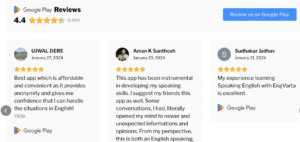
EngVarta App Review

Final Thoughts :

If you want the most effective blend of affordability and results, you need three ingredients:

  1. A subscription model that makes practice consistent
  2. Flexible session timings so life doesn’t break your routine
  3. Feedback so you don’t repeat the same mistakes forever

EngVarta fits this framework strongly with its live 1-on-1 expert practice, real-time corrections, recordings, and wide timing window (7 AM–11:59 PM IST)—making it one of the most practical options for daily speaking practice.

Frequently Asked Questions (FAQs)

Frequently Asked Questions

How much time should I spend on English speaking practice daily?

Spending just 15–30 minutes a day on EngVarta App is enough to see steady improvement. Regular short speaking sessions build fluency, reduce hesitation, and help learners gain confidence faster than occasional long study sessions.

Do online speaking platforms help with real-life conversations?

Yes. EngVarta App connects learners with live English experts and real conversation practice, helping users get comfortable with natural speech, pronunciation, and everyday communication used in offices, interviews, and social situations.

How important are flexible session timings in English speaking practice?

Flexible timings are extremely important because consistency builds fluency. EngVarta App allows learners to practice from morning till late night, making it easy to fit English speaking into busy work, college, or family schedules.

Are subscription-based English speaking platforms better than free options?

Yes. Subscription-based platforms like EngVarta App provide structured daily speaking practice, live expert feedback, and real conversations, which free tools cannot offer. This helps learners improve faster and speak with confidence in real situations.

What is the best affordable English speaking practice platform?

The best affordable English speaking platform is one that offers real conversation practice, flexible timings, and continuous feedback. Subscription-based platforms like EngVarta App provide live one-to-one speaking sessions with experts, making practice consistent and cost-effective.