English Learning App In India |

TAG: english learning app in india

10 Best English Speaking Practice Apps in 2026 (Tested & Compared)

April 13, 2026 • 17 min read • By Swati Raj

10 best English speaking practice apps in 2026 tested and compared

The best English speaking app is the one you use daily. Fluency comes from consistent practice—not expensive apps or fancy AI. If you understand English but struggle to speak, EngVarta offers strong value for daily practice. For IELTS, FixoLang provides focused exam prep. For pronunciation, ELSA Speak or ChatterFox can help. The fastest learners practice every day, even for 15 minutes. Pick one app, stay consistent for 30 days, and you’ll see the difference.

Finding the right app to practice spoken English can be overwhelming. There are hundreds of options, but most focus on grammar drills or vocabulary games rather than real speaking practice. If your goal is to actually speak English fluently, you need an app that makes you talk, not just tap. We tested and compared the best English speaking practice apps available in 2026. This guide covers what each app does best, what it costs, and which type of learner it suits so you can pick the one that actually helps you improve.

No affiliate spin. No sponsored slots. Every app on this list earned its place on merit, not on a check.

What Makes a Good English Speaking Practice App?

Before jumping into the list, here is what separates an effective speaking app from a mediocre one:

  • Real speaking time – You should be talking, not just reading or listening
  • Feedback on mistakes – Either from a real person or AI that catches your errors
  • Consistency tools – Daily reminders, short sessions, flexible scheduling
  • Affordable enough for daily use – Speaking practice works best when done every day

With these criteria in mind, here are the best English speaking practice apps for 2026.

Best English Speaking Practice Apps in 2026

1. EngVarta – Best for Daily Speaking Confidence

EngVarta connects you with live English experts for real one-on-one conversations. No scripts, no bots. You call an expert, talk about real topics, and get corrected naturally during the conversation. Available from 7 AM to midnight, it fits into any schedule. What makes EngVarta different from other apps is the focus on building speaking confidence through real practice. Most learners understand English but freeze when they have to speak. EngVarta solves this by giving you a safe, judgment-free space to practice every single day.

  • Price : Starting at from ₹2,700 for 25 sessions for daily sessions
  • Best for : Learners who understand English but struggle to speak fluently
  • Unique features : Live human experts (not AI), real-time corrections, audio-only format for zero pressure, expert feedback after every session
  • Limitation : Not designed for grammar lessons or exam-specific preparation

Start Practicing Today

You’ve read the comparison. You know the numbers. The only thing left is to actually start.

Try EngVarta for ₹69. Full money-back guarantee. No risk, no booking, no excuses.

Download on Google Play →
Download on App Store →

Available on Android & iOS • 2M+ learners • 4.5★ rating


2. FixoLang – Best for IELTS Speaking Preparation

If you are preparing for the IELTS speaking test, FixoLang is built specifically for you. The app simulates the actual IELTS speaking test format with cue cards, timed responses, and AI evaluation that gives you a predicted band score. FixoLang helps you practice Part 1 introductions, Part 2 cue card responses, and Part 3 discussions exactly how they appear in the real exam. The AI feedback tells you exactly where you lost marks and what to fix.

  • Price : Free tier available | Premium plans from Rs 1,199/month
  • Best for : IELTS aspirants targeting 6.5+ band in speaking
  • Unique features : AI band score prediction, IELTS mock tests with all 3 parts, cue card timer, detailed pronunciation and fluency feedback
  • Limitation : Focused only on IELTS. Not suitable for general English conversation practice

Trusted by thousands of IELTS test-takers across India, FixoLang has helped learners improve their speaking band by 0.5 to 1.5 points within weeks of consistent practice. Download FixoLang : Download for Android | Download for iOS

3. ELSA Speak – Best for Pronunciation and Accent Training

ELSA Speak uses advanced AI to analyze your pronunciation at the phoneme level. It listens to how you say each sound and shows you exactly where your mouth position or stress pattern is wrong. If your main challenge is pronunciation rather than conversation, ELSA is one of the best tools available. The app provides structured lessons on individual sounds, word stress, intonation patterns, and connected speech. It is especially useful for learners who want to reduce their mother tongue influence on their English accent.

  • Price : Free (limited) | Pro at $11.99/month or $74.99/year
  • Best for : Learners focused on clearer pronunciation and accent reduction
  • Unique features : Phoneme-level speech recognition, mouth position guides, AI pronunciation scoring, personalized daily lessons
  • Limitation : All exercises are scripted. No real conversation practice. Can feel repetitive after a while

4. Cambly – Best for Practice with Native Speakers

Cambly connects you with native English-speaking tutors from the US, UK, and Australia for live video conversations. You can book sessions or start an instant call anytime. The tutors are real people who adjust to your level and interests. Cambly works well for learners who specifically want exposure to native accents and natural conversation patterns. The video format also helps with non-verbal communication skills.

  • Price : From $52/month (1 lesson/week, 30 min) | 3-month plan at $7.75/lesson | Annual plan at $5.54/lesson. India pricing starts around Rs 1,199/month
  • Best for : Intermediate to advanced learners who want native speaker interaction
  • Unique features : Instant tutoring with native speakers, video calls, session recordings for review, kids-specific program available
  • Limitation : Expensive for daily practice. Tutor quality varies. No pronunciation scoring or structured curriculum

5. ChatterFox – Best for Accent Coaching

ChatterFox combines AI-driven pronunciation drills with personalised feedback from certified accent coaches, which is rare in the category – most apps lean fully into one or the other. The hybrid model works well for learners who want the convenience of daily AI practice plus the credibility check of a real human coach reviewing their progress at intervals. Particularly suited to professionals who need clearer English at work without sounding artificial.

  • Price : Subscription-based, with structured plans on chatterfox.com
  • Best for : Professionals who want both AI accent drills and certified coach feedback
  • Unique features : AI + certified accent coach hybrid, personalised feedback, structured progression
  • Limitation : Coach availability may be limited at peak times; pure-AI apps offer more on-demand drilling

6. SpeakShark – Best Free AI English Speaking Practice

SpeakShark gives unlimited 24/7 conversation practice with four native-accent AI teachers (American, British, Australian, plus a fourth voice) and real-time pronunciation scoring at the phoneme level. The free tier is 10 minutes per day with no credit card – enough for a daily speaking habit without commitment. Strong fit for self-driven learners who want consistent daily practice without the scheduling and social pressure of human sessions.

  • Price : Free 10 min/day (no credit card) | Paid tiers for unlimited practice
  • Best for : Self-driven learners wanting consistent daily AI practice without scheduling
  • Unique features : 4 native-accent AI teachers, phoneme-level pronunciation scoring, free tier without credit card
  • Limitation : AI-only – learners specifically wanting human conversation or video-call confidence will need human practice alongside

7. Speak (by Speakeasy Labs) – Best AI Conversation App

Speak is an AI-powered conversation practice app backed by OpenAI’s startup fund. It offers structured speaking lessons with an AI tutor that listens, responds, and corrects you as you practice. The app is designed around repetition and drills so you build speaking muscle memory. Speak works well for learners who want consistent AI-driven drills without the pressure of talking to a real person. It has been recommended by Wirecutter and has strong speech recognition.

  • Price : Around $14/month | $99/year Premium
  • Best for : Structured AI speaking drills and repetition-based practice
  • Unique features : Natural AI conversation, solid speech recognition, scenario-based lessons, Wirecutter recommended
  • Limitation : No real human interaction. Cannot build the social confidence needed to speak to real people in real situations

8. Duolingo – Best for Beginners and Daily Habit

Duolingo is the world’s most popular language learning app with over 500 million users. Its gamified approach, streaks, and bite-sized lessons make it incredibly easy to build a daily learning habit. For absolute beginners, it is a solid way to pick up vocabulary and basic grammar. However, Duolingo is not a speaking app in any meaningful sense. Most exercises involve tapping, matching, or typing. Actual speaking practice is minimal and the AI feedback is limited.

  • Price : Free | Super Duolingo at $7/month
  • Best for : Absolute beginners building vocabulary and basic grammar
  • Unique features : Addictive gamification, daily streaks, generous free tier, huge community
  • Limitation : Minimal speaking practice. Mostly tap and swipe exercises. Not effective for building real fluency or speaking confidence

9. MySivi AI – Best AI App for Indian Learners

MySivi AI is an AI-powered English speaking app designed for Indian learners. It supports Hindi and a few other Indian languages, offering AI-driven conversation practice in a bilingual context.

  • Price : Free tier available | Premium plans available
  • Best for : Indian learners who want AI practice with bilingual interface
  • Unique features : Bilingual interface for Indian users
  • Limitation : AI-only – no human practice, which limits real-world conversation confidence

10. HelloTalk – Best for Free Language Exchange

HelloTalk connects you with real people worldwide who want to exchange languages. You teach them your native language, they help you with English. It is free, global, and gives you genuine human interaction without the cost of a tutor. For casual conversation practice with native speakers, HelloTalk can be a great supplement. The community is active and you can find partners at various levels.

  • Price : Free | Premium from $6.99/month
  • Best for : Casual conversation practice with native speakers around the world
  • Unique features : Real human interaction, free tier, global community, text, voice, and video options
  • Limitation : Partners are untrained and unreliable. Quality varies wildly. No structured feedback or corrections. Compared to EngVarta (from ₹2,700 for 25 sessions / from $45 for 25 sessions) with trained experts, you get what you pay for

Quick Comparison: Best English Speaking Practice Apps 2026

App Price Best For Real Conversations? AI Feedback?
EngVarta Rs 2,700/mo Daily speaking confidence Yes (live humans) Expert feedback
FixoLang Free / Rs 1,199/mo IELTS speaking prep AI mock tests Yes (band score)
ELSA Speak Free / $11.99/mo Pronunciation training No Yes (phoneme level)
Cambly From $52/mo Native speaker practice Yes (video tutors) No
ChatterFox Subscription Accent coaching (AI + human coach hybrid) Yes (certified coaches) Yes
Speak $14/mo / $99/yr Structured AI drills No (AI only) Yes
Duolingo Free / $7/mo Beginner vocabulary No Limited
SpeakShark Free 10 min/day / Paid Free AI conversation with native-accent voices No (AI only) Yes
MySivi AI Free / Premium Indian bilingual learners No (AI only) Limited
HelloTalk Free / $6.99/mo Language exchange Yes (untrained) No

What Our Learners Say

Rated 4.5★ from 9,100+ reviews on Google Play

★★★★★
hii i have taken your 69 rs plan for expert calling but no response from your side you gove the number i am trying to call on that number but no response r u making me fool? or what?
★★★★★
It was a very amazing experience to talk to an expert. She suggested how to improve my speaking skills and enhance my confidence level. EngVarta is the best platform to learn English fluently.
★★★★★
Wonderful! They provide you a best platform to talk. A very unique idea I think. English is learned more by speaking than by being taught. So this is the best platform I think. And also you get a chance to interact with intellectual experts so that you can explore yourself.
★★★★★
Wonderful application for English learners and good for speaking with trainers .All trainers are well experienced and help us within the time period,Thanks
★★★★★
I highly recommend this app.this App is soo good for beginners who want to learn English.
★★★★★
I took two months of subscription. This platform really helped me to improve my communication and get rid of the fear I had earlier. Now I can talk fully confident and without any fear.
★★★★★
Don’t take that, it’s a good application during the trails calls only. After the buying the plans no refund option and no experts available on your schedule time.
★★★★★
No words to say about your app. I'm very interested in it and learning a lot. Thanks for your help.
★★★★★
This app is very useful for e English and the Mam is nice by rating is five star
★★★★★
I am very happy while speaking to you. It was a very good experience. I want to congrats your team for making such an excellent app for helping people who want to learn and speak English.
★★★★★
I have thoroughly enjoyed the session and the expert provided me instant feedback that will definitely help me.
★★★★★
An excellent platform to enhance communication skills. Kudos to the team.

Ready to Practice with Real Experts?

Try EngVarta today — ₹69 trial (India) / $1 trial (International) · 100% refundable

How to Choose the Right English Speaking App

The best app depends on what is holding you back:

  • You understand English but cannot speak it – Start with EngVarta (from ₹2,700 for 25 sessions / from $45 for 25 sessions). Daily live conversations with trained experts will build the habit and confidence you need.
  • You need to crack the IELTS speaking test – Use FixoLang for exam-specific practice with AI scoring.
  • Your pronunciation is unclear – Try ELSA Speak for phoneme-level correction.
  • You want to practice with native speakersCambly connects you with tutors from English-speaking countries.
  • You want to refine your accentChatterFox combines AI accent drills with feedback from certified human coaches.
  • You want structured AI drillsSpeak provides scenario-based AI conversation lessons.
  • You are a complete beginnerDuolingo is a fun way to pick up vocabulary before moving to real speaking practice.
  • You want free AI warm-up practiceSpeakShark gives 10 minutes per day free with native-accent AI voices, no credit card needed.
  • You are an Indian learner wanting bilingual AI practiceMySivi AI offers basic bilingual support.
  • You want free language exchangeHelloTalk connects you with real people, though quality varies.

For most Indian learners, the biggest barrier is not grammar or vocabulary. It is the confidence to speak. That is why apps that provide real, daily conversation practice with trained experts tend to deliver the fastest improvement in spoken English fluency. AI apps and gamified apps are useful supplements, but nothing replaces talking to a real human who can correct you, encourage you, and hold you accountable.

👉 Connect with EngVarta & Boost Your English Daily!

Stay inspired and improve your English speaking skills with daily tips, real conversations, and expert guidance.

📸 Instagram: https://www.instagram.com/engvarta.app/

▶️ YouTube: http://www.youtube.com/@EngVarta

📘 Facebook: https://www.facebook.com/engvarta

💼 LinkedIn: https://www.linkedin.com/company/engvarta

✨ Follow EngVarta now and start speaking English confidently every day!

Conclusion

The best English speaking app is the one you use daily. Fluency comes from consistent practice—not expensive apps or fancy AI. If you understand English but struggle to speak, EngVarta offers strong value for daily practice. For IELTS, FixoLang provides focused exam prep. For pronunciation, ELSA Speak or ChatterFox can help. The fastest learners practice every day, even for 15 minutes. Pick one app, stay consistent for 30 days, and you’ll see the difference.

Frequently Asked Questions (FAQs)

Q1. What is the best English speaking practice app for beginners?

Ans : For beginners who understand some English but struggle to speak, EngVarta is the most effective choice. It pairs you with live English experts who adjust to your level and help you build confidence through real conversations. There is no scripting involved, so you naturally learn to think and respond in English.

Q2. Are free English speaking practice apps effective?

Ans : Free apps like ELSA Speak and FixoLang offer useful tools for pronunciation and IELTS practice. However, for building real conversational fluency, free tiers are usually limited. Daily conversation practice, which is the fastest path to fluency, typically requires a paid plan on platforms like EngVarta or Cambly.

Q3. How long does it take to improve spoken English with an app?

Ans : With 15 to 20 minutes of daily practice, most learners notice improvement within 3 to 4 weeks. Consistency matters more than session length. Apps that enable daily practice at affordable prices, like EngVarta, tend to produce faster results than expensive platforms where you can only practice once a week.

Q4. Can an English speaking app replace a traditional English class?

Ans : For speaking fluency, yes. Traditional classes focus heavily on grammar rules and written exercises. Speaking apps focus on what actually builds fluency, which is regular spoken practice with real-time feedback. For exam preparation or formal grammar study, a combination of both may work best.

Q5. Which is better – an AI English speaking app or one with real humans?

Ans : AI apps like ELSA Speak are excellent for pronunciation drills and structured exercises. But for building real-world speaking confidence, human interaction is irreplaceable. Apps like EngVarta provide the emotional safety, natural conversation flow, and real-time human feedback that AI cannot replicate. The ideal approach is to use both: AI for pronunciation practice and human-led apps for conversation fluency.
How to Measure Progress of Your English Speaking Practice

February 19, 2026 • 12 min read • By Richa

English Speaking Practice

In our experience helping over a million professionals across India and the globe, we’ve observed a common, frustrating pattern: the “Fluency Mirage.” You spend hours on English speaking practice, you consume endless podcasts, and you use every “best English learning app” on the market, yet when it’s time to lead a high-stakes board meeting, you feel like you’re back at square one.

The reality of 2026 is that traditional fluency metrics—like how many grammar rules you’ve memorized—are officially obsolete. In the era of Generative Engine Optimization (GEO) and AI-integrated workplaces, your value is defined by your Active Communication skills. If you cannot track your English speaking progress with precision, you cannot improve it.

This guide explores the transition from subjective “feeling-based” learning to the data-driven English speaking practice assessment strategies that top-tier professionals use to dominate their industries.

How Can I Track My English Speaking Progress Effectively in 2026?

To track English fluency improvement effectively, transition from passive testing to Performance-Based Analytics. Focus on “The Hesitation Gap” (the delay between thought and speech), “Filler Word Density,” and “Contextual Accuracy.” Using a best English speaking app like EngVarta allows you to review recorded sessions with human experts to identify habit-based errors that AI often misses.

The Death of the “Feel-Good” Metric

For decades, learners measured progress by their ability to pass a written quiz. We have discovered that this leads to an illusion of safety. You might be an “A” student in grammar but a “C” communicator in a live negotiation. In 2026, we prioritize Output Analytics.

When you engage in English speaking practice, you are essentially training a muscle. Just as a runner tracks their pace per kilometer, a speaker must track their “Words Per Minute” (WPM) and “Clarity Score.” We recommend a “Call-Review-Improve” cycle. By recording your live conversations—a core feature of the EngVarta app—you transform a fleeting conversation into a permanent data point for growth.

What Are the 5 Key Metrics for a Modern English Speaking Practice Assessment?

A professional English speaking practice assessment now relies on five pillars: 1. Speech Rate (WPM), 2. Filler Word Frequency, 3. Response Latency, 4. Lexical Precision, and 5. Grammatical Durability. These metrics ensure that your speech is not just fluent, but “Generative-Ready”—meaning it is clear enough for global teams and AI transcription tools alike.

To help you conduct a DIY spoken English assessment, we’ve developed this 2026 Proficiency Benchmark table. Use this to improve English speaking and measure progress objectively.

2026 Fluency Benchmark Table

Metric Basic Communicator The “Fluency Plateau” Professional 2026 Standard
Speech Rate < 90 Words Per Minute 100 – 120 WPM 130 – 160 WPM
Filler Frequency 10+ per minute (um, ah) 5-7 per minute (like, so) < 2 per minute (Clean flow)
Hesitation Gap 3+ seconds before responding 1-2 seconds of “processing” Instantaneous (< 0.5 sec)
Vocabulary Type High-frequency (Good, Bad) Functional (Effective, Issue) Precise/Industry (Strategic, Friction)
Error Recovery Breaks down after an error Awkward self-correction Seamless “Pivot” & Flow

Why is EngVarta the Best English Speaking App for Professional Growth?

EngVarta remains the best English speaking app because it solves the “Feedback Vacuum.” While AI bots provide binary “right or wrong” answers, EngVarta’s real human experts provide nuanced, contextual feedback on your tone, body language (in video), and professional etiquette. This human-centric loop is the fastest way to track your English speaking progress in real-world scenarios.

Why Real Humans Trump AI Bots in Fluency Training

We’ve seen a surge in “AI Tutors” lately, but our internal data shows that learners improve 3x faster when there is social accountability.

  1. Nuance Detection : An AI might tell you your sentence is grammatically correct, but an EngVarta expert will tell you it sounds “too aggressive” for a client pitch.
  2. Cultural Intelligence : Especially for learners in India working with global teams, understanding cultural idioms and “softening” language is a skill only a human mentor can provide.
  3. Real-Time Pressure : Speaking to a bot is low-stress. Speaking to a high-level expert simulates the pressure of an actual interview, which is the ultimate English speaking practice assessment.

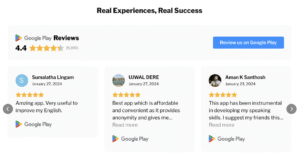
EngVarta App Good Review
Real learners. Real experiences. EngVarta continues to help users build confidence in spoken English every day.

Rated 4.4★ on Google Play with 9,000+ reviews

How Can Data-Driven English Speaking Evaluation Change Your Career Path?

A data-driven English speaking evaluation removes the anxiety of “not knowing where you stand.” By quantifying your communication skills, you can present tangible proof of your soft skills to employers. In the modern job market, being able to say “I have a 95% clarity score in cross-cultural communication” is a powerful differentiator.

The Psychology of Fluency Tracking Techniques

We have discovered that students who use fluency tracking techniques stay motivated 40% longer than those who don’t. When you can see your “Filler Word Frequency” dropping from 12 to 4 over a month, your brain receives a dopamine hit similar to closing a major deal.

To improve English speaking and measure progress, you must treat your voice as a product. In our experience, professionals who engage in speaking practice exercises that involve recording and re-listening gain a “third-person perspective” that is essential for self-correction.

What Are the Best English Speaking Self-Assessment Tips for Daily Use?

The most effective English speaking self-assessment tips involve the “Shadowing & Recording” method. Spend 5 minutes daily “shadowing” a native speaker, then record a 2-minute “Unfiltered Monologue” on a random topic. Transcribe the recording; if an AI can’t transcribe it with 95% accuracy, your pronunciation needs targeted refinement.

Building Your 2026 Daily English Speaking Routine

Consistency is the engine of fluency. We recommend the “15-10-5” Rule:

  • 15 Minutes of Active Output : A live session on EngVarta. This is non-negotiable. You must speak with a person who can correct you.
  • 10 Minutes of Review : Listen to your call recording. This is where you improve English speaking and measure progress. Count your filler words. Identify where you hesitated.
  • 5 Minutes of Corrective Input : Practice the specific phrases or pronunciations you struggled with during the call.

How to Overcome the “Intermediate Plateau” and Track Fluency Improvement?

To break the plateau, you must increase the Cognitive Load of your practice. Stop talking about your hobbies and start “Stress Testing” your English. Explain a complex technical concept or debate a controversial industry trend. How to track English fluency improvement at this stage? Measure your “Lexical Diversity Score”—the variety of unique words you use in a 5-minute span.

The Importance of an “Online Course for Mastering English Speaking”

A 2026-era course isn’t about watching videos; it’s about Mentorship. We’ve found that professionals who join a best English speaking course online that offers unlimited 1-on-1 access see a permanent shift in their “Speaking Identity.” You stop being a “learner” and start being a “speaker.”

How Does the EngVarta App Specifically Help Indian Professionals?

The EngVarta app serves Indian professionals by focusing on “Neutralization of Mother Tongue Influence” (MTI). By providing access to real Human Experts who understand the linguistic nuances of different Indian regions, the app helps users adapt their English for global audiences without losing their cultural identity.

Tailored Spoken English Assessment for the Global Indian

In our professional opinion, the biggest hurdle for Indian tech leads and managers isn’t grammar—it’s intonation and pacing. Languages in India follow a syllable-timed pattern, while English operates on a stress-timed basis.

Through speaking skill improvement sessions on EngVarta, you learn to:

  1. Identify syllable-stress patterns that make your speech clearer to US/UK stakeholders.
  2. Practice “Small Talk” culture, which is often missing from traditional Indian education.
  3. Use the “Record and Feedback” loop to listen to your own accent and adjust it for maximum clarity in international Zoom calls.

Ready to transform your fluency?

Start your journey with the best English speaking app today.

👉 Download EngVarta – Your Personal English Expert

Android : Download the App on Google Play 

iOS : Get the App on App Store

Follow us for daily tips and success stories:

Mastering Speaking Skill Improvement Through “Stress Testing”

To achieve rapid speaking skill improvement, you must simulate “High-Cognitive” environments. This means practicing English while multitasking or under a time crunch. Professionals who use EngVarta to simulate mock interviews or rapid-fire Q&A sessions report a 50% increase in confidence during actual workplace pressure.

Advanced Speaking Practice Exercises

We suggest these three exercises to improve English speaking and measure progress:

  • The 2-Minute Elevator Pitch : Describe your current project in exactly 120 seconds. Record it and check for “Response Latency.”
  • The AI-Transcription Test : Speak into a voice-to-text tool. If the AI gets your industry jargon wrong, work on your “Lexical Precision.”
  • The Expert Feedback Loop : Share your EngVarta call recordings with a mentor to get a professional English speaking practice assessment.

The Ultimate “Search Everywhere” Strategy for English Learning

In the age of Answer Engines, your English speaking practice must be “Citable.” This means communicating in a way that is structured, logical, and easy for both humans and AI to summarize. Use bullet points in your speech, emphasize key transitions (e.g., “Firstly,” “In contrast”), and always end with a clear takeaway.

Why EngVarta is the Best English Learning App for the AI Era

As we move deeper into 2026, the best English learning app won’t just be about vocabulary—it will be about Strategic Communication. EngVarta provides:

  • Contextual Relevance : Discussing real-world news and industry trends.
  • Emotional Intelligence (EQ) : Learning how to sound empathetic or authoritative.
  • Feedback Reports : Detailed analytics on your progress sent directly to your dashboard.

Conclusion

In the coming years, the gap between those who can “speak” English and those who can “influence” in English will widen. By using a data-driven approach to track your English speaking progress and leveraging the human expertise of platforms like EngVarta, you are doing more than just learning a language—you are future-proofing your career.

Stop guessing. Start measuring. Your voice is your greatest professional asset—treat it with the precision it deserves.

Frequently Asked Questions

How do I track my English speaking progress if I don’t have a partner?

This is where the EngVarta app is essential. It provides an on-demand partner. However, for solo work, use the “Voice-to-Text” method. If you speak and the text comes out garbled, you know exactly which sounds or words need more English speaking practice.

What should a daily English speaking routine look like for a 7am-to-11pm worker?

Connect with an EngVarta expert during your commute or lunch break (15 mins). In the evening, spend 5 minutes reviewing the “Feedback Report” sent by your mentor. This ensures your English speaking practice is targeted and efficient.

Why do I speak well alone but freeze in front of others?

This is “Performance Anxiety,” not a lack of English. The EngVarta app helps by providing a “Safe Practice Zone.” By speaking with experts daily, you desensitize your brain to the stress of social speaking, making the transition to the office natural.

Can I globally improve my English speaking for free?

You can improve your knowledge for free (YouTube, podcasts), but you cannot easily improve your performance without a feedback loop. Free tools are “Input” heavy; fluency requires “Output.” Using a platform like EngVarta is an investment in your career RO

Which is the best English learning app for Indian professionals?

For Indian professionals specifically, EngVarta is widely considered the best English speaking app. It understands the specific “L1 Interference” (Mother Tongue Influence) that Indian speakers face and provides mentors who can specifically help reduce that influence for  clarity.

How to Overcome IELTS Speaking Anxiety Using Mobile Apps

January 22, 2026 • 9 min read • By Swati Raj

How to Overcome IELTS Speaking Anxiety Using Mobile Apps

For many IELTS candidates, the Speaking section doesn’t feel like a test of English—it feels like a test of nerves. You might know grammar. You might have vocabulary. You might even understand the question perfectly. Yet the moment the examiner looks at you and the timer starts ticking, your mind goes blank, your voice shakes, and the simplest answers feel difficult.

If that sounds familiar, you’re not alone. Overcome IELTS Speaking Anxiety is one of the most common reasons capable learners score lower than they deserve. The issue is rarely “bad English.” It’s usually stress, hesitation, fear of making mistakes, and lack of real speaking exposure.

This guide breaks down:

  • Why anxiety happens during the IELTS speaking interview
  • How to reduce IELTS speaking stress with mental preparation strategies
  • How to build confidence for IELTS speaking through practical habits
  • How mobile apps—especially the Fixolang app—support calmness, fluency, and exam readiness
  • Where Fixolang is available (Android + Apple App Store)

If you want a clear, repeatable plan to speak confidently under pressure, this blog is for you.

How do I overcome IELTS Speaking Anxiety?

To overcome IELTS speaking nervousness, practice speaking daily under timed conditions, use calm-breathing techniques before speaking, stop aiming for perfection, and train structured answers. Apps like Fixolang help by providing exam-style speaking prompts, timed practice, and consistent routines that reduce fear and hesitation.

Why IELTS Speaking Anxiety Happens (And Why It’s Normal)

The IELTS Speaking Test is a live interview. Humans are wired to feel stress when being judged in real-time. This is not weakness—it’s biology.

Common triggers of anxiety during the IELTS speaking interview

  • Fear of being judged by the examiner
  • Fear of mistakes (“What if I say something wrong?”)
  • Fear of accent (“Do I sound bad?”)
  • Fear of silence (“What if I pause?”)
  • Time pressure (especially in cue card Part 2)
  • Overthinking grammar while speaking

In many countries—especially India—students learn English as a subject but don’t get regular speaking opportunities. So the speaking interview becomes the first “real conversation under pressure” for many learners.

How Anxiety Affects IELTS Speaking Scores

Anxiety directly impacts the scoring criteria:

Fluency and Coherence

  • More hesitation
  • More fillers (“umm,” “actually,” “you know”)
  • Broken sentence flow
  • Short answers

Lexical Resource (Vocabulary)

  • Safe, repetitive vocabulary
  • Difficulty recalling better words under pressure

Grammar Range and Accuracy

  • Over-simple sentences because the brain avoids complexity

Pronunciation

  • Rushed speech or unclear words due to nervous breathing

In short: anxiety hides your real English level. The goal is not to “be fearless.” The goal is to perform calmly despite pressure.

The Most Common IELTS Speaking Problems (And What They Really Mean)

1) Fear: “I will sound stupid”

This fear comes from self-judgment, not from the examiner. Most candidates believe they must sound perfect. But IELTS rewards clear, natural communication, not perfection.

2) Hesitation: “I can’t think fast”

Hesitation usually comes from a lack of practice under time pressure. Your brain is trained to think slowly (writing mode), but IELTS requires real-time speaking (performance mode).

3) Anxiety: “My heartbeat increases, voice shakes”

This is a nervous system response. It can be reduced using breath control, exposure practice, and structured speaking routines.

Mental Preparation Strategies to Reduce IELTS Speaking Stress

Mental preparation is not “motivation.” It’s training your brain to stay stable under pressure.

1) Use the “Conversation Frame” (Mindset Shift)

Instead of thinking:
“I am being tested.”
Think:
“I am being understood.”

This shift lowers performance pressure instantly. The examiner is not your enemy. They are simply rating your communication.

2) Train Imperfect Speaking (Confidence Builder)

Many candidates freeze because they try to speak perfect English. That backfires.

A better rule:

  • Speak first
  • Improve later

Fluency grows through usage. Accuracy improves through feedback and repetition.

3) 20-Second Calm Breathing (Before the Interview)

Use this routine:

  • Inhale 4 seconds
  • Hold 2 seconds
  • Exhale 6 seconds
    Repeat 3 times.

It reduces nervous system activation and slows down rushed speech.

4) Visualization (Pre-test brain training)

Close your eyes for 30 seconds and imagine:

  • You greet the examiner calmly
  • You answer naturally
  • You pause without fear
  • You smile
  • You finish smoothly

This prepares your brain for the situation. It sounds simple, but it’s powerful.

5) Replace “Fear Questions” With “Action Questions”

Fear questions:

  • “What if I make mistakes?”
  • “What if I forget words?”

Action questions:

  • “How can I extend this answer?”
  • “What example can I add?”

Your brain moves toward solutions instead of panic.

Practical Strategies to Improve Confidence for IELTS Speaking

1) Use a simple answer structure (works in Part 1 and Part 3)

Answer → Reason → Example

Example:
“I prefer mornings because I feel energetic. For example, I can focus better at work early in the day.”

This structure reduces blank moments.

2) Use strategic pauses instead of fillers

A pause is not a mistake. A pause shows control.

Instead of:
“Umm… actually… you know…”

Try:
(brief pause) “That’s an interesting question. I think…”

This sounds confident and natural.

3) Prepare “topic buckets,” not memorized answers

Memorizing IELTS speaking topics with answers often sounds robotic.

Instead, prepare:

  • 4 short personal stories
  • 6 common opinions (technology, education, health)
  • 10 flexible vocabulary phrases

This makes you adaptable and reduces anxiety.

4) Practice speaking under timed conditions

IELTS is timed. Untimed practice creates fake confidence.

Daily practice should include:

  • Part 1: 10 questions, quick answers
  • Part 2: cue card, 1 minute prep + 2 minutes speak
  • Part 3: 3 deeper questions, extended answers

Apps that simulate this reduce fear faster than passive learning.

How Fixolang App Helps Overcome IELTS Speaking Anxiety

Fixolang is designed to support learners with real speaking practice, not just reading tips.

1) Builds familiarity with real IELTS speaking patterns

Anxiety reduces when your brain recognizes the format. Fixolang provides test-style prompts and cue cards so the exam doesn’t feel unknown.

Fixolang helps reduce IELTS speaking anxiety by making candidates practice exam-like speaking regularly, so the real test feels familiar.

2) Encourages daily speaking habit (the biggest confidence multiplier)

Confidence doesn’t come from one strong day. It comes from repeated practice.

Fixolang supports regular speaking routines that build:

  • comfort
  • speed of thinking
  • smoother delivery

3) Helps reduce hesitation through repeated real-time speaking

Hesitation improves when your brain learns to respond faster. Fixolang encourages repeated speaking with topic variety, helping you become flexible.

4) Improves fluency by training structured answers

Practice helps you naturally apply:

  • linking phrases
  • opinion structures
  • examples
  • smooth transitions

This improves coherence and confidence together.

5) Supports exam readiness through consistent practice

Fixolang creates “exam readiness” by training:

  • timing
  • question switching
  • cue card pressure tolerance
  • confidence under observation (even if simulated)

This reduces last-minute panic.

Fixolang App Availability

Fixolang is available on both:

So learners can do IELTS preparation at home, while commuting, or in short daily slots.

Why This Matters for IELTS Candidates in India

In India, many candidates:

  • understand English but don’t speak daily
  • feel shy speaking in public
  • lack safe practice environments
  • rely on passive learning (videos/notes)

Fixolang helps because it creates a private, consistent speaking routine that feels practical and doable—especially for students and working professionals.

A 14-Day “Calm Speaking” Plan Using Fixolang + Mental Strategies

Here’s a simple plan for fast improvement:

Days 1–3: Comfort Mode

  • Part 1 practice daily
  • Focus on calm breathing before speaking
  • Aim: speak without freezing

Days 4–7: Structure Mode

  • Answer → Reason → Example pattern
  • 1 cue card daily
  • Aim: reduce hesitation

Days 8–11: Pressure Mode

  • Timed cue cards
  • Part 3 opinion questions
  • Aim: speak under pressure without panic

Days 12–14: Exam Mode

  • Full speaking simulation style practice
  • Focus on pacing and clarity
  • Aim: calm performance confidence

This kind of routine turns anxiety into familiarity.

Follow FixoLang on social media

🟦 Facebook : https://www.facebook.com/fixolang/

📸 Instagram : https://www.instagram.com/FixoLang/

▶️ YouTube : https://www.youtube.com/@FixoLang

Final Thoughts

IELTS speaking anxiety is not proof that you’re weak at English. It’s proof that you haven’t practiced the performance skill enough under pressure.

With the right mental preparation and consistent speaking practice, nervousness becomes manageable. Confidence becomes repeatable. And your true English level starts showing in your answers.

If you commit to daily speaking—especially with structured practice support like Fixolang—you will not only improve fluency, but also walk into the speaking interview calmer and more prepared.

Frequently Asked Questions

Can mobile apps really prepare me mentally for IELTS speaking?

Yes, if they focus on real speaking practice. Fixolang  App helps candidates practice calmly, improve flow, and build exam readiness through structured routines.

Should I focus more on fluency or grammar while speaking?

Fluency should come first. Grammar improves with feedback and repetition. Fixolang encourages natural speaking first, which leads to better overall performance.

Can practicing alone help reduce IELTS speaking anxiety?

Practicing alone helps at first, but confidence improves faster when you practice speaking in a realistic, timed format. Apps like Fixolang provide that exam-style structure.

What should I do if my mind goes blank during the speaking test?

Pause briefly, breathe, and restart your answer calmly. The examiner allows short pauses. Regular speaking practice using tools like the Fixolang app helps reduce blank moments.

Is IELTS speaking anxiety common among high-scoring candidates too?

Yes. Even Band 7–8 candidates feel IELTS speaking anxiety. The difference is regular exam-style speaking practice, which Fixolang helps build.

Best English Learning Apps to Practice Speaking in English (2026 Guide)

January 17, 2026 • 9 min read • By Richa

Best English Learning Apps to Practice Speaking in English

Learning to speak English fluently becomes much easier when you have a regular practice partner—but what if you don’t have one? This is where the EngVarta app makes a real difference. With EngVarta, you no longer need to rely on people around you to practice spoken English. The app connects you with live English experts, allowing you to practice speaking English directly from your smartphone anytime and anywhere.

Whether you are a beginner or someone who understands English but struggles with fluency, EngVarta acts as your personal practice partner. Through one-on-one conversations, real-time feedback, and guided speaking sessions, the app helps improve your fluency, pronunciation, vocabulary, and confidence in a practical and effective way.

Why Use English Learning Apps to Improve Speaking Skills?

English learning apps have transformed the way people practice spoken English. Unlike traditional classrooms, these apps allow learners to practice at their own pace and comfort level. They remove the fear of judgment and encourage learners to speak more freely.

Key benefits of using English learning apps:

  • Practice English anytime, anywhere
  • Learn at your own pace
  • Get instant feedback on pronunciation
  • Improve confidence through daily speaking
  • Access native-speaker conversations

For learners who feel shy or hesitant to speak English in public, mobile apps offer a safe and effective environment to build fluency.

If you want to improve your spoken English effectively, here are the best English learning apps to practice speaking English.

1. EngVarta – One-on-One Spoken English Practice

If you know English but struggle with fluency, EngVarta is one of the best apps to practice spoken English. With over a million downloads and strong ratings, it is quickly becoming a favorite among English learners.

EngVarta offers:

  • One-on-one live English practice
  • Phone-call–based English conversations
  • Certified English experts
  • Focus on fluency and accent improvement

EngVarta plans to introduce video calling features, making it even more interactive. It’s like having your personal English-speaking partner on your phone.

Best for: Beginners and daily practice
Platform: Android App, iOS App, Web

2. Duolingo – Best App for Beginners to Learn English

When it comes to learning a new language, Duolingo is one of the most popular and trusted English learning apps worldwide. It is suitable for beginners as well as advanced learners and uses smart technology to make learning fun and addictive.

Duolingo offers:

  • Grammar and vocabulary lessons
  • Speaking and pronunciation exercises
  • Daily goals, reminders, and rewards
  • Bite-sized lessons for easy learning

The app’s algorithm encourages consistency by sending reminders and adapting lessons based on your progress. If you are just starting your English-speaking journey, Duolingo is an excellent choice.

3. English Conversation – Speaking English App

The English Conversation – Speaking English app focuses mainly on real-life conversations. It includes more than 200 English conversations and videos designed to improve listening and speaking skills.

Key features include:

  • Real-life conversation practice
  • Listening and speaking sessions
  • Quizzes to test understanding
  • Progress tracking and feedback

This app is ideal for learners who want to improve comprehension and gain confidence in everyday English conversations.

Best for: Conversation practice and listening skills

4. HelloTalk – Practice English with Native Speakers

HelloTalk is a highly rated English learning app that connects learners with native speakers from around the world. It allows users to chat via text, voice messages, and audio clips.

Why HelloTalk stands out:

  • Chat with native English speakers
  • Voice messages and audio corrections
  • Built-in grammar correction tools
  • Cultural exchange with real people

Practicing English with native speakers helps learners sound more natural and confident while speaking.

Best for: Real conversations and pronunciation improvement

5. Cake – Learn Spoken English Through Videos

Yes, learning English can really feel like a piece of cake  with the Cake app. This app uses short videos, movie clips, and real-life expressions to teach spoken English.

Features include:

  • Video-based English lessons
  • Voice recording for pronunciation practice
  • Daily speaking challenges
  • Common phrases and expressions

Cake is perfect for learners who enjoy visual learning and want to sound more natural while speaking English.

Best for: Pronunciation and everyday expressions

6. Knudge Me – Smart Vocabulary & Speaking Practice

Knudge Me is a powerful English learning app based on scientific learning algorithms. It focuses on vocabulary building, which is essential for speaking fluent English.

Key highlights:

  • Flashcards and quizzes
  • Smart revision reminders
  • Personalized learning recommendations
  • Vocabulary-based speaking improvement

The app’s algorithm ensures that you revise words at the right time, helping you remember and use them confidently in conversations.

Best for: Vocabulary building and revision

How English Speaking Apps Improve Fluency Faster

English speaking apps are designed using smart algorithms and AI-driven learning models. These systems analyze your performance and suggest personalized lessons to improve weak areas.

Here’s how these apps accelerate fluency:

  • Repetition of common words and phrases
  • Listening to native accents and real-life conversations
  • Speaking practice through voice recording and live calls
  • Vocabulary reinforcement using spaced repetition
  • Daily reminders to maintain consistency

Consistent exposure and active speaking help learners think in English instead of translating from their native language.

How to Choose the Best English Learning App for You

With so many English learning apps available, choosing the right one can feel overwhelming. The best app depends on your learning goals and current English level.

Consider these factors before choosing an app:

  • Your level: Beginner, intermediate, or advanced
  • Your goal: Fluency, pronunciation, vocabulary, or confidence
  • Learning style: Videos, conversations, quizzes, or live classes
  • Time availability: Short daily sessions or long practice hours

For example:

  • Beginners should start with EngVarta or Cake
  • Fluency seekers should try EngVarta or HelloTalk
  • Vocabulary learners benefit from EngVarta 

Tips to Improve Spoken English Using Apps

Simply downloading an app is not enough. To see real improvement, you need a smart practice strategy.

Effective tips for better results:

  • Practice speaking daily, even for 10–15 minutes
  • Speak aloud instead of only reading or listening
  • Record your voice and compare pronunciation
  • Repeat common phrases and sentences
  • Don’t fear mistakes—fluency comes with practice

Consistency matters more than perfection.

Common Mistakes English Learners Should Avoid

Many learners use English apps but still struggle due to common mistakes.

Avoid these errors:

  • Focusing only on grammar instead of speaking
  • Skipping speaking exercises
  • Practicing irregularly
  • Being afraid of making mistakes
  • Not revising learned vocabulary

Fluency improves when speaking becomes a habit, not an occasional activity.

Who Can Benefit from English Speaking Apps?

English learning apps are suitable for a wide range of learners:

  • Students preparing for exams or interviews
  • Working professionals improving communication skills
  • Job seekers preparing for global opportunities
  • Travelers wanting conversational English
  • Beginners starting their English journey

No matter your age or background, English speaking apps can help you improve.

👉 Connect with EngVarta on Social Media

Instagram : 👉  https://www.instagram.com/engvarta.app/

Youtube : 👉  http://www.youtube.com/@EngVarta

Facebook : 👉  https://www.facebook.com/engvarta

LinkedIn : 👉  https://www.linkedin.com/company/engvarta

Conclusion

Improving spoken English no longer requires expensive classes or finding a physical practice partner. With the right English learning apps, you can practice speaking English anytime and anywhere. From beginner-friendly apps like EngVarta App to conversation-focused platforms like HelloTalk and Duolingo, each app offers unique tools to help you become a fluent English speaker.

The key to success is consistency. Choose an app that matches your learning style, practice daily, and don’t be afraid to speak—even if you make mistakes. With regular effort, fluency will follow.

Happy learning, and keep speaking English with confidence!

Frequently Asked Questions

Do these apps help improve pronunciation and accent?

Yes. The EngVarta App helps improve pronunciation and overall clarity by encouraging regular speaking practice and providing feedback during live conversations. The focus is on clear, understandable English rather than forcing a specific accent.

Are these English learning apps suitable for beginners?

Yes. The EngVarta App is suitable for beginners as well as intermediate learners. It allows users to start with simple conversations and gradually move to more advanced speaking levels at their own pace.

How much time does it take to get better at speaking English?

With daily practice on the EngVarta App, many learners start noticing improvement within a few weeks. Speaking for 15–30 minutes a day consistently helps build fluency, clarity, and confidence over time.

Can I learn spoken English for free using these apps?

Yes, you can start learning spoken English for free on the EngVarta App. It offers free access options to experience real speaking practice before choosing a paid plan for more consistent improvement.

Which is the best app to practice spoken English?

The EngVarta App is one of the best apps to practice spoken English because it focuses on real conversations with live experts. It helps learners speak daily, improve fluency, and gain confidence through practical usage rather than theory.

Best Fluent English Practice App to Boost Your Speaking Skills

April 17, 2025 • 4 min read • By Swati Raj

Best Fluent English Practice App to Boost Your Speaking Skills

You’ve studied grammar.
Watched English movies.
Even tried repeating dialogues from a web series.

But when it’s time to speak?
You pause. You doubt. You stay quiet.

The missing link?
Not more studying — but real, consistent speaking practice.

That’s where a Fluent English Practice App can be a game-changer.
It gives you the space to speak, make mistakes, and improve — all from your phone.

Let’s look at the top apps that are helping learners become fluent, confident speakers.

1. EngVarta – Top Pick for Indian Learners

EngVarta gives you the most natural way to improve spoken English — by actually speaking with live experts over phone calls. It’s not a course or a class — it’s real-time conversation, correction, and confidence-building.

No rigid lessons. No fear of judgement. Just meaningful practice that helps you grow every day.

Why EngVarta is the Most Practical Fluent English Practice App:
Real Conversations: Talk about your day, work, or interviews — and get guided corrections.
Anytime Practice: Morning, evening, or during a tea break — speak when it suits you.
Supportive Experts: Learn in a no-pressure space where mistakes are part of growth.
Made for Indian Learners: Designed with your challenges and goals in mind.

Pros:

  • Trained English experts

  • Focused on real fluency, not just theory

  • 100% refundable trial available

Cons:

  • Not free (but offers great value for the price)

🌟 EngVarta is the Fluent English Practice App that turns shy learners into confident speakers — one call at a time.

📲 Start Your Practice Now:

🔗 Stay Connected with EngVarta:

📸 Instagramhttps://www.instagram.com/engvarta.app
📘 Facebookhttps://www.facebook.com/engvarta
▶️ YouTubehttps://www.youtube.com/@EngVarta

2. ElsA Speak

Best for: Pronunciation and fluency using AI

ElsA Speak is an AI-powered Fluent English Practice App that gives instant feedback on your pronunciation and speaking pace. If you want to sound clear and confident, this app is a good start.

Pros:

  • Smart AI corrections

  • Intonation training

  • Voice scoring system

Cons:

  • No live interaction

  • Lacks real conversation practice

3. Cambly

Best for: Practicing with native English tutors

Cambly connects you with native English speakers through live video calls. It’s ideal if you want to improve your accent, prepare for IELTS, or have professional conversations with people from around the world.

Pros:

  • Native tutors from US/UK

  • Flexible timings

  • Customized sessions for job interviews, travel, and business English

Cons:

  • Premium pricing

  • Not ideal for total beginners

4. HelloTalk

Best for: Casual language exchange with people worldwide

This app is more like a social platform for language learners. You connect with real users who want to learn your language, while they help you with English.

Pros:

  • Free and community-driven

  • Speak with users across the globe

  • Multiple chat options (text, voice, call)

Cons:

  • No structured lessons

  • May lack focus on speaking fluency

5. Duolingo (Speaking Mode)

Best for: Beginners starting with speaking practice

Duolingo now includes speaking tasks in its gamified learning journey. While it’s not a complete Fluent English Practice App, it’s great for developing the habit of speaking daily.

Pros:

  • Fun and addictive

  • Encourages consistency

  • Covers the basics of speaking

Cons:

  • Limited depth

  • No expert feedback

🧭Final Recommendation: Which App Should You Pick?

Here’s a quick summary based on your fluency goal:

Goal Recommended App
Talk to natives Cambly
Fix your pronunciation ElsA Speak
Practice fluency in real time EngVarta
Social language exchange HelloTalk
Beginner speaking habit Duolingo

But if you want a Fluent English Practice App that gives you:

✅ Real conversations
✅ Supportive experts
✅ Progress you can feel

👉 Then EngVarta is your go-to app.

🚀 Ready to Start Speaking Fluently?

📲 Download EngVarta today
💬 Speak to a live English expert
🎯 Practice daily. Grow naturally.

Because fluency isn’t taught — it’s practiced.

And the right Fluent English Practice App can take you from knowing English… to living it.

Use EngVarta & Learn How to Use Would, Could, and Should in English

April 1, 2025 • 2 min read • By Swati Raj

Use EngVarta & Learn How to Use Would, Could, and Should in English

Ever feel confused about when to use would, could, and should in English? You’re not alone! These little words can be tricky, but once you understand how they work, you’ll sound more fluent and confident. Let’s break them down together with simple rules and everyday examples.

What Are Modal Verbs?

Modal verbs are special helper verbs that add meaning to the main verb. They show things like possibility, ability, or advice. The stars of today’s lesson—would, could, and should—are three of the most popular ones!

When to Use Would

Use would to talk about:

  • Polite requests: Would you help me, please?
  • Imaginary or unreal situations: I would go to Paris if I had the money.
  • Future in the past: He said he would call me.
  • Wishes and desires: I would love a slice of cake.

👉 Quick Tip: Think of would as a softer, more polite version of will.

When to Use Could

Use could for:

  • Past ability: She could read when she was three!
  • Polite requests: Could you please pass the salt?
  • Possibility: It could snow tomorrow.
  • Suggestions: You could try restarting your phone.

👉 Quick Tip: Could is like a more polite or uncertain form of can.

When to Use Should

Use should when giving advice, opinions, or talking about what’s right:

  • Advice: You should drink more water.
  • Expectation: She should be here by now.
  • Moral obligation: People should be kind.
  • Suggestions: Should we go out for lunch?

👉 Quick Tip: Should is a gentle way of saying something is the right thing to do.

Final Thoughts

Learning how to use would, could, and should doesn’t have to be hard. Keep practicing with real sentences, and you’ll start using them naturally. They may be small words, but they make a big difference in your English!

Learn and Practice More with EngVarta

Want to improve your spoken English with live practice? Try the EngVarta, where you can talk to live English experts any time!

👉EngVarta YouTube Channel: https://www.youtube.com/@EngVarta

👉 Follow EngVarta on Instagram: https://www.instagram.com/engvarta

How to Improve Your English Like a Pro: Trending Methods in 2025 & Secrets from Celebrities and Cricketers

February 24, 2025 • 4 min read • By Swati Raj

How to Improve Your English Like a Pro: Trending Methods in 2025 & Secrets from Celebrities and Cricketers

English is the global language of communication, and mastering it opens doors to new opportunities. But how do successful individuals—celebrities, cricketers, and influencers—perfect their English despite coming from non-English backgrounds? The secret is consistent practice, real conversations, and the right learning environment. Fluency isn’t about memorizing grammar rules—it’s about speaking regularly and learning from mistakes. If they can do it, so can you! Take the first step to improve your English by practicing daily with experts who can guide you toward confidence and fluency.

In this blog, we’ll explore:

  • Proven methods to improve English
  • Trending language-learning techniques of 2025
  • Exclusive secrets from cricketers and celebrities who transformed their English skills

1. Time-Tested Methods to Improve English

1.1. Consistent Practice

  • Read daily: Books, news articles, blogs, and even social media in English.
  • Write regularly: Journaling, blog writing, and social media posts.
  • Listen actively: English podcasts, audiobooks, and TED Talks.

1.2. Expanding Your Vocabulary

  • Learn new words daily and use them in conversations.
  • Use flashcards and vocabulary apps like Anki and Quizlet.
  • Play word games like Scrabble or crossword puzzles.

1.3. Mastering Grammar Without Stress

  • Focus on common grammar mistakes and correct them through practice.
  • Use AI tools like Grammarly to refine your writing.
  • Follow a grammar-focused YouTube channel for easy explanations.

2. Top Language-Learning Trends in 2025

2.1. AI-Powered Learning Tools

  • Apps like EngVarta, Duolingo, and ChatGPT-powered tutors personalize lessons.
  • AI-driven chatbots help simulate real-life conversations.

2.2. Virtual Reality (VR) & Augmented Reality (AR)

  • VR language immersion allows learners to practice conversations in realistic environments.
  • Apps like Mondly VR let users interact with AI in different scenarios.

2.3. Microlearning: Bite-Sized Lessons for Busy Learners

  • Platforms deliver short, 5-minute lessons to keep learning consistent.
  • Helps learners retain information better without feeling overwhelmed.

2.4. Social Media & Online Communities

  • Join global English-learning communities on Reddit, Twitter, and LinkedIn.
  • Follow influencers and English teachers on YouTube and Instagram.

3. How Celebrities and Cricketers Improve Their English

Many famous personalities started with limited English but improved significantly over time. Their secret? Immersion, persistence, and expert guidance.

3.1. Immersive Listening

  • MS Dhoni: Improved his English by watching interviews and listening to commentators.
  • Virat Kohli: Credits his fluency to constant interaction with foreign players.

3.2. Professional Coaching

  • Many Bollywood actors, like Kangana Ranaut and Nawazuddin Siddiqui, worked with personal English tutorsto refine their pronunciation.
  • Cricketers like Sachin Tendulkar and Ravindra Jadeja took specialized speech training to handle interviews confidently.

3.3. Daily Speaking Practice

  • Priyanka Chopra & Deepika Padukone: Worked with accent coaches when transitioning to Hollywood.
  • Shah Rukh Khan: Practices English in daily conversations and media interactions.

3.4. Learning from Mistakes

  • Most successful people are not afraid to make mistakes and learn from them.
  • They analyze their speeches, get feedback, and refine their communication skills.

💡 The Secret Hack Used by Celebrities: Focused, One-on-One Practice!

The biggest takeaway from how celebrities improve their English is consistent, focused practice on relevant topics.

🚀 EngVarta helps you do exactly that!
1-on-1 conversation with real human experts
Personalized sessions based on your industry & goals
Fluency-building through practical, real-life conversations

Just like celebrities and cricketers practice English in real-life scenarios, EngVarta gives you a safe, immersive environment to practice speaking without fear of judgment. 🎤

💬 Start practicing today & transform your English fluency!
👉Download the EngVarta App

Conclusion: Become Fluent Like a Star!

If celebrities and sports icons can master English, so can you! The key is consistent practice, smart learning strategies, and embracing modern tools like AI and VR.

Want to practice English like a pro?

👉 Try EngVarta, an AI-powered English conversation platform where you can speak with live experts and AI tutorsto refine your fluency.

Your journey to fluent English starts today! 🚀

Essential Vocabulary for Different Professions

February 6, 2025 • 4 min read • By Swati Raj

Essential English vocabulary for different professions and careers

When it comes to mastering a profession, industry-specific vocabulary is essential. Whether you’re a doctor, engineer, entrepreneur, or creative professional, knowing the right terminology helps you communicate clearly and confidently in your field.

This guide introduces key professional vocabulary across various industries, from medicine and engineering to business and hospitality. Whether you’re a student, job seeker, or working professional, understanding these terms will help you enhance your communication skills and excel in your career.

Why Learning Professional Vocabulary is Important?

  1. Improves Communication – Using the right terms makes conversations clear and effective.
  2. Enhances Professionalism – Employers and colleagues appreciate those who can speak confidently in their industry.
  3. Helps in Job Interviews – Knowing industry-specific terms can help you impress interviewers.
  4. Boosts Workplace Performance – Understanding workplace vocabulary can increase efficiency and accuracy.
  5. Builds Confidence in English Communication – Knowing the right words makes professional conversations smoother.

Struggling with Professional Communication? EngVarta Can Help!

Having the right vocabulary is important, but using it correctly in conversations is even more crucial. That’s where EngVarta comes in!

🚀 EngVarta is a live English-speaking practice app where you can practice real-life conversations with English experts to improve your confidence and fluency. Whether you need to prepare for a job interview, business meeting, or professional presentation, EngVarta helps you use industry-specific vocabulary effectively in spoken English.

📲 Download EngVarta (https://apps.apple.com/in/app/english-learning-app-engvarta/id1221875549) and start practicing today!

Download Your Free PDF: Industry-Specific Vocabulary

To help you learn the most important professional vocabulary words, we’ve created a comprehensive PDF guide that includes 50 professions along with 10 essential vocabulary words for each profession.

📥 Click the link below to download the full PDF:
[Download PDF] – Essential Vocabulary for Different Professions]

A Sneak Peek Into Some Professions & Vocabulary

Here’s a preview of some of the professions covered in the PDF and why mastering their vocabulary is essential:

1. Medical Professions (Doctors, Nurses, Surgeons, Pharmacists, etc.)

  • Knowing terms like Diagnosis, Prescription, Surgery, Anesthesia, and Symptom is crucial for medical professionals.
  • Helps in effective communication with patients, doctors, and healthcare staff.

2. Engineering & Technology Professions (Civil Engineer, Software Engineer, Robotics Engineer, etc.)

  • Engineers and tech professionals use words like Blueprint, Algorithm, Debugging, Infrastructure, and Automation.
  • These terms are fundamental in design, programming, and development.

3. Business & Finance Professions (Accountant, Banker, Marketing Manager, etc.)

  • Words like Revenue, Investment, ROI, Branding, and Portfolio help professionals manage financial and business growth.
  • Used frequently in financial reports, market strategies, and sales pitches.

4. Creative Professions (Filmmaker, Graphic Designer, Writer, Photographer, etc.)

  • Terms like Cinematography, Typography, Composition, and Manuscript are essential for professionals in the media, film, and design industry.
  • These help in storytelling, branding, and creative expression.

5. Hospitality & Travel Professions (Hotel Manager, Chef, Flight Attendant, Tour Guide, etc.)

  • Key words like Reservation, Itinerary, Layover, Inflight Service, and Garnish help in customer service, travel planning, and food presentation.
  • Knowing these terms can improve service quality and communication with guests.

How to Learn and Use Professional Vocabulary?

  1. Read Industry-Specific Content – Articles, reports, and research papers use professional terms in context.
  2. Watch Interviews & Podcasts – Listening to experts can help you understand how to use vocabulary naturally.
  3. Practice with Flashcards – Write down key terms and their meanings for quick reference.
  4. Engage in Conversations – Use industry terms in meetings, emails, and networking events.
  5. Practice Speaking on EngVartaJoin EngVarta’s live sessions to practice using professional vocabulary in real conversations with experts.
  6. Download & Study the PDF – Our Essential Vocabulary for Different Professions PDF is a great resource to keep handy!

Final Thoughts

Expanding your professional vocabulary boosts your career, improves confidence, and enhances communication skills. No matter your field, understanding industry-specific words can make you stand out.

🎯 But vocabulary alone isn’t enough! You need practice.

Synonyms and Antonyms: Unlocking the Power of Words

January 30, 2025 • 16 min read • By Swati Raj

Synonyms and Antonyms: Unlocking the Power of Words

Have you ever felt stuck using the same words repeatedly? Do you often find yourself saying happy when you could say joyful or elated? Or perhaps you’ve written big so many times that it no longer has any impact?

If this sounds familiar, you’re not alone! The English language is vast, with thousands of words that can help you express yourself in a richer and more precise way. Learning synonyms and antonyms is one of the easiest ways to expand your vocabulary, improve your writing, and make your speech sound more polished and engaging.

In this blog, we’ll explore what synonyms and antonyms are, why they are important, and how apps like EngVarta and Fixolang can help you master them.

What Are Synonyms?

Synonyms are words that have the same or nearly the same meaning as another word. They allow us to express similar ideas in different ways, making our language more varied and interesting.

For example, instead of repeatedly using beautiful, you could say gorgeous, stunning, elegant, or charming, depending on the context.

Why Should You Use Synonyms?

Using synonyms helps you:

Avoid repetition – Instead of sounding monotonous, your speech and writing will feel more dynamic.
Express yourself better – Sometimes, a synonym can capture your exact emotion or idea more effectively.
Improve your fluency – Knowing different words for the same meaning makes you sound more confident and natural.

Examples of Synonyms

Here are ten common words and their synonyms:

  1. Happy – Joyful, Cheerful, Elated, Content
  2. Big – Huge, Enormous, Gigantic, Massive
  3. Fast – Quick, Swift, Speedy, Rapid
  4. Smart – Intelligent, Clever, Sharp, Bright
  5. Beautiful – Gorgeous, Stunning, Attractive, Elegant
  6. Cold – Chilly, Freezing, Icy, Frosty
  7. Tired – Exhausted, Weary, Fatigued, Drained
  8. Easy – Simple, Effortless, Straightforward, Basic
  9. Angry – Furious, Mad, Irritated, Annoyed
  10. Funny – Hilarious, Amusing, Entertaining, Witty

What Are Antonyms?

Antonyms are words that have opposite meanings. They are useful when you want to describe contrasts, emphasize differences, or express opposing ideas.

For example, the opposite of hot is cold, and the opposite of fast is slow.

Why Should You Use Antonyms?

Enhance your descriptions – Using antonyms can create contrast and make your writing more engaging.
Improve your critical thinking – When you know opposites, you understand the nuances of words better.
Score higher in exams – Tests like IELTS, TOEFL, and SAT often assess vocabulary depth, including antonyms.

Examples of Antonyms

Here are ten words along with their antonyms:

  1. Happy – Sad, Unhappy, Miserable, Gloomy
  2. Big – Small, Tiny, Little, Miniature
  3. Fast – Slow, Sluggish, Lazy, Unhurried
  4. Smart – Dumb, Unintelligent, Foolish, Clueless
  5. Beautiful – Ugly, Unattractive, Plain, Dull
  6. Cold – Hot, Warm, Toasty, Heated
  7. Tired – Energetic, Lively, Fresh, Alert
  8. Easy – Difficult, Hard, Challenging, Complicated
  9. Angry – Calm, Peaceful, Gentle, Composed
  10. Funny – Serious, Boring, Dull, Unamusing

200+ Most Common English Synonyms and Antonyms (with Meanings)

The fastest way to expand your active vocabulary is to study words in clusters — grouping a common word with its synonyms and opposites. The list below covers more than 200 base words, each paired with synonyms and antonyms, organized into twelve everyday categories. In total, you’ll find over 500 synonym and antonym terms you can start using in conversation, writing, and exams like IELTS, TOEFL, and SAT.

Category 1: Positive Emotions (20+ pairs)

Word Meaning Synonyms Antonyms
Happy Feeling pleasure joyful, cheerful, glad, content sad, unhappy, miserable
Excited Eagerly enthusiastic thrilled, enthusiastic, eager bored, indifferent, apathetic
Joyful Full of joy elated, delighted, jubilant sorrowful, mournful, gloomy
Pleased Satisfied gratified, content, glad displeased, upset, annoyed
Loving Showing love affectionate, warm, caring cold, distant, hostile
Calm Peaceful state relaxed, serene, composed anxious, agitated, restless
Hopeful Full of hope optimistic, positive, confident hopeless, pessimistic, despairing
Proud Feeling pride honored, dignified, pleased ashamed, humbled, embarrassed
Grateful Showing thanks thankful, appreciative, indebted ungrateful, unappreciative
Amused Entertained entertained, tickled, delighted bored, uninterested, annoyed
Confident Self-assured assured, certain, self-reliant unsure, doubtful, insecure
Enthusiastic Eager interest passionate, zealous, keen apathetic, disinterested, reluctant
Fond Having affection attached, devoted, caring averse, disliking, hostile
Cheerful Brightly happy upbeat, merry, buoyant gloomy, sullen, morose
Content Satisfied state satisfied, fulfilled, at ease discontent, dissatisfied, restless
Thrilled Very excited ecstatic, overjoyed, exhilarated disappointed, let down, depressed
Relaxed Free of tension at ease, tranquil, chilled tense, stressed, anxious
Warm Friendly genial, kind, cordial cold, aloof, unfriendly
Delighted Greatly pleased charmed, thrilled, overjoyed displeased, upset, disheartened
Inspired Creatively moved motivated, stirred, uplifted uninspired, unmoved, dull
Peaceful Free from conflict tranquil, serene, calm chaotic, turbulent, troubled

Category 2: Negative Emotions (15+ pairs)

Word Meaning Synonyms Antonyms
Sad Unhappy unhappy, sorrowful, downcast happy, cheerful, joyful
Angry Feeling rage furious, irritated, enraged calm, composed, pleased
Afraid Feeling fear scared, frightened, terrified brave, fearless, bold
Worried Uneasy mind anxious, concerned, troubled calm, relaxed, carefree
Lonely Feeling alone isolated, solitary, forsaken accompanied, social, connected
Jealous Envious envious, resentful, covetous content, trusting, generous
Disappointed Let down dismayed, disheartened, dejected pleased, satisfied, impressed
Ashamed Guilt-ridden embarrassed, humiliated, guilty proud, confident, unashamed
Frustrated Feeling blocked aggravated, exasperated, annoyed satisfied, relieved, content
Bored Lacking interest uninterested, weary, tired excited, engaged, interested
Nervous Tense anxious, jittery, uneasy calm, composed, confident
Miserable Extremely unhappy wretched, woeful, forlorn joyful, ecstatic, delighted
Guilty Having done wrong culpable, blameworthy, remorseful innocent, blameless, clear
Hurt Emotionally wounded wounded, pained, offended healed, fine, unharmed
Tense Strained stressed, edgy, uptight relaxed, easygoing, loose
Depressed Very sad despondent, melancholy, glum elated, cheerful, upbeat

Category 3: Size and Quantity (20+ pairs)

Word Meaning Synonyms Antonyms
Big Large in size huge, large, massive, enormous small, tiny, minuscule
Small Little in size tiny, little, petite, miniature big, large, enormous
Many A large number numerous, plenty, abundant few, scarce, limited
Few Small number limited, scarce, sparse many, numerous, plenty
Tall Great in height lofty, towering, high short, low, stumpy
Short Low in height brief, stubby, compact tall, lengthy, extended
Wide Large in width broad, expansive, spacious narrow, thin, slim
Narrow Limited in width thin, slim, tight wide, broad, spacious
Long Extended in length lengthy, extended, prolonged short, brief, quick
Heavy Great weight weighty, hefty, substantial light, weightless, airy
Light Low in weight airy, feathery, buoyant heavy, hefty, weighty
Full Completely filled packed, loaded, crammed empty, vacant, hollow
Empty Containing nothing vacant, hollow, bare full, packed, crowded
Thick Dense dense, bulky, chunky thin, slim, fine
Thin Not thick slim, slender, slight thick, fat, bulky
Enormous Very large gigantic, colossal, immense tiny, miniature, microscopic
Tiny Very small miniature, minute, diminutive huge, massive, gigantic
Huge Extremely large vast, immense, colossal tiny, miniscule, petite
Deep Far down profound, bottomless, vast shallow, surface, superficial
Shallow Not deep surface, superficial, slight deep, profound, bottomless
Plenty More than enough abundance, ample, loads scarcity, shortage, lack

Category 4: Speed and Movement (15+ pairs)

Word Meaning Synonyms Antonyms
Fast Moving quickly quick, swift, rapid, speedy slow, sluggish, unhurried
Slow Moving gradually sluggish, leisurely, gradual fast, quick, rapid
Run Move quickly on foot sprint, jog, dash walk, stroll, amble
Walk Move on foot stroll, amble, stride run, sprint, race
Jump Push off the ground leap, hop, bound stay, sit, remain
Rush Move in a hurry hurry, hasten, dash linger, dawdle, delay
Hurry Move quickly rush, scurry, race stroll, dawdle, loiter
Quick Done fast swift, speedy, rapid slow, gradual, leisurely
Rapid Very fast swift, speedy, fast slow, gradual, delayed
Stop Cease motion halt, pause, cease start, continue, proceed
Move Change position shift, relocate, travel stay, remain, halt
Chase Pursue pursue, follow, hunt flee, escape, avoid
Drift Move slowly float, wander, glide anchor, settle, stop
Crawl Move slowly creep, inch, drag dash, sprint, zoom
Zoom Move very fast speed, race, whiz crawl, creep, plod
Sudden Occurring quickly abrupt, instant, unexpected gradual, slow, expected

Category 5: Intelligence and Learning (15+ pairs)

Word Meaning Synonyms Antonyms
Smart Mentally sharp intelligent, bright, clever, brilliant dumb, stupid, foolish
Intelligent Quick-minded clever, sharp, perceptive unintelligent, dull, slow
Clever Skilled at thinking witty, cunning, inventive clueless, dull, slow
Wise Showing experience sage, insightful, prudent foolish, unwise, reckless
Educated Having knowledge learned, informed, knowledgeable uneducated, ignorant, unlearned
Brilliant Exceptionally bright genius, outstanding, superb dim, mediocre, poor
Knowledgeable Well-informed learned, expert, informed ignorant, uninformed, clueless
Curious Eager to learn inquisitive, interested, questioning uninterested, indifferent, apathetic
Foolish Lacking sense silly, senseless, unwise wise, sensible, prudent
Stupid Mentally slow dumb, dense, dim smart, intelligent, bright
Ignorant Lacking knowledge uninformed, unaware, clueless informed, aware, knowledgeable
Gifted Naturally talented talented, skilled, capable untalented, mediocre, ordinary
Quick-witted Fast thinking sharp, alert, nimble-minded dull-witted, slow, dim
Thoughtful Reflective reflective, considerate, deep thoughtless, shallow, careless
Logical Based on reason rational, reasonable, sound illogical, irrational, absurd

Category 6: Appearance (20+ pairs)

Word Meaning Synonyms Antonyms
Beautiful Very attractive attractive, gorgeous, stunning, pretty ugly, unattractive, plain
Ugly Unpleasant to see unattractive, hideous, plain beautiful, gorgeous, lovely
Pretty Pleasing to look at cute, lovely, charming plain, ugly, unattractive
Handsome Good-looking (male) attractive, dashing, good-looking unattractive, homely, plain
Cute Adorably pleasing adorable, sweet, charming unsightly, repulsive, plain
Elegant Graceful refined, sophisticated, classy unrefined, crude, clumsy
Gorgeous Strikingly beautiful stunning, magnificent, ravishing hideous, ugly, unattractive
Neat Orderly tidy, organized, clean messy, untidy, sloppy
Messy Disorderly untidy, cluttered, disorganized neat, tidy, orderly
Clean Free of dirt spotless, pristine, immaculate dirty, filthy, soiled
Dirty Not clean filthy, grimy, soiled clean, spotless, pristine
Bright Giving light luminous, radiant, vivid dim, dull, dark
Dark Little light dim, shadowy, murky bright, luminous, lit
Shiny Reflecting light gleaming, glossy, polished dull, matte, dim
Dull Not bright matte, faded, lackluster shiny, gleaming, vivid
Fashionable In style trendy, stylish, chic outdated, dowdy, unfashionable
Plain Simple in look simple, unadorned, basic elaborate, fancy, ornate
Colorful Full of color vibrant, bright, vivid colorless, dull, drab
Stylish Looking good chic, fashionable, elegant tacky, unstylish, drab
Young Not old youthful, juvenile, fresh old, elderly, aged
Old Aged elderly, aged, ancient young, youthful, new

Category 7: Quality (15+ pairs)

Word Meaning Synonyms Antonyms
Good Of high quality excellent, great, superb, wonderful bad, poor, terrible, awful
Bad Of poor quality poor, awful, terrible good, great, excellent
Excellent Extremely good superb, outstanding, first-rate awful, poor, mediocre
Poor Low quality inferior, substandard, weak excellent, superior, top-notch
Amazing Remarkable incredible, astounding, wonderful ordinary, unremarkable, mundane
Awful Very bad terrible, dreadful, horrid wonderful, fantastic, excellent
Perfect Without flaw flawless, ideal, impeccable imperfect, flawed, faulty
Faulty Having defects defective, flawed, imperfect perfect, flawless, sound
Useful Helpful helpful, beneficial, practical useless, pointless, worthless
Useless Not helpful pointless, worthless, futile useful, helpful, beneficial
Reliable Trustworthy dependable, trustworthy, solid unreliable, unstable, flaky
Cheap Low cost inexpensive, affordable, low-priced expensive, costly, pricey
Expensive High cost costly, pricey, high-priced cheap, affordable, inexpensive
Valuable Of great worth precious, priceless, worthy worthless, valueless, trivial
Fresh Recently made new, recent, novel stale, old, outdated

Category 8: Strength and Weakness (15+ pairs)

Word Meaning Synonyms Antonyms
Strong Having great power powerful, mighty, robust weak, feeble, frail
Weak Lacking strength feeble, frail, fragile strong, powerful, sturdy
Powerful Having power strong, forceful, potent powerless, weak, ineffective
Brave Showing courage courageous, fearless, bold cowardly, timid, fearful
Cowardly Lacking courage timid, fearful, spineless brave, courageous, fearless
Tough Able to endure resilient, hardy, sturdy fragile, delicate, weak
Fragile Easily broken delicate, breakable, flimsy sturdy, tough, unbreakable
Brave-hearted Having courage valiant, heroic, gallant cowardly, faint-hearted, timid
Solid Firm and stable firm, dense, sturdy hollow, flimsy, unstable
Sturdy Strongly built robust, solid, tough flimsy, fragile, delicate
Mighty Possessing great power powerful, strong, formidable weak, puny, feeble
Feeble Lacking strength weak, frail, infirm strong, vigorous, robust
Fearless Not afraid brave, bold, daring fearful, timid, cowardly
Timid Shy and fearful shy, nervous, bashful bold, confident, brave
Vigorous Full of energy energetic, lively, spirited sluggish, lethargic, weak

Category 9: Common Action Verbs (20+ pairs)

Word Meaning Synonyms Antonyms
Start Begin begin, commence, initiate stop, end, finish, conclude
Finish Complete end, conclude, complete start, begin, commence
Give Hand over provide, offer, donate take, receive, keep
Take Grasp grab, seize, accept give, return, release
Build Construct construct, erect, assemble destroy, demolish, tear down
Destroy Ruin demolish, wreck, ruin build, construct, create
Buy Purchase purchase, acquire, obtain sell, auction, vend
Sell Exchange for money vend, trade, market buy, purchase, acquire
Open Unclose unlock, unfold, unseal close, shut, seal
Close Shut shut, seal, fasten open, unlock, unseal
Increase Grow in amount raise, grow, expand decrease, reduce, shrink
Decrease Reduce reduce, shrink, diminish increase, grow, raise
Remember Recall recall, memorize, retain forget, overlook, disregard
Forget Lose memory of overlook, dismiss, disregard remember, recall, retain
Accept Receive willingly approve, embrace, welcome reject, refuse, decline
Reject Refuse refuse, decline, deny accept, approve, welcome
Love Feel deep affection adore, cherish, treasure hate, despise, loathe
Hate Feel strong dislike despise, detest, loathe love, adore, admire
Help Assist aid, assist, support hinder, obstruct, hurt
Hurt Cause pain harm, injure, wound heal, help, cure
Win Be victorious triumph, succeed, conquer lose, fail, surrender
Lose Fail to win fail, forfeit, surrender win, succeed, triumph

Category 10: Common Adverbs (15+ pairs)

Word Meaning Synonyms Antonyms
Quickly In a fast manner fast, rapidly, swiftly slowly, gradually, leisurely
Slowly Without rush gradually, leisurely, steadily quickly, rapidly, swiftly
Carefully With care cautiously, attentively, thoughtfully carelessly, recklessly, hastily
Carelessly Without care recklessly, negligently, heedlessly carefully, cautiously, attentively
Always At all times constantly, perpetually, continually never, rarely, seldom
Never Not at any time not ever, on no occasion always, constantly, frequently
Often Frequently frequently, regularly, usually rarely, seldom, infrequently
Rarely Not often seldom, infrequently, hardly often, frequently, regularly
Easily Without difficulty effortlessly, readily, smoothly hardly, barely, with difficulty
Hardly Scarcely barely, scarcely, just easily, readily, completely
Loudly With much noise noisily, boomingly, thunderously quietly, softly, silently
Quietly Without noise softly, silently, hushedly loudly, noisily, thunderously
Politely In a courteous way courteously, respectfully, civilly rudely, impolitely, disrespectfully
Rudely In an impolite way impolitely, discourteously, bluntly politely, respectfully, kindly
Perfectly Flawlessly flawlessly, faultlessly, ideally poorly, badly, imperfectly
Badly Poorly poorly, inadequately, wrongly well, superbly, excellently

Category 11: Common Adjectives (20+ pairs)

Word Meaning Synonyms Antonyms
Hot High temperature warm, boiling, scorching cold, chilly, icy
Cold Low temperature chilly, freezing, icy, frosty hot, warm, toasty
Rich Having wealth wealthy, affluent, prosperous poor, broke, impoverished
Poor Lacking money impoverished, broke, needy rich, wealthy, affluent
Easy Not difficult simple, effortless, straightforward difficult, hard, challenging
Difficult Not easy hard, challenging, tough easy, simple, effortless
Safe Free from harm secure, protected, unharmed dangerous, risky, hazardous
Dangerous Not safe hazardous, risky, perilous safe, secure, harmless
True Factual accurate, correct, factual false, untrue, incorrect
False Not true untrue, incorrect, wrong true, correct, accurate
Funny Causing laughter hilarious, amusing, entertaining, witty serious, boring, dull
Serious Not funny solemn, grave, earnest funny, lighthearted, playful
Tired In need of rest exhausted, weary, fatigued, drained energetic, refreshed, lively
Energetic Full of energy lively, active, vigorous tired, sluggish, lethargic
Fair Just just, impartial, equitable unfair, biased, unjust
Unfair Not just biased, unjust, prejudiced fair, just, equitable
Kind Friendly and generous gentle, caring, compassionate cruel, mean, harsh
Cruel Causing pain harsh, brutal, heartless kind, gentle, compassionate
Honest Truthful truthful, sincere, trustworthy dishonest, deceitful, untrustworthy
Dishonest Not truthful deceitful, untruthful, crooked honest, truthful, sincere
Modern Of present time contemporary, current, up-to-date old-fashioned, ancient, outdated

Category 12: Descriptive Words (10+ pairs)

Word Meaning Synonyms Antonyms
Interesting Holding attention fascinating, engaging, intriguing boring, dull, tedious
Boring Not interesting dull, tedious, monotonous interesting, exciting, lively
Important Of great value significant, crucial, vital trivial, unimportant, minor
Trivial Unimportant insignificant, minor, petty important, vital, significant
Correct Right right, accurate, proper wrong, incorrect, faulty
Wrong Incorrect incorrect, inaccurate, mistaken correct, right, accurate
Common Occurring often ordinary, usual, frequent rare, uncommon, unusual
Rare Seldom found scarce, uncommon, unusual common, ordinary, frequent
Natural Not artificial organic, genuine, pure artificial, fake, synthetic
Artificial Not natural fake, synthetic, manufactured natural, genuine, organic
Public Open to all communal, general, shared private, personal, exclusive
Private Not public personal, confidential, exclusive public, communal, shared

That gives you over 200 base words with their synonyms and antonyms — well over 500 terms in total. Bookmark this list, and try adding one new pair to your conversations every day. Pair this study with regular English speaking practice and the new vocabulary will stick far better than memorizing alone.

How to Learn and Use Synonyms & Antonyms Effectively?

Now that you understand synonyms and antonyms, let’s explore how to master them effectively.

1. Read More

Books, newspapers, and online articles introduce you to new words naturally. Notice how authors use varied vocabulary instead of repeating the same words.

2. Use a Thesaurus

Websites like Thesaurus.com can help you discover synonyms and antonyms for any word. But remember, not all synonyms are interchangeable! Always check their meaning and usage before using them.

3. Practice Writing

Try writing a paragraph and then replace some common words with synonyms. For example:

Before: She was very happy to receive the big prize.
After: She was absolutely elated to receive the enormous prize.

4. Play Word Games

Games like Scrabble, Word Association, and Crossword Puzzles can make learning fun. You’ll pick up new words without even realizing it!

5. Speak and Get Feedback

Using new words in conversations is the best way to remember them. But what if you don’t have anyone to practice with? This is where EngVarta and Fixolang can help.

How EngVarta & Fixolang Help You Master Vocabulary

Expanding your vocabulary isn’t just about memorizing words—it’s about using them confidently. This is where EngVarta and Fixolang can make a huge difference.

📌 EngVarta: Learn by Speaking with Experts

EngVarta is a live English practice app where you can talk to real experts and use new words naturally in conversation.

Expand your vocabulary – Experts help you replace basic words with more advanced synonyms.
Get real-time feedback – If you use a word incorrectly, experts guide you with better alternatives.
Improve fluency – The more you practice, the more comfortable you become using synonyms and antonyms.

💡 Example: If you always say “I am very tired”, an expert may suggest saying “I am exhausted” instead.

Start today with a risk-free trial:

Download EngVarta on Android or iOS and unlock the power of words in real conversations.

Practice speaking daily, improve your vocabulary with the right synonyms and antonyms, and express yourself more clearly and confidently.

✨ Try EngVarta for just Rs 69 / $1 — 100% refundable if it’s not the right fit.
One real practice session will show you how powerful daily English speaking practice can be.

Download on Google Play →
Download on App Store →

📌 Fixolang: AI-Powered IELTS Speaking Practice

Fixolang is an AI-based IELTS practice app that helps you improve your vocabulary and pronunciation through instant feedback and scoring.

AI corrections on word choices – Helps you use precise synonyms and avoid repetitive words.
IELTS-style speaking practice – Expands your vocabulary for formal conversations.
Advanced vocabulary exercises – Encourages you to use a variety of words in responses.

💡 Example: If you say “The building is big” in your IELTS speaking test, Fixolang might suggest using “The building is enormous” to boost your score.

Final Thoughts

Learning synonyms and antonyms is one of the fastest ways to improve your English. It helps you:

✔ Speak and write more fluently
✔ Avoid repetitive words
✔ Score better in exams like IELTS
✔ Express yourself with clarity and confidence

But learning new words isn’t enough—you need to use them in real conversations. That’s why apps like EngVarta (for real conversations with experts) and Fixolang (for AI-powered feedback) are great tools to help you practice effectively.

🚀 Challenge for You! Pick one word you use frequently and replace it with a synonym in your next conversation or writing. Drop your example in the comments! 😊

Would you like more vocabulary-building tips? Let me know!

Learn English with EngVarta – Both Free and Paid Ways to Become Fluent

October 3, 2024 • 5 min read • By Swati Raj

Learn English with EngVarta – Both Free and Paid Ways to Become Fluent

When it comes to learning English, everyone has their own style and preferences. Some want a fully immersive experience with live practice, while others are happy picking up tips and lessons at their own pace. With EngVarta, you have the freedom to choose both options – whether you want to pay for live expert sessions or prefer to learn English for free. But here’s the exciting part: if you want to learn English for absolutely free, EngVarta’s YouTube channel is your perfect go-to resource!

Let’s explore how EngVarta provides both paid and free learning opportunities, with a focus on how you can start your English learning journey without any cost.

The Free Way to Learn English – EngVarta’s YouTube Channel

If you’re looking to learn English without any financial commitment, EngVarta’s YouTube channel is your treasure chest. Packed with hundreds of videos covering everything from vocabulary building to speaking hacks, this channel makes English learning fun, accessible, and absolutely FREE.

The videos are designed to help learners of all levels – from beginners to advanced speakers. And the best part is that you can learn English anytime, anywhere, and at your own pace. Here are some highlights of what the YouTube channel offers:

  1. Daily English Lessons: The channel covers a wide range of topics, such as grammar rules, sentence structures, and practical speaking tips.
  2. Improve Your Vocabulary: Whether you’re looking to build your day-to-day vocabulary or want to learn advanced words, the channel provides easy-to-understand explanations and examples.
  3. Speaking Tips & Conversation Practice: The channel offers practical advice to help you speak English more naturally and confidently. Learn common phrases, pronunciation tips, and how to start conversations in English.
  4. Motivational Content to Keep You Going: EngVarta not only focuses on language lessons but also shares motivational content that inspires you to keep learning and growing as an English speaker.

👉 Visit and Subscribe to EngVarta’s YouTube Channel for Free English Lessons 👈

Subscribing to the channel gives you instant access to all their free content, ensuring you never miss an update or a new lesson. It’s a fantastic way to keep your English practice fresh and exciting without spending a dime!

The Paid Way – EngVarta App for Live Practice

While the YouTube channel is an excellent way to learn English for free, EngVarta also offers a more personalized and immersive experience through its paid app services. The app connects you with live English experts for one-on-one practice sessions, where you can focus on improving your fluency, pronunciation, and confidence in real-time conversations.

Here’s what the paid EngVarta app offers:

  1. Live Practice Sessions: Practice speaking English with real experts who guide you through conversations, helping you build confidence and correct mistakes.
  2. Customized Learning Experience: Whether you’re a student, a professional, or someone who simply wants to improve their conversational skills, the experts on EngVarta adapt to your level and needs.
  3. Flexible Scheduling: Choose when and how often you want to practice. The app provides flexibility, allowing you to schedule sessions at your convenience.

Why Start Learning with EngVarta’s YouTube Channel?

  1. Access to Quality Lessons Anytime: The channel is filled with quick, informative, and engaging videos that allow you to learn English on the go. No matter where you are, you can access these lessons on your phone or computer.
  2. Comprehensive Range of Topics: From grammar and vocabulary to speaking hacks and pronunciation tips, the YouTube channel covers all the key areas you need to improve your English skills.
  3. Self-Paced Learning – No Pressure: Unlike traditional classes, you can watch these videos at your own pace. Revisit lessons as many times as you need to fully understand and practice the concepts.
  4. Completely Free – No Subscription Needed: Perhaps the best part about EngVarta’s YouTube channel is that it is 100% free. You don’t need to worry about subscriptions or fees. All you have to do is hit the subscribe button and start learning!

How to Start Your Free English Learning Journey

It’s as simple as heading over to EngVarta’s YouTube channel and clicking “Subscribe.” Once subscribed, you’ll have a world of English learning resources at your fingertips. From easy-to-understand grammar lessons to practical speaking tips, you can start improving your English fluency today without paying a single penny.

👉 Subscribe to EngVarta’s YouTube Channel Now! 👈

And if you’re ready to take your learning to the next level with live speaking practice, you can download the EngVarta app and explore their personalized, expert-led sessions.

Wrapping Up: Two Paths to Fluent English – Choose Yours!

EngVarta provides two amazing ways to learn English:

  1. The Free Path: Use EngVarta’s YouTube channel to access tons of free lessons and start improving your English from day one.
  2. The Paid Path: Download the EngVarta app to connect with experts and practice speaking live, getting personalized feedback and support.

Whether you choose to learn for free or go for a paid experience, EngVarta makes sure you have the right resources to improve your English fluency and confidence.

Start your journey to fluent English with EngVarta today, and remember – the best way to learn is to practice, practice, practice! 😊

10 Common Mistakes to Avoid When Using Prepositions in Spoken English

September 11, 2024 • 4 min read • By Swati Raj

10 Common Mistakes to Avoid When Using Prepositions in Spoken English

Prepositions are those small but mighty words that link nouns, pronouns, or phrases to other words within a sentence. They’re everywhere in spoken English, but mastering their use can be tricky, especially for non-native speakers. Today, we’ll go over 10 common mistakes people make with prepositions and how to avoid them.

1. Confusing ‘In’ and ‘At’ for Locations

  • Mistake: Saying, “I’m in the restaurant” when you mean, “I’m at the restaurant.”
  • Correction: Use ‘at’ when you’re talking about specific locations, like “at the office” or “at the park.” Use ‘in’ when you’re referring to something more general or enclosed, like “in the city” or “in the car.”

2. Using ‘On’ Instead of ‘In’ for Months and Years

  • Mistake: Saying, “I was born on 1995″ instead of “I was born in 1995.”
  • Correction: Use ‘in’ for months, years, centuries, and long periods of time, like “in March” or “in 2025.” Use ‘on’ for specific days or dates, like “on Tuesday” or “on December 12th.”

3. Mixing Up ‘For’ and ‘Since’ with Time Expressions

  • Mistake: Saying, “I’ve lived here since 10 years” instead of “I’ve lived here for 10 years.”
  • Correction: Use ‘for’ when talking about the length of time (a duration), like “for 10 years.” Use ‘since’ when you’re referring to the starting point in time, like “since 2010.”

4. Incorrect Use of ‘By’ and ‘Until’

  • Mistake: Saying, “I will stay here by 5 PM” instead of “I will stay here until 5 PM.”
  • Correction: ‘Until’ is used to indicate the time something will continue to happen, like “until 5 PM.” ‘By’ is used to show the deadline or when something must be completed, like “Please finish this by Friday.”

5. Incorrect Use of ‘To’ After ‘Discuss’

  • Mistake: Saying, “Let’s discuss about the project” instead of “Let’s discuss the project.”
  • Correction: The verb ‘discuss’ doesn’t require a preposition. You should say, “Let’s discuss the project,” without ‘about.’

6. Confusing ‘On’ and ‘About’ After ‘Depend’

  • Mistake: Saying, “It depends about the weather” instead of “It depends on the weather.”
  • Correction: Always use ‘on’ after the verb ‘depend,’ as in “It depends on the weather,” or “It depends on you.”

7. Mixing Up ‘In’ and ‘On’ with Transportation

  • Mistake: Saying, “I’m on the car” instead of “I’m in the car.”
  • Correction: Use ‘in’ for smaller vehicles like cars or taxis (“in the car”) and ‘on’ for larger modes of transportation like buses, trains, and planes (“on the bus”).

8. Using ‘In’ Instead of ‘On’ for Surfaces

  • Mistake: Saying, “The book is in the table” instead of “The book is on the table.”
  • Correction: Use ‘on’ when referring to something that’s on a surface, like “on the table,” “on the floor,” or “on the shelf.”

9. Confusing ‘With’ and ‘By’

  • Mistake: Saying, “The picture was painted with Picasso” instead of “The picture was painted by Picasso.”
  • Correction: Use ‘by’ when you’re talking about the agent or doer of an action (“painted by Picasso”), and ‘with’ when you’re referring to the tool or instrument used (“painted with a brush”).

10. Incorrect Use of ‘To’ After ‘Explain’

  • Mistake: Saying, “Can you explain me the problem?” instead of “Can you explain the problem to me?”
  • Correction: The verb ‘explain’ needs to be followed by the object first and then the person it’s explained to: “Explain the problem to me.”

For more information, you can check this blog Prepositions of Time in English – At, On, In

How to Avoid These Mistakes?

  1. Practice Listening and Reading: Exposure to correct usage through podcasts, TV shows, and books will help you naturally pick up the right prepositions.
  2. Use an English Learning App: Apps like EngVarta provide real-time conversations with English experts, helping you identify and correct preposition mistakes in real time.
  3. Create Flashcards: Make a list of common preposition phrases and review them daily.
  4. Speak Regularly: The more you practice speaking English, the more natural it is to use prepositions.

Mastering prepositions may seem challenging, but with practice, you’ll find yourself making fewer and fewer mistakes. Prepositions can often change the entire meaning of a sentence, so using them correctly is key to fluency.

By avoiding these 10 common mistakes, you’ll see a noticeable improvement in your spoken English!

Ready to master prepositions and speak English confidently? Download EngVarta today and start practicing with live experts!