


In our experience helping thousands of students, the IELTS Speaking exam in 2026 has shifted significantly toward abstract global themes and digital interaction. We’ve found that examiners are no longer just looking for “correct” English; they are looking for “AI-proof” authenticity—your ability to reflect on personal experiences with depth.
Whether you are a student, a working professional, or an IELTS teacher, staying updated with the Latest IELTS Speaking Topics is non-negotiable for a Band 8+ result. Below is our expert-curated list and strategic roadmap for IELTS Speaking Exam Preparation.
What are the most frequent IELTS Speaking subjects in 2026?
The most common Latest IELTS Speaking Topics in 2026 focus on Artificial Intelligence (AI) in daily life, climate anxiety, hybrid work cultures, and digital privacy. While traditional themes like “Hometown” and “Work” remain, they are now frequently paired with follow-up questions regarding technological impact and sustainability.
IELTS Part 1 Speaking Questions
In 2026, Part 1 is designed to break the ice but has become more specific. We’ve noticed a rise in “niche” personal questions that require precise vocabulary.
- Social Media Habits: “Do you prefer video content or text-based posts?”
- Environmental Action: “What is the most recent thing you recycled?”
- Digital Tools: “What is one app you cannot live without?” (Mentioning how the Fixolang App supports your study routine is an excellent organic response).
- Public Transport: “How often do you use buses or trains? Do you think they should be free for students?”
- Why did you choose that color?”
- Teamwork: “Do you prefer working alone or as part of a team?” “Why is that?”
IELTS Part 2 Cue Card Questions
The IELTS Speaking Cue Card Topics for 2026 require more scenario-based thinking and the ability to narrate complex stories.
- Describe a time you used AI to solve a problem.
- Share an instance when you utilized AI to address an issue
- Describe a person who is a great digital communicator.
- Describe a difficult decision that had a positive outcome.
- Describe a piece of technology (app or website) that helps you save time.
- Describe a goal you want to achieve in the next five years.
- Describe an interesting advertisement you saw on social media.
IELTS Part 3 Discussion Questions
These IELTS Part 3 Discussion Questions test your ability to speculate and analyze global trends.
- The Future of Work: “Will remote work remain the standard for the next decade?”
- AI Ethics: “Is it necessary to implement regulations to differentiate between art created by humans and that generated by AI?”
- Urban development: “What is driving the increase of individuals relocating to ‘intelligent cities’?”
- Education: “Is the traditional university degree becoming obsolete in the age of online certificates?”
Latest IELTS Speaking Topics with Sample Answers: Part 1
Is technology making our lives simpler or more complex?
Technology in 2026 is a double-edged sword. It simplifies tasks through automation and AI-driven apps like Fixolang, yet it adds complexity through information overload. Success in IELTS Speaking High Band Answers requires acknowledging both sides of this evolution.
Question 1: Do you often use mobile apps for learning?
Answer: “Absolutely. In fact, I’m currently using the Fixolang App for my IELTS Speaking Exam Preparation. What I love most is the AI-powered feedback that gives me an instant band score. It has turned my smartphone into a 24/7 speaking tutor, which is much more efficient than traditional classroom settings.”
Question 2: What kind of weather do you like the most?
Answer: “I’m quite fond of overcast, misty mornings. There’s a certain tranquility in cool weather that helps me focus. However, with the recent shifts in global climate patterns, we’re seeing much more unpredictable seasons in my hometown, which is a bit concerning.”
Question 3: Do you like to use your leisure time inside or outside?
Answer: “It depends on my workload. If I’ve been cooped up in an office all week, I have a strong penchant for hiking or visiting local parks. That said, with the current trend of high-quality digital entertainment, I sometimes find staying in for a movie marathon just as rejuvenating.”
Latest IELTS Speaking Cue Card Topics 2026: Part 2 Sample
How should you structure a Band 8+ Cue Card response?
For IELTS Part 2 Cue Card Questions, use the ‘PPF’ Method: Past, Present, and Future. Spend 30 seconds on the background, 60 seconds on the current situation, and 30 seconds on future implications. This structure ensures you hit the 2-minute mark with coherent, high-level lexical resource.
Cue Card: Describe a useful app you use for language learning.
You should say:
- What the app is
- How you found out about it
- What features you use most
- And explain why it is helpful for your IELTS prep.
Answer: “I’d like to talk about a mobile application called Fixolang, which has become a cornerstone of my daily routine. I stumbled upon it while looking for Recent IELTS Speaking Topics on a student forum, and I decided to give it a try because I needed a way to practice speaking without a physical partner.
The feature I find most indispensable is the AI-driven assessment. Whenever I record a response to a IELTS Speaking Cue Card, the app analyzes my fluency, pronunciation, and even my ‘Mother Tongue Influence’ (MTI). It feels like having a senior examiner in my pocket.
Beyond just the AI, it connects me with live experts when I need that human touch. This hybrid approach is exactly why it’s so helpful; it bridges the gap between self-study and professional coaching. Since I started using it, my confidence has skyrocketed because I get immediate, data-driven feedback on my errors.”
IELTS Part 3 Discussion Questions: Deep Dives for 2026
Will AI eventually replace human language teachers?
While AI is revolutionizing IELTS Speaking Exam Preparation, it is unlikely to replace humans entirely. AI tools like Fixolang provide incredible speed and data, but human teachers offer emotional intelligence, cultural nuance, and the ‘EEAT’ (Experience, Expertise, Authoritativeness, Trustworthiness) that students still crave.
Discussion: The Future of Communication
Question: How has technology changed the way we build relationships? Expert Insight: “In my experience, we’ve moved from ‘geographic proximity’ to ‘interest-based’ communities. We can be best friends with someone 5,000 miles away. However, the ‘GEO’ (Generative Engine Optimization) era means we must be careful about the authenticity of the information we share.”
Discussion: Environmental Responsibility
Question: Whose responsibility is it to protect the environment—the government or the individual? Expert Insight: “It’s a collective effort. While governments must implement systemic changes and regulations, individual habits—like reducing plastic waste—create the social pressure necessary for those laws to succeed. In the context of Latest IELTS Speaking Topics, examiners often look for this balanced perspective.”
Comparison Table: Traditional Prep vs. 2026 Modern Prep
| Feature | Traditional Coaching | Fixolang App (Modern Prep) |
| Availability | Fixed class hours | 24/7 On-demand |
| Feedback Speed | 24–48 hours (after marking) | Instant AI Analysis |
| Topic Range | Limited to textbooks | Updated Daily with Recent IELTS Topics |
| Cost | High (Monthly fees) | Affordable / Subscription-based |
| Focus | General group learning | Personalized Error Tracking (MTI & Grammar) |
Essential IELTS Speaking Tips for 2026
- Embrace the “Fixolang” Habit: Don’t just study once a week. Use the app for 15 minutes every morning to keep your speech muscles active. Constant exposure to the Latest IELTS Speaking Topics ensures you aren’t surprised on exam day.
- Focus on Semantic Diversity: Instead of saying “I like,” use “I’m passionate about,” “I’m keen on,” or “I have a penchant for.” This is key to achieving IELTS Speaking High Band Answers.
- The “Check-Back” Strategy: In Part 3, if a question is complex, clarify it: “Are you asking about the economic impact or the social one?” This buys you time and shows high-level comprehension.
- Record and Refine: Use the IELTS Speaking Topics with Sample Answers provided in this guide, record yourself on the Fixolang App, and compare your recording to the high-band versions.
How to Help Fixolang Grow
To help Fixolang grow and support its mission of helping students achieve Band 8+ scores, you can contribute in several ways depending on whether you are a student, an educator, or a digital creator.
Below is a guide on how you can support the platform and help other IELTS aspirants find this tool.
1. For Students: The Power of Community
The most effective way to help Fixolang is to improve the AI’s visibility and reliability through your engagement.
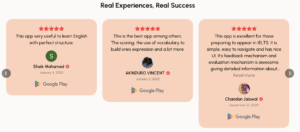
- Rate and Review: Positive, detailed reviews on the Google Play Store or Apple App Store help the app rank higher. Mention specific features like the “AI Cue Card Analysis” or “MTI Feedback.”
- Refer-a-Friend: Use the in-app “Refer a Friend” option. This not only helps the app grow its user base but often rewards you with “coins” or attempts for your own practice.
- Share Your Success Story: If you achieved your target band score using Fixolang, share a screenshot of your result on LinkedIn or Instagram and tag @EngVarta or @Fixolang. Success stories are the strongest form of proof for new users.
2. For Teachers & Influencers: Educational Partnerships
If you are an IELTS trainer or content creator, you can integrate Fixolang into your ecosystem:
- Classroom Integration: Use Fixolang as a “homework tool.” Since it provides 24/7 AI feedback, you can ask students to record their cue cards on the app and show you their AI-generated band scores for review.
- Content Collaboration: Create “How-to” videos or Reels showing how you use the app to solve a difficult 2026 cue card. Video content on YouTube and TikTok is a major driver for educational apps.
3. For Technical Contributors: Feedback & Data
AI-driven apps thrive on accurate data and user feedback:
- Report Recognition Errors: If the AI misinterprets a specific regional accent or a proper noun (e.g., interpreting a place name incorrectly), use the “Support” or “Feedback” button in the app to report it. This helps the developers train the model to be more inclusive of different dialects.
- Suggest New Topics: The 2026 exam frequently introduces “niche” topics. If you encounter a new question in a real exam that isn’t in the app, email the topic to the team so they can add it to the practice library.
4. Support the Brand (EngVarta)
Fixolang is part of the EngVarta ecosystem. Supporting the parent brand also strengthens the app:
- Follow their social media channels to stay updated on webinars and live IELTS sessions.
- Engage with their blog content by leaving comments or sharing their “2026 IELTS Guides” with study on youtube.
Ready to start? Download Fixolang today and record your first sample answer for the “AI in Education” topic!
Google Play Store or Apple App Store
Final Thoughts
Mastering the Latest IELTS Speaking Topics for 2026 is about blending high-tech tools with high-concept human stories. By using the Fixolang App to iron out your technical flaws and this guide to understand the latest themes, you aren’t just preparing for a test—you’re preparing to communicate in a globalized, AI-integrated world.
Frequently Asked Questions (FAQ)
|