Whether you are preparing for college admissions, navigating the rigors of IELTS, gearing up for campus placements, or simply aiming to present with confidence in class, learning how to improve English speaking skills for students is one of the most impactful investments you can make. In India’s competitive academic and professional landscape, the students who secure the best opportunities are not always those with the highest marks. Instead, they are the individuals who can express themselves clearly, confidently, and fluently.
This comprehensive guide is designed to help you build English fluency and enhance communication skills—regardless of your current proficiency level.
Why English Speaking Skills Matter for Students in India
In the Indian context, English is more than just a language; it is a gateway. Every major career milestone—from engineering entrance interviews and MBA Group Discussion (GD) rounds to government job interviews—evaluates your ability to communicate.
- Academic Performance : Modern education relies heavily on seminars and presentations. Improving speaking skills for students ensures you aren’t just a face in the crowd but a leader in the classroom.
- Career Gateways : Top MNCs and institutions like the IIMs assess candidates based on English communication because it serves as a proxy for professional readiness.
- Global Opportunities : If you are eyeing international waters, English fluency tips for students become essential for acing the IELTS or TOEFL.
The Complete Step-by-Step Guide to Improve English Speaking Skills for Students
Step 1: Build a Non-Negotiable Daily Practice Habit
Consistency is the bedrock of progress. If you want to improve spoken English, you must realize that twenty minutes of daily output is far superior to a five-hour “cram session” once a week.
The Power of “Micro-Practicing”
To effectively improve spoken English for students, you need to create an environment where the language feels natural. Choose a fixed 20–30 minute slot—perhaps during your commute, after classes, or before bed—and use it exclusively for speaking.
Techniques for Solo Practice
- Narrate Your Life : Describe what you are doing as you do it. “I am now preparing my notes for the history seminar.”
- The Movie Summary : After watching a film, try to summarize the plot aloud in three minutes.
- The Mirror Method : Speak to yourself in the mirror to monitor your body language and facial expressions while you talk.
Step 2: Expand Your Vocabulary the Smart Way
Many students fall into the trap of memorizing long lists of obscure words. However, to enhance communication skills, you need “active” vocabulary—words you can actually use in a conversation.
Focus on Contextual Learning
Instead of random words, focus on:
- Academic Transitions : Use words like consequently, furthermore, and notwithstanding.
- Conversational Fillers (The Good Kind) : Learn phrases like “That’s an interesting perspective,” or “To build on that point.”
- Topic-Based Clusters : If you are a science student, master the terminology of your field so you can discuss your projects fluously.
Tip: Aim for five new words a day. Don’t just write them down; use each one in three different spoken sentences to lock them into your long-term memory.
Step 3 : Practice Real Conversations, Not Just Grammar Drills
There is a significant “fluency gap” between knowing grammar rules and being able to use them in real-time. To improve English speaking skills for students, you must bridge this gap through live interaction.
Why Grammar Drills Fail
Grammar is the skeleton, but conversation is the muscle. You can know every tense in the book, but if you haven’t practiced English speaking practice for students, your brain will freeze when someone asks you a spontaneous question.
How to Find Practice Partners
- College Clubs : Join debate societies or literary circles.
- Peer Groups : Form a “Speak-Only” group with friends where you agree to communicate only in English for one hour a day.
- Digital Communities : Use platforms designed to build English fluency by connecting you with other learners or experts.
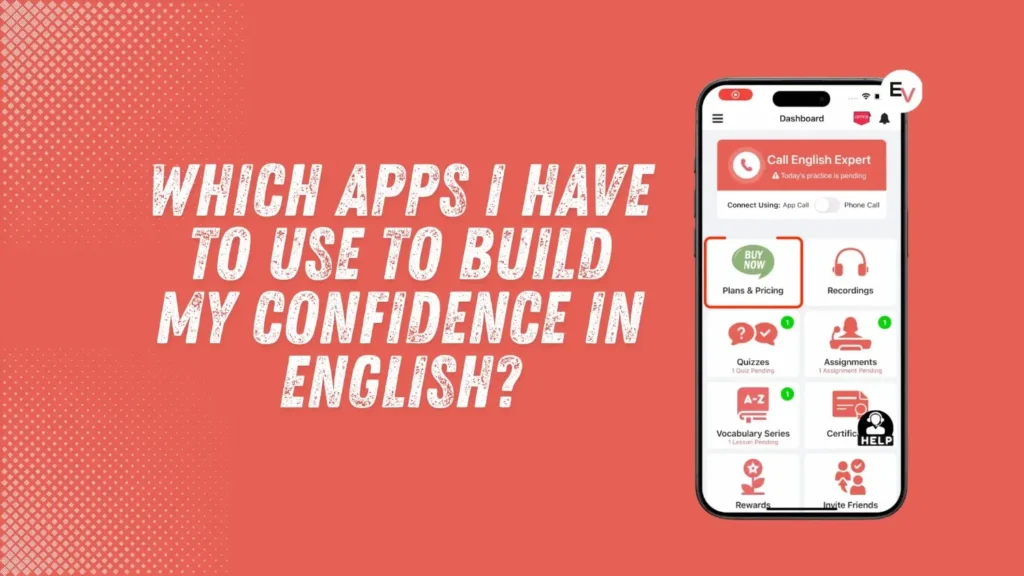
Step 4 : Use the Right English Learning Apps
The digital age offers a surplus of tools, but not all are created equal. Many apps focus on “gamified” spelling or translation, which does little to improve spoken English.
What to Look For
The most effective English communication skills for students are developed through apps that offer:
- Live Human Interaction : AI is good for basics, but humans understand nuance, slang, and emotion.
- Instant Feedback : You need someone to tell you why a phrase sounded awkward, not just that it was “wrong.”
- Scenario-Based Learning : Look for tools that simulate real-life situations like job interviews or university presentations.
Step 5 : Master Group Discussions (GD) and Presentation Skills
For many Indian students, the Group Discussion is the ultimate “boss battle” of the recruitment process. This requires a specific subset of spoken English skills for students.
The Anatomy of a Successful GD
To stand out in a GD, you must master:
- The Entry : “If I may chime in here…”
- The Pivot : “That’s a valid point, however, looking at it from a different angle…”
- The Summary : “To conclude our discussion, we have agreed on three main points…”
Public Speaking Excellence
Classroom presentations are your training ground. Work on your English fluency tips for students by focusing on pacing. Most students speak too fast when nervous. Slow down, use pauses for emphasis, and maintain eye contact.
Step 6 : Prepare Specifically for IELTS and Exam Speaking
If your goal is to study abroad, how to speak English fluently for students takes on a more structured requirement. The IELTS Speaking test, for instance, is a three-part marathon:
- Part 1 (Introduction) : Casual and relaxed. Focus on natural flow.
- Part 2 (The Long Turn) : You must speak for two minutes on a prompt. This tests your ability to organize thoughts on the fly.
- Part 3 (The Discussion) : This is abstract and challenging. It requires high-level English communication skills for students.
Step 7 : Eliminate Filler Words and Refine Your Flow
Filler words like “um,” “uh,” “like,” and “you know” are the enemies of perceived intelligence. They signal that your brain is struggling to keep up with your mouth.
The “Pause” Technique
One of the best English fluency tips for students is to embrace the silence. Instead of saying “uh,” simply stop talking for a second. A pause makes you look thoughtful and composed; a filler word makes you look unprepared.
Record and Review
The fastest way to improve spoken English for students is to record yourself speaking for two minutes. When you listen back, you will be shocked at how many fillers you use. This awareness is the first step toward elimination.
How EngVarta Helps Students Achieve Fluency
While self-study is important, professional guidance accelerates the process. EngVarta is specifically designed for the Indian student who needs to improve English speaking skills.
Why EngVarta Works:
- One-on-One Mentorship : You aren’t lost in a crowd. You get 100% of the expert’s attention.
- Real-Time Correction : Experts identify your specific pronunciation hurdles and grammatical “ticks.”
- Flexibility : As a student, your schedule is hectic. EngVarta allows you to practice from 6 AM to midnight.
- Goal-Oriented : Whether it’s an upcoming placement or an IELTS attempt, the practice is tailored to your immediate needs.
Ready to speak English with confidence?
📲 Download the EngVarta App now and start practicing anytime, anywhere.
Get live practice sessions, expert guidance, and real conversations that help you improve faster.
👉 Don’t just learn English — start speaking it today!
Download the app and take your first step toward fluency.
Download on Google Play →
Download on App Store →
Available on Android & iOS • 2M+ learners • 4.5★ rating
The 30-Day Fluency Challenge for Students
If you are ready to improve spoken English for students, follow this structured four-week plan:
|
Week |
Focus Area |
Daily Task |
|
Week 1 |
Foundation |
10 mins of self-talk + 5 new “academic” words. |
|
Week 2 |
Interaction |
Join 3 live sessions on EngVarta to test your comfort level. |
|
Week 3 |
Structure |
Practice “The 2-Minute Monologue” on random topics. |
|
Week 4 |
Refinement |
Record yourself, eliminate fillers, and simulate a Mock Interview. |
🎥 Watch this video to boost your English speaking confidence and learn practical tips you can start using today!
👉 Don’t miss it — your journey to fluent English starts here.
Stay Connected with EngVarta on Social Media!
Follow us for updates, tips, and more :
Instagram : https://www.instagram.com/engvarta.app/
Youtube : http://www.youtube.com/@EngVarta
Facebook : https://www.facebook.com/engvarta
LinkedIn : https://www.linkedin.com/company/engvarta
Conclusion:
Students who prioritise and consistently work to improve english speaking skills for students are building the single skill that cuts across every professional domain — one that will matter on the first day of your career as much as on the last.
Every resource, tip, and strategy in this guide serves one purpose — to help students consistently and measurably improve english speaking for students in a way that creates real academic and career outcomes.
The students who consistently work to improve English speaking skills for students — through daily practice, live expert feedback, and targeted scenario preparation — are the ones who ace GDs, score high on IELTS, clear placement interviews, and build careers that their peers only dream of. It is not about being naturally gifted — it is about being consistent. Start today: 20 minutes of spoken practice, one EngVarta session this week, and a commitment to daily improvement. Your future self will thank you.
Frequently Asked Questions ( FAQs )
-
Can beginners in English use EngVarta to improve their speaking skills?
- Yes. EngVarta works for all levels from beginner to advanced. Experts adjust their pace, vocabulary, and feedback style to match your current level, creating a comfortable environment where you can make mistakes and learn from them without embarrassment.
-
How do I improve English speaking for a campus placement group discussion?
Practice structured GD skills: entering the discussion, making a clear point, supporting it with an example, building on others’ arguments, and summarising. Use EngVarta to simulate GD scenarios with an expert who acts as the evaluator and gives feedback on your language, logic, and communication style.
-
What is the best English speaking app for students in India for exam preparation?
EngVarta is one of the best English speaking apps for students preparing for IELTS, MBA GD-PI, and campus placements. It offers live simulation sessions with trained experts who can specifically prepare you for the exact format and scoring criteria of your target exam
-
How long does it take a student to improve English speaking skills?
Students using EngVarta who practice speaking English daily for just 20–30 minutes often notice a clear boost in confidence and spontaneity within 3–4 weeks. With consistent live practice and expert feedback, many learners achieve significant fluency improvements for competitive exams, group discussions, and interviews within 2–3 months.
-
How can a student improve English speaking at home without a practice partner?
Use self-talk as your primary technique — narrate your activities, retell stories, describe your surroundings, and explain concepts in English aloud. Supplement with EngVarta for live expert feedback. Recording yourself and listening back is also highly effective for identifying specific improvement areas